Best Badminton Racket Bag: Multi-Racket Compartments Compared

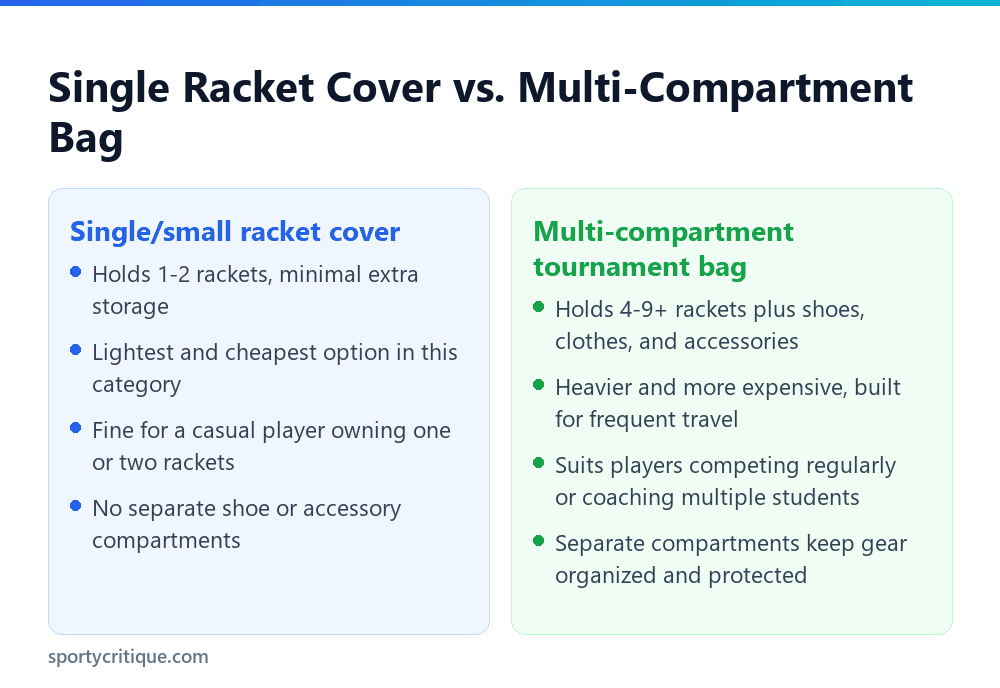
The best badminton racket bag depends mainly on how many rackets and how much gear a player actually needs to carry. A casual player with one or two rackets is well served by a simple cover like the Senston or the budget Yonex KITBAG. Players carrying a fuller kit for practice or matches do better with a larger multi-compartment bag like the Hundred Cosmogear or the Yonex Tournament Bag 2331, while frequent travelers or coaches managing several rackets and students’ gear get the most out of a premium option like the Yonex Pro Tournament Bag.
Racket bag needs scale directly with how seriously and how often someone plays. Buying a large, expensive tournament bag for occasional casual play wastes money and carries unnecessary bulk, while a small single-racket cover quickly becomes inadequate for a player who has accumulated multiple rackets, shoes, and extra gear for regular matches.
- →Bag size and compartment count should match actual racket count and gear volume, not aspiration
- →A genuine Yonex bag is available at nearly every price point, from $18 kit bags to $105 tournament bags
- →“Thermal” marketing claims on racket bags are uncommon and unverified for most listings; check specific product descriptions rather than assuming insulation
- →Multi-compartment bags separate shoes, clothes, and rackets, reducing gear mixing and odor transfer
- →Padded shoulder straps matter more for comfort once a bag is loaded with multiple rackets and gear
Table of Contents
What “Thermal” Racket Bag Claims Actually Mean
True thermally insulated racket bags, designed specifically to protect string tension and racket materials from extreme temperature swings, exist as a real product category among certain premium tennis and badminton brands, but genuinely verified, clearly labeled thermal models were not reliably available among current Amazon listings at the time of this comparison’s research.
⚠️ Watch out: A listing using the word “thermal” in its title doesn’t automatically mean the bag includes genuine insulating material. Checking the specific product description for actual insulation details, rather than assuming the word in a title guarantees the feature, avoids paying extra for a claim that isn’t backed by real construction detail.
For most recreational and even competitive club players, standard padded compartments provide adequate protection without needing true thermal insulation, which matters most for extreme climate conditions or very long-term storage rather than typical day-to-day transport between home, car, and the court.
5 Real Options, Compared
📊 Note: The jump from the Hundred Cosmogear kit-bag to the Yonex Tournament Bag 2331 roughly doubles the price but adds genuine multi-compartment organization and brand-specific construction quality that matters more to frequent, competitive players than casual ones.
How Many Rackets Do You Actually Need to Carry?
A single recreational player typically needs room for just one or two rackets, since carrying a spare in case of string breakage is common practice even among casual players, but rarely more than that without a specific reason. This use case is fully covered by the smallest, cheapest options in this comparison.
Competitive players who restring frequently, experiment with different racket setups, or play in leagues requiring quick racket changes benefit from a bag holding four or more rackets. Coaches managing multiple students’ equipment, or players who also carry doubles partners’ gear regularly, are the primary audience for the largest, most expensive tournament bags in this comparison.
Choosing the Right Bag
- ✓Match bag size and compartment count to actual racket and gear volume
- ✓Check specific product descriptions for real insulation claims, not just title keywords
- ✓Prioritize padded straps once a bag is regularly loaded with multiple rackets
- ✓Consider separate shoe compartments if gear organization and odor control matter to you
- ✕Buying an oversized tournament bag for occasional, casual single-racket use
- ✕Assuming a “thermal” label guarantees genuine insulating construction
- ✕Ignoring strap comfort until after a heavy bag already causes shoulder strain
- ✕Overpaying for premium branding when a simple, smaller cover meets your actual needs
What Actually Protects a Racket in Transit
Padded compartment walls, rather than just a soft outer fabric shell, are what actually cushion a racket frame against impact during transport, particularly relevant for carbon fiber frames that can crack under a hard, unpadded knock. Checking for described internal padding, not just an attractive outer design, matters more to a racket’s actual protection than the bag’s visual styling.
Separate string-side compartments or dividers that keep multiple rackets from directly contacting each other reduce the risk of strings snagging or frames scratching against one another during transport, a detail more common in the multi-compartment tournament bags than in simple single-racket covers.
Shoe and Accessory Compartments
A separate, ventilated shoe compartment keeps sweaty court shoes from transferring odor and moisture to rackets and clean clothes packed in the same bag, a feature present in most mid-range and premium options but absent from basic single-racket covers by design.
Smaller accessory pockets for grip tape, extra shuttlecocks, and personal items add convenience for players who prefer to carry a single bag rather than juggling multiple separate items to and from the court. This organizational benefit becomes more valuable as a player’s total gear collection grows over time.
Backpack-Style vs. Shoulder-Strap Bags
Backpack-style racket bags distribute weight across both shoulders, a real practical advantage for players carrying a heavier, fully loaded multi-compartment bag over any real distance, whether walking to a club, taking public transit, or traveling to a tournament away from home.
A single shoulder-strap design, common on smaller covers and budget bags, works fine for a lighter load carried a short distance, like from a car directly to a court, but becomes noticeably less comfortable than a backpack design once the bag is loaded with multiple rackets and a full set of gear over a longer carry.
Material and Weather Resistance
Water-resistant or water-repellent outer fabric protects rackets and gear from light rain or incidental moisture during transport, a meaningful practical feature for players who regularly travel between indoor and outdoor settings or live in a rainier climate. Fully waterproof construction is less common and typically costs more, reserved mainly for premium tournament-tier bags.
Checking a specific bag’s material description for water-resistance claims, rather than assuming any sports bag handles rain adequately, avoids an unpleasant surprise of soaked gear after an unexpected downpour during transport. This detail matters more for players in humid or rain-prone regions than for those in consistently dry climates.
Durability and Zipper Quality
Zipper quality is an easily overlooked detail that significantly affects a bag’s long-term usability, since a failed zipper on a frequently used bag renders an otherwise fine bag frustrating or unusable. Premium options that specifically mention branded zippers, like YKK, generally hold up better over years of regular use than unbranded, generic zipper hardware common on the cheapest bags.
Reinforced stitching at stress points, the base of shoulder straps and handle attachment points specifically, matters more for bags carrying heavier, fuller loads regularly than for a light, occasionally used single-racket cover. Checking reviews specifically for mentions of strap or seam failure over time gives a more reliable durability signal than the product description alone.
Traveling With a Racket Bag
Air travel specifically introduces considerations beyond everyday use, including whether a bag fits carry-on size restrictions or needs to be checked, and whether rackets inside are adequately protected against the rougher handling checked luggage typically receives compared to careful, personal carrying.
Players traveling to tournaments regularly sometimes invest in a bag specifically rated or marketed for travel durability, with reinforced corners and more substantial overall construction than a bag meant purely for local, everyday transport between home and a nearby court. This distinction is worth considering separately from the size and compartment count factors already covered.
Cleaning and Maintaining a Racket Bag
Regularly emptying and airing out a racket bag, particularly the shoe compartment, prevents moisture and odor buildup that can otherwise transfer to rackets and clean gear over repeated use without proper ventilation between sessions.
Wiping down the bag’s exterior and interior lining periodically, following any specific care instructions for the material, extends its usable life and keeps it from becoming an unpleasant, grimy piece of equipment that a player might otherwise be tempted to replace prematurely simply due to neglected basic maintenance.
Frequently Asked Questions
Do I need a multi-compartment bag if I only own one racket?
No. A simple single or dual-racket cover like the Senston or budget Yonex kit bag covers this need fully without the unnecessary bulk and cost of a larger tournament bag.
Are thermal racket bags worth seeking out?
For most players, standard padded protection is sufficient. Genuine, clearly verified thermal insulation is uncommon among currently available listings, so check specific product descriptions rather than assuming a title claim guarantees the feature.
What’s the real benefit of a Yonex tournament bag over a generic multi-compartment bag?
Brand-specific construction quality, YKK zippers, and dedicated compartment design tailored to racket sports specifically, which can matter more to frequent competitive players than casual ones.
How many rackets should a competitive player carry?
Often four or more, accounting for different string setups, backup rackets, and quick changes needed during league or tournament play.
Does shoe compartment separation really matter?
Yes, for odor and moisture control specifically. Keeping sweaty shoes separate from clean clothes and rackets is a meaningful practical benefit in bags that include this feature.
What protects a racket best during transport?
Padded internal compartment walls and dividers that prevent rackets from directly contacting each other, more than the bag’s outer fabric or visual design.
None of these details require an expert eye to evaluate before buying; reading a few reviews closely, checking the specific product description for material and hardware claims, and honestly assessing how much gear actually needs to fit inside covers the large majority of what separates a satisfying long-term purchase from one that disappoints within a season.
Matching bag size to actual racket count and gear volume, checking for real padded protection rather than marketing claims alone, and considering shoe and accessory organization based on personal habits covers the practical decisions that matter most in this category, regardless of which specific price point ends up being the right fit for a given player’s actual schedule, travel habits, and how many rackets they realistically own and use in a normal week.
Weight distribution, water resistance, and hardware quality rarely get the same attention as compartment count in most buying decisions, yet they’re often what actually determines whether a bag still feels good to carry a full season or more after the initial purchase excitement has worn off and the bag is simply doing its job, trip after trip, without drawing any attention to itself.
A little extra research up front, comparing a handful of listings side by side against the specific factors covered in this guide, pays off far more reliably than picking whichever bag happens to appear first in a general search result.
As an Amazon Associate, we earn from qualifying purchases through links on this page.