How to Choose a Hockey Stick Curve

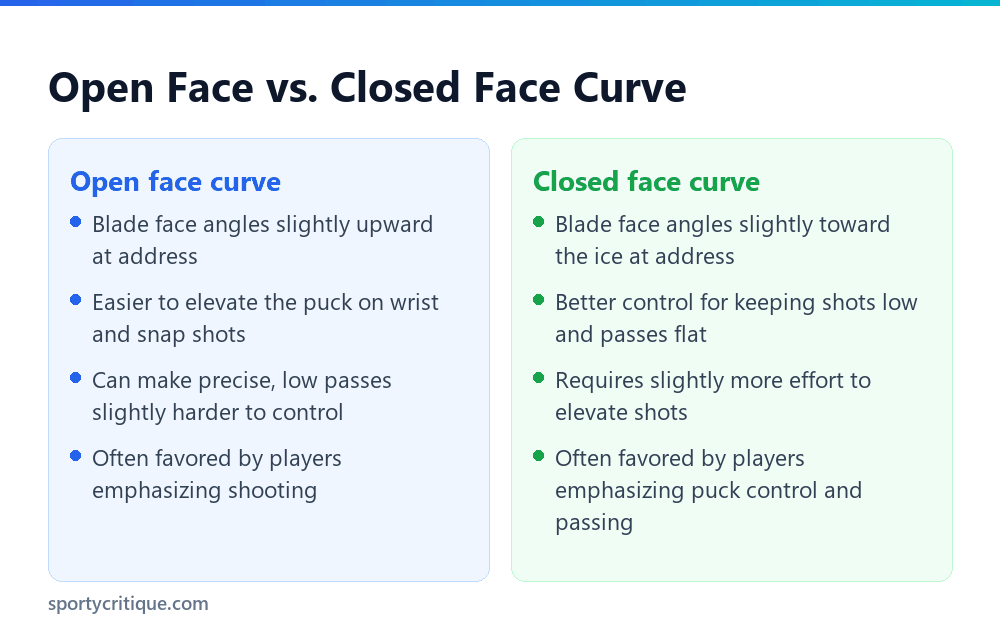
A good hockey stick curve guide comes down to three main variables: curve depth, how much the blade bends from heel to toe, face angle, whether the blade opens upward or closes toward the ice, and toe shape, whether the blade’s tip is rounded or squared off. A deeper curve and open face help elevate shots more easily but can make precise, flat passing and puck control slightly harder, while a shallower curve and closed face favor control and passing at some cost to shot elevation. Position and personal shot preference should drive the final choice more than whatever curve a favorite professional player happens to use.
Curve selection is one of the more overlooked equipment decisions in hockey, often chosen based on brand familiarity or copying a favorite player rather than matching the curve’s actual mechanical properties to a player’s real position, shot preference, and puck-handling style. Understanding what each curve variable actually does removes the guesswork from this decision.
- →Curve depth affects how easily a shot elevates, with deeper curves elevating pucks more readily
- →Face angle, open or closed, affects the tradeoff between shot elevation and passing precision
- →Toe shape, rounded or squared, affects stickhandling feel and how the blade catches the puck
- →Position and personal shot style should drive curve choice more than a favorite pro’s setup
- →A curve that feels great for shooting can feel worse for passing and puck control, and vice versa
Table of Contents
Curve Depth: How Much the Blade Bends
Curve depth describes how much the blade bends from the heel, near the shaft, to the toe, the blade’s far tip, measured in fractions of an inch. A deeper curve creates more of a natural cupping effect that helps lift the puck off the ice more readily during a shot, which is why players emphasizing shooting power and elevation often prefer a deeper curve.
A shallower, flatter curve offers more consistent blade-to-puck contact across a wider range of stick positions, which benefits puck control and passing precision, particularly for players handling the puck frequently in tight spaces where predictable blade behavior matters more than shot elevation.
Face Angle: Open vs. Closed
Face angle describes whether the blade’s face points slightly upward, an open face, or slightly toward the ice, a closed face, when the stick is held in a natural position. An open face naturally helps lift pucks into the air more easily, useful for players who want to elevate wrist and snap shots without excessive extra effort.
⚠️ Watch out: An open face curve can work against a player specifically trying to keep shots low and precise, since the same properties that help elevate the puck can make it harder to consistently keep a shot down when a low, hard shot is actually the better tactical choice in a given situation.
A closed face curve keeps the puck lower and offers more consistent flat, accurate passing, which benefits players who prioritize puck distribution and controlled, low shots over maximum shot elevation. Defensemen specifically often favor a more closed or neutral face for exactly this reason.
Toe Shape: Rounded vs. Square
A rounded toe offers a slightly larger effective blade surface for catching and cushioning passes, particularly helpful for backhand plays and receiving passes at awkward angles, since the curved shape provides a more forgiving contact surface across a range of puck approach angles.
A square toe offers a slightly larger surface specifically at the very tip of the blade, which some players find useful for backhand shots and certain stickhandling moves that rely on precise toe contact. This is a smaller, more subtle distinction than curve depth or face angle, but it still factors into overall blade feel for players attuned to this level of detail.
💡 Pro tip: Trying both toe shapes during practice, rather than assuming this detail doesn’t matter enough to test, helps identify a genuine personal preference that some players notice clearly once they compare the two directly.
Matching Curve to Position
Forwards emphasizing shooting, particularly wingers taking one-timers and quick releases, often benefit from a moderate-to-deep curve with a slightly open face, since these properties support the quick elevation these specific shot types depend on for beating a goaltender.
Centers and playmaking forwards who prioritize passing accuracy across a range of angles and distances often prefer a shallower, more neutral curve that offers consistent blade-to-puck contact regardless of exact stick position, supporting the precise, flat passes their role depends on more than shot elevation.
Defensemen commonly favor a shallower curve with a closed or neutral face, prioritizing reliable puck control during breakouts and consistent, low shots from the point that are harder for a goaltender and shot-blockers to deflect unpredictably compared to a puck that tends to hop or flutter off a deeper curve.
Common Curve Selection Mistakes
- ✓Match curve properties to actual position and shot preference, not brand loyalty alone
- ✓Consider a shallower curve if passing precision matters more than shot elevation
- ✓Try different toe shapes directly if fine blade feel matters to your game
- ✓Test a new curve through actual practice before committing to a full season purchase
- ✕Choosing a curve purely because a favorite professional player uses it
- ✕Assuming a deeper curve is universally better regardless of playing style or position
- ✕Ignoring face angle’s effect on passing precision while focusing only on shot elevation
- ✕Committing to an expensive stick purchase without any hands-on testing of the specific curve
Legal Curve Depth Limits
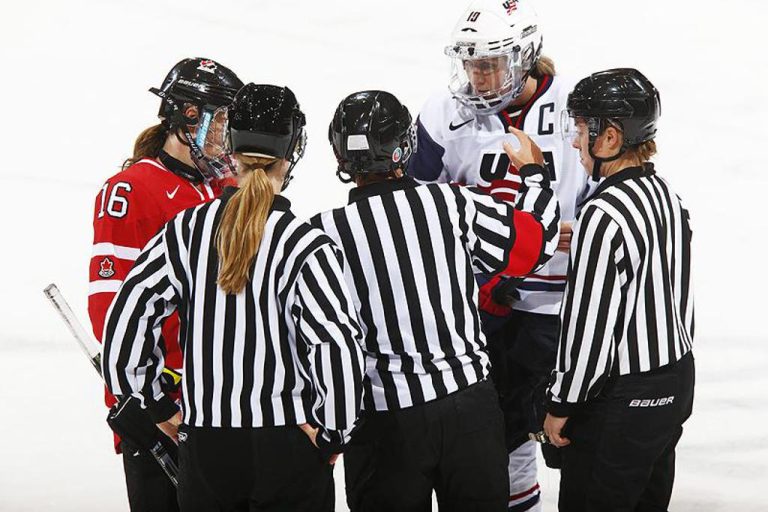
Most competitive leagues, including the NHL, limit maximum legal curve depth to prevent an excessively deep curve from creating an unfair puck-handling or shooting advantage, with officials able to check a stick’s curve depth during a game if a curve appears to exceed the legal limit.
📊 Note: Manufacturers design and label their standard curve options to fall within these legal limits for the levels of play their sticks are marketed toward, so a curve purchased through normal retail channels for standard youth, amateur, or professional play is very unlikely to inadvertently exceed a legal limit under normal circumstances.
Adjusting to a New Curve
Switching to a meaningfully different curve than one previously used, moving from a shallow to a deep curve or from a closed to an open face, requires a genuine adjustment period, since muscle memory built around a previous curve’s specific properties doesn’t transfer perfectly to a new one immediately.
Giving a new curve several practice sessions before drawing firm conclusions, rather than abandoning it after one disappointing session, distinguishes a genuine poor fit from simply an unfamiliar feel that would resolve with continued use. Many players who switch curves too hastily back and forth never give any single option enough time to properly evaluate it.
Where the Curve Sits on the Blade
Beyond overall depth, curves also differ in where along the blade the bend is concentrated, heel curves bending mostly near the shaft, mid curves bending through the blade’s center, and toe curves concentrating the bend near the tip. This positioning affects where on the blade a player gets the most natural lift and control, independent of the total curve depth measurement.
A toe curve, for example, tends to suit players who release shots quickly with the puck already toward the blade’s tip, while a heel curve suits players who prefer to control and release the puck closer to the shaft. Neither positioning is universally better; the right choice depends on where a specific player naturally makes contact during their release.
How Lie Angle Interacts With Curve Choice
Lie angle, the angle between the shaft and blade, is a separate stick specification from curve but interacts with it meaningfully, since a stick’s effective face angle at the moment of contact depends on both the blade’s curve and how the lie angle positions that blade relative to the ice given a specific player’s height and skating stance.
A player with an incorrect lie angle for their stance can experience blade behavior that doesn’t match what the curve specifications alone would suggest, since an improperly angled blade changes effective ice contact regardless of the curve’s own open or closed face design. Getting lie angle right first, separately from curve selection, ensures the curve’s actual properties translate accurately to on-ice performance.
Do Goalies Need to Think About Curve Too?
Goalie sticks use a fundamentally different blade design than player sticks, built primarily for stopping pucks and clearing them rather than for shooting and stickhandling in the same way, so the curve considerations covered throughout this guide apply specifically to player sticks, not goalie equipment.
That said, goalies who occasionally handle and pass the puck as part of their role still benefit from understanding basic blade behavior principles, even though goalie stick specifications and selection criteria differ enough from player sticks that they deserve their own separate, dedicated discussion beyond the scope of this curve-focused guide.
Curve Considerations for Youth Players
Younger players still developing basic stick skills generally benefit from a simpler, more neutral curve rather than an aggressive, specialized curve chosen to match a specific advanced shooting technique they haven’t yet developed the strength or skill to fully utilize.
As young players mature and develop clearer position-specific tendencies and personal shot preferences, introducing more specialized curve choices becomes more relevant, mirroring the same progressive approach recommended for other equipment specifications like flex, discussed in more detail in related hockey equipment content on this site.
Frequently Asked Questions
What curve depth should a beginner use?
A moderate, middle-of-the-road curve depth is a reasonable starting point for beginners, since it doesn’t strongly favor either shot elevation or passing precision while a player is still developing their overall game and preferences.
Does face angle matter more than curve depth?
They matter for different things and work together. Face angle specifically affects the elevation-versus-passing-precision tradeoff, while curve depth affects how easily the puck lifts off the blade generally.
Why do defensemen often use different curves than forwards?
Defensemen typically prioritize puck control during breakouts and consistent, low point shots, favoring a shallower, more neutral curve over the deeper, shot-elevation-focused curves some forwards prefer.
Is it worth trying a professional player’s exact curve?
Not automatically. A pro’s curve suits their specific position, shot style, and personal preference, which may not match a different player’s actual game regardless of skill level.
How long does it take to adjust to a new curve?
It varies, but giving a new curve several practice sessions before judging it fairly distinguishes genuine poor fit from simply an unfamiliar feel that resolves with continued use.
Can a stick’s curve be illegal?
Yes, if it exceeds a league’s maximum legal curve depth, though standard retail sticks marketed for a given level of play are designed to fall within legal limits under normal circumstances.
Curve selection rewards a bit of deliberate experimentation more than following a fixed formula, since the right combination of depth, face angle, and toe shape genuinely varies by individual playing style, position, and personal feel in a way that no single universal recommendation can fully capture, no matter how detailed, confident, or well-intentioned that written recommendation ultimately happens to be for any one specific player.
A little patience during this process, resisting the urge to buy several sticks at once and instead testing one specific curve change at a time, produces a clearer, more reliable picture of what actually works than trying to evaluate several variables at once and losing track of which change actually caused which difference in feel and results.
As an Amazon Associate, we earn from qualifying purchases through links on this page.