Best Arm-Friendly Tennis Rackets for Adult Beginners

Price is not the only thing that separates one beginner racket from another. Head size, balance point, and frame material decide how forgiving a racket feels on the mishits every new player makes constantly, and how much of that shock travels up into your wrist and elbow. This guide is built around comfort and forgiveness, not the lowest sticker price.
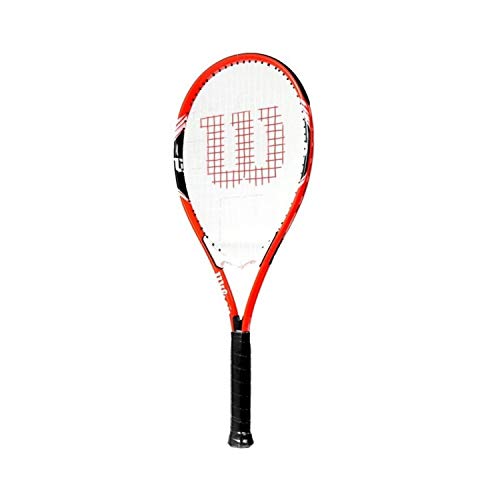
If arm comfort is your priority, look at head size first: bigger is more forgiving. The Wilson Triumph has the largest head here at 112 square inches. If you want a genuinely different frame material built for shock absorption rather than just a big head, the Babolat Boost Drive uses a full graphite construction with Babolat’s Woofer dampening system.
- →A larger head (105-112 sq in) gives you a bigger forgiving zone, so off-center hits still feel controlled instead of jarring.
- →Head-light balance, weight concentrated toward the handle, makes a racket easier to whip through the swing and reduces the wrist strain that comes from a head-heavy frame.
- →None of the rackets here are the absolute cheapest option; they are the ones that trade a little extra cost for measurably less shock reaching your arm.
- →If you already feel elbow or wrist soreness after hitting, this is the more relevant guide for you, not a pure price comparison.
Table of Contents
Why arm comfort is its own buying criterion
New players mishit the ball low or near the frame edge far more often than experienced players do, simply because timing and contact point take months to groove. Every one of those mishits sends vibration up the frame and into your hand. A racket with a bigger head and a softer, head-light frame absorbs more of that shock before it reaches you. Over dozens of sessions, that difference is the gap between building good habits comfortably and quietly developing tennis elbow before you have even learned to serve.
The comfort-first picks
HEAD Ti. Instinct Supreme Tennis Racket

HEAD builds this on a 109-square-inch head with Nano Titanium reinforcement and a head-light balance, meaning the weight sits closer to your hand than the tip. That combination is what makes a racket feel easy to swing quickly while still giving you a wide margin on shots that land near the edge of the frame instead of dead center.
- ✓109 sq in head is truly oversized, not just marketing language
- ✓Head-light balance reduces wrist strain on fast swings
- ✓Pre-strung and ready to play
- ✕Ships in a single grip size (4 1/4″), so measure first
- ✕One colorway available
HEAD Geo Speed Adult Tennis Racket

The Geo Speed runs a half-inch longer than a standard 27-inch racket, which extends your reach slightly on wide balls, and pairs that with the same head-light balance philosophy as the Instinct Supreme. At 105 square inches the head is a touch smaller than some other picks here, but the light overall weight (around 10.4 oz) keeps swings easy and reduces cumulative arm fatigue across a long practice session.
Wilson Triumph Tennis Racket
The Triumph is built specifically as an oversized recreational racket, and at 112 square inches it has the biggest head of any racket in this guide. Wilson’s V-Matrix construction is designed to widen the effective sweet spot further within that already-large frame, and the 27.5-inch length adds a bit of extra reach. If your single biggest frustration right now is mishits that feel harsh in your hand, the sheer head size here gives you the largest forgiving zone available at this level.
📊 Note: No product photo is included for this listing because we could not confirm a current, accurate image URL for this specific ASIN. The specs above come directly from the current manufacturer listing.
Babolat Boost Drive Tennis Racquet (Pre-Strung)
This is the one racket on this page that is not aimed purely at absolute beginners; Babolat positions it as the step for juniors and adults moving up to their first full-size, full-graphite frame. That graphite construction, combined with Babolat’s Woofer system, which increases how long the ball stays in contact with the string bed, is a specifically comfort-oriented piece of engineering rather than just a bigger head. At 105 square inches and roughly 9.8 oz strung, it is light enough for a true beginner but built with more advanced shock-management technology than the other rackets here.
💡 Pro tip: If you are coming from another racket sport, like pickleball, padel, or badminton, and already have some arm sensitivity, the Babolat Boost Drive’s graphite build and Woofer system are worth the small step up in price over a pure aluminum beginner frame.
Comparing head size and balance side by side
Signs you specifically need an arm-friendly racket
⚠️ Watch out: If you already feel soreness in your elbow or wrist after playing, do not just push through it and hope a better swing fixes it. Confirm your grip size is correct first (a too-small grip is a common hidden cause), then move to a larger, head-light frame like the ones above before symptoms become a diagnosed case of tennis elbow.
A few practical signs point specifically toward this category of racket rather than a pure budget pick: soreness after playing that was not there before, a habit of hitting the ball closer to the frame’s edge than its center, or simply preferring a racket that feels stable and solid rather than whippy and light. Any of those point toward prioritizing head size and balance over the lowest price tag.
A quick 5-minute test to check if a racket suits your arm
You do not need weeks of play to get a sense of whether a racket is a good fit for your arm. Hold it with a relaxed grip and bounce a ball on the strings ten or fifteen times, paying attention to how much vibration you feel in your wrist on the hits that land slightly off center rather than dead in the middle. Then hit a few slow shots against a wall or with a partner and notice whether contact near the frame’s edge feels sharp and jarring or muted and manageable. A racket that stays comfortable on off-center contact is doing its job; one that sends a noticeable sting up your arm on anything but a perfect hit is a candidate to size up in head area or swap for a more head-light build.
Swingweight, not just total weight, affects comfort too
Two rackets that weigh the same on a kitchen scale can still feel very different in your hand once you start swinging, because how that weight is distributed along the frame changes how much effort it takes to bring the head through contact. A head-light racket, like the HEAD models above, concentrates weight toward the handle, so it accelerates with less wrist effort than a head-heavy racket of the same total weight would. That lower swing effort is a real, physical reason head-light beginner frames feel less tiring and less jarring over a long session, separate from head size.
Why some experienced players still choose arm-friendly frames
This category is not only for people who have never picked up a racket before. Plenty of players who have been at the sport for years, especially those returning after a long break, playing multiple times a week, or managing a previous elbow injury, deliberately choose a larger, softer-feeling frame over a smaller, stiffer performance racket. Comfort and control are not exclusively beginner concerns; they are simply more urgent for a beginner because a new player’s technique has not yet developed the consistency that lets more advanced players get away with a less forgiving frame.
Frequently Asked Questions
Does a bigger racket head actually reduce arm pain?
Indirectly, yes. A larger head widens the effective sweet spot, so more of your mishits still land in a zone that transfers less shock into the frame and your arm. It will not fix a swing flaw that is causing pain on its own, but it reduces how much a given mishit hurts.
What does head-light balance mean?
It means more of the racket’s total weight sits toward the handle rather than the head. That makes the racket feel easier to accelerate through a swing and generally reduces strain compared to a head-heavy racket of the same total weight.
Is the Babolat Boost Drive too advanced for a true beginner?
No. Babolat markets it as an entry point to full-size, full-graphite rackets for both juniors and adult beginners. It is a small step up in price and materials from an aluminum recreational racket, not a performance racket for experienced players.
How do I know my current racket is causing arm strain?
Soreness in the wrist, forearm, or elbow that appears after playing and was not present before is the main sign. Check grip size first, since an undersized grip is a frequent hidden cause, then consider a larger, head-light frame like the ones in this guide.
Should I get a lighter string tension for arm comfort, or a different racket?
Try the cheaper fix first. Asking a stringer for the lower end of the recommended tension range costs little and can noticeably soften how a racket feels. If discomfort continues after that, a larger, head-light frame like the ones above addresses the issue at the source rather than masking it.
Checking grip size on these specific models
Grip size matters just as much here as it does on a budget racket, arguably more, since an ill-fitting grip forces exactly the kind of over-squeezing that undoes the comfort benefit of a larger, softer frame. The HEAD Ti. Instinct Supreme and Geo Speed above both ship in a single grip size per listing, so check the specific size shown before buying rather than assuming standard fit. Wilson and Babolat both offer the Triumph and Boost Drive across a range of grip sizes depending on the exact listing, so take the extra minute to confirm the size matches your hand measurement rather than defaulting to whatever loads first in search results.
String tension also affects how a racket feels on your arm
The frame is only half the comfort equation. Every racket on this page comes pre-strung at a factory-set tension, and while you cannot easily change that before your first session, it is worth knowing for later: lower string tension generally feels softer and more forgiving on contact, while higher tension feels stiffer and more precise but transmits more shock. If you eventually have any of these rackets restrung, asking a shop for the lower end of the manufacturer’s recommended tension range is a simple, low-cost way to add extra arm comfort without changing rackets at all.
Frame material: aluminum, composite, and graphite
Most true beginner rackets, including the HEAD and Wilson models above, use an aluminum or aluminum-composite frame, which is light, inexpensive, and perfectly adequate for the swing speeds a new player generates. Graphite, used in the Babolat Boost Drive, is stiffer for its weight and generally considered a step up in feel and durability, which is part of why it costs more. Neither material choice should be treated as a sign of quality on its own; an aluminum frame paired with a large head and head-light balance can feel more comfortable in practice than a poorly-balanced graphite frame, so judge the whole package rather than the spec sheet’s material line by itself.
Bottom line
If comfort and forgiveness matter more to you than shaving another ten dollars off the price, start with the HEAD Ti. Instinct Supreme or Geo Speed for a balanced, head-light feel, move to the Wilson Triumph if you want the single largest sweet spot available, and consider the Babolat Boost Drive if you want genuine graphite construction and are willing to spend a bit more for it.
As an Amazon Associate, we earn from qualifying purchases through links on this page.