Best Budget Tennis Rackets for Beginners Under $80

Not every beginner needs to spend $150 on a graphite frame before they know if they even like tennis. This guide is built around one constraint: a real ceiling of about $80, and mostly well under it, for a strung, ready-to-play racket that will not fall apart in your first month on the court.
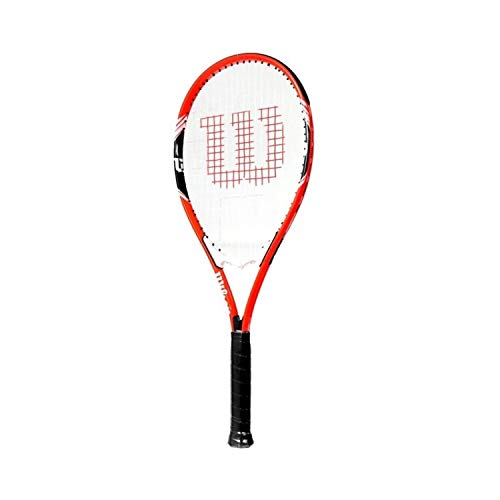
If you want the cheapest reasonable way into tennis, the Wilson Federer Adult Recreational runs around $33 and is the single most-bought beginner racket on Amazon. If you are buying for two people who both need a racket, balls, and a bag in one box, the HIRALIY 27″ two-player set covers that for less than two separate rackets would cost.
- →A sub-$80 beginner racket is not a compromise. Almost every entry-level frame on this list uses the same oversized head and lightweight build that pricier ‘beginner’ rackets charge more for.
- →Pre-strung is standard at this price point. You will not need to pay a shop to string these.
- →Buying a 2-pack or a boxed set is often cheaper per racket than buying two rackets separately, and it solves the ‘who do I play with’ problem on day one.
- →Grip size still matters even on a budget racket. Do not skip that step to save time.
Table of Contents
Why price is the right filter for a first racket
A beginner racket has one job: let you rally, learn a swing, and find out whether you actually want to keep playing. Every racket on this page is lightweight, has an oversized or near-oversized head for a forgiving sweet spot, and comes pre-strung. Above roughly $80 you start paying mostly for cosmetic branding and marginal material upgrades that a first-time player cannot feel yet. That money is better spent on a can of balls, a lesson, or court time.
📊 Note: This is a companion guide to our arm-friendly beginner racket roundup, which looks at comfort and forgiveness rather than price, and our junior racket guide for kids by age and size.
The budget picks
Wilson Federer Adult Recreational Tennis Racket

This is the racket most beginners end up buying by default, and there is a reason: it is consistently priced around $33, which is close to the floor for anything strung and made by a major brand. It is light enough to swing all afternoon without your arm complaining, and the grip size (3, roughly 4 3/8 inches) fits most adult hands without needing an overgrip on day one.
- ✓Genuinely the cheapest strung racket from a major brand
- ✓Light enough for long practice sessions
- ✓Wide availability means replacement is easy if it gets lost or damaged
- ✕Only sold in one grip size, so measure your hand first
- ✕No case included, just the racket
Wilson Tour Slam Adult Recreational Tennis Racket
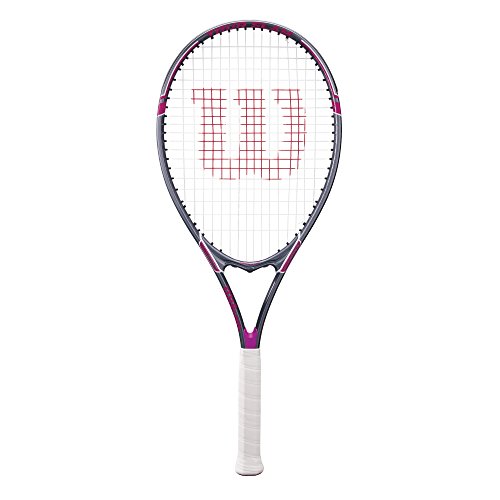
The Tour Slam sits in the same budget bracket as the Federer but carries a truly oversized 110-square-inch head, which is one of the larger sweet spots you will find at this price. Wilson’s stop-shock pads cut down on the sting you feel when you mishit low on the frame, which happens constantly in your first few weeks.
If your main worry is missing the ball entirely rather than hitting it too softly, the bigger head here buys you real margin for error without pushing you into a higher price tier.
Wilson Essence Adult Recreational Tennis Racket

The Essence is Wilson’s other current entry-level model and lands in the same price range as the Federer and Tour Slam. It uses the same AirLite Alloy build as the Tour Slam with an oversized head shaped for an enlarged sweet spot, so functionally it is a close cousin. Pick this one over the other two mainly on grip size or color availability if either of those is what is out of stock when you are ready to buy.
OPPUM 27″ Pro Tennis Rackets (2-Pack)

This is where the budget math changes: you get two rackets, each with a roughly 105-square-inch head, for what a single big-brand racket often costs. If you are buying so you and a partner, roommate, or child can rally together, this is the cheapest way to put two working rackets in two hands at once. The tradeoff is that OPPUM is not a legacy tennis brand, so build quality past the first season is less proven than Wilson or HEAD.
HIRALIY 27″ Tennis Rackets Set for Adults

This is the true all-in-one budget option: two pre-strung rackets, three balls, two overgrip tapes, and a carrying bag, all in a single order. If you have nothing at all yet, not even balls, this removes every other purchase decision. It will not outlast a racket bought individually from Wilson or HEAD, but for a first attempt at the sport with a friend, it is hard to beat on total cost.
How to compare these on more than price
⚠️ Watch out: A racket under $80 is not a lifetime purchase, and it should not be marketed as one. Expect one to two seasons of regular play before the grip wears smooth or the strings lose tension enough to matter. That is a completely normal tradeoff for the price, not a defect.
Grip size still matters, even on a $33 racket
Skipping the grip-size step is the most common mistake at this price point, because it feels like a detail that only matters for expensive rackets. It does not. A grip that is too small forces you to squeeze harder to control the racket, which is a direct cause of the forearm and elbow soreness beginners blame on ‘bad technique.’ Measure from the tip of your ring finger to the middle horizontal crease of your palm; that measurement in inches is close to your correct grip size. Most of the rackets above ship in the 4 1/4″ to 4 3/8″ range, which fits the majority of adult hands, but check the specific listing before you buy.
💡 Pro tip: If a grip feels slightly too small when it arrives, an overgrip wrap adds roughly 1/16″ and costs a few dollars, cheaper than returning the racket and waiting for an exchange.
What else to budget for besides the racket
The racket is rarely the only cost of getting started, and skipping the rest of this list is how a $33 racket turns into a frustrating first session. A can of three balls costs a few dollars and wears out faster than most beginners expect, since fuzz loss and pressure loss happen within a handful of sessions of regular hitting. Court time, whether that is a public court fee or a club guest pass, is worth checking before you buy anything, since a free public wall or court removes an ongoing cost entirely. An overgrip, a thin adhesive wrap that goes over the factory grip, is the cheapest way to fine-tune comfort or replace a grip that has gone slick from sweat, and it is worth keeping a spare on hand from the start.
What you can safely skip spending money on as a beginner
It is tempting to treat a first racket purchase as the moment to also buy a vibration dampener, a premium string upgrade, a ball machine, or a second ‘backup’ racket. None of that changes how quickly you improve in your first few months. The two things that actually move the needle early are court time and getting the grip size right, both of which cost far less than any of the accessories above.
Frequently Asked Questions
Is a $30-40 tennis racket actually good enough to learn on?
Yes. Every racket in this price range uses the same core beginner features (lightweight frame, oversized head, pre-strung) as racket costing two or three times as much. The differences that matter to advanced players, like precise string-bed feel or custom weighting, are not things a beginner can perceive yet.
Should I buy one racket or a 2-pack if I only play with one other person?
A 2-pack, like the OPPUM set, is usually cheaper per racket than buying two separate rackets, and it guarantees both rackets match in weight and grip range so neither of you is at a disadvantage.
Do budget rackets come pre-strung?
Every racket on this page ships pre-strung and ready to play out of the box. None require a trip to a stringer before your first session.
When should I upgrade past this price range?
Once you are playing multiple times a week and can consistently find the sweet spot, moving up to a racket in the $100-180 range with a more refined feel, like the models in our arm-friendly guide, starts to make a real difference.
Will a cheap racket break easily?
Not under normal recreational use. These are aluminum or composite frames built for casual and beginner play, not daily competitive training. Treat the strings as the part most likely to need attention first, since low-cost factory strings lose tension faster than premium string jobs.
Common first-racket mistakes worth avoiding
Beyond skipping grip size, a few other habits waste money on a first racket without improving anything. Buying a second, backup racket before you know if you will stick with the sport is one; a single racket easily lasts a full season of casual play, and a backup only becomes worth it once you are playing regularly enough that string tension or frame wear is a real issue. Chasing a specific pro’s racket model because you recognize the name is another; professional-tier frames are built for players who can already generate their own power and spin, and they tend to feel stiff and unforgiving in a beginner’s hands compared to any racket on this list. Finally, buying strings separately to have a shop restring a cheap frame rarely makes sense at this price point, since the labor cost alone can approach what a new pre-strung racket costs outright.
A quick way to sanity-check any budget racket before you buy
Before adding any racket to your cart, check three things on the listing itself: the grip size range it ships in, whether it says pre-strung, and the head size if it is listed. If a listing is missing all three of those details, or the photos and description look inconsistent with each other, treat that as a reason to move to a different listing rather than assuming the best. Every racket recommended above lists all three clearly.
How these budget picks were chosen
Every racket above had to clear three bars: it needed to be currently listed and in stock, priced meaningfully under the $80 ceiling for this guide, and built around the same core beginner-friendly formula of a lightweight frame and an oversized or near-oversized head. We did not include rackets we could not verify were still sold, and we did not carry forward a specific price claim unless we could confirm it directly, which is why only the Wilson Federer is quoted with an exact dollar figure above; the others should be checked at the time of purchase since pricing on inexpensive, high-turnover listings shifts more often than on premium gear.
Bottom line
For most first-time adult players, the Wilson Federer at roughly $33 is the simplest right answer: cheap, widely reviewed, and light enough to not fight you while you learn. Buy the Tour Slam or Essence instead if you specifically want a bigger head for more forgiveness, the OPPUM 2-pack if you are equipping two players at once, and the HIRALIY set if you own literally nothing else, not even balls, and want one purchase to solve that.
As an Amazon Associate, we earn from qualifying purchases through links on this page.