Best Soccer Cleats for Kids: Verified Youth-Sized Picks

Real soccer cleats for kids are built on a youth-specific last, not an adult boot pattern printed in smaller sizes, and mixing the two up is the most common mistake parents make when shopping. Here’s how to tell the difference, four verified youth SKUs with current price and stock, and the growth-room math that actually matters.
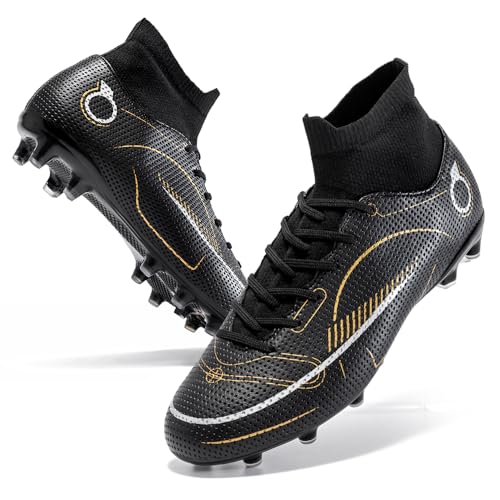
The best soccer cleats for kids are built on a genuine youth last, meaning the toe box, midfoot width, and stud length are all proportioned for a child’s foot and body weight, not an adult boot pattern printed in smaller sizes. Verified picks: adidas Child-Unisex Goletto VII Firm Ground Soccer Cleats ($34.90) and Carter’s Unisex-Child Fica Sport Cleat ($32.14) for younger toddlers.
- →A true kids’ cleat is built on its own youth last, not an adult boot pattern shrunk down
- →Stud length matters more for kids than adults; overly long studs on a lighter body increase ankle-roll risk
- →Buying one size up for growth room is reasonable, two sizes up creates a genuine safety and control problem
- →All four picks below were checked against Amazon’s live catalog on 2026-09-13 for real price and stock
- →Toddler-specific brands like Carter’s fit differently than a youth size scaled from an adult line
Table of Contents
Why an adult cleat sized down isn’t a kids’ cleat
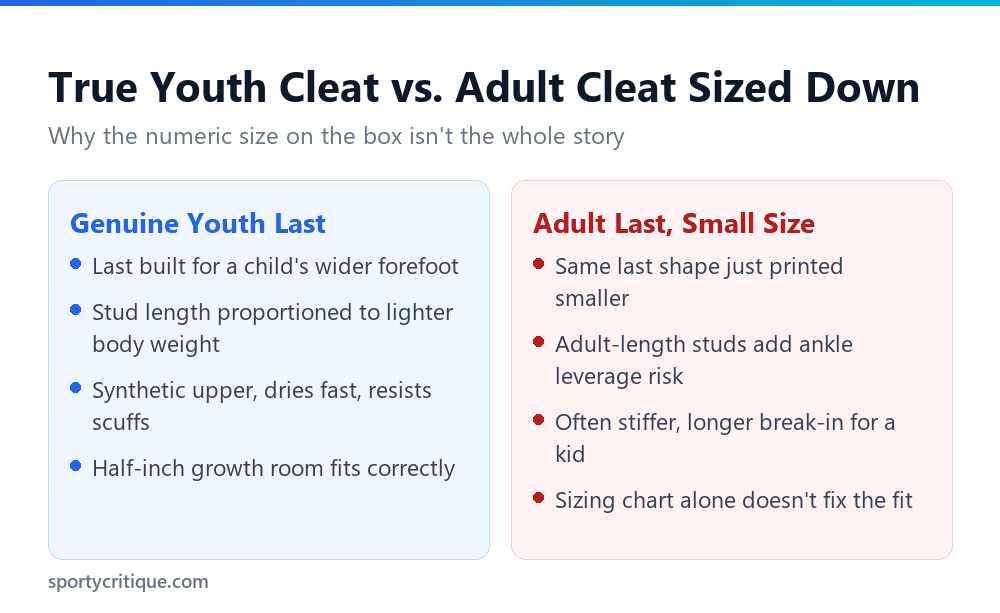
Some listings simply take an adult boot and offer it in smaller numeric sizes without changing anything else about the last, the stud pattern, or the upper stiffness. That matters because a child’s foot isn’t just a scaled-down adult foot: it’s proportionally wider through the forefoot, the arch hasn’t fully formed, and body weight relative to stud length changes how much leverage a stud puts on the ankle during a turn.
A genuine youth cleat, like the two adidas Goletto kids’ models below, is built on its own last specifically for that size range, not just printed smaller from the adult mold. That’s the actual distinction worth shopping for, rather than trusting a size chart alone.
⚠️ Watch out: Longer studs designed for adult body weight put more leverage on a lighter child’s ankle during a plant-and-turn than the same stud length does on an adult. If a listing doesn’t specify a youth-appropriate stud pattern, treat that as a real gap, not a minor detail.
Verified youth-specific picks
Each product below was looked up directly through Amazon’s product API on 2026-09-13 for its real title, price, and stock status.

adidas Child-Unisex Goletto VII Firm Ground Soccer Cleats
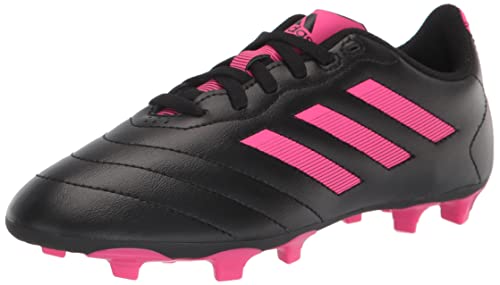
Listed at $34.90 at last check (only 1 left in stock at last check). This is adidas’s own child-specific Goletto build, not an adult Goletto in a small size. It uses a firm-ground stud pattern sized for youth play, which makes it a reasonable default for a young player training and playing matches on natural grass.
adidas Unisex-Kids Goletto IX Firm Ground/Multi Ground Soccer
Listed at $34.99 at last check (in stock at last check). The newer Goletto IX kids’ build adds a firm-ground/multi-ground stud pattern, which gives slightly more surface flexibility if your child’s team practices on both grass and a harder training pitch during the week.
Carter’s Unisex-Child Fica Sport Cleat
Listed at $32.14 at last check (in stock at last check). Carter’s is a children’s footwear brand first, not a soccer brand that also makes a kids’ line, and it shows in the fit: a wider, more forgiving toe box built for a toddler’s foot shape rather than a scaled-down performance last. This is the pick for a first pair on a very young player, not for a competitive youth league roster.
Sooneeya Kid’s Firm Ground Soccer Cleats (Turf-friendly)
Listed at $28.99 at last check (in stock at last check). This is the budget option on the list, built with a shorter, turf-friendly stud pattern that also holds up reasonably on hard-packed training fields. Construction quality at this price point is basic, so treat it as a practice or backup pair rather than a primary match cleat.
Growth room: how much is actually reasonable
A thumb’s width, roughly half an inch, of space between the longest toe and the front of the cleat is the standard growth-room target most youth coaches and fitters recommend. That’s usually about one size up from a snug fit, not two. Two full sizes of growth room lets the foot slide inside the boot during a sudden stop or direction change, which hurts ball control and increases the chance of blisters far more than it saves on replacement cost.
Kids’ feet also grow unevenly, sometimes half a size in a matter of months during a growth spurt. Checking fit every 8 to 10 weeks during an active season, rather than assuming a boot bought in August still fits correctly by November, catches this before it becomes a comfort or control problem.
- ✓Buy a cleat built on its own youth last, like the Goletto kids’ line
- ✓Leave about half an inch of toe room, roughly one size up from snug
- ✓Re-check fit every couple of months during an active growth period
- ✓Choose a toddler-specific brand for a very young first-time player
- ✕Assume an adult boot in a small numeric size fits like a real youth cleat
- ✕Buy two sizes up ‘to save money’; it hurts control and increases blister risk
- ✕Ignore stud length; adult-length studs put more ankle leverage on a lighter child
- ✕Keep using the same pair all season without rechecking fit after a growth spurt
💡 Pro tip: Press a thumb against the toe box with the boot laced normally, not loosened. If there’s more than a thumb’s width of empty space, that’s too much room for control, regardless of what the size label says.
Durability considerations specific to youth players
Kids go through cleats faster than adults for reasons that have nothing to do with product quality: rapid foot growth, less controlled movement that scuffs the upper and toe box harder, and, for younger players, less consistent care like drying boots out between sessions. Budget-tier options like the Sooneeya pair above make sense specifically because of this faster replacement cycle, not because durability doesn’t matter.
A synthetic upper, rather than genuine leather, is usually the more practical choice for younger players for the same reason: it dries faster, resists scuffing better, and costs less to replace on a shorter cycle. Leather uppers make more sense once a player is older, more consistent with foot size, and getting real performance benefit from the better touch a leather upper provides.
📊 Note: Lace bands like the Tactia Soccer Lace Bands, Youth ($9.99 at last check, in stock at last check) are a small, inexpensive fix for a real youth-specific problem: young players often don’t tie laces tightly or consistently enough, and a loose lace is both a trip hazard and a control problem during a match.
Common myths about kids’ cleats
Signs a pair no longer fits, before your child says anything
Younger players often won’t volunteer that a boot feels tight or is slipping, either because they don’t recognize it as the cleat’s fault or because they don’t want to miss out on wearing their favorite pair. Watch for a few physical signs instead: red pressure marks across the top of the foot after a session, a heel that visibly lifts out of the boot when walking, or toes that curl noticeably when the boot is laced snugly.
Any one of those on its own might be nothing. Two or more together, especially paired with a recent growth spurt or a new complaint about foot soreness after practice, is a reasonable trigger to remeasure rather than wait for the season to end.
Shopping for youth sizing online without a fitting
Buying kids’ cleats online means you lose the in-store chance to check fit before committing, so measure the foot directly rather than trust a remembered shoe size from a different brand. Have your child stand on a sheet of paper, trace the foot, and measure the longest point from heel to toe. Compare that measurement against the specific brand’s size chart, since a size 2 in one youth line can differ by close to half a size from a size 2 in another.
Check the return policy before ordering, too. Youth cleats, more than almost any other footwear category, get returned or exchanged once purely because a foot grew between ordering and delivery, and a flexible return window saves a second round of shipping costs when that happens.
Other cleat guides on this site
Bottom line
The best soccer cleats for kids come from a genuine youth last, not an adult boot offered in smaller sizes. The adidas Goletto kids’ models above are the safest defaults for an active youth player, Carter’s suits a very young first-timer better, and the Sooneeya pair is a reasonable budget backup for a player who’s still growing fast.
Whichever pair you land on, the two habits that matter most are the same regardless of price: measure the actual foot rather than guess from a past size, and recheck that measurement partway through the season instead of only at the start of it.
Frequently asked questions
Do kids need special soccer cleats, or will adult shoes sized down work?
Kids benefit from a genuine youth last, not an adult boot pattern in a smaller size. A child’s foot is proportionally wider and less arched, and adult-length studs put more ankle leverage on a lighter body, so a purpose-built kids’ cleat fits and performs more safely.
How much growth room should I leave when buying soccer cleats for kids?
About half an inch, roughly a thumb’s width between the longest toe and the front of the boot with laces tied normally. That’s usually one size up from a snug fit, not two.
How often should I check whether my child’s cleats still fit?
Every 8 to 10 weeks during an active season is a reasonable check-in, since youth feet can grow half a size or more during a single growth spurt without an obvious change in how the boot looks.
Are synthetic uppers or leather better for kids’ cleats?
Synthetic uppers are usually the more practical choice for younger players. They dry faster, resist scuffing better, and cost less to replace on the faster cycle kids typically go through cleats.
As an Amazon Associate, we earn from qualifying purchases through links on this page.