FG vs AG Soccer Cleats: Firm Ground vs Artificial Grass Traction, Stud Pressure, and Injury Prevention Guide

Modern soccer pitches have undergone a dramatic structural transformation over the past two decades. Where competitive soccer was once played almost exclusively on natural grass fields, the global expansion of third-generation (3G) and fourth-generation (4G) synthetic turf systems has rewritten the physical demands placed on soccer footwear. Millions of players step onto artificial grass every weekend wearing standard Firm Ground (FG) cleats, completely unaware of the mechanical friction, high joint torques, and catastrophic injury risks created beneath their feet.
Choosing the correct outsole configuration between dedicated Artificial Grass (AG) cleats and traditional Firm Ground (FG) boots is not simply an aesthetic preference or marketing gimmick. It is a fundamental biomechanical decision that dictates joint longevity, knee ligament protection, plantar pressure distribution, and shoe durability. This exhaustive technical breakdown examines the physical science of turf interaction, stud geometry mechanics, knee torque loads, warranty policies, and the best performance cleats available on the market.
Table of Contents
The Physical Anatomy of Synthetic Turf: From 1G Carpet to 4G Infill
To understand why outsole traction behaves so radically differently between grass and turf, you must examine the underlying structural layers of modern synthetic playing surfaces. First-generation (1G) AstroTurf from the 1970s consisted of short, dense nylon carpet fibers glued directly to solid asphalt or concrete sub-bases. It offered zero natural give, resulting in severe friction burns and catastrophic joint impacts.
Modern 3G and 4G pitches utilize tall polyethylene or polypropylene monofilament yarn blades measuring between 40mm and 65mm in pile height. These synthetic grass fibers are supported by a multi-layered infill matrix composed of silica sand (providing ballast and stabilizing the carpet backing) and cryogenic styrene-butadiene rubber (SBR) crumb or thermoplastic elastomer (TPE) granules. A shock-absorbing elastic underlayment pad sits beneath the backing fabric, resting on crushed aggregate stone beds.
Natural grass soil possesses natural shear displacement: when a player plants their foot and rotates forcefully, the topsoil layer shears and gives way, releasing excess rotational energy. Artificial turf backing does not shear. The woven geotextile backing is structurally anchored to prevent tearing. Consequently, any excess rotational friction generated between the soccer cleat and the synthetic fibers transfers directly upward through the player’s ankle, tibia, meniscus, and anterior cruciate ligament (ACL).
Stud Geometry Mechanics: Bladed FG vs. Hollow Conical AG
The foundational engineering difference between FG and AG soleplates lies in stud geometry, length, cross-sectional area, and spacing density:
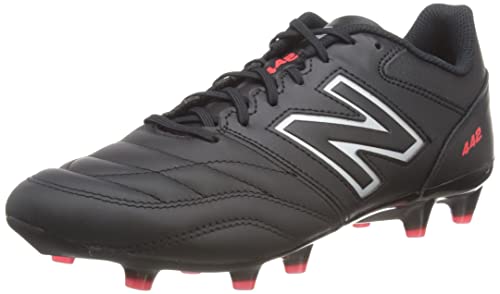
Firm Ground (FG) Stud Architecture: Standard FG soleplates are designed to penetrate firm, natural loam and clay soil. They feature between 10 and 13 relatively long studs (typically 12mm to 15mm in length). Modern FG cleats prioritize aggressive linear acceleration, employing chevron-shaped, triangular, or bladed studs with sharp leading edges. These blades knife into natural soil, locking the ground during forward sprints.
Artificial Grass (AG) Stud Architecture: Dedicated AG soleplates feature between 20 and 28 shorter studs (typically 8mm to 10mm in height). The studs are uniformly cylindrical or rounded conical shapes with hollowed centers (donut profile). This shorter length prevents the studs from bottoming out against the impenetrable carpet backing, while the round profile allows smooth, uninhibited 360-degree rotational pivoting.
When an AG stud penetrates the rubber crumb matrix, infill pellets enter the hollow cavity of the stud. This displacement mechanism cushions the foot strike while allowing the shoe to release cleanly from the synthetic turf without snagging on woven polypropylene carpet strands.
FG vs AG Soccer Cleats: Technical Specification & Safety Matrix
| Engineering Feature | Firm Ground (FG) Cleats | Artificial Grass (AG) Cleats | Multi-Ground (MG) Hybrid Cleats | Amazon Recommendation |
|---|---|---|---|---|
| Stud Geometry & Profile | Bladed, chevron, and elongated teardrop shapes (12mm to 15mm height) | Short, hollow cylindrical or conical studs (8mm to 10mm height) | Small rounded conical studs with varied heights (9mm to 11mm) | Check Nike AG-Pro Pricing |
| Total Stud Count | 10 to 13 studs distributed across soleplate | 20 to 28 dense studs with hollow centers | 14 to 18 molded low-profile studs | Check Adidas Predator AG Price |
| Rotational Traction Risk | Extremely high on artificial turf; prone to dangerous mechanical turf lock | Low and controlled; smooth 360-degree pivot without catching | Moderate; acceptable safety on both soil and turf | View Puma Future AG Deals |
| Stud Pressure Hotspots | High point pressure on synthetic turf; metatarsal fatigue common | Low point pressure; weight distributed evenly across dense hollow studs | Balanced pressure distribution across foot bed | Check Mizuno Neo IV AG Specs |
| Soleplate Thermal Resistance | Standard Pebax or TPU; susceptible to friction melting on hot turf | Reinforced heat-resistant nylon and secondary abrasive toe bumper | Standard dual-density polyurethane | View Reinforced Outsoles |
| Manufacturer Warranty | Strictly voided if worn on 3G or 4G artificial turf pitches | Fully covered under warranty for artificial turf surfaces | Covered on both natural grass and synthetic turf | Check Warranty Terms |
Rotational Traction vs. Linear Traction: The Biomechanics of Turf Lock
Sports biomechanists divide soccer shoe traction into two distinct functional categories: linear traction and rotational traction. Linear traction is the friction required to accelerate forward, brake, and backpedal without slipping. Rotational traction is the resistance encountered when the planted foot twists around its vertical axis during quick direction changes, cuts, and shooting follow-throughs.
High linear traction is beneficial for explosive sprinting. High rotational traction, however, is the primary mechanical trigger for non-contact lower-limb injuries. When a soccer player wears aggressive chevron or bladed FG cleats on synthetic turf, the sharp edges of the blades catch between the synthetic fiber weave and the packed rubber infill. This phenomenon is known clinically as “turf lock.”
During turf lock, the outsole remains rigidly anchored to the artificial grass while the player’s upper body, pelvis, and femur continue rotating into a cut. This generates extreme internal tibial rotation and knee valgus collapse. When torsional resistance exceeds the tensile limit of human connective tissue (approximately 40 to 60 Newton-meters of torque), the anterior cruciate ligament tears, frequently accompanied by medial collateral ligament (MCL) ruptures and lateral meniscus bucket-handle tears.
Clinical studies published in orthopedic sports medicine journals reveal that non-contact ACL injury rates are significantly higher among soccer and American football players wearing bladed or edge-oriented cleats on synthetic turf compared to players wearing circular, low-profile conical configurations. Dedicated AG soleplates drastically reduce peak rotational torque, ensuring the foot releases smoothly throughout dynamic cutting motions.
Plantar Stud Pressure Distribution and Metatarsal Stress Fractures
Beyond acute ligament tears, improper outsole selection on synthetic turf creates chronic overuse injuries through uneven plantar pressure distribution. Natural grass soil yields under downward load, allowing the cleat soleplate to sink and distribute body weight evenly across the entire surface of the foot.
Artificial grass is far less compliant. The hard shock pad and compacted sub-base resist stud penetration. When a player wearing an FG cleat with only 10 to 12 studs steps onto turf, the player’s entire body weight is concentrated onto tiny contact points beneath the heel and forefoot. This generates severe “stud pressure” hotspots.
Concentrated stud pressure repeatedly strikes the heads of the first and fifth metatarsal bones. Over the course of a 90-minute match, this repetitive localized micro-trauma causes deep bone bruising, severe plantar fasciitis flare-ups, and fifth metatarsal Jones fractures. By contrast, an AG soleplate with 24 to 28 distributed studs expands the contact footprint by over 200%, dispersing ground reaction forces across the plantar fascia and eliminating localized pressure hotspots.
Thermal Friction, Abrasive Wear, and Manufacturer Warranty Voiding
Artificial grass turf behaves like abrasive sandpaper on soccer cleats. Synthetic polyethylene fibers generate extreme kinetic friction when dragging against footwear uppers. On hot summer days, ambient sunlight heats black rubber crumb infill to temperatures exceeding 140°F to 160°F (60°C to 71°C).
This intense thermal environment poses significant structural problems for standard FG cleats:
Adhesive Delamination: Modern soccer cleats utilize polyurethane adhesives to bond the upper to the lightweight outsole plate. Intense heat radiating from rubber crumb softens these chemical adhesives, causing the toe box to separate from the soleplate after just a few weeks of competitive play.
Stud Snapping and Soleplate Cracking: Ultra-lightweight FG soleplates made of stiff Pebax or carbon-infused polymers are engineered for natural turf flex profiles. The rigid, unforgiving resistance of synthetic turf creates bending fatigue along the midfoot shank, snapping studs at their base or causing the soleplate to fracture cleanly across the forefoot flex groove.
The Warranty Trap: If you purchase an expensive pair of top-tier FG cleats and they delaminate or snap on synthetic turf, major manufacturers (including Nike, Adidas, and Puma) will reject your warranty replacement claim. Product tags and warranty documentation explicitly state that FG boots are engineered solely for natural grass pitches. Dedicated AG cleats feature reinforced thermal-resistant TPU compounds and protective abrasive rubber toe caps, backed by full manufacturer warranty coverage for synthetic play.
In-Depth Review: Top Artificial Grass (AG) Cleats for 2026
Choosing the right AG cleat requires balancing upper lockdown, touch responsiveness, soleplate flexibility, and stud geometry. Here are the five standout artificial grass soccer cleats leading the industry:
1. Nike Mercurial Vapor 15 / Superfly 9 AG-Pro: Nike’s AG-Pro configuration is widely regarded as the benchmark of artificial grass engineering. It features an integrated 3/4-length articulated Zoom Air unit embedded directly inside the soleplate, delivering responsive kinetic snap during sprints. The outsole utilizes an array of hollow conical studs that distribute pressure flawlessly across 3G/4G pitches. The lightweight Vaporposite+ upper offers barefoot ball feel, while a reinforced perimeter rim shields against synthetic fiber abrasion.
2. Adidas Predator Elite AG: For players demanding striking power and grip on artificial turf, the Predator Elite AG excels. Its Strikeskin rubber fins provide intense ball swerve on free kicks and passing strikes. The specialized AG soleplate features shorter, rounded studs with secondary stabilization ribs that prevent slippage on damp turf while maintaining low rotational resistance during quick pivots.
3. Puma Future 7 Match AG: Built on Puma’s adaptable Fuzionfit360 upper with PWRTAPE reinforcement, the Future 7 offers exceptional midfoot compression and lockdown. The low-profile AG soleplate utilizes circular studs with a flexible forefoot zone, making it exceptionally comfortable for players suffering from prior plantar fasciitis or Achilles stiffness.
4. Mizuno Morelia Neo IV Beta Japan AG: Handcrafted in Japan from premium Scotchguard-treated kangaroo leather, the Morelia Neo IV Beta AG is the undisputed king of comfort and build quality. Its AG soleplate is specifically molded with rounded conical studs that glide over dense artificial turf without catching, while the supple leather molds naturally to the foot contours, eliminating friction blisters.
5. Adidas Copa Pure 2 Pro FG/AG: Designed as a versatile hybrid for players who split time between soft natural grass and well-maintained 3G turf, the Copa Pure 2 utilizes a balanced stud configuration. The rounded studs avoid aggressive blade catches while offering plush quilted leather comfort for central midfielders and defenders.
What About Multi-Ground (MG) Cleats? The Compromise Solution
In recent seasons, brands have expanded their catalog of Multi-Ground (MG) cleats, specifically targeting amateur and youth players who cannot afford two pairs of specialized boots. MG outsoles utilize a hybrid compromise: they incorporate more studs than a pure FG boot (typically 14 to 18 studs), and the studs are slightly shorter with rounded or oval profiles.
For youth players whose bodies are still growing, MG cleats represent a sensible, cost-effective investment. They provide adequate grip on natural grass without generating dangerous levels of rotational torque on artificial turf. However, for competitive adult players performing high-intensity cutting maneuvers at full sprint, dedicated AG boots remain the gold standard for ligament safety and pressure dispersion.
Turf Shoes (TF) vs. AG Cleats: When to Choose Low-Profile Rubber Nubs
Another common point of confusion is the distinction between Artificial Grass (AG) cleats and Turf (TF) shoes. While both are built for synthetic surfaces, they are engineered for distinctly different pitch generations:
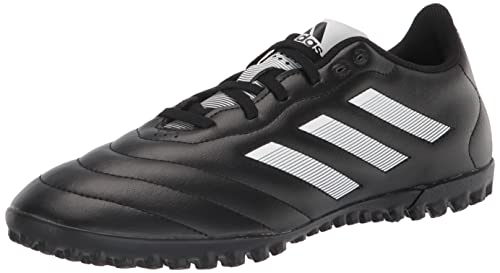
Turf Shoes (TF): Feature a solid rubber outsole packed with dozens of tiny, low-profile rubber nubs (measuring just 3mm to 5mm) and a full-length EVA foam midsole. TF shoes are engineered for thin, carpet-style 1G/2G AstroTurf, heavily compacted indoor synthetic pitches, or indoor soccer arenas. On modern long-pile 3G/4G turf, TF shoes can lack sufficient linear grip in wet conditions.
AG Cleats: Feature molded plastic or nylon studs (8mm to 10mm) designed to penetrate deep rubber crumb infill on modern 3G/4G pitches. AG cleats should never be worn on thin 1G carpet AstroTurf, as the plastic studs cannot penetrate the thin carpet, causing the foot to balance precariously on plastic pillars.
Step-by-Step Guide: Transitioning to AG Cleats for Maximum Joint Longevity
If you have been playing in FG cleats on artificial grass and decide to switch to dedicated AG footwear, follow these practical steps to optimize your transition and protect your joints:
Step 1: Inspect Your Home Pitch Generation: Examine the synthetic field where you train most frequently. Look at the blade length and infill depth. If the synthetic grass fibers are over 1.5 inches long and packed with black rubber crumb, you are playing on 3G or 4G turf where AG cleats deliver optimal traction. If the carpet is short, worn flat, and filled with sand, a TF shoe with a cushioned EVA midsole is safer.
Step 2: Check Soleplate Stud Flexibility: When selecting AG boots, inspect the bottom plate. The forefoot should flex naturally under your toes without resisting, while the midfoot and heel must remain torsionally stiff. Avoid AG soleplates that feel completely rigid from heel to toe, as they restrict natural plantar flexion.
Step 3: Pair with Anti-Slip Grip Socks: Artificial grass causes significant in-shoe shearing due to rapid deceleration forces. Replace standard team soccer socks with premium textured grip socks. The silicone grip pads on the heel and sole lock your foot inside the cleat, eliminating blister-causing friction and toe jamming.
Step 4: Clean Infill Residue After Every Match: Synthetic rubber crumb carries dust and micro-abrasives that lodge inside the hollow studs and lace eyelets. Tap your cleats upside down after every session and rinse the soleplates under cold water to prevent abrasive buildup from degrading adhesives.