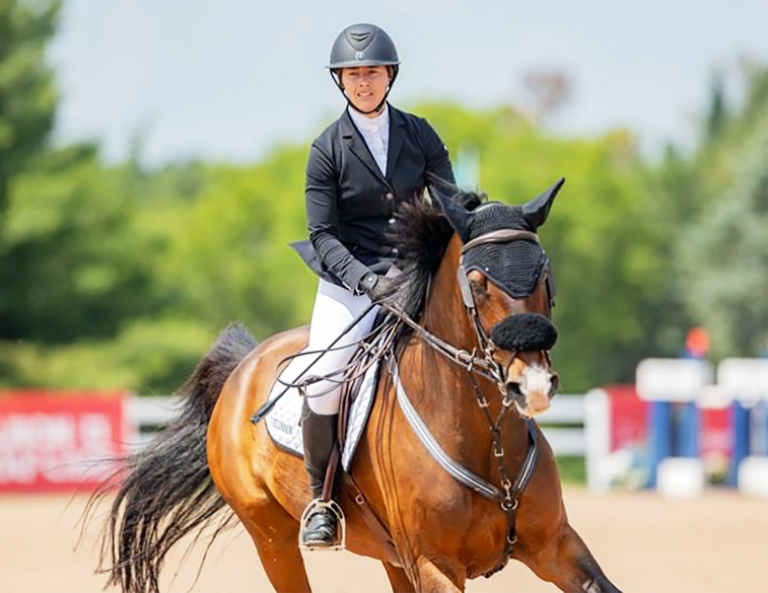
How to Post the Trot in Rhythm With Your Horse


Learning how to post the trot comes down to timing, not strength: rise as the horse’s motion lifts you, land softly, and check your diagonal against the outside shoulder. Here’s the rhythm broken into steps you can actually feel and correct in the saddle.
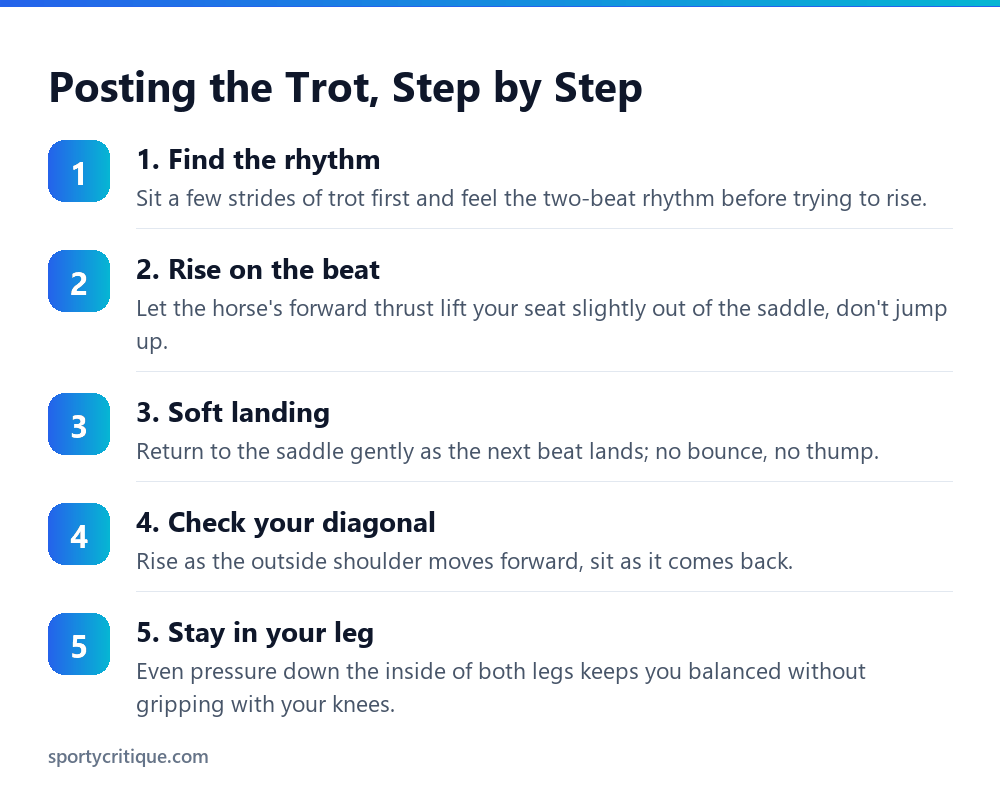
Posting the trot means rising and sitting in rhythm with your horse’s two-beat trot instead of absorbing every stride in the saddle. Let the horse’s own forward motion lift your seat slightly out of the tack, then return softly as the next beat lands, using even pressure down both legs rather than gripping with your knees for balance. Getting the diagonal right, rising as the outside shoulder moves forward, keeps you balanced through turns and is what most instructors mean by “correct diagonal.”
The trot is the gait that trips up more new riders than any other, not because it’s fast, but because its two-beat rhythm creates a bounce that’s uncomfortable for both horse and rider if you just sit through it at anything faster than a slow jog trot. Posting solves that by syncing your body to the horse’s motion instead of fighting it. It looks simple from the rail, and it takes most riders a handful of lessons to actually feel, not because the timing is complicated but because your body has to learn a rhythm it can’t fully think its way through.
- →Posting means rising and sitting in rhythm with the trot’s two-beat stride, not jumping up
- →Let the horse’s forward thrust lift you; don’t push up out of the stirrups with your legs
- →The correct diagonal means rising as the horse’s outside shoulder moves forward
- →Even pressure down the inside of both legs, not knee-gripping, is what actually holds your position
- →Dropping your stirrups occasionally is one of the fastest ways to feel the rhythm without overthinking it
Table of Contents
Feel the rhythm before you try to rise
Before attempting to post, sit a few strides of trot and simply feel the two-beat rhythm moving through your seat and lower back. Trying to time a rise before you can feel the beat is like trying to clap along to a song you haven’t heard yet. Most instructors will have a new rider sit the trot first, even briefly and uncomfortably, specifically so the rhythm registers before adding the rising motion on top of it.
This is also where a lot of tension creeps in. New riders often brace against the bounce instead of absorbing it, which stiffens the lower back and actually makes the sitting trot feel worse than it needs to. A relaxed, slightly following lower back absorbs more of the motion than a rigid one, and that relaxation carries directly into a smoother post once you add the rising motion.
The rise: let the horse do the lifting
The common mistake is trying to actively push yourself up out of the saddle using your leg muscles, which turns posting into an exhausting workout and usually looks stiff and mechanical. Instead, let the horse’s own forward thrust lift your seat slightly out of the saddle as the stride comes forward. Your legs guide and support the motion rather than generating it from scratch. Think of it less as standing up and more as allowing yourself to be carried forward and slightly up.
The rise itself should be small, just an inch or two of clearance between your seat and the saddle, not a full stand in the stirrups. Rising too high looks exaggerated, throws off your balance, and actually makes the landing harder to control since you’re dropping from further away. A subtle rise that barely clears the saddle is both more correct and, once it clicks, noticeably less tiring.
The sit: soft, not a thump
⚠️ Watch out: Returning to the saddle with a thump on every stride is uncomfortable for you and for your horse’s back, and it’s usually a sign you’re either rising too high or landing with stiff, braced legs instead of absorbing the motion. Aim for a landing so soft that, from the ground, an observer would struggle to hear you sit back down.
A soft landing comes from staying relaxed through your hips and lower back on the way down, letting your body ease back into the saddle in time with the next beat rather than dropping onto it. If your seat is landing hard no matter what you try, check whether your stirrups are the right length; stirrups that are too long force you to reach for them and land with more impact than stirrups adjusted to your actual leg length.
Posting diagonals, explained simply
The common phrase riders learn is “rise and fall with the leg on the wall”: you rise as the horse’s outside front leg, the one closer to the rail if you’re riding in an arena, moves forward, and sit as that same leg comes back. This is called riding on the correct diagonal, and it matters more than beginners tend to expect. Riding on the correct diagonal keeps your weight better balanced through turns and is specifically why it’s taught as a standard, not just a style preference.
To check your diagonal without looking down constantly, glance briefly at the horse’s outside shoulder: if it moves forward exactly as you rise, you’re correct. If you’re consistently a beat off, sit for one extra stride to reset, then resume posting on the corrected beat rather than trying to awkwardly catch the rhythm mid-motion.
Leg position: even pressure, not a knee grip
Balance in the post comes from even pressure running down the inside of your entire leg, from thigh to calf, not from clamping your knees against the saddle. Knee-gripping tends to pop your lower leg backward and off the horse’s side, which actually makes you less stable, not more, since your base of support narrows to just the knee instead of the full length of the leg.
💡 Pro tip: Drop your stirrups for a lap or two at the walk, then trot briefly without them if you’re experienced enough to do so safely, holding the pommel if needed. Feeling the horse’s rhythm through your seat alone, without the stirrups to push against, is one of the fastest ways to internalize the timing rather than counting beats in your head.
Comfortable, well-fitted lower-leg gear helps here too, since anything that shifts or pinches distracts from feeling the rhythm through your leg. A pair of Dublin Easy-Care Half Chaps keeps your lower leg snug against the saddle flap without the bulk of a full tall boot, which a lot of riders find easier to feel the horse’s sides through while they’re still learning to post.
Common problems and quick fixes
- ✓Let the horse’s forward motion lift your seat, guiding rather than forcing the rise
- ✓Keep your rise small, just clearing the saddle
- ✓Check your diagonal by glancing at the outside shoulder, not by feel alone at first
- ✓Relax your lower back to absorb motion instead of bracing against it
- ✕Actively push yourself up with your leg muscles on every stride
- ✕Rise high out of the saddle like standing in the stirrups
- ✕Grip with your knees to try to stay balanced
- ✕Stiffen your back and brace against the horse’s motion
How long it actually takes to click
Most riders get the basic motion within a handful of lessons, but truly relaxed, effortless posting, the kind that doesn’t require conscious counting, usually takes longer, often several months of regular riding. That timeline is normal and doesn’t mean you’re behind. The biggest jump in feel usually comes not from more instruction but from more saddle time at the trot specifically, since this is a motor skill your body has to learn through repetition more than through understanding the mechanics intellectually.
Stirrup length changes everything
Stirrups set too long force you to reach down for them, which pulls your lower leg back and makes it harder to rise cleanly off your seat. Stirrups set too short push your knees up too high and shorten the base you’re balancing on. A rough starting point for posting is a stirrup length where your ankle, knee, and hip roughly line up when your leg hangs relaxed with the ball of your foot on the tread. From there, most riders find posting easier with stirrups a hole or two shorter than their flatwork length, since a slightly shorter stirrup gives a bit more leverage for the rise without sacrificing security.
If you’ve checked your rhythm, your diagonal, and your leg position and posting still feels like a fight, stirrup length is worth checking before anything else. It’s an easy adjustment that gets overlooked because riders assume a technique problem when the actual issue is equipment setup.
Posting trot versus sitting trot: when each is used
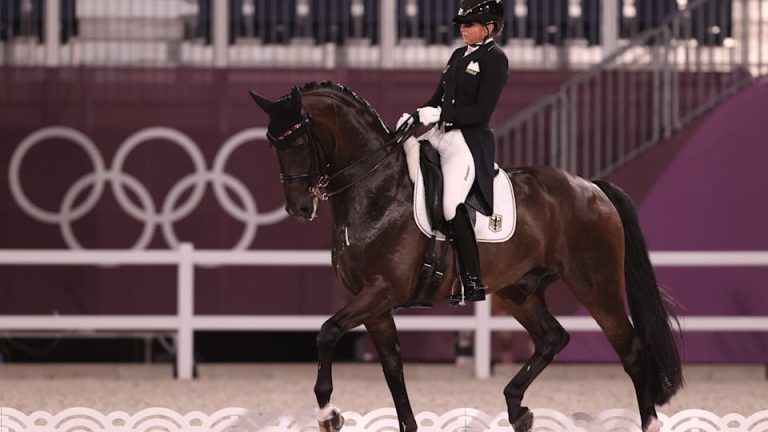
Posting is the default for English riding at anything faster than a slow jog, both because it’s more comfortable for the rider and because it’s easier on the horse’s back over distance. Sitting trot is used deliberately in dressage tests and specific training exercises where the rider needs a deeper, more continuous seat connection, and it demands considerably more core control and a more developed independent seat than posting does. Western riders typically ride a jog, a slower, more collected trot, sitting through it rather than posting, though posting is still used in western pleasure and speed events at a working trot.
New riders sometimes assume sitting trot is the “proper” or more advanced way to ride and feel like posting is a beginner’s shortcut. It isn’t. Posting is standard practice at working and extended trot across most English disciplines specifically because it’s better for the horse, not because it’s easier for the rider. Sitting trot for extended periods is the specialized skill, not the other way around.
Bottom line
Posting the trot is a rhythm skill before it’s a strength or technique skill. Feel the beat sitting first, let the horse’s motion lift you rather than muscling the rise, land softly, and check your diagonal against the outside shoulder until it becomes automatic. The bounce that makes the trot uncomfortable for new riders disappears once your body, not just your understanding, catches up to the rhythm.
What does posting the trot mean?
Posting means rising and sitting in rhythm with the horse’s two-beat trot stride instead of sitting through every stride. You let the horse’s own forward motion lift your seat slightly out of the saddle, then return softly as the next beat lands.
How do I know if I’m on the correct diagonal?
Rise as the horse’s outside front shoulder moves forward, and sit as it comes back. You can check this by glancing briefly at the outside shoulder while posting; if it moves forward exactly as you rise, you’re correct.
Why does my trot feel so bouncy?
A bouncy feel usually means you’re either sitting the trot without posting at a pace that needs it, rising too high and landing hard, or bracing your lower back instead of relaxing into the motion. Check your rise height and how softly you’re landing first.
How long does it take to learn to post the trot?
Most riders learn the basic motion within a handful of lessons, but relaxed, automatic posting without conscious counting usually takes several months of regular riding to fully develop, since it’s primarily a motor skill built through repetition.
As an Amazon Associate, we earn from qualifying purchases through links on this page.