How to Trail Ride Safely as a Beginner

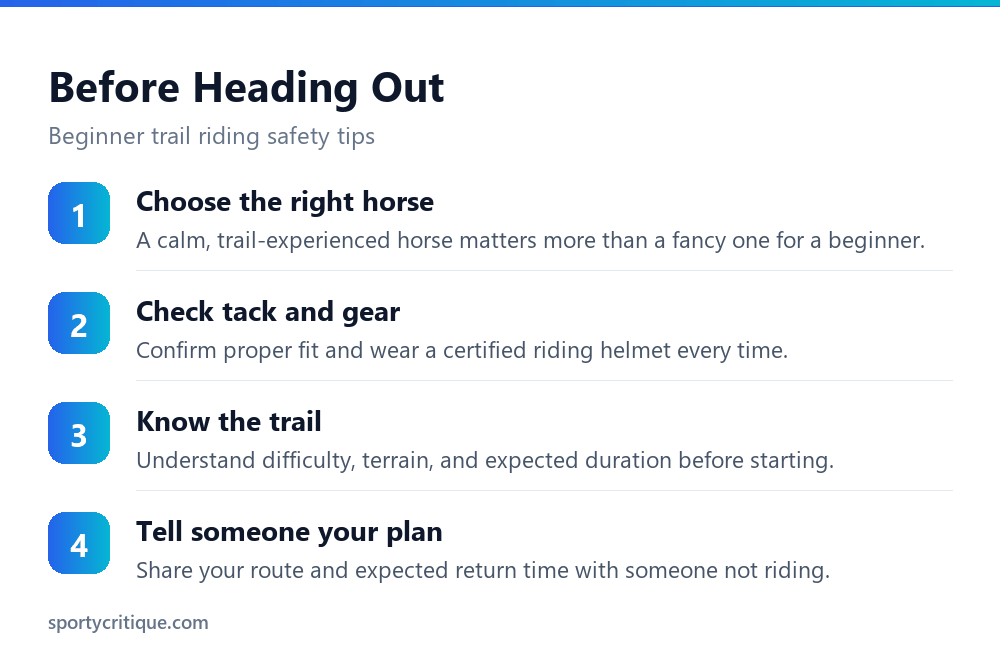
The most important beginner trail riding safety tips start before ever mounting up: choosing a calm, trail-experienced horse rather than a flashy or green one, confirming tack fits properly and wearing a certified riding helmet every time, understanding the specific trail’s difficulty and terrain in advance, and telling someone not riding what route is planned and when to expect a return. On the trail itself, maintaining safe spacing from other riders, staying alert to terrain and wildlife, and riding within one’s actual skill level rather than a group’s pace prevent the large majority of beginner trail riding accidents.
Trail riding introduces variables that an arena or ring simply doesn’t have, uneven terrain, wildlife, changing weather, and being farther from immediate help if something goes wrong. These added variables don’t mean trail riding is inherently dangerous for a beginner, but they do mean specific preparation and habits matter more here than for controlled arena riding.
- →A calm, trail-experienced horse matters more for beginner safety than a horse’s appearance or breeding
- →A certified riding helmet should be worn on every ride, not just for more challenging trails
- →Understanding a trail’s difficulty and terrain before starting avoids unpleasant surprises mid-ride
- →Telling someone your route and expected return time is a simple, critical safety habit
- →Riding within your own skill level, not a group’s pace, matters more than keeping up appearances
Table of Contents
Choosing the Right Horse for Trail Riding
A calm, experienced trail horse that’s accustomed to varied terrain, unexpected sounds, and wildlife encounters is a far safer choice for a beginner than an inexperienced or particularly high-energy horse, regardless of how well that horse might perform in a controlled arena setting.
⚠️ Watch out: A common beginner mistake is choosing a horse based on appearance or reputation rather than temperament and trail experience specifically. A horse that’s wonderful in an arena can react very differently to a sudden noise, a loose dog, or uneven footing out on an actual trail.
Riding a specific horse in a controlled setting before committing to a trail ride with that same horse, when this option is available through a lesson barn or rental stable, gives a beginner a chance to build some familiarity and confidence before facing a trail’s added unpredictability.
Gear and Helmet Requirements
A certified equestrian riding helmet, properly fitted and fastened, should be worn on every trail ride regardless of how easy or short the trail appears, since a fall can happen unpredictably even on seemingly simple terrain, and head injury risk doesn’t scale down just because a trail looks less challenging.
Sturdy boots with a defined heel, rather than sneakers or sandals, prevent a foot from sliding through the stirrup in a way that could trap a rider during a fall, a specific and serious risk that appropriate footwear directly addresses. Checking that all tack fits correctly before starting a ride, not just assuming a saddle or bridle from a rental fits acceptably, matters as much on the trail as in any other riding context.
Knowing the Trail Before You Start
Understanding a specific trail’s difficulty rating, terrain type, and typical duration before starting helps a beginner and their guide set realistic expectations and avoid a route that exceeds either the rider’s or the horse’s comfortable capability partway through, when turning back may not be a simple or quick option.
Checking recent trail conditions specifically, since weather, recent maintenance work, or seasonal changes can affect footing and obstacles meaningfully compared to how a trail is typically described in general guides or older reviews, avoids being caught off guard by conditions that don’t match outdated expectations.
💡 Pro tip: Starting with shorter, well-established, and clearly marked trails before attempting longer or more remote routes lets a beginner build trail-specific experience and confidence gradually, similar to how skill progression works in any other new activity.
Telling Someone Your Plan
Sharing a planned route and expected return time with someone not participating in the ride is a simple habit that costs nothing but provides a critical safety net if an injury, a lost rider, or an unexpected delay occurs somewhere along a remote trail without cell service or nearby help.
📊 Note: This habit matters even for guided trail rides through a commercial stable, since group rides can occasionally have a rider or horse fall behind or experience a problem that isn’t immediately noticed by the rest of the group, particularly on a longer or more spread-out ride.
Core Safety Habits
- ✓Choose a calm, trail-experienced horse over a flashier or less experienced one
- ✓Wear a certified riding helmet on every single ride, regardless of trail difficulty
- ✓Research a specific trail’s current conditions before starting out
- ✓Tell someone not riding your planned route and expected return time
- ✕Choosing a horse based on appearance rather than temperament and trail experience
- ✕Skipping a helmet because a trail looks easy or the ride feels casual
- ✕Assuming outdated trail descriptions still accurately reflect current conditions
- ✕Heading out on a trail without telling anyone your plan or expected timing
Reading Terrain as You Ride
Watching the trail ahead for changes in footing, loose rocks, roots, mud, or sudden elevation changes, rather than only looking down at the immediate ground beneath the horse, gives both rider and horse more time to adjust pace and positioning before an unexpected obstacle becomes a sudden problem.
Slowing to a walk through genuinely uncertain or technical terrain, rather than maintaining a faster gait purely to keep pace with a group, prioritizes safety over social pressure, and an experienced trail group should understand and respect a beginner making this choice rather than pressuring them to match a pace beyond their comfort level.
Wildlife and Unexpected Trail Encounters
Sudden wildlife encounters, a deer bolting from cover or a bird flushing unexpectedly nearby, are common triggers for a horse’s startle reflex, and staying relaxed and maintaining a secure, balanced seat during these moments helps a rider stay in control rather than compounding the horse’s reaction with their own sudden tension or a jerked rein.
Learning basic guidance from an instructor or experienced trail leader about how to respond if a horse does spook or bolt, rather than facing this situation for the first time with no prior preparation, gives a beginner at least some baseline response plan rather than pure improvisation in a genuinely startling moment.
Group Riding Etiquette and Spacing
Maintaining a safe following distance from the horse ahead, typically at least one horse length, prevents a kick or sudden stop from causing a collision, and this spacing matters even more on narrow or technical trail sections where quick evasive movement is harder for both horse and rider.
Communicating clearly with the group about pace changes, obstacles, or a need to stop, rather than assuming everyone automatically notices a change happening somewhere in the group, keeps the whole ride coordinated and reduces the chance of a rider being caught off guard by an unannounced change in speed or direction ahead of them.
Weather and Its Effect on Trail Safety
Checking weather forecasts before heading out, and understanding how quickly conditions can change in a specific riding area, helps a beginner avoid starting a ride that ends up caught in sudden rain, extreme heat, or an approaching storm that could have been reasonably anticipated with a quick check beforehand.
Heat specifically deserves attention for both horse and rider, since a horse working in high temperatures needs adequate water access and rest breaks, and a rider who becomes dehydrated or overheated makes worse decisions and reacts more slowly than one who’s properly hydrated and paced appropriately for the conditions.
What to Carry on a Trail Ride
A basic set of essentials, water, a phone with a charged battery and, where possible, a backup power source, a small first-aid kit, and any personal medication a rider might need, covers the most likely scenarios where a ride runs longer than expected or a minor injury needs immediate attention before reaching more complete help.
For longer or more remote trail rides specifically, a map of the area or a downloaded offline trail map, given that cell service can be unreliable in exactly the kind of remote areas where trail riding often happens, provides a backup navigation option if a planned route becomes confusing or a rider needs to find the fastest way back unexpectedly.
Physical Readiness Before a Trail Ride
Basic physical conditioning, core and leg strength specifically, supports the balance and endurance a longer trail ride demands more than a short arena lesson typically requires, and a beginner planning an extended trail ride benefits from building toward that physical demand gradually rather than assuming general fitness automatically translates to trail-specific riding stamina.
Starting with shorter rides and gradually building toward longer trail outings, similar to how any new physical activity benefits from progressive buildup rather than an immediate jump to maximum duration, reduces both injury risk and the kind of fatigue-related lapses in attention that become more dangerous the longer and more physically demanding a ride becomes.
The Value of Instruction Before Trail Riding
A beginner with at least some formal riding instruction, even a handful of lessons focused on basic control, balance, and emergency stopping technique, enters trail riding with a meaningfully stronger safety foundation than someone attempting trail riding as their very first exposure to horses entirely.
Many reputable trail riding operations specifically assess a rider’s basic skill level before matching them with an appropriate horse and route, but a beginner arranging a more independent trail ride, through a friend’s horse or a less structured setting, benefits from seeking at least some basic instruction beforehand rather than skipping this step entirely to save time or cost.
Frequently Asked Questions
What’s the most important safety factor for a beginner trail rider?
Choosing a calm, trail-experienced horse matched to the rider’s skill level, since horse temperament affects safety more directly than almost any other single factor for a beginner.
Do I need a helmet even on an easy, short trail?
Yes. A fall can happen unpredictably regardless of how easy a trail appears, and head injury risk doesn’t decrease just because the terrain looks simple.
Should I tell someone before going on a guided trail ride?
It’s still a good habit, even for guided rides through a commercial stable, since a rider or horse can occasionally fall behind or have a problem that isn’t immediately noticed by the rest of the group.
What should I do if my horse spooks on the trail?
Stay relaxed and maintain a secure, balanced seat rather than compounding the reaction with sudden tension or a jerked rein. Learning basic guidance from an instructor beforehand helps prepare for this situation.
How much space should I keep from the horse ahead of me?
Typically at least one horse length, more on narrow or technical trail sections where quick evasive movement is harder for both horse and rider.
Is it okay to slow down if the group is moving faster than I’m comfortable with?
Yes, absolutely. Prioritizing your own safety and comfort level over matching a group’s pace is the right choice, and an experienced group should understand and respect that decision.
None of these habits require advanced riding skill to follow; they require preparation, honest self-assessment of comfort level, and a willingness to prioritize safety over pace or appearances. A beginner who takes these basics seriously enjoys trail riding with far less overall risk than one who treats careful preparation as an optional extra rather than a core part of the activity itself.
As an Amazon Associate, we earn from qualifying purchases through links on this page.