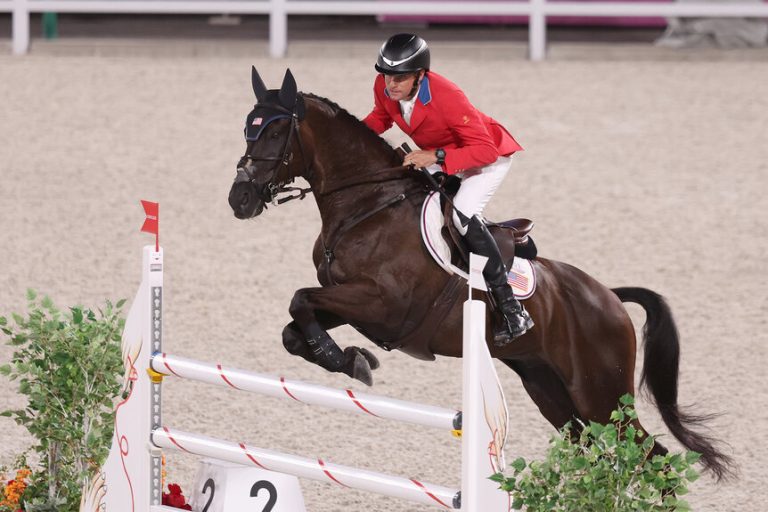
How Do Equestrian Horses Get to the Olympics?



How do equestrian horses get to the Olympics? In short: months of qualifying competition, a formal health and documentation process built around the horse’s FEI passport, and finally a short but carefully managed trip that combines road transport with a cargo flight in a padded individual stall. No single step is exotic on its own. What makes it complex is that all of it, sport, veterinary medicine, and logistics, has to line up for a single animal that cannot be rescheduled the way a shipment of cargo can.
Every four years, a small number of horses end up on television jumping fences or performing dressage tests at the Olympics, and the question that actually gets asked online is rarely about the sport itself. It’s about the trip: how does an animal that weighs half a ton and cannot be reasoned with end up on a different continent, ready to compete, without the process breaking the horse? This page is the overview. It covers the whole path from qualification to competition in general terms, with two deeper guides linked below for readers who want the flight mechanics or the paperwork and quarantine timeline in more detail.
- →Qualification happens first, through national results and FEI-sanctioned international events, long before travel is even booked
- →Every competing horse needs a valid FEI passport and a veterinary health certificate before it can leave the country
- →Many routes involve a pre-export quarantine period of several days, with blood and swab testing for specific diseases
- →The flight itself uses a cargo aircraft fitted with individual padded stalls, not a converted passenger cabin
- →After landing, horses go through customs and veterinary inspection again, then get days to recover before competing
Table of Contents
Step one: earning the trip in the first place
No horse is entered into Olympic equestrian sport by invitation. The horse and rider have to earn the spot together as a combination, through a mix of national competition results and performances at events sanctioned by the FEI, the sport’s international governing body. Each discipline (dressage, show jumping, and eventing) sets its own Minimum Eligibility Requirement, a set of scores or results a combination has to post at recognized events before they’re even eligible to be considered. National federations then select from among their qualified riders to fill the country’s allotted team and individual spots.
This part of the process can take a year or more and has nothing to do with transport logistics. It matters here because it sets the calendar for everything that follows: a horse’s flight and quarantine schedule can’t be booked until qualification is essentially settled, which is why the travel and paperwork window tends to compress into the final weeks before the Games.
Step two: the paperwork that has to exist before anyone books a flight
Every horse that competes internationally has to carry a valid FEI passport or an FEI-recognized national equivalent. The passport records the horse’s physical description, ownership, and vaccination history, and it’s checked at multiple points: by the national federation before entry, by veterinary and customs authorities at departure, and again on arrival in the host country. Alongside the passport, a treating veterinarian issues a health certificate closer to the travel date confirming the horse is fit to fly and free of signs of infectious disease.
Step three: getting the horse from the stable to the plane
Before a horse ever sees an airport, it usually travels by road in a purpose-built horsebox with air suspension and non-slip flooring, designed to keep the ride smooth over ordinary road conditions. At the airport, horses are loaded into individual padded stalls, sized to roughly a single horse’s width so it can brace against gentle motion without much room to move around and injure itself, and those stalls are raised into a cargo aircraft using a hydraulic lift rather than a passenger boarding ramp.

A groom and a veterinarian typically travel in the same cargo hold, checking on the horses throughout the flight and making sure feed and water are available. Flight length depends entirely on where a horse is coming from and where the Games are being held, and it’s not unusual for a trip to include more than one leg. That’s a big enough topic on its own that it gets its own page rather than a paragraph here.
Step four: landing doesn’t mean the horse is ready to compete
Arrival triggers another round of veterinary and customs inspection, checking the horse’s documents against the animal in front of them and confirming nothing changed in transit. After clearing that, horses generally get a recovery window measured in days, not hours, before their first competition. That time lets a horse rehydrate, settle into an unfamiliar barn environment, and adjust to a new time zone and climate, all of which affect performance more than most spectators realize.
⚠️ Watch out: None of this is optional paperwork for the sake of bureaucracy. Cross-border horse movement is one of the more realistic pathways for spreading equine diseases like equine influenza, which is why the health certificate, passport check, and quarantine steps exist at every major international event, not just the Olympics.
Why the whole system is built this way
It’s worth stepping back and asking why this is so involved compared to, say, shipping equipment or even other Olympic athletes. The short answer is that a horse is a living animal crossing international borders, subject to the same categories of animal health law that govern any livestock or companion animal moving between countries, layered on top of the FEI’s own sport rules. Airlines, national federations, and veterinary authorities have refined this process over decades of major championships, and the version used for the Olympics is close to what’s used for World Championships and other top-level FEI events, not a one-off system built solely for one competition every four years.
What happens if a horse can’t travel as planned
National federations often nominate a traveling reserve horse and rider combination alongside the confirmed team. If a selected horse is injured, falls ill, or fails a veterinary inspection at any point before competition, including the routine horse inspections held on-site before the Games begin, the reserve combination can be substituted in under FEI rules. This is one reason team selection announcements sometimes name more combinations than there are actual competition slots, and it’s a direct result of how much can happen to a horse’s condition between final qualification and the first day of competition.
Who actually pays for all of this
The costs of qualifying, health certification, quarantine, and international transport are generally covered by a mix of the horse’s owner, the rider’s sponsors, and the national equestrian federation, depending on the country and the specific horse’s ownership structure. Top-level Olympic horses are frequently owned or part-owned by syndicates rather than a single individual, partly because the combined cost of buying, training, and campaigning a horse at this level over several years is substantial even before travel enters the picture. Exact figures vary too widely by horse, country, and year to state a single number, and federations don’t typically publish a line-item breakdown per horse.
Do all three equestrian disciplines travel the same way
Dressage, show jumping, and eventing horses go through essentially the same documentation, quarantine, and transport pipeline described above. The FEI passport, health certificate, and customs process don’t change based on discipline. What can differ slightly is timing: eventing horses compete across three phases (dressage, cross-country, and show jumping) on a tighter schedule, which can affect how much recovery buffer a federation tries to build in after a long flight, but the underlying transport mechanics are the same regardless of what the horse does once it’s on the ground.
The trot-up: one last check before anyone competes
Even after a horse clears customs, settles into its temporary stable, and gets its recovery days, there’s one more formal checkpoint: the horse inspection, commonly called the trot-up. An FEI veterinary panel and ground jury watch each horse trot in hand on a hard surface, checking for any sign of lameness or unsoundness. A horse that doesn’t pass can be held for a re-inspection later, or in some cases withdrawn from competition entirely, which is exactly the situation a traveling reserve horse exists to cover. It’s a public event at most major championships, and it’s the clearest single moment where the entire travel and health process either gets validated or exposes a problem before it becomes one during actual competition.
The journey at a glance
💡 Pro tip: If you’re trying to understand one specific part of this in depth, rather than the whole overview, the two linked guides above go much further into the flight mechanics and the pre-travel paperwork and quarantine timeline respectively.
Frequently asked questions
How long does the whole process take, from qualifying to competing?
It varies by horse and country, but qualification alone typically spans a year or more of competition. The travel-specific portion, documentation, quarantine where required, and the trip itself, usually compresses into the final weeks before the Games, followed by a recovery window of several days before the horse competes.
Do all Olympic horses fly, or do some travel by road only?
It depends entirely on distance. Horses coming from within the host continent may travel entirely by road in a specialized horsebox. Horses crossing oceans travel by cargo aircraft for the long-haul portion of the trip, with ground transport on either end.
Is the FEI passport the same as a regular horse passport?
Not always. Many horses already hold a national passport for domestic competition. To compete under FEI rules internationally, including at the Olympics, a horse needs either an FEI passport or an FEI-recognized national passport with a valid FEI recognition card.
Why can’t horses just fly like regular cargo?
They’re transported in a cargo aircraft, but not as ordinary freight. Individual padded stalls, an onboard groom and veterinarian, and feed and water access throughout the flight are standard for equine air transport, reflecting welfare and safety requirements specific to live animals.
What is a traveling reserve horse?
It’s a fully qualified backup horse and rider combination that travels to the Games alongside the confirmed team but doesn’t compete unless a selected horse is withdrawn, whether from injury, illness, or failing the pre-competition veterinary inspection. Not every federation sends one, but it’s a standard risk-management step for teams that can afford it.