Best Pool Tables for Home Use: 7ft vs 8ft vs 9ft Compared

Picking the best pool table for home use is really a room-measuring exercise wearing a shopping decision’s clothes. Get the size wrong and you end up with a table you can’t take a full stroke around, or one that looks lost in a big basement. Here’s what actually changes between 7-foot, 8-foot, and 9-foot tables, what room each one needs, and which currently-available tables are worth your money at each size.
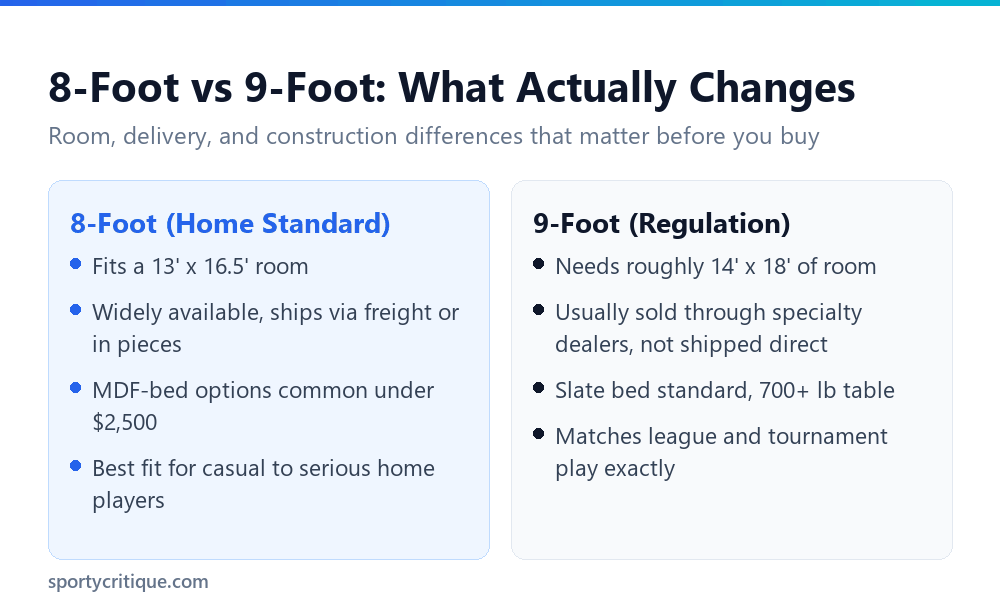
For most houses, an 8-foot table is the right call. It plays a real game, fits through a standard doorway in pieces, and needs a room around 13 by 16.5 feet once you account for cue swing. A 7-foot table is the better pick for a small den, apartment, or finished basement with a low ceiling. A 9-foot table is regulation size used in tournaments, but it needs close to 14 by 18 feet of clear room, and almost none of the ready-to-ship tables sold on Amazon are actually built to that size or bed material.
- →8-foot is the real standard for home use: full-size play in a room most houses can fit
- →7-foot (bar-box) tables suit apartments, condos, and smaller rooms without cramping the game
- →9-foot regulation tables need roughly 14×18 feet of clear space and are rarely sold as ready-to-ship Amazon items
- →Most affordable home tables use an MDF or particle-board bed, not slate; that’s fine for casual play but changes long-term roll consistency
- →Add at least 5 feet of clearance from every rail so a standard 58-inch cue has room for a full backswing
Table of Contents
Why the size question comes before the brand question
Every pool table buying guide eventually gets to brand and price, but neither matters if the table doesn’t fit the room. A table that’s too big for the space forces players to bank the cue off a wall or a couch on half their shots, which ruins the game regardless of how nice the felt is. Measure the room first, then shop within the size that measurement allows.
The rule of thumb that most dealers use is simple: take the table’s overall footprint and add roughly 5 feet of clearance on every side. That extra space isn’t padding, it’s what a standard 58-inch cue actually needs for a full stroke without clipping a wall, a doorframe, or a nervous houseguest standing too close.
📊 Note: If your room measures under 12 by 15 feet, a 7-foot table is the honest choice, not a compromise. A too-big table crammed into a too-small room gets played less, not more, once the novelty wears off.
7-foot tables: the bar-box size, and where it actually wins
A 7-foot table, sometimes called a bar box, is what you’ll find in most actual bars because it fits small commercial floor plans and turns games over faster. That second part matters at home too: shorter distances between rails mean shorter shots, which makes the game more forgiving for beginners and kids, and it means games finish quicker when you’ve got a line of people waiting for a turn.
The tradeoff is that a 7-foot table plays noticeably differently from what you’d see on TV or in a pool hall running 9-foot tables. Pockets are proportionally tighter relative to the ball spread, position play requires less precision, and players used to a bigger table sometimes find a bar box feels cramped. None of that makes it a worse table, it just makes it a different game, one built around speed and casual play rather than long precision shots.
This is the size to pick for an apartment, a condo, a small den, or a finished basement with a low ceiling or support posts that limit layout options. It’s also the more forgiving choice if you’re not fully sure the table will get regular use. A 7-foot table is easier to resell or give away later if a bigger table becomes the better fit down the road.
8-foot tables: the actual standard for most homes
If you only read one section of this guide, make it this one: for the typical American house, an 8-foot table is the right size. It’s large enough to play a real game with proper position play and pocket difficulty, but it doesn’t demand the kind of dedicated game room that a 9-foot table needs. Most manufacturers build their best-value tables at this size for exactly that reason; it’s where supply and demand meet.
An 8-foot table also splits the difference on price. You’ll pay more than a comparable 7-foot table from the same brand, but meaningfully less than a true 9-foot table, and you get most of the playing experience serious players actually care about. Unless your room truly can’t fit one, this is the size to default to.
9-foot tables: regulation size, and an honest note about buying one online
A 9-foot table is the size used in professional and most competitive amateur pool, full stop. If you play in a league or want your home table to feel exactly like tournament play, this is the size that matches. The extra length changes the game meaningfully: balls travel farther, position play has to be more deliberate, and pockets play tighter relative to the cue ball’s travel distance.
⚠️ Watch out: Checked current Amazon listings while researching this guide and found no true 9-foot table currently in stock with a live price there; the one regulation-size listing we found was marked out of stock. This isn’t an oversight, it’s normal. Real 9-foot tables typically weigh 700 to 1,000+ pounds with a slate bed, and they’re usually sold through dedicated billiard dealers who handle white-glove delivery and professional setup, not shipped in a box. If you want a genuine 9-foot table, budget for a specialty retailer and in-home installation rather than searching for one online the same way you’d shop for a 7 or 8-foot table.
That’s not a knock on 9-foot tables, it’s just a practical buying note. The room requirement alone (roughly 14 by 18 feet of clear space) rules out most homes anyway, and the ones with room for it are usually the same buyers willing to work with a specialty dealer on delivery logistics.
MDF vs slate: the spec that matters more than size
Nearly every affordable, ready-to-ship pool table sold online, including every option in the comparison table below, uses an MDF or particle-board playing bed rather than slate. That’s worth understanding before you buy, not after. Slate is the material used in real tournament and bar tables because it stays flat under a cloth for decades and doesn’t warp with humidity changes. MDF is lighter, cheaper, and ships in a box, but it can develop a slight warp over years, especially in a garage or basement with swings in humidity.
For casual and family play, that tradeoff is usually fine. An MDF-bed table kept in a climate-controlled room will play well for years. Where it matters is if you’re chasing serious accuracy or plan to keep the table for a decade or more in a garage or unfinished basement; in that case, either budget for a slate table from a specialty dealer or plan on periodically re-leveling the table yourself.
💡 Pro tip: Whatever bed material you choose, check the table with a level after assembly and again about a month later once it’s settled. Most tables include adjustable leg levelers for exactly this reason, and a five-minute check saves you from chasing a mystery rolling ball for years.
Real tables worth looking at, across price tiers
These are currently available, with live pricing confirmed while writing this guide. Prices change, so treat the numbers below as a snapshot rather than a guarantee, and check the listing before buying.
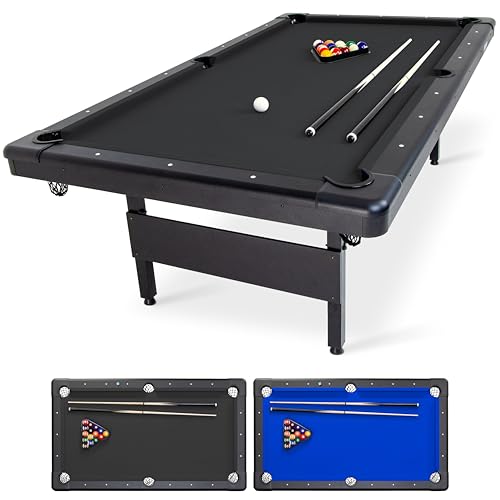
The GoSports 7 ft Pool Table is the cheapest legitimate option here, and it’s a reasonable starting point if you’re not sure the table will get heavy use. Step up to the RACK Draco 7-Foot and you’re paying for a sturdier MDF frame and better felt, still at bar-box size.
At 8 feet, the RACK Orion 8-Foot sits in the middle of the market and is a sensible default if you want full home-standard size without paying premium pricing. The SIMBASHOPPING 8 Foot Pool Table costs meaningfully more but adds an automatic ball return, which matters more than it sounds if multiple people will play regularly and you’re tired of chasing balls around the room after every shot.
Who should buy which size
- ✓Choose 7-foot if your room is under about 12 x 15 feet, or the table needs to share space with other furniture
- ✓Choose 8-foot as the default for a dedicated game room, den, or finished basement in a typical house
- ✓Choose 9-foot only if you have a true dedicated room (roughly 14 x 18 feet) and are working with a specialty billiard dealer
- ✓Measure your actual room, including doorway width for delivery, before ordering any size
- ✕Don’t buy a 9-foot table expecting Amazon-style delivery and self-assembly; it typically isn’t sold that way
- ✕Don’t assume every ‘tournament’ or ‘professional’ label in a product title means slate or true 9-foot dimensions; check the actual playing surface size
- ✕Don’t skip the 5-foot clearance rule just because the table technically fits in the room
- ✕Don’t buy the biggest table you can physically fit if it means giving up room to take a full stroke
Two common misconceptions
Delivery and setup, briefly
Most 7 and 8-foot tables in this price range ship in multiple boxes and require assembly, usually a few hours for two people with basic tools. Check the doorway and hallway width the table needs to pass through before ordering, especially for the felt playing surface panel, which typically can’t be folded. A handful of listings offer white-glove delivery and assembly for an added fee; if you’re not confident assembling furniture from instructions, that option is usually worth the extra cost.
Leave the table in its final position for a day before playing on it if it’s been in a cold truck or garage, so the wood and felt can adjust to room temperature. Playing on a cloth that’s still cold and slightly damp from transit is a common reason a brand-new table feels slower than it should for the first week.
Bottom line
Measure the room before you shop, not after. An 8-foot table is the right default for most houses with a dedicated game space. Go 7-foot if your room is smaller or the table needs to share space with other furniture. Only chase a true 9-foot table if you have the room for it and you’re prepared to buy through a specialty dealer rather than a standard online listing.
What size pool table is best for an average home?
An 8-foot table is the best fit for most houses. It plays a full, proper game while needing a room only around 13 by 16.5 feet once you add clearance for a standard cue.
Can a 9-foot pool table fit in a normal house?
Only in a dedicated room of roughly 14 by 18 feet or larger. Most standard living rooms and basements don’t have that much clear floor space once furniture and walkways are accounted for.
Is a 7-foot pool table too small for adults?
No. A 7-foot, or bar-box, table is a legitimate size that adults play on in bars every day. It plays a faster, more forgiving game than an 8 or 9-foot table, which suits casual and family play well.
Do cheaper pool tables use real slate?
Most affordable, ready-to-ship tables use an MDF or particle-board bed instead of slate. That’s fine for casual play in a climate-controlled room; slate is worth the extra cost mainly for serious players or garage/basement installations with humidity swings.
How much clearance does a pool table actually need?
Plan on roughly 5 feet of open space from every rail so a standard 58-inch cue has room for a full stroke without hitting a wall or furniture.
As an Amazon Associate, we earn from qualifying purchases through links on this page.