Best Budget Badminton Racket Under $50

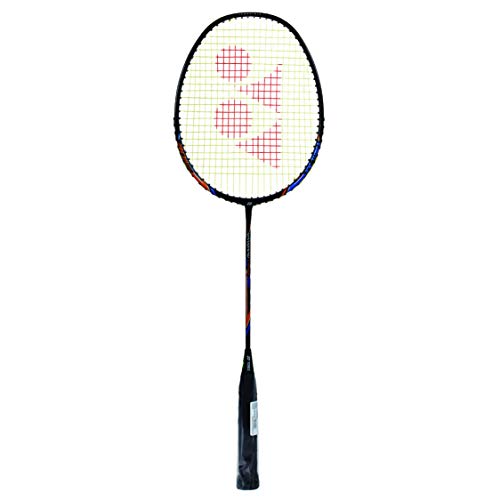
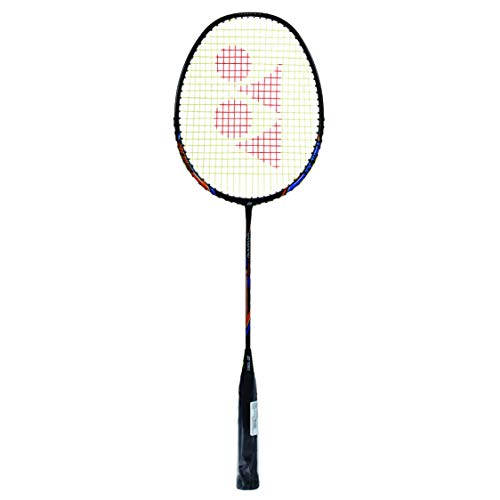
The best budget badminton racket under $50 for most recreational players is the YONEX Nanoray Light 18i, a genuine Yonex graphite frame at a real entry-level price. Players who want a quicker, more attack-oriented swing should look at the Yonex Astrox Attack 9 at a nearly identical price. Households outfitting several players at once for backyard or casual play get more total value from a complete set like the HIRALIY 4-racket bundle instead of buying single rackets separately.
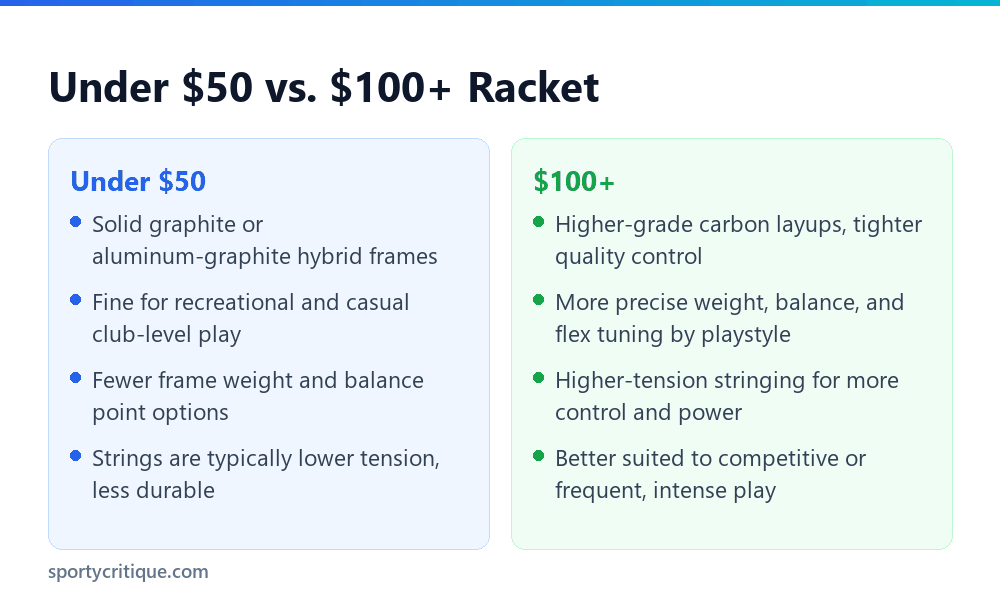
A racket under $50 doesn’t need to feel like a compromise for the large majority of recreational and casual club players. The real gap between a budget racket and a $100-plus model shows up in frame consistency, string tension ceiling, and fine-tuned weight balance, differences that matter far more to a competitive player refining specific shots than to someone playing a few times a month for exercise and fun.
- →A genuine Yonex graphite frame is available well under $50, not just off-brand alternatives
- →The real gap versus premium rackets is string tension ceiling and precise weight tuning
- →A 2-pack or family set delivers more value than a single racket for households with multiple players
- →Grip size and string tension matter more to everyday feel than brand name alone at this price
- →Budget carbon rackets from smaller brands vary more in quality control than established brands
Table of Contents
What Actually Gets Cut to Hit This Price
Manufacturers hit a sub-$50 price point primarily by using a simpler graphite layup, sometimes blended with aluminum in the frame or shaft, rather than the higher-grade, multi-layer carbon construction found in premium rackets. This affects how much energy the frame returns on contact and how the racket flexes through a swing, but it doesn’t make the racket unsafe or unusable for the level of play most recreational players engage in.
String tension ceiling is another real difference. Budget frames are typically rated for a lower maximum string tension than premium frames, which limits how much control-oriented, high-tension stringing a player can eventually move toward as their skill develops. This matters specifically to players progressing toward more competitive play, not to someone playing purely recreationally.
5 Real Options, Compared
📊 Note: Both Yonex options land within 30 cents of each other in price but suit noticeably different playstyles, the Nanoray Light 18i favors a more balanced, all-around swing while the Astrox Attack 9 is head-light and quicker through the swing for players leaning toward faster, attacking exchanges.
Established Brand vs. Lesser-Known Carbon Frames
Smaller or lesser-known brands selling ultralight carbon rackets, like the ALPSPORT option above, can offer surprisingly impressive weight figures at a low price, but quality control tends to vary more between individual units than with an established brand like Yonex. A player buying from a smaller brand should pay closer attention to return policies and reviews mentioning specific unit defects before committing.
⚠️ Watch out: An extremely light racket weight advertised by a lesser-known brand isn’t automatically a red flag, but it’s worth verifying against the listed weight class (typically labeled 4U or 5U) rather than assuming a marketing claim is accurate without any cross-reference.
Grip Size Matters More Than Brand at This Price
Grip size, typically labeled G4 or G5 on most rackets sold in the United States, affects comfort and control more directly for many recreational players than the specific frame material or brand reputation. A grip that’s too large makes fine wrist and finger control difficult, while one that’s too small can lead to over-gripping and forearm fatigue over a long session.
Adding an overgrip, a thin, inexpensive wrap applied over the factory grip, is a simple, low-cost way to fine-tune grip size and feel on a budget racket without needing to buy a different frame entirely. This small addition often does more to improve a player’s day-to-day comfort than upgrading to a pricier racket would.
Choosing the Right Budget Racket
- ✓Confirm grip size before buying, or plan to add an overgrip afterward
- ✓Choose a 2-pack or family set for households outfitting multiple players
- ✓Check reviews for specific unit-quality complaints on lesser-known brands
- ✓Match head-heavy vs. head-light balance to playstyle, not just price
- ✕Assuming the cheapest available racket is automatically the best value
- ✕Ignoring grip size because a racket is a well-known or trusted brand
- ✕Buying multiple single rackets when a bundled set costs less overall
- ✕Expecting a sub-$50 frame to handle very high string tension long-term
Durability and Warranty at This Price
Established brands like Yonex typically offer a limited warranty against frame defects, though warranty coverage rarely extends to a cracked frame from a mishit or a collision during doubles play, which are the most common ways a badminton racket actually breaks. Reading the specific warranty terms on a listing before buying clarifies what’s actually covered versus what counts as normal wear or accidental damage.
Lesser-known brands selling ultralight carbon frames sometimes offer shorter or less clearly defined warranty terms, which is part of the tradeoff for the lower price and lighter weight figures these frames often advertise. Checking seller-specific return policies on the actual listing, rather than assuming a general Amazon return window covers every situation, avoids confusion if a frame does fail early.
Choosing a Budget Racket for Kids or Complete Beginners
For a child or a complete beginner picking up a racket for the very first time, a family set like the HIRALIY bundle above solves two problems at once: it provides enough rackets for the whole household to play together, and it removes the pressure of matching a specific racket to a beginner’s still-undeveloped playstyle, since that preference simply hasn’t formed yet.
A lighter overall racket weight, generally easier for a smaller or less experienced player to control through a full swing, matters more for this group than frame material or string tension ceiling. Most of the budget options in this comparison fall in a genuinely comfortable weight range for beginners, though a parent buying specifically for a younger child should still confirm the racket’s listed weight class against the child’s size and strength.
Restringing a Budget Racket
Most budget rackets, including every option above, ship pre-strung at a factory tension suitable for recreational play, and restringing isn’t necessary until the strings actually break or noticeably lose tension over time. When restringing eventually becomes necessary, staying within the frame’s rated tension ceiling, usually printed on the frame itself or in the product listing, protects against frame damage from over-tensioning.
A local stringing service typically costs a modest amount separate from the string material itself, and for a budget frame, it’s often more cost-effective to simply replace the racket once strings and frame both show significant wear rather than repeatedly restringing an aging budget frame at a cost that starts approaching the price of a new one.
When to Upgrade Beyond $50
The clearest signal that it’s time to move beyond a budget racket is hitting the frame’s string tension ceiling and wanting more control than the current setup allows, a sign that typically shows up only after a player has developed a fairly consistent, intermediate-level swing. Upgrading before reaching that point mostly buys marginal, hard-to-notice improvements relative to the added cost.
Competitive club or tournament play is the other clear trigger for upgrading, since a premium racket’s tighter weight and balance tolerances start mattering more once opponents and match stakes both increase. For everyone else playing primarily for fitness, fun, and casual social games, a well-chosen sub-$50 racket remains a perfectly reasonable long-term choice.
Frequently Asked Questions
Is a $35 Yonex racket actually a genuine Yonex product?
Yes, when purchased from a reputable listing. Yonex makes entry-level graphite frames specifically to compete at lower price points, and these are genuine products, not counterfeits, as long as they’re bought through an authorized or reputable seller.
What’s the real difference between a $35 and a $150 badminton racket?
Primarily frame layup quality, string tension ceiling, and precision of weight and balance tuning. For casual and recreational play, these differences matter far less than for competitive players pushing the limits of control and power.
Should I buy a single racket or a multi-pack set?
For a household with multiple players or for casual backyard use, a multi-pack set typically offers better overall value. A serious single player benefits more from a dedicated single racket matched to their specific grip size and playstyle.
How do I know what grip size I need?
Grip sizes are typically labeled G4 or G5 on U.S.-sold rackets, with G4 being slightly larger. Trying a racket in person, or checking a manufacturer’s sizing guide relative to hand size, helps avoid a mismatch when buying online.
Do budget rackets need restringing sooner than premium ones?
Not necessarily sooner in a fixed timeframe, but budget frames have a lower maximum string tension, which limits how high a player can eventually string them compared to a premium frame as their game develops.
When should I upgrade from a budget racket?
The clearest signals are hitting the frame’s string tension ceiling and wanting more control, or moving into more competitive or tournament-level play where tighter weight and balance tolerances start to matter more.
For the overwhelming majority of players picking up badminton recreationally or playing casually with friends and family, a well-chosen racket under $50 delivers everything actually needed to enjoy the game and improve. Saving the upgrade budget for later, once a specific, concrete limitation shows up in play, is a more efficient way to spend than buying premium gear before it’s genuinely useful.
Care matters as much as initial purchase price when it comes to how long a budget racket actually lasts. Storing the racket in a proper cover or bag rather than leaving it loose in a gym bag, avoiding extreme heat like a car trunk in summer that can warp the frame or degrade strings faster, and wiping down the grip after sweaty sessions all extend the useful life of even the least expensive frame in this comparison.
None of these habits cost anything beyond a small amount of attention, yet they close much of the durability gap that might otherwise justify spending significantly more on a premium racket purely for longevity reasons. A well cared for budget frame regularly outlasts a neglected premium one, which is a detail that gets overlooked in most buying-guide comparisons focused purely on specs and price.
Taken together, price, grip fit, and basic care matter more to day-to-day enjoyment than chasing a bigger brand name or a heavier price tag before there’s a real reason to spend more.
As an Amazon Associate, we earn from qualifying purchases through links on this page.