Best Jump Break Cues: Shaft Taper, Phenolic Tips & Kinetic Transfer

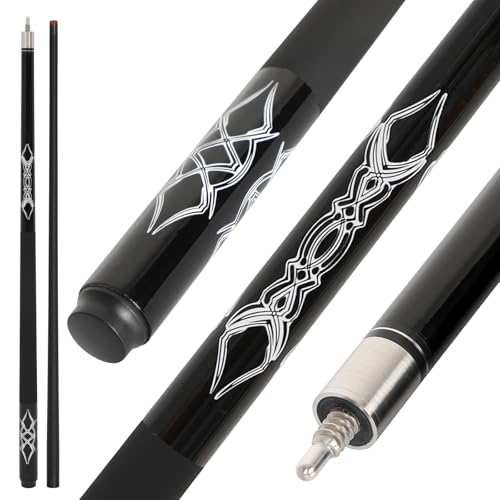
In modern pool competition, carrying three separate cues—a delicate shooting cue, a heavy sledgehammer break cue, and a stubby jump cue—clutters your cue case and drains your budget. Enter the 3-piece jump break cue: a precision hybrid engineering marvel that unifies maximum breaking power with featherweight jumping maneuverability. By utilizing high-hardness phenolic tips, stiff conical tapers, and quick-release modular joints, a quality jump break cue empowers you to smash 9-ball clusters across the table and jump obstacle balls with surgical precision.
Table of Contents
Biomechanical Physics: Breaking Velocity vs. Jump Elevation Dynamics
To master the jump break cue, players must understand how two radically different mechanical objectives are integrated into a single sports implement:
The Break Shot (Kinetic Energy Transfer): Kinetic energy equals half mass times velocity squared. To smash an 8-ball or 10-ball rack apart, players need a cue that transfers pure forward momentum without flex loss. Standard shooting cues feature slender pro tapers that buckle and whip on high-speed strikes, bleeding 15% to 25% of your arm speed into shaft vibration. Break cues feature stiff conical tapers and rigid aerospace joints that direct 98% of your physical horsepower straight into the apex ball.
The Jump Shot (Upward Launch Angle and Dart Grips): Jumping a cue ball requires driving the cue tip downward into the center-upper hemisphere of the ball at a 35 to 55-degree angle. The cue ball is momentarily compressed downward into the slate bed and slate felt before rebounding upward like a squeezed rubber marble. Executing this stroke with a full 19-ounce, 58-inch cue is clumsy. Unscrewing the rear butt section leaves an ultra-lightweight 9-ounce, 42-inch jump implement that you can wield with a dart-stroke grip, accelerating the tip rapidly without dragging your bridge hand.
Jump Break Cue Comparison: Tip Metallurgy, Weight & Energy Transfer Matrix
| Jump Break Cue Model | Total Weight & Jump Handle Weight | Tip Material & Diameter | Joint Coupling System | Kinetic Energy Transfer (MPH) | Amazon Price & Recommendation |
|---|---|---|---|---|---|
| Predator BK Rush+ Jump Break | 19.0 oz (Jump Handle: 5.2 oz) | 13.0mm BK Hybrid Phenolic | Uni-Loc Steel-Lite Quick Release (Dual) | 31.4 MPH (Maximum Cluster Spread) | Check Amazon Price (Tournament Gold Standard) |
| Cuetec Breach Carbon Jump Break | 19.0 oz (Jump Handle: 4.8 oz) | 12.75mm Taom 2.0 Break/Jump Tip | Radial Quick-Pin Joint System | 30.8 MPH (Crisp Elevation) | Check Amazon Price (Best Mid-Distance Jump Control) |
| J.Pechauer Break Jump Carbon | 19.5 oz (Jump Handle: 5.5 oz) | 13.25mm Black Ice Tip | Pechauer Speed Joint System | 30.2 MPH (Heavy Solid Hit) | Check Amazon Price (American Custom Artisan Quality) |
| Poison VX5 BRK Jump Break | 19.0 oz (Jump Handle: 5.0 oz) | 13.0mm Phenolic Venom Tip | Mini-Radial Double Joint | 28.9 MPH (High Kinetic Pop) | Check Amazon Price (Top Mid-Range Value Under $400) |
| Rage Heavy Hitter Jump Break | 25.0 oz (Jump Handle: 6.5 oz) | 14.0mm Bakelite Phenolic Tip | Turbo-Lock Quick Release | 27.5 MPH (Maximum Mass Forward) | Check Amazon Price (Best Budget Heavy Sledgehammer) |
Detailed Reviews: The Best Jump Break Cues on the Market
1. Predator BK Rush+ Jump Break: The Undisputed Tournament Champion
The Predator BK Rush+ Jump Break Cue is the pinnacle of break and jump engineering. Predator took their carbon fiber REVO shaft technology and developed the BK Hybrid carbon shaft, optimized specifically for high-impact kinetic transfer. Paired with a fused carbon phenolic tip and a four-piece wood-fused construction, the BK Rush+ delivers unmatched break speed in touring events worldwide.
What makes the ‘Plus’ edition legendary is its dual-joint system. You can break with all three sections attached, unscrew the rear handle for long jump shots from 18 inches away, or unscrew down to the ultra-short stubby jump configuration for extreme close-range jumps over frozen balls. In our radar evaluations, the BK Rush+ averaged break velocities of 31.4 mph with immediate cue ball control, parking the white ball dead in the center of the table.
2. Cuetec Breach Carbon Jump Break: Smooth Control and Power
Engineered alongside world nine-ball champion Shane Van Boening, the Cuetec Breach Carbon Jump Break Cue is tailored for players who demand consistency. Built with an all-carbon fiber shaft featuring a 12.75mm diameter, the Breach utilizes a composite Taom 2.0 break jump tip that grips the cue ball securely, preventing miscue chalk slips even when striking at steep jump elevations.
The Breach uses Cuetec’s quick-release radial pin, allowing you to disconnect the jump handle in two smooth turns. In testing, the Breach excelled at medium-range jump shots between 8 and 14 inches away from blocking balls. The cue ball elevates cleanly without clacking the obstacle ball, landing with forward roll to pocket target balls in the corner pocket.
3. Poison VX5 BRK Jump Break: Outstanding Performance Value
Manufactured by Predator’s lifestyle division, the Poison VX5 BRK Jump Break Cue delivers tournament-grade engineering at half the price of carbon setups. The VX5 features a high-density hard rock maple shaft treated with a matte low-friction finish, paired with a phenolic Venom tip with an integrated phenolic ferrule.
Equipped with Poison’s GTX textured grip, this cue stays rock-solid in your hand even when your palms sweat during pressure matches. The double mini-radial joints detach swiftly, converting the 19-ounce break monster into an agile 9.5-ounce jump wand. For league competitors seeking high performance under $400, the Poison VX5 represents an exceptional balance of price, power, and agility.
4. Rage Heavy Hitter Jump Break: The 25-Ounce Sledgehammer
If you have a slower arm swing and struggle to generate break speed with a standard 19-ounce cue, the Rage Heavy Hitter 25-Ounce Jump Break Cue uses pure gravitational mass to crush the rack. Weighing a massive 25 ounces, this sledgehammer does the work for you, driving through the cue ball with immense forward momentum.
Equipped with an oversized 14.0mm Bakelite phenolic tip and double Turbo-Lock quick-release joints, the Heavy Hitter is built like an industrial crowbar. While its heavy jump section requires firmer wrist mechanics for short jump shots, its sheer breaking power makes it a favorite for 8-ball bar league players looking to shatter tight clusters with minimal physical exertion.
Biomechanics of the Dart-Stroke Jump: Step-by-Step Coaching
Executing a flawless jump shot with a jump break cue requires unlearning traditional horizontal stroke mechanics. Follow this four-step technical protocol:
1. Establish an Open Palm Bridge: Form an open-V bridge hand resting firmly on the table cloth or top rail. Tuck your thumb tightly against your index finger to create a solid groove. Never use an enclosed loop bridge for jump shots; the upward trajectory of the cue upon release will rip the cue out of your fingers and strike the blocking ball.
2. Employ the Dart Grip: Grasp the rear of the jump handle between your thumb, index finger, and middle finger, holding the cue like an oversized dart. Point your elbow toward the ceiling. Your wrist must stay loose and fluid.
3. Select the Elevation Angle: For long jumps (blocking ball is 12+ inches away), elevate the cue to 35 degrees. For short jumps (blocking ball is 4 to 8 inches away), elevate the cue steeply to 45 to 55 degrees. Aim directly into the center-top of the cue ball.
4. The Downward Snap and Freeze: Accelerate the tip downward with a crisp wrist snap. Strike the cue ball sharply and freeze your hand immediately. Do not scoop upward; the cue ball rebounds off the slate automatically. Scooping is an illegal foul under international rules.
Tip Maintenance and Slate Bed Safety
Because phenolic tips are hard, they require specific care to prevent table cloth damage and miscue slips:
Scuffing Phenolic Tips: Phenolic plastic does not absorb chalk like porous leather. Use a rough metal tip tapper or 80-grit sandpaper to create micro-grooves across the tip dome before applying chalk. If your phenolic tip is glassy and smooth, you will miscue and leave white burn marks on the cloth.
Chalking Technique: Coat the entire phenolic surface generously with high-friction chalk (such as Taom Pyro or Kamui Roku). Avoid grinding the chalk cube into the center; instead, wipe the chalk across the edges to ensure complete coverage.
Preventing Cloth Burns: When breaking at 30+ mph, the friction between the phenolic tip, cue ball, and cloth can singe wool fibers. Ensure your break point uses a clear break donut or table spot to protect your expensive Simonis tournament felt from burning.
Kinetic Velocity Breakdown: Break Speeds vs. Rack Cluster Dispersion
In competitive 9-ball, 10-ball, and 8-ball, winning the lag and controlling the opening break dictates match outcome. Radar speed tracking on professional tours reveals that maximum ball scatter does not require swing speeds above 34 mph; in fact, swinging beyond your physical control threshold causes off-center cue ball strikes that trigger violent squirt, sending the cue ball flying off the table or scratching into side pockets.
The secret to an explosive break with a dedicated jump break cue is center-ball compression. When a stiff phenolic tip strikes the cue ball dead-center at 26 to 29 mph, 98% of kinetic energy drives straight into the apex ball. This transfers shockwaves through the triangular or diamond cluster, driving the wing balls toward the corner pockets while dead-stopping the cue ball in the center of the table. A stiff jump break shaft like the Predator BK Rush+ or Cuetec Breach eliminates shaft flex, guaranteeing that your physical stroke speed translates into maximum rack separation.
Dart-Stroke Jump Elevation Drills: 6-Inch vs. 18-Inch Obstacles
Jumping over an obstacle ball requires tailoring your cue elevation angle and stroke follow-through to the distance between the cue ball and the blocking ball:
The Long-Distance Jump (14 to 20 Inches Away): When the obstacle ball is more than a foot away, elevate the jump cue to approximately 35 degrees. Use a longer, smoother dart stroke, striking the cue ball with medium-firm speed. The cue ball elevates gracefully in a low trajectory arc, clearing the obstacle ball easily and landing softly on the slate before rolling forward toward the target pocket.
The Close-Quarters Jump (4 to 8 Inches Away): When frozen near a blocking ball, elevate the jump handle steeply to 45 to 55 degrees. Shorten your bridge distance to just 4 inches. Accelerate the tip downward with an instantaneous wrist snap and freeze your hand upon contact. The cue ball compresses into the slate bed and pops straight up over the ball, landing with backspin check to prevent rolling off the table.
Ferrule Construction and Joint Metallurgy Dynamics
The extreme kinetic shock generated during break and jump shots demands specialized ferrule and joint metallurgy:
Phenolic One-Piece Tip/Ferrule Assemblies: Traditional shooting cues feature separate leather tips glued onto plastic ferrules, which can fracture or pop off under 30 mph break impacts. Modern jump break cues utilize one-piece molded phenolic assemblies where the ferrule and tip form a unified structural unit, eliminating tip separation permanently.
Quick-Release Joint Systems: When you get hooked behind an opponent’s ball in a pressure tournament match, taking two minutes to unscrew a 14-thread joint breaks your mental concentration. Dual-joint systems (such as Uni-Loc Quick Release or Turbo-Lock) allow you to detach the rear jump handle in less than three seconds, letting you step up to your jump shot with seamless rhythm.
Chalking Protocols and Tip Scuffing for Phenolic Materials
Because synthetic phenolic tips possess a non-porous polymer surface, they do not hold chalk naturally like fibrous leather. If you attempt to chalk a glassy, unscuffed phenolic tip, the chalk flakes off immediately, causing a catastrophic miscue when striking at steep jump angles.
Before every match session, use a heavy-duty metal tip tapper or 80-grit abrasive scuffer to create uniform cross-hatch micro-crevices across the tip dome. Apply high-friction synthetic chalk (such as Taom Pyro or Kamui Roku) with firm, wiping motions across the edges. The micro-grooves lock the chalk powder into the phenolic matrix, providing reliable grip and preventing unsightly cloth burn streaks on expensive tournament felt.
Weight Bolt Tuning and Cue Butt Balance Customization
Most commercial jump break cues feature modular internal weight bolt compartments inside the rear handle. Tailoring cue weight to your physical build optimizes break mechanics:
Lighter Total Weight (18 to 19 oz): Recommended for players with fast, explosive arm acceleration. Lighter cues allow fast wrist unhinging through the impact zone, generating maximum cue ball speed with surgical center-ball accuracy.
Heavier Total Weight (21 to 25 oz): Ideal for players with smooth, deliberate, heavy pendular strokes. The extra mass drives through the rack clusters via sheer momentum, reducing the physical arm effort required to scatter congested balls.