Intermediate Pool Cue Specs Explained: What Actually Changes

Most guides to the intermediate pool cue tier just list products. This one explains the actual construction specs, shaft taper, ferrule material, joint pin type, and tip hardness, that separate an intermediate cue from a beginner one, with real examples showing each spec in practice.
An intermediate pool cue is defined by four construction changes over a beginner cue: a more refined pro taper on the shaft, a better ferrule material (ivorine, phenolic, or linen-phenolic instead of plain plastic), a precision metal-to-metal joint instead of a simple wood screw joint, and a graded medium-hard leather tip instead of an inconsistent stock tip. These are physical, checkable specs, not marketing language, and named-brand cues that build to this standard, such as McDermott’s Lucky series or Viking’s Valhalla line, typically start around $135.
Most “best intermediate pool cue” guides just list products and rank them by star rating. That skips the actual question worth answering first: what, mechanically, makes a cue an intermediate cue rather than a beginner one? Price alone doesn’t answer this, since a $150 cue and a $30 cue can both claim to be “tournament grade” in their listing copy. The specs underneath the price tag are what actually separate the tiers, and once you know what to check, you can evaluate any listing on its own construction details instead of trusting the marketing headline.
This guide walks through each spec that changes at the intermediate level, explains why it matters to how the cue plays, and shows real examples of cues built to this standard so you can see the specs in practice rather than in the abstract.
- →Shaft taper profile shifts from a generic straight taper to a refined pro taper with more consistent flex
- →Ferrule material moves from plain plastic to ivorine, phenolic, or linen-phenolic composites
- →Joint pin type shifts from wood-to-wood or basic screws to a precision metal-to-metal fit
- →Tip hardness becomes a graded, intentional choice (typically medium-hard leather) rather than whatever shipped
- →None of these specs require spending $300+; named-brand cues hit this standard starting around $135
Table of Contents
Shaft taper profile: the biggest feel difference
Taper describes how the shaft’s diameter changes along its length, from the tip down toward the joint. A beginner or house cue typically uses a simple, generic taper that prioritizes cheap, consistent manufacturing over feel. An intermediate cue usually steps up to a “pro taper”, a longer, more gradual taper that keeps the forward few inches of the shaft thinner and more consistent in diameter before it begins widening toward the joint.
The practical effect is in your bridge hand: a pro taper lets the shaft slide more smoothly and predictably through your fingers on the stroke, since the diameter under your grip changes less abruptly than on a generic taper. This is one of the first differences experienced players notice when picking up an intermediate cue after playing on a house cue for a while, even before they can name what changed.
Ferrule material: plastic versus ivorine and phenolic
The ferrule is the small collar, usually under an inch long, that sits between the wood shaft and the tip. On beginner and house cues, it’s typically a basic plastic ring, chosen for cost rather than performance. Intermediate cues commonly upgrade to ivorine (a dense synthetic substitute for genuine ivory), phenolic resin, or a linen-phenolic composite, all of which transmit the shaft’s energy into the tip more efficiently and resist chipping better under repeated impact.
⚠️ Watch out: A plastic ferrule isn’t automatically bad, plenty of perfectly playable budget cues use one, but if a listing markets itself as “intermediate” or “advanced” without naming the ferrule material at all, that’s usually a sign the description is leaning on the word rather than the spec. Look for the material named explicitly.

Joint pin type: where two-piece cues actually differ
Two-piece cues join the shaft to the butt with a threaded pin. Cheap cues often use a wood-to-wood joint or a simple metal screw threaded directly into wood on both sides, which is functional but prone to developing play (looseness) over time as the wood around the threads wears. Intermediate cues typically move to a precision metal-to-metal joint, most commonly steel or stainless steel pins fitted into metal-lined collars on both halves, which holds its fit far longer and transmits the hit more solidly through the joint rather than absorbing some of the energy in a loose connection.
You can partially check this yourself before buying by reading reviews for mentions of a “tight” or “solid” joint feel versus complaints about wobble developing after a few months. A well-fitted metal joint should thread together with no play and no visible gap where the two halves meet.
Tip hardness: a deliberate choice, not an afterthought
Tip hardness affects how long the cue ball stays in contact with the tip during the hit, which in turn affects how forgiving the tip is on off-center contact and how much spin it can hold. Beginner and house cues often ship with whatever tip was cheapest to install, with no real hardness spec given. Intermediate cues typically ship with a named, graded leather tip, commonly in a medium-hard rating, chosen specifically to balance control and forgiveness for a player who has moved past the absolute basics but isn’t yet playing at a level where a very hard, less forgiving tip pays off.
💡 Pro tip: If a listing names the tip brand and hardness (for example, a specific medium or medium-hard leather tip from a known tip maker), that’s a genuine intermediate-level detail. If it just says “leather tip” with nothing else, treat that as a baseline spec rather than an upgrade.
Seeing the specs in practice: three real examples
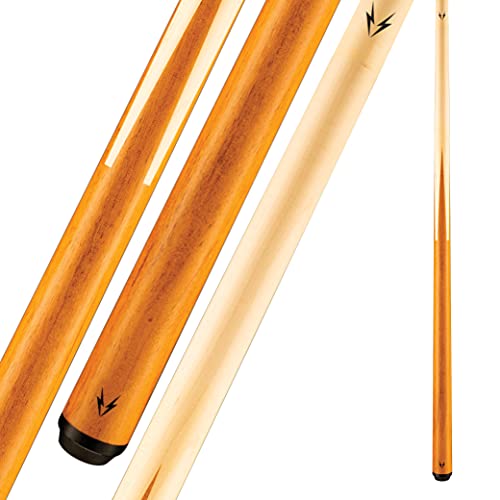
The Lucky Pool Cue by McDermott – L4-19oz is a straightforward example of the baseline intermediate standard: a solid maple shaft with a proper pro taper and a standard leather tip, built by a recognized cue maker rather than an unbranded import. It doesn’t have a low-deflection composite shaft, but it hits the taper, ferrule, and joint specs that separate this tier from a generic house cue.
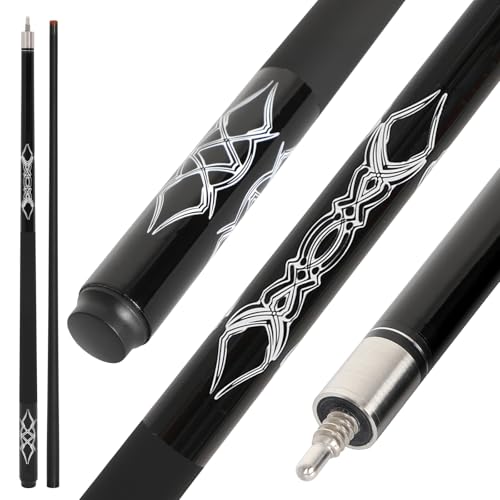
The Valhalla VA120 Viking 2 Piece Pool Cue Stick, Mahogany Stain, Irish Linen Wrap, 20.5oz shows a different spec choice within the same tier: an Irish linen wrap grip section instead of a bare or painted handle, which changes how the cue feels in your grip hand specifically, distinct from the taper change in the bridge hand. This is a good example of how “intermediate” covers a range of construction choices, not one fixed spec sheet.
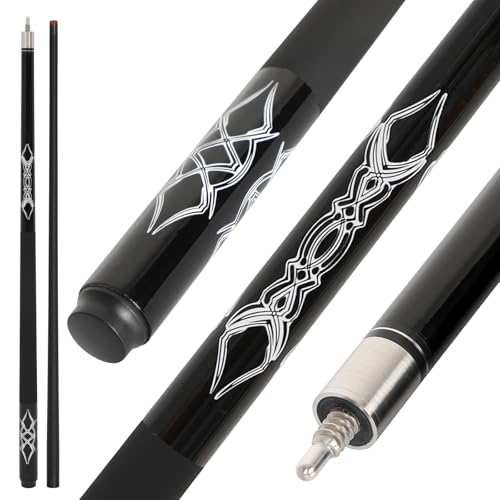
The Cuetec AVID Proof Series 11.75mm 5PT No Wrap Pool/Billiard Cue sits at the top edge of this comparison and shows what the next spec jump looks like: a glass-bonded composite shaft construction instead of solid wood, which measurably reduces cue ball deflection on off-center hits. At roughly three times the price of the two cues above, it’s a useful reference point for where “intermediate” construction gives way to genuine low-deflection shaft technology, rather than a cue we’d call strictly necessary at this stage.
Why this matters more than the word “intermediate” on a listing
None of these four specs are visible in a thumbnail photo, and none of them are guaranteed just because a listing uses the word “intermediate” or “advanced” in its title. Reading the actual product description for taper type, ferrule material, joint construction, and tip hardness tells you far more about whether a cue has genuinely moved past beginner-tier construction than the marketing category it’s filed under.
- ✓Check the listing for a named ferrule material, not just ‘quality ferrule’
- ✓Look for a named joint type (steel-to-steel, stainless-to-stainless) on two-piece cues
- ✓Read reviews for joint-tightness and shaft-straightness comments over time, not just initial impressions
- ✓Treat ‘pro taper’ as a real spec worth checking for, since it changes bridge-hand feel directly
- ✕Assume a higher price automatically means better specs without reading the description
- ✕Buy based on the word ‘intermediate’ alone without checking any named material or construction detail
- ✕Expect a $135 cue to include a low-deflection composite shaft; that’s a separate, pricier upgrade
- ✕Ignore tip hardness because it feels like a minor detail; it directly affects spin control
When these specs actually start to matter for your game
If you’re still working on consistent aim and basic position play, these specs matter less than practice time. They start to matter once you can reliably apply intentional spin and notice differences in how a cue transmits the hit, typically after a few months of regular play. That’s also usually the point where players start noticing the bridge-hand feel difference a pro taper makes, since it’s most apparent once you’re gripping the shaft consistently rather than adjusting your grip shot to shot.
A note on weight and balance at this tier
Weight and balance point are worth checking alongside the four core specs above, though they’re more about personal preference than tier. Most intermediate cues are sold in the standard 18 to 21 ounce range with a balance point that falls close to standard, which is less a marker of tier than it is a baseline you should expect regardless of price. If a cue’s balance feels noticeably off from where the listing suggests, that’s more likely a quality control issue than a tier problem.
Checking these specs on a used or in-store cue
If you’re evaluating a cue in person rather than from a listing, you can check most of these specs directly. Unscrew a two-piece cue and look at the joint pin: a dull, scratched screw threaded straight into visible wood is the beginner-tier joint, while a bright metal pin seated in a metal collar on both halves is the intermediate-tier version. Press a thumbnail gently into the tip to get a rough sense of hardness, and run a finger down the shaft near the joint to feel where the taper begins narrowing. None of this requires special tools, just a few minutes of hands-on comparison before you decide.
Bottom line
An intermediate pool cue is defined by four checkable construction changes: shaft taper, ferrule material, joint pin type, and tip hardness, not by a price bracket or a marketing label. Once you know to look for these specs by name in a listing, you can evaluate any cue on its actual construction rather than trusting whatever tier the seller assigned it.
See also: Best Pool Cue for Intermediate Player: Top Picks for Precision Play if you’re ready to shop specific cues built to this standard, or Best Pool Cue Weight for 8-Ball League Play for how weight factors into the decision.
What makes a pool cue ‘intermediate’ instead of beginner level?
Four specific construction specs: a more refined pro taper on the shaft, an upgraded ferrule material (ivorine, phenolic, or linen-phenolic instead of plain plastic), a precision metal-to-metal joint, and a named, graded tip hardness instead of an unspecified stock tip.
Do I need a low-deflection shaft for an intermediate cue?
No. Low-deflection composite shafts are a separate, later upgrade that typically costs significantly more. The taper, ferrule, joint, and tip specs covered in this guide define the intermediate tier on their own.
How much does a real intermediate-level cue cost?
Named-brand cues that meet these construction specs, such as McDermott’s Lucky series or Viking’s Valhalla line, typically start around $135. Cues with low-deflection composite shafts run considerably higher, often $400 and up.
Can I tell if a cue meets these specs just from the listing?
Mostly, yes. Check whether the description names a specific ferrule material, joint type, and tip hardness rather than using vague terms like ‘quality’ or ‘professional’ without specifics.
As an Amazon Associate, we earn from qualifying purchases through links on this page.