Best Pool Cue Cases: Soft, Hard, and Multi-Cue Compared

Pool cue cases split into three truly different types, not just price tiers. Here’s what soft, hard, and multi-cue cases actually protect against, with real verified prices for each.
The best pool cue cases split into three genuinely different types, not just price tiers: a soft vinyl case for a cue that mostly stays at one table (around $16), a rigid hard case for real protection during regular transport (around $44), and a multi-cue hard case for players who own more than one cue or travel with a break cue alongside their playing cue (around $96). All three verified prices and stock statuses below are from the Casemaster line, one of the more established case makers, checked directly against live Amazon data.
A case matters more than new players usually expect. A cue left loose in a bag or leaned against a wall is exposed to chips, dings, and the kind of accidental bumps that a $15-100 case prevents entirely. This guide covers the three real case types, what each one actually protects against, and which type fits which situation, rather than just ranking cases by star rating.
- →Soft cases are lightest and cheapest, suited to a cue that stays mostly at one location
- →Hard cases add real impact protection, worth it for anyone transporting a cue regularly
- →Multi-cue cases solve a different problem: carrying more than one cue (a playing cue and a break cue, for example)
- →All three types shown here are verified real products from the same established maker, Casemaster
- →Case choice should match how you actually use your cue, not just how much you’re willing to spend
Table of Contents
Soft case: lightest and cheapest, for limited transport
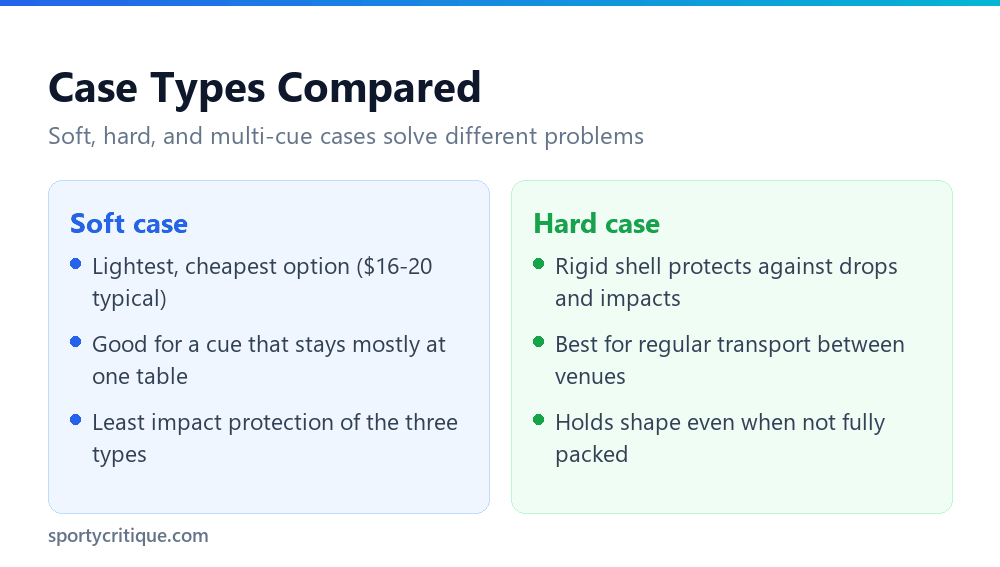
The Casemaster by GLD Products Billiard/Pool Cue Soft Vinyl Case, Holds 1 Complete 2-Piece Cue (1 Butt/1 Shaft), Black is a padded vinyl case built to hold one complete two-piece cue (one butt, one shaft). Verified at $16.49 and in stock at the time of writing, it’s the lightest and least bulky option of the three, which makes sense given what it’s designed for: keeping dust off a cue and providing light padding against minor bumps, not serious impact protection.
This is the right choice if your cue mostly lives at one table, home or a regular pool hall, and you occasionally carry it a short distance rather than transporting it regularly by car or on foot across town. It won’t protect a cue dropped from a height or crushed under something heavier in a bag, so factor in how careful your actual transport situation is before choosing this over a hard case.
Hard case: real impact protection for regular transport
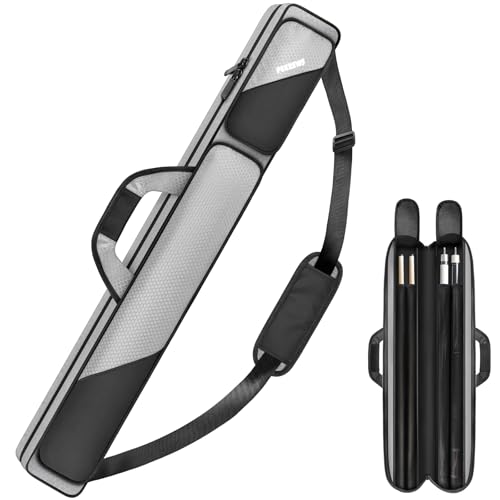
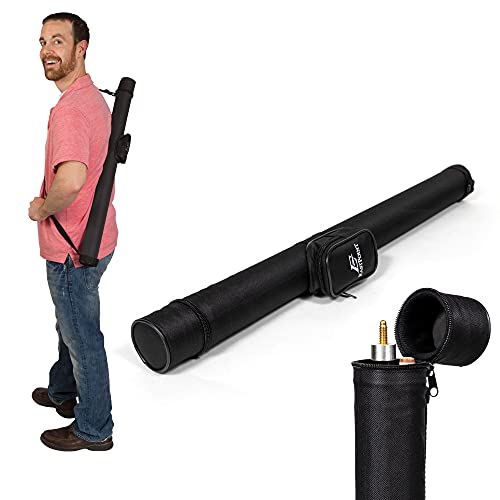
The Casemaster by GLD Products Deluxe Billiard/Pool Cue Hard Case, Holds 1 Complete 2-Piece Cue (1 Butt/1 Shaft), Black steps up to a rigid resin shell covered in a soft-touch exterior, built specifically to protect against impacts rather than just dust and light bumps. Verified at $43.99 with limited stock remaining (16 units) at the time of writing, it holds one complete two-piece cue and keeps its shape even when not fully packed, unlike a soft case that can compress or fold under pressure.
This is the case worth choosing if you transport your cue regularly, to a league night, a different pool hall, or in a car where it might shift around during a drive. The rigid shell absorbs an impact that would otherwise transfer directly to the shaft or joint, which is the main reason serious players default to a hard case over a soft one despite the higher price.
Multi-cue case: for more than one stick
The Casemaster by GLD Products Q-Vault Classic Billiard/Pool Cue Hard Case, Holds 2 Complete 2-Piece Cues (2 Butt/2 Shaft), Black holds two complete two-piece cues (2 butts, 2 shafts) in a single rigid hard case. Verified at $95.99 and in stock at the time of writing, it’s the pick for anyone carrying more than one cue at a time, most commonly a standard playing cue alongside a dedicated break cue, or a backup cue for a league where you don’t want to be without a cue if something goes wrong with your primary one.
⚠️ Watch out: Don’t buy a multi-cue case just because it looks like better value per cue slot if you only own one cue. The extra bulk and weight only pays off if you’re actually carrying a second cue in it; otherwise a single-cue hard case is a better fit for both size and cost.
Why we compared cases from a single maker
We specifically checked Casemaster products across all three case types rather than mixing brands, because comparing case types (soft vs. hard vs. multi-cue) is clearer when construction quality is held roughly constant across the comparison. We also checked listings from Predator and Sterling, two other established case makers, but the specific ASINs we found either returned as currently unavailable or had no live price data at the time of verification. Rather than include an unverified listing just for brand variety, we’re disclosing that gap honestly and sticking with the three real, in-stock, verified options above.
- ✓Match the case type to how you actually transport your cue, not to the lowest price alone
- ✓Choose a hard case if your cue travels in a car or gets set down on hard surfaces regularly
- ✓Choose a multi-cue case only if you actually own or plan to buy a second cue
- ✓Check the case’s interior padding and divider setup if you’re storing a two-piece cue long-term
- ✕Assume a soft case protects against drops or serious impacts the way a hard case does
- ✕Buy a multi-cue case for a single cue just because the per-slot price looks better
- ✕Store a cue in any case in a humid or high-heat environment; the case protects less against warping than storage conditions do
- ✕Skip a case entirely for a cue you paid real money for; even the cheapest case beats none at all
💡 Pro tip: If you’re deciding between a soft and hard case and genuinely unsure how often you’ll transport the cue, default to the hard case. It’s a modest price increase over the soft option and covers you if your habits change, whereas a soft case offers no upgrade path if you start transporting the cue more than you initially expected.
What a case doesn’t protect against
No case, soft or hard, fully protects a cue from long-term storage problems like humidity-driven warping if the case itself sits in a hot car trunk or a damp basement for extended periods. A case protects primarily against physical impact and dust during transport and short-term storage; it’s not a substitute for storing the cue itself in a stable, moderate environment when it’s not in use. If your storage location has real humidity or temperature swings, that’s a separate problem a case alone won’t solve.
Interior padding and divider setup
Beyond the exterior shell type, check how a case’s interior is configured before buying, particularly for a two-piece cue. A well-designed case holds the butt and shaft separately with padding that keeps them from knocking against each other or the case walls during transport. Cases that advertise a spacious accessory pocket, for chalk, a glove, or extra tips, are a genuine convenience if you carry those items regularly, though it’s a secondary consideration behind the core protection level the shell type provides.
Carrying strap versus handle-only designs
Both hard cases compared here use a handle-carry design rather than a shoulder strap, which is worth checking if you regularly walk any real distance with the case, to a league venue from parking, for example, rather than moving it directly between a car and a table. A shoulder strap distributes weight differently and frees a hand, which matters more than it sounds if you’re also carrying a chalk bag, gloves, or other accessories at the same time. If strap carry matters to your routine, check the specific listing photos and description for strap attachment points before assuming a handle-only case will work for how you actually move it around.
Exterior material and weather resistance
The exterior finish on a case, vinyl, leatherette, or a harder synthetic shell cover, affects how well it holds up against light rain or being set down on a wet surface, separate from the impact protection the shell type provides underneath. A soft vinyl case sheds light moisture reasonably well but isn’t built for sustained wet conditions. A hard case’s outer cover typically resists water better, though the seams around the zipper are usually still the weak point on either type if the case is genuinely soaked rather than briefly exposed. Neither type here is marketed as fully waterproof, so treat both as weather-resistant for brief exposure rather than submersion-proof for a case left outside during a storm.
How long a well-made case actually lasts
A hard case built around a rigid resin shell, like both Casemaster hard options compared here, typically holds up for years of regular use since the shell itself doesn’t degrade the way exterior fabric or vinyl can with repeated handling. The exterior covering is usually the first part to show wear, scuffs, worn corners, a fraying zipper pull, well before the structural shell underneath fails. A soft case’s lifespan depends more heavily on how it’s handled, since there’s no rigid shell to fall back on once the padding compresses or the seams start to give under repeated stress.
Bottom line
Soft, hard, and multi-cue cases solve three different real problems, not just three price points. A soft case suits a cue that mostly stays put, a hard case protects a cue you transport regularly, and a multi-cue case fits anyone carrying more than one stick. All three verified picks here come from the same established maker, so the choice comes down to matching the case type to how you actually use and move your cue.
See also: Intermediate Pool Cue Specs Explained if you’re also shopping for a new cue to go in one of these cases, or Pool Cue Weight by Play Style if you’re specifically looking at the multi-cue option to carry a dedicated break cue.
What’s the difference between a soft and hard pool cue case?
A soft case is lighter and cheaper but offers mainly dust protection and light padding. A hard case uses a rigid shell that protects against real impacts and holds its shape, which matters more if you transport the cue regularly.
Do I need a multi-cue case if I only own one cue?
No. A multi-cue case only makes sense if you’re carrying more than one cue, commonly a playing cue plus a dedicated break cue. For a single cue, a single-cue hard or soft case is a better fit for both size and cost.
Does a case prevent a cue from warping?
Only partially. A case protects mainly against physical impact and dust during transport. If the case itself is stored somewhere hot or humid for extended periods, that storage condition can still cause warping regardless of the case.
Is a more expensive case always better protection?
Not necessarily. Price differences often reflect capacity (how many cues it holds) as much as protective quality. Check the shell type (soft vs. hard) and interior padding rather than assuming price alone indicates protection level.
As an Amazon Associate, we earn from qualifying purchases through links on this page.