Best Pool Cue Under $75: Where Extra Money Actually Buys Better Quality

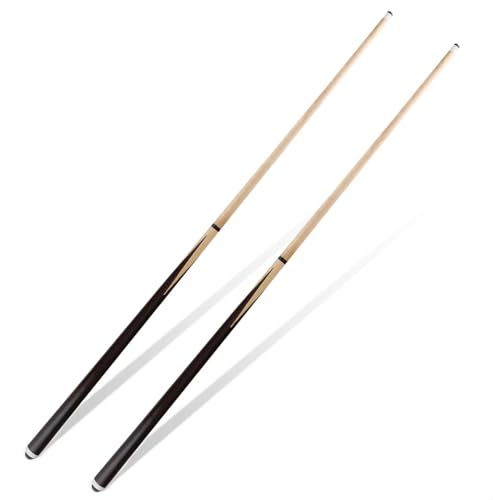
Between $50 and $75, a pool cue stops being just a cheaper version of the same build and starts including real material upgrades. Here’s exactly what changes, and whether it’s worth the extra money for how you actually play.
Between $50 and $75, a pool cue starts to actually change in the parts that matter: a hand-shaped, better-finished grip section, more consistent Canadian maple, and tighter quality control on straightness. It still won’t have a low-deflection shaft or a precision metal joint, those show up closer to $100 and up, but this tier is the first place the upgrade is real rather than just a higher price tag on the same build.
This guide is the companion to our cheapest-tier pick, which covers cues under $40 for casual and bar play. If you’ve already read that one, or you already know a sub-$40 cue felt a little too plain or a little too rough in the hand, this is the next step up, and it’s worth understanding exactly what the extra $20 to $35 buys before you spend it.
The short version: in this range you’re paying for wood grading and finish work, not for shaft technology. That distinction matters because it tells you what to actually look for in a listing description, rather than trusting a price tag alone to signal quality.
- →$50-75 buys better wood grading and finish work, not low-deflection shaft technology
- →An ergonomic or contoured grip section is a real, checkable upgrade at this price, not marketing fluff
- →Straightness tolerance tightens up in this tier; expect fewer warp complaints in reviews
- →You’re still buying a solid maple build; carbon fiber and phenolic tips start higher up
- →This tier makes sense once you play regularly enough to notice how a cue feels, not just whether it hits straight
Table of Contents
What actually changes between $40 and $75
The core material is usually still the same species, Canadian hard maple, in both brackets. What changes is grading: cues in this tier are more likely to be cut from straighter-grained stock with fewer natural imperfections, which is the single biggest factor in whether a cue stays straight over time. You’re also more likely to see a hand-finished or textured grip section instead of a plain linen wrap, which changes how the cue feels through a full stroke, not just how it looks.
What usually does not change yet at this price is the shaft technology itself. Low-deflection shafts, whether phenolic-tipped or carbon fiber, are a $100-plus feature on nearly every brand that makes them. A $65 cue advertised as “low deflection” is worth double-checking against the actual shaft material listed, since the term gets used loosely in budget listings.
⚠️ Watch out: Watch for listings that lean entirely on the word “professional” without naming a specific material upgrade. At true budget prices, that word is doing marketing work, not describing a spec. Look instead for named details: grip material, tip brand or hardness rating, joint type (wood-to-wood versus metal-to-metal).
Our pick for this tier
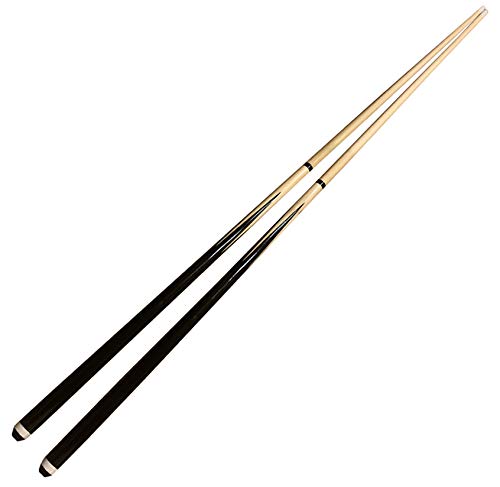
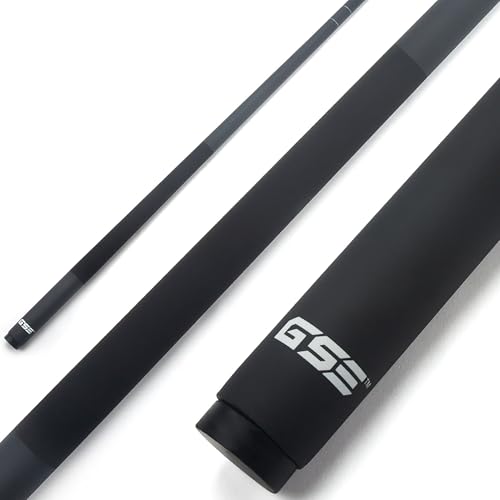
The AB Earth 58" Ergonomic Design Hardwood Canadian Maple Pool Cue is a good example of what this bracket does well. It keeps the same solid Canadian maple core as cheaper cues, but adds a hand-shaped ergonomic grip section designed to reduce slipping and improve feel through the stroke, along with a more finished look than a plain painted or wrapped butt. It’s sold as a standalone cue rather than bundled with a case, which keeps the money going into the cue itself instead of into accessories you may not need.
The ergonomic grip is the detail worth paying attention to here. A wavy or contoured hand-shaped section, compared with a plain cylindrical linen wrap, gives your bridge and grip hand more to reference by feel, which matters more than people expect once you’re playing regularly enough to notice cue feel at all. It’s a small mechanical difference with a real effect on comfort over a long session.
Who should spend the extra money
- ✓You play at least a few times a month and have started to notice cue feel
- ✓You’re buying one primary cue for yourself rather than outfitting a shared table
- ✓You want a better grip and finish without paying for shaft technology you won’t use yet
- ✓You’ve outgrown a sub-$40 cue and know specifically what bothered you about it
- ✕You only play a few times a year; the cheapest tier still covers that use case fine
- ✕You’re buying multiple cues for a bar or game room on a fixed budget
- ✕You expect low-deflection performance; that’s a different, pricier tier
- ✕You haven’t played enough yet to know what you’d want different from a basic cue
💡 Pro tip: Read reviews specifically for warp and straightness complaints before buying in this tier, not just star ratings. A cue with a 4.3-star average but several one-star reviews citing a bent shaft on arrival is telling you something a simple average hides.
How to tell if a listing is really this tier or just priced like it
Some sellers price a sub-$40 build at $60 simply because they can. The quickest check is the grip description: if the listing only says “linen wrap” or doesn’t mention the grip section at all, you’re likely looking at the same build as the cheaper tier with a higher price tag attached. Genuine $50-75 cues usually call out the grip shaping or material specifically because it’s the actual upgrade being sold.
Second check: look at the listed weight options. Cues that only come in one fixed weight are more common at the true budget end; the ability to choose a specific ounce weight, or an adjustable weight bolt system, starts appearing more often as you move up through this bracket and beyond.
A word on breaking in a new cue
Even a well-built maple cue in this range benefits from a short break-in period. The finish softens slightly with handling over the first few sessions, and the tip needs a light initial scuff and chalking to hold properly. Don’t judge a new cue’s feel after a single game; give it two or three sessions before deciding whether the grip and balance actually suit your stroke.
Balance point and how it changes at this price
Balance point, where the cue sits level when you rest it on a single finger, is usually somewhere between 18 and 19 inches from the butt end on a standard 58-inch cue. Cheaper cues can drift outside that range if the wood density varies unevenly along the shaft, which is another symptom of inconsistent grading rather than a deliberate design choice. In the $50-75 tier, tighter wood selection tends to keep the balance point closer to that standard range, which is part of why these cues often feel more “neutral” in hand than cheaper ones, even at the same stated weight.
You can check this yourself in under a minute after the cue arrives: balance it on your index finger and see where it settles. It won’t tell you everything about build quality, but a cue that balances noticeably off from where the listing implies is worth reporting to the seller while you’re still inside the return window.
Joint quality in this bracket
If the cue is two-piece, the joint is worth a closer look than most buyers give it. At this price, a wood-to-wood joint or a basic metal-to-metal joint are both common, and neither is inherently better at this budget, what matters is fit. A well-fitted joint screws together snugly with no wobble and no gap where the two halves meet; a poorly fitted one will show a visible seam or feel slightly loose even when fully threaded. Reviews that mention a “tight” or “solid” joint feel are a more useful signal than the joint material itself at this price point.
One-piece cues in this tier avoid the joint question entirely, which is part of why they remain a common choice even as the price climbs. The tradeoff, as with the cheapest tier, is storage and transport length, so factor that into the decision if you’ll be moving the cue between locations.
How this tier compares for gift buying
This bracket is also a common sweet spot for gift buying, for a partner, a friend, or an adult child who plays occasionally but seriously enough to appreciate a real upgrade over a house cue. It reads as a considered gift rather than the cheapest option on the shelf, without venturing into a price range where a wrong choice on weight or grip preference becomes an expensive mistake. If you’re buying for someone else, note the standard 19-ounce weight tends to be the safest default unless you know their preference. Pair it with a basic case if you’re gifting it, since a naked cue thrown in a closet is far more likely to end up scratched or leaned against something that eventually chips the finish.
Finish and how it holds up
The clear-coat finish on a $50-75 cue is typically applied in more coats and buffed more carefully than on the cheapest builds, which shows up as a smoother, less tacky feel on the forearm section and better resistance to the small dings that come from normal handling. It’s a cosmetic difference at first glance, but a finish that seals the wood properly also helps prevent moisture from getting in and causing the exact kind of warping that plagues the cheapest tier, so it’s a durability factor as much as a look.
Bottom line
If you’ve been playing on a sub-$40 cue and started noticing the grip or the feel through your stroke, the $50-75 tier is where that actually gets addressed with real material changes, not just a higher price. It’s still not the tier for shaft technology, but for most regular casual and social players, it’s the meaningful upgrade that’s worth paying for.
See also: Cheapest Pool Cues Under $40 if you’re still deciding whether you need to spend this much, or Best Pool Cue and Case Bundles if you also need a case.
Is a $50-75 pool cue worth it over a $30 one?
For anyone playing regularly, yes. The wood grading is more consistent, straightness holds up better over time, and the grip section is usually meaningfully upgraded rather than just repriced. For occasional players, the cheaper tier is still a reasonable choice.
Does this price range include low-deflection shafts?
Almost never. Low-deflection shaft technology, whether phenolic or carbon fiber, is typically a feature that starts appearing closer to $100 and up. A $60 listing claiming low deflection is worth double-checking against the actual named shaft material.
What’s the single biggest quality difference at this price?
Wood grading and grip finishing. Straighter-grained maple with fewer natural flaws reduces warp risk, and a shaped, ergonomic grip section changes how the cue feels through a full stroke in a way a plain wrap doesn’t.
Should I buy a case at this price point too?
It depends on whether you’ll transport the cue. If it stays at one table, a case is optional. If you’ll carry it anywhere, even a basic soft case protects the finish and joint far more than leaning it in a corner.
As an Amazon Associate, we earn from qualifying purchases through links on this page.