How to Throw a Quick-Stick Shot


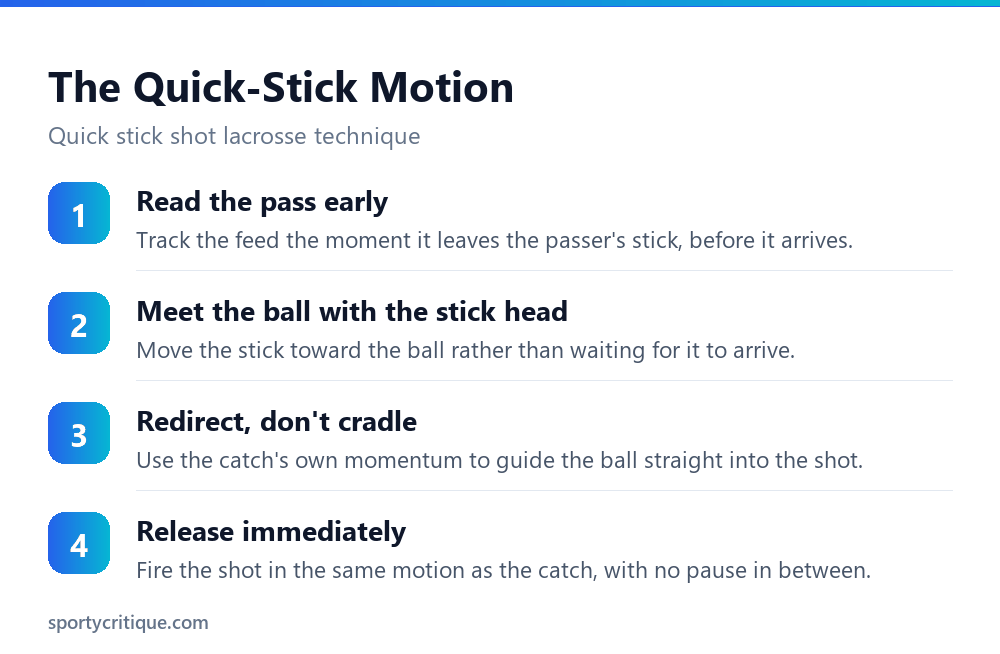
A quick stick shot lacrosse players use catches and releases the ball in a single fluid motion, with no pause to cradle or set up between receiving a pass and shooting. Reading the incoming pass early, moving the stick head to meet the ball rather than waiting passively, redirecting the ball’s momentum straight into the shot rather than absorbing and re-cradling it, and releasing immediately in that same motion are what make the technique effective against a goaltender who hasn’t had time to reset position.
The quick-stick shot’s entire value comes from speed and surprise, beating a goaltender who is still adjusting position from the previous pass rather than overpowering them with a harder, more deliberate shot. A player who catches the ball and pauses, even briefly, to cradle or reset before shooting has given the goaltender exactly the time they need to recover, defeating the technique’s core purpose entirely.
- →The catch and the shot happen in one continuous motion, with no pause to cradle in between
- →Reading the pass early gives enough time to position the stick before the ball actually arrives
- →The stick head should move to meet the ball rather than waiting passively for it to arrive
- →Redirecting the ball’s momentum into the shot is more effective than absorbing and re-cradling it
- →This technique specifically exploits a goaltender who hasn’t reset position after the previous pass
Table of Contents
Reading the Pass Before It Arrives
Successful quick-stick execution starts before the ball even arrives, with the shooter reading the pass’s trajectory and speed the moment it leaves the passer’s stick rather than waiting to react once the ball is already close. This early read gives enough time to position the stick head correctly and prepare the shooting motion, which is what makes the immediate release possible in the first place.
⚠️ Watch out: A player who waits until the ball is nearly in the stick pocket before deciding how to respond has left too little time to execute a clean quick-stick motion, usually resulting in either a fumbled catch or a delayed shot that gives up the technique’s core timing advantage entirely.
Meeting the Ball With the Stick Head
Rather than holding the stick still and waiting for the pass to arrive, moving the stick head toward the incoming ball slightly shortens the effective catching window and gives the shooter more control over exactly where and how the catch happens. This active positioning is a meaningful departure from standard passing and catching technique, where a softer, more receiving-focused approach is usually taught first.
This active catching approach takes deliberate practice to execute reliably, since it requires more precise timing than a standard, passive catch and carries a higher risk of a bad touch or dropped ball if the timing is off. Most coaches introduce quick-stick technique only after a player has already built solid, reliable standard catching fundamentals.
Redirecting Momentum Instead of Absorbing It
A standard catch absorbs the ball’s incoming momentum into the pocket before a separate cradling and shooting motion begins; a quick-stick catch instead redirects that existing momentum directly into the shot’s release, treating the catch and the shot as one continuous transfer of energy rather than two separate actions performed back to back.
This redirection is the specific mechanical detail that makes the technique fast enough to catch a goaltender out of position. A player who catches normally and then begins a separate shooting motion, even a quick one, has already reintroduced the pause the quick-stick specifically exists to eliminate.
💡 Pro tip: Practicing against a wall or rebounder, catching a rebounding pass and immediately redirecting it back at a target with no pause, builds the specific momentum-redirection feel that’s hard to isolate in a standard passing drill with a human partner.
When the Quick-Stick Shot Actually Works
This technique is most effective off a crisp feed from a teammate positioned to create a genuine scoring window, typically from behind the goal or from an adjacent attack position, specifically timed to catch the goaltender still adjusting from covering the previous pass or threat. Attempting a quick-stick shot off a slow, floating, or poorly timed feed rarely produces the same advantage, since the goaltender has ample time to reset regardless of how fast the shooter’s own release is.
Coordinated practice between the passer and the shooter, working specifically on feed timing and placement together rather than treating passing and shooting as entirely separate skills, improves quick-stick effectiveness more than either player drilling their half of the connection in isolation.
Common Quick-Stick Mistakes
- ✓Read the pass early to prepare stick positioning before it arrives
- ✓Move the stick head actively to meet the ball rather than waiting passively
- ✓Redirect the ball’s existing momentum straight into the shot
- ✓Practice with a partner specifically timing feeds for this technique
- ✕Waiting until the ball is nearly in the pocket to decide how to respond
- ✕Catching passively and beginning a separate shooting motion afterward
- ✕Attempting the technique off a slow, floating, or poorly timed feed
- ✕Skipping standard catching fundamentals before attempting quick-stick technique
Stick and Pocket Considerations
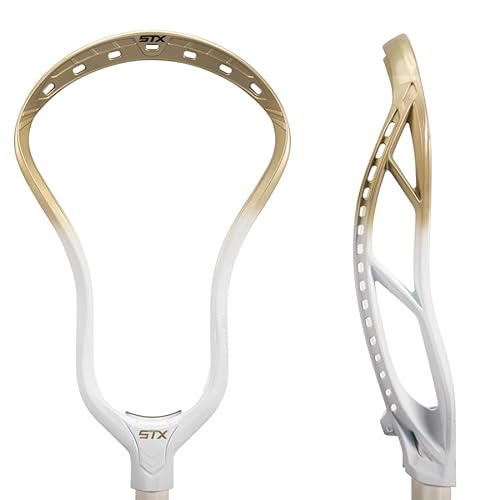
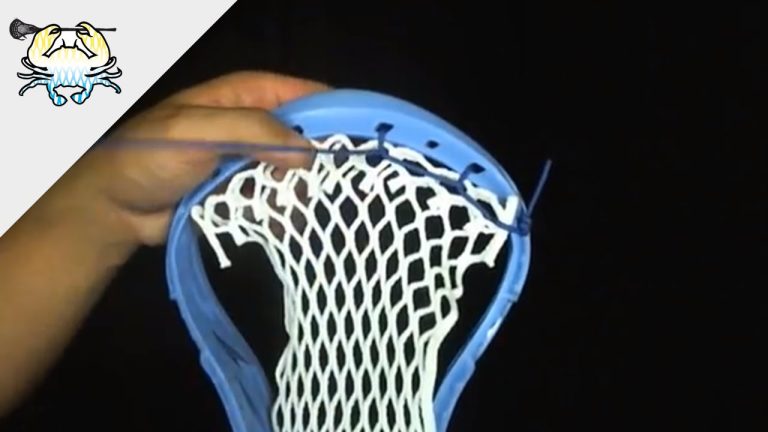
A pocket that’s too deep or too loose can actually work against quick-stick technique, since the ball settles too far into the pocket on catch, adding time and distance the shooter has to compensate for during the redirect. A tighter, more consistent pocket, within legal depth regulations, gives more predictable ball behavior during the catch-and-release motion this technique depends on.
📊 Note: Legal pocket depth rules exist specifically to prevent an unfairly deep pocket from giving a player excessive ball control advantages, and a pocket right at or near that legal limit doesn’t necessarily help quick-stick technique the way a moderate, consistent pocket does.
A Practice Progression for Learning It
Starting with stationary, close-range partner passing focused purely on the catch-to-release timing, without worrying about shot power or placement yet, isolates the core mechanical skill before adding complexity. Gradually increasing pass speed and distance, then adding actual shot targets and eventually a goaltender, builds the technique in layers rather than attempting the full, game-speed version immediately.
Incorporating movement, catching the quick-stick pass while cutting through the offensive zone rather than standing still, closes the gap between isolated practice and how the technique actually gets used in a real game, where a shooter is rarely standing perfectly still and set when the feed arrives.
Footwork That Supports the Quick-Stick
Good footwork positions the body to receive the pass already facing or angled toward the goal, rather than needing to turn or reposition after the catch, which would reintroduce the exact delay the quick-stick technique is designed to eliminate. Cutting into the reception spot at the right angle, timed to arrive just as the pass does, sets up both the catch and the shot in one coordinated movement.
A player who arrives at the catch position too early and has to wait, or too late and has to reach or stretch awkwardly for the ball, undermines the clean mechanics the technique depends on. Timing the approach run or cut to sync with the pass’s arrival is a footwork skill that deserves as much practice attention as the stick mechanics themselves.
Quick-Stick From the Off-Hand Side
Executing a quick-stick shot from a player’s weaker or off-hand side is meaningfully harder than from the dominant side, since the reduced stick control and comfort most players have off-hand compounds the already tight timing window the technique requires. Many players default to avoiding quick-stick attempts off-hand entirely until their off-hand stick skills reach a solid baseline level.
Deliberately practicing quick-stick catches and releases off-hand, even at a slower, more controlled pace than the dominant-hand version, closes this gap over time and prevents a defense from simply forcing every play toward a shooter’s off-hand side to neutralize the technique entirely. This off-hand development is a longer-term project than mastering the technique on the dominant side alone.
Reading the Goaltender’s Position
Even with perfect catch-to-release mechanics, a quick-stick shot still needs a target, and glancing at the goaltender’s position in the instant before the pass arrives, without breaking focus on the catch itself, helps identify which side of the goal is actually open. This is a genuinely difficult skill to divide attention for, and it’s usually the last piece that comes together after the catch-and-release mechanics themselves feel automatic.
Shooters who rely purely on a pre-planned target rather than reading the goaltender’s actual position in the moment sometimes shoot directly at a goaltender who has already recovered to cover that specific spot, wasting the timing advantage the quick-stick technique worked to create in the first place. Combining fast mechanics with even a quick, late read of the goal produces meaningfully better results than mechanics alone.
Game Situations Where This Technique Shines
Behind-the-goal feeds to a cutting attackman, a skip pass across the middle catching the defense mid-slide, and broken-play scrambles where the goaltender hasn’t had time to square up are all classic situations where quick-stick technique produces disproportionate results relative to a standard, deliberate shot attempt in the same spot.
Man-up situations, where the offense already has a numbers advantage, also reward quick-stick shooting specifically, since the extra offensive player creates more opportunities for a goaltender to be caught mid-adjustment covering multiple threats at once. Recognizing these recurring situational patterns helps a player identify quick-stick opportunities in live play rather than only executing the technique when specifically drilled for it in practice.
Frequently Asked Questions
What makes a quick-stick shot different from a normal catch-and-shoot?
The catch and the shot happen in one continuous motion, with the ball’s incoming momentum redirected straight into the release rather than absorbed and followed by a separate shooting motion.
Why does my quick-stick shot keep missing or fumbling?
Reading the pass too late is the most common cause, leaving too little time to position the stick correctly before the ball arrives. Practicing the early read specifically often resolves this.
Should beginners learn quick-stick technique right away?
No. Most coaches introduce it only after a player has solid, reliable standard catching fundamentals, since quick-stick technique carries more risk of a bad touch if the underlying catching skill isn’t already dependable.
Does pocket depth affect quick-stick shooting?
Yes. A moderate, consistent pocket generally gives more predictable ball behavior during the catch-and-release motion than a very deep or very loose one.
What kind of pass sets up a quick-stick shot best?
A crisp, well-timed feed specifically aimed at catching the goaltender still adjusting from the previous play. A slow or floating pass gives the goaltender time to reset regardless of shot speed.
How do I practice this technique effectively?
Start with stationary, close-range passing focused purely on catch-to-release timing, then gradually add speed, distance, movement, and eventually a goaltender as the core timing becomes reliable.
The quick-stick shot rewards timing, early reads, and coordinated practice with a passer far more than raw shooting power. Mastering the momentum-redirection mechanic at its core turns a flashy-looking play into a reliable, repeatable scoring tool against goaltenders still catching up to the previous pass.
Coaches who film and review these reps with players, pointing out the exact moment a pause crept back into the motion, speed up this learning process considerably compared to a player trying to self-correct purely by feel without any outside feedback.
None of this comes together overnight. The players who execute this shot most reliably in games are almost always the ones who put in deliberate, repetitive reps on the exact catch-to-release timing long before they ever tried it against a live defense and a real goaltender.
As an Amazon Associate, we earn from qualifying purchases through links on this page.