Best Tensor Table Tennis Rubbers: Sponge Density, Arc Trajectory & Spin

In 2008, the International Table Tennis Federation (ITTF) enacted a landmark ban on volatile organic compound (VOC) speed glues for health and environmental safety. For decades, players had relied on chemical glues to swell rubber sponges, generating blistering catapult speed and distinct acoustic clacks. In response to the ban, German and Japanese chemical engineers pioneered ‘Tensor’ technology—permanently baking molecular tension directly into porous synthetic sponges and elastic topsheets. Today, tensor rubbers dominate international competition, offering explosive catapult acceleration, heavy topspin, and crisp ball feedback against 40+ ABS plastic poly balls.
Table of Contents
Anatomy of a Tensor Rubber: Topsheet Elasticity and Sponge Dynamics
To choose the right tensor rubber for your blade, you must understand how sponge density and pimple geometry interact:
Porous Sponge Cell Structure: Unlike traditional dense, closed-cell sponges, tensor sponges feature large, microscopic air chambers (such as Butterfly Spring Sponge X and Xiom Carbo Sponge). When the 40+ plastic ball impacts the rubber, these porous cells compress like thousands of micro-springs, pocketing the ball deeply before exploding outward with high kinetic rebound.
Sponge Hardness (Shore O Scale): Sponge hardness dictates control and power thresholds:
Hard Sponges (47.5° – 50°): Maximum speed ceiling, direct low trajectories, and extreme power on high-speed counter-loops. Requires proper kinetic chain body mechanics to compress the sponge. Best suited for offensive forehand attack weapons.
Medium-Soft Sponges (40° – 45°): Extended dwell time, higher trajectory safety arcs, and effortless catapult pop on compact swings. Outstanding for backhand opening loops against heavy backspin chops, quick blocks, and active spin counters.
Tensor Table Tennis Rubber Comparison: Sponge Hardness, Speed & Arc Matrix
| Rubber Model | Sponge Hardness (Shore O) | Tension Technology Profile | Trajectory Arc & Dwell Time | Best Forehand / Backhand Placement | Amazon Price & Recommendation |
|---|---|---|---|---|---|
| Butterfly Dignics 05 | 40° (Medium-Hard Spring Sponge X) | High Tension + Enhanced Surface Grip | High Trajectory Arc / Exceptional Dwell | Forehand & Aggressive Backhand Loop | Check Amazon Price (Top Professional Tournament Pick) |
| Tibhar Evolution MX-P | 47.5° (Hard Red Energy Sponge) | Pro-Tension Dynamic Catapult | Direct Medium Arc / Explosive Speed | Forehand Power Loop Dominance | Check Amazon Price (Best Forehand Counter-Punch Power) |
| Yasaka Rakza 7 (Standard / Soft) | 45° / 40° (Natural Rubber Gum) | Power Sponge Hybrid Tension | High Safety Arc / Maximum Forgiveness | Backhand Control & All-Around Spin | Check Amazon Price (Best Durability & Value) |
| Donic Baracuda | 47.5° (Porous Blue Sponge) | Spin-Elastic Built-in Speed Glue | Extreme High Arc / Heavy Spin Dip | Backhand Opening Loops & Chops | Check Amazon Price (Best Backhand Heavy Topspin Value) |
| Xiom Vega Pro | 47.5° (Black Carbo Sponge) | Hyper Elasto Carbon Sponge | Medium-High Dynamic Arc | Forehand & Backhand Counter-Drive | Check Amazon Price (Best Budget Tensor Under $45) |
Detailed Reviews: The Best Tensor Table Tennis Rubbers
1. Butterfly Dignics 05: The World-Class Tournament Standard
The Butterfly Dignics 05 Rubber represents the zenith of high-tension rubber engineering. Built on Butterfly’s advanced Spring Sponge X and a newly formulated abrasion-resistant topsheet, Dignics 05 holds the ball longer than its legendary predecessor, Tenergy 05, while producing an even higher, safer trajectory arc.
When executing counter-loops close to the table or attacking heavy underspin balls, Dignics 05 grabs the plastic poly ball with fierce grip. The ball clears the net with ample margin before diving sharply onto the opponent’s baseline, kicking forward with heavy topspin that forces opponents into weak, high defensive blocks. With significantly improved surface longevity that outlasts standard tensors by 30%, Dignics 05 is the premier choice for serious competitive players.
2. Tibhar Evolution MX-P: The Ultimate Forehand Power Engine
If your offensive strategy revolves around crushing forehand third-ball winners from mid-distance, the Tibhar Evolution MX-P Table Tennis Rubber is a thunderous powerhouse. Equipped with a firm 47.5-degree red open-pore energy sponge, the MX-P is the closest modern rubber to old-school speed-glued setups.
The MX-P produces a penetrating, direct ball flight with blistering speed. When you accelerate through full-power loops, the sponge absorbs the ball’s incoming pace and unleashes a ferocious forward catapult that blows past defenders. While it demands active footwork and disciplined stroke mechanics, its explosive power ceiling is unmatched in European rubber production.
3. Yasaka Rakza 7: Supreme Durability & All-Around Spin Balance
For players seeking professional tensor performance without extreme sensitivity to incoming opponent spin, the Yasaka Rakza 7 Rubber is a beloved worldwide classic. Yasaka builds Rakza 7 with a high percentage of natural gum rubber in the topsheet, resulting in exceptional mechanical grip and extraordinary durability.
Rakza 7 produces a high, safe trajectory arc that makes opening up against backspin chops effortless. On passive blocks, the natural rubber absorbs opponent speed, allowing you to direct the ball safely into deep corners. It is arguably the most versatile backhand rubber in existence, equally effective for intermediate club players and master tournament competitors.
4. Donic Baracuda: The High-Arc Spin Monster
The Donic Baracuda Table Tennis Rubber is renowned for producing the highest ball trajectory arc in table tennis. Built with German ESN tensor technology, Baracuda’s grippy topsheet grabs the ball, launching it in an exaggerated parabolic rainbow curve over the net.
This high arc provides immense safety when lifting heavy backspin pushes from underneath table level. Upon striking the opponent’s side, the ball dips aggressively and bites into the table surface, skidding low with extreme rotational spin. For players developing their backhand loop-drive mechanics, Baracuda provides immense forgiveness and consistency.
5. Xiom Vega Pro: Best High-Performance Tensor Under $45
Top-tier competition rubbers frequently retail between $65 and $90. The Xiom Vega Pro Rubber delivers authentic German tensor performance for under $45. Featuring Xiom’s distinctive black Carbo Sponge, the Vega Pro pairs carbon composite dampening with a high-friction hyper-elastic topsheet.
Vega Pro excels at modern close-to-the-table counter-driving and punch-blocking. The medium-hard 47.5-degree sponge provides crisp feedback and linear speed control, ensuring that passive blocks stay low and penetrating. It is the premier budget-friendly upgrade for intermediate competitors moving up from beginner equipment.
Rubber Care and Cleaning Protocols
Because tensor rubbers maintain permanent molecular pre-tension, environmental exposure to dust, ozone, and ultraviolet light accelerates topsheet oxidation. Follow these maintenance rules:
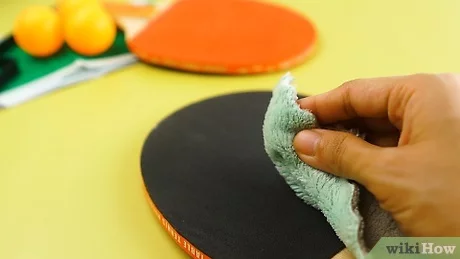
Clean with Distilled Water Only: Avoid alcohol-based or harsh detergent cleaners; chemical solvents strip natural oils from the topsheet, making the rubber glassy and slick. Use a specialized rubber cleaning foam or a damp microfiber sponge with distilled water after every playing session.
Apply Protective Sheets: While the rubber is still slightly damp after wiping, apply a non-adhesive protective plastic sheet across the face. Use a rubber roller to squeeze out air bubbles, locking out ambient dust and preventing atmospheric oxidation during storage in your racket bag.
VOC-Free Water-Based Gluing Protocols for High-Tension Sponges
Because tensor rubbers contain delicate, porous open-cell sponges pre-stressed with internal molecular tension, improper gluing methods will permanently damage the sponge or cause bubbling under the topsheet. Follow these professional rubber mounting rules:
1. Use Only Dedicated Water-Based Glue: Always use ITTF-approved water-based VOC-free latex glues (such as Butterfly Free Chack Pro II, Donic Vario Clean, or Revolution No. 3). Never use old solvent-based glues or industrial rubber cements; chemical solvents dissolve the internal tension of modern tensor sponges, causing premature shrinkage and dead bounce spots.
2. Apply Thin, Transparent Glue Layers: Spread a thin, even coat of glue across both the blade face and the rubber sponge using a high-density foam clip applicator. Allow both surfaces to dry completely until the milky white glue turns 100% transparent (typically 15 to 20 minutes). Assembling the rubber while the glue is still white traps moisture inside the sponge cells, deadening speed.
3. Use a Cylindrical Roller with Light Pressure: Align the rubber starting at the base of the handle. Roll the rubber onto the blade with a smooth wooden or acrylic roller using gentle, uniform pressure. Never stretch or pull the rubber sheet as you apply it; stretching creates artificial surface tension that causes the edges to peel away from the blade within days.
Pimple Geometry Dynamics: Inward Pimple Height, Width and Spacing
Beneath the smooth outer surface of an inverted table tennis rubber lies a grid of conical or cylindrical rubber pimples (pips) facing downward into the sponge. The geometric dimensions of these internal pimples dictate rubber behavior:
Wider, Densely Packed Pimples (Code 05 Structure): Used in Butterfly Dignics 05 and Tenergy 05, this geometry places thick pimples closely together. This creates a firm surface with immense mechanical grip, allowing players to generate maximum rotational spin on high-speed looping brush contact.
Narrow, Widely Spaced Pimples (Code 64 Structure): Features thinner pimples with greater distance between them. This allows the ball to penetrate deeper into the soft sponge with less surface resistance, maximizing forward ball speed and flat counter-punching acceleration.
Loop-Driving Against Heavy Underspin: Technique Guide
The primary advantage of tensor rubbers like Tibhar MX-P and Donic Baracuda is their ability to lift heavy backspin chops. When opening against a defensive push, drop your racket below table level by bending your knees. Accelerate your forearm upward and forward at a 45-degree angle, grazing the back-top of the ball. The tensor sponge grabs the ball, converting the opponent’s backspin into devastating topspin that accelerates forward off the bounce.
Topsheet Cleaning and Anti-Oxidation Care Routine
Ambient oxygen, ultraviolet sunlight, and airborne dust particles break down the delicate polymer chains in high-tension topsheets. To keep your tensor rubber gripping like new across a full season:
Wipe Down After Every Match: Use a specialized rubber cleaning foam or distilled water on a lint-free sponge to wipe away sweat droplets and ball dust. Avoid breathing on the rubber (the ‘fogging’ technique), as moisture from your breath contains trace oils and saliva enzymes that degrade rubber grip.
Store with Non-Adhesive Film: While the topsheet is drying, roll a non-adhesive protective plastic sheet across the rubber face. Store your assembled racket inside a thermally insulated racket case away from direct sunlight and freezing temperatures.
Sponge Thickness: 1.9mm vs. 2.1mm vs. Max
Choosing sponge thickness tailors the rubber’s catapult response to your playing style. A 1.9mm sponge provides superior linear control, lower weight, and sharper feedback for active blocking. A 2.1mm or Max sponge provides the deepest ball pocketing and highest speed ceiling, recommended for aggressive offensive players who attack from mid-distance.
Edge Tape Protection and Table Collision Prevention
Because high-tension porous sponges are brittle around the outer edges, catching the table corner during low-ball push returns can chip or tear the sponge crumb. Apply a durable 10mm to 12mm padded cloth edge tape (such as Butterfly or Nittaku side tape) around the racket perimeter. Padded edge tape absorbs table knocks, protecting both the wood plies of your blade and the perimeter edges of your tensor rubbers.
ITTF Flatness Regulations and Chemical Booster Bans
Under official ITTF Rule 3.2.1, the total thickness of rubber including topsheet, sponge, and adhesive film must not exceed 4.0 millimeters. Applying aftermarket liquid chemical boosters (paraffin or limonene oils) to swell tensor sponges is illegal in sanctioned tournament play and causes uneven surface dome bubbling that results in immediate racket disqualification.
Humidity Control and Grip Preservation in Hot Gymnasiums
In high-humidity playing environments (such as summer club tournaments without air conditioning), airborne moisture condenses on the cold rubber topsheet, creating microscopic water films that cause the plastic poly ball to slip off the rubber with zero spin. Keep a clean terry cloth wristband or small micro-towel in your pocket, wiping the topsheet lightly between points to eliminate slick condensation and restore mechanical friction.