Best Turf Soccer Shoes for Artificial Grass: Multi-Stud Outsoles, EVA Dampening, Upper Abrasion Armor, and ACL Rotational Safety

Artificial grass and synthetic turf have transformed modern soccer infrastructure across North America and Europe, providing municipal parks, schools, and competitive clubs with weather-resistant, year-round playing surfaces. However, transitioning from natural grass to artificial turf introduces severe biomechanical hazards if players wear inappropriate footwear. Every weekend, amateur and competitive players lace up long-bladed firm ground (FG) cleats on thin synthetic turf, subjecting their joints to dangerous rotational lock, painful plantar pressure points, and heightened risks of severe knee and ankle ligament damage.
Modern short-pile artificial turf demands dedicated footwear engineering. Equipping yourself with the best turf soccer shoes for artificial grass provides the specialized multi-stud rubber outsoles, shock-absorbing EVA midsole wedges, reinforced suede or rubber toe bumpers, and controlled rotational slip necessary to dominate competitive five-a-side, seven-a-side, and full-field synthetic matches without sacrificing joint health. Understanding outsole physics, rubber crumb heat dissipation, upper abrasion resistance, and ligament preservation ensures you perform at peak speed while safeguarding your knees for the long haul.
Table of Contents
Biomechanics of Turf: Rotational Traction and ACL Injury Prevention
The primary medical and biomechanical hazard of artificial turf is excessive rotational traction. To appreciate this risk, one must examine what occurs during a high-speed directional cut or sharp pivot on synthetic fibers:
The Rotational Lock Phenomenon: On natural grass, long studs slice through sod and displace dirt sideways if the foot is forced to rotate under heavy body weight, effectively releasing rotational torque. On artificial turf, synthetic polyethylene carpet fibers are interwoven with thousands of abrasive rubber infill pellets over an impenetrable concrete or crushed stone base. When a long, rigid plastic FG stud penetrates this synthetic matrix, the fibers wrap around the stud. If the player attempts a sudden rotational pivot, the cleat remains locked in the turf plane while the player’s femur and torso rotate. The resulting torsional load passes directly through the knee joint, frequently rupturing the anterior cruciate ligament (ACL) or tearing the medial meniscus.
Rubber Stud Elastic Deformation: Specialized turf (TF) outsoles resolve this hazard through material physics. Instead of ten or twelve long plastic blades, a TF outsole incorporates forty to seventy low-profile rubber studs (measuring between 2mm and 4mm in height). Rubber possesses a significantly lower modulus of elasticity than rigid thermoplastic polyurethane. When peak rotational torque strikes the outsole during an aggressive cut, the rubber studs flex, compress, and release from the turf fibers. This controlled rotational slip acts as a mechanical fuse, capping peak torque below the failure threshold of human knee ligaments.
Plantar Pressure Distribution: On hard, thin turf pitches, rigid studs cannot sink into the ground, forcing the player’s full body weight onto tiny points beneath the first metatarsal head and calcaneus. This creates painful “cleat pressure” that causes metatarsalgia, arch blisters, and plantar fasciitis. A turf shoe’s dense matrix of rubber nubs distributes gravitational load across hundreds of square millimeters, eliminating pressure concentrations.
Top Turf Soccer Shoes for Artificial Grass: Technical Specification Matrix
| Turf Shoe Model | Outsole Tread & Stud Geometry | Midsole Cushioning & Stack | Upper Material & Toe Rand Armor | Rotational Traction / Joint Safety | Amazon Recommendation |
|---|---|---|---|---|---|
| Adidas Mundial Team Turf | Traxion multi-stud round rubber nubs | Dual-density die-cut EVA wedge midsole | Full kangaroo leather upper with suede toe bumper | Low rotational torque (safest for knee ligaments) | Check Adidas Mundial Price (Best Classic Leather Durability) |
| Nike Tiempo Legend 9 Academy TF | Low-profile hexagonal rubber micro-studs | Plush molded foam insole with EVA wedge | Calfskin leather vamp with raised foam touch pods | Balanced linear acceleration and lateral release | Check Nike Tiempo Price (Best Lightweight Modern Touch) |
| Puma Future 7 Match TT | Multi-directional chevron and bladed rubber studs | Lightweight EVA shock-absorption core | FUZIONFIT knit upper with PWRTAPE reinforcement | High aggressive sprint bite for fast wingers | Check Puma Future Price (Best Dynamic Agility & Lock) |
| Mizuno Morelia Sala Classic TF | Dense circular rubber suction studs | U4ic lightweight responsive midsole foam | Traditional synthetic leather with reinforced toe stitch | Exceptional pivot fluidity and futsal transitions | Check Mizuno Morelia Price (Best Low-Profile Precision) |
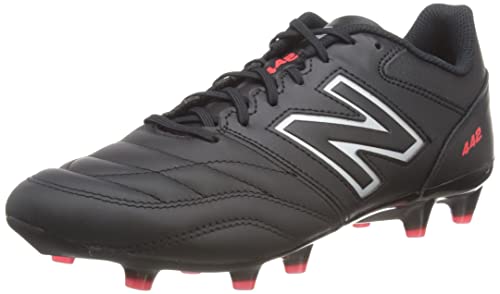
| New Balance 442 V2 Team TF | Non-marking rubber turf nubs with flex grooves | Full-length EVA midsole cushioning | Full-grain leather vamp with microfiber collar lining | Medium-wide forefoot volume for wider feet | Check New Balance 442 Price (Best Wide-Foot Turf Comfort) |
Midsole Architecture: Why Cushioning Is Critical on Artificial Pitches
Standard natural grass soccer cleats feature paper-thin internal footbeds placed directly atop rigid plastic soleplates, relying on soft natural earth to absorb running shock. Artificial turf possesses virtually zero soil compliance, making integrated midsole cushioning vital:
Dual-Density EVA Wedges: Classic turf shoes like the Adidas Mundial Team Turf incorporate a full-length or three-quarter die-cut ethylene-vinyl acetate (EVA) wedge between the rubber outsole and the leather upper. This cellular foam absorbs vertical impact shock on heel strike, dampening bone vibration that otherwise travels up the tibia into the patellar tendon and lumbar spine. Veteran players competing on artificial pitches often find that switching to an EVA-cushioned turf shoe completely eliminates post-match lower back stiffness and shin splints.
Low Stack vs Maximal Stack Trade-Offs: Unlike road running shoes where 35mm stack heights are common, soccer demands high lateral agility and close ball feel. A turf shoe midsole must strike a delicate compromise: typically maintaining a stack height between 12mm and 18mm. If the midsole is excessively thick, the player’s center of gravity is raised, increasing lateral roll torque on the subtalar joint and heightening the risk of ankle inversion sprains during rapid lateral jockeying.
Responsive Polyurethane and Supercritical Foams: Modern performance turf boots (such as Puma’s ProFoam and Nike’s React foam adaptations) replace traditional EVA with responsive thermoplastic foams. These materials resist permanent compression pack-out across sixty-minute indoor and outdoor sessions, returning elastic kinetic energy to propel quick first-step accelerations off the mark.
Upper Durability: Combating Abrasive Synthetic Fiber Wear and Thermal Degradation
Artificial grass is extraordinarily hostile to soccer footwear materials. A shoe upper that lasts three seasons on pristine natural grass can suffer severe blowouts within two months on abrasive synthetic turf:
Friction Burn and Suede Rand Protection: Synthetic grass fibers act like fine-grit sandpaper against footwear. When a player strikes the ball with their instep or drags their toe while sliding to block a shot, the synthetic fibers grind directly against the front seam connecting the upper to the outsole. To prevent the upper from separating from the soleplate (a common issue known as “sole separation”), premium turf shoes feature reinforced suede leather split rands or vulcanized rubber toe bumpers stitched directly over the front bumper. The Adidas Mundial Team’s suede toe box wrap remains the industry benchmark for preventing toe blowouts.
Thermal Degradation from Crumb Rubber: On sunny summer afternoons, black crumb rubber infill absorbs massive amounts of solar radiation, with field surface temperatures frequently exceeding 130 to 140 degrees Fahrenheit (55 to 60 degrees Celsius). This extreme ambient heat softens standard glues and accelerates the breakdown of polyurethane upper coatings. Premium turf boots utilize heat-resistant adhesive formulations and breathable knit or perforated leather panels to vent hot interior air away from the foot.
Natural Kangaroo/Calfskin Leather vs Synthetic Knit Uppers: Traditionalists praise natural leather (featured on the Adidas Mundial Team and Nike Tiempo Legend 9 Academy TF) for its unmatched ability to mold to the unique contours of the foot, delivering a cushioned, dampened touch when trapping hard passes. However, natural leather requires disciplined post-match cleaning and leather balm application to keep turf infill dust from leeching natural tanning oils. Modern synthetic knits (like Puma’s FUZIONFIT) absorb zero water, clean easily with a damp sponge, and resist abrasive scuffing without maintenance.
Outsole Stud Geometry: Matching Lug Profiles to Turf Density
Not all synthetic pitches are identical. Surfaces vary from carpet-thin 1G turf laid over concrete gym floors to deep, infill-heavy 3G and 4G pitches. Selecting the right stud geometry maximizes traction while preserving freedom of movement:
Circular and Suction-Cup Rubber Studs: Featured on classic turf footwear and futsal transition boots like the Mizuno Morelia Sala Classic TF. Circular studs provide identical friction coefficients across 360 degrees of rotation. They excel at rapid pivoting, spin turns, and sole-of-the-foot ball rolls common in small-sided soccer, providing safe, predictable traction without catching.
Hexagonal and Micro-Blade Stud Layouts: Featured on the Nike Tiempo and Puma Future 7 Match TT. By arranging geometric micro-studs in alternating diagonal patterns, manufacturers provide directional bite: high traction during forward acceleration and lateral braking, paired with smooth release during rotational twisting.
Flex Grooves and Forefoot Articulation: A stiff, unyielding turf soleplate forces the foot to slap flatly against the ground, straining the plantar fascia. High-end turf outsoles incorporate segmented flex grooves across the metatarsal break line, allowing the shoe to bend naturally with the foot during full sprint stride extension.
Top Turf Soccer Shoe Reviews and Field Evaluations
1. Adidas Mundial Team Turf: The undisputed king of durability and joint comfort on artificial grass. Built with a full kangaroo leather upper, dual-density EVA wedge midsole, and an abrasion-resistant suede toe rand, the Mundial Team delivers unmatched durability and comfort. Its dense multi-stud Traxion rubber outsole provides dependable traction while maintaining low rotational torque, making it the top choice for veteran players, referees, and coaches seeking absolute knee protection.
2. Nike Tiempo Legend 9 Academy TF: The modern benchmark for lightweight touch on synthetic pitches. Nike reconstructs the iconic Tiempo with soft calfskin leather backed by raised foam touch pods that cushion ball impact for surgical passing. The low-profile rubber stud array delivers responsive linear bite without catching, while the streamlined foam insole keeps the shoe agile and fast.
3. Puma Future 7 Match TT: Engineered for electric attackers and dynamic playmakers who refuse to sacrifice speed on turf. The FUZIONFIT upper adapts to the foot shape with compressive elastic support, allowing you to play laced or unlaced. The aggressive multi-directional rubber outsole provides explosive acceleration out of sharp cuts, making it the most responsive modern turf shoe on the market.
4. Mizuno Morelia Sala Classic TF: Japanese craft engineering tailored for technical small-sided soccer. Featuring a supple synthetic leather vamp with reinforced toe stitching and a high-response U4ic midsole, the Morelia Sala Classic offers unmatched precision for sole-of-the-foot ball manipulation. Its dense round suction studs allow silky smooth 360-degree rotational pivots.
5. New Balance 442 V2 Team TF: The premier choice for players with wider feet who suffer painful forefoot pinching in narrow European boots. The 442 V2 combines a soft full-grain leather forefoot with a roomy anatomical toe box and a full-length EVA cushion. It delivers immediate game-ready comfort and dependable grip on every variety of synthetic grass.
Maintenance Protocols: Caring for Turf Shoes and Managing Infill
Synthetic pitches leave unique residues that require disciplined maintenance to preserve footwear longevity:
Post-Match Crumb Rubber Extraction: After every session, remove the shoe insoles and shake out the accumulated black crumb rubber pellets. Leaving hard rubber granules trapped under the insole causes focal pressure points that wear holes through the footbed strobel board.
Cleaning Synthetic Turf Dust: Polyethylene turf fibers break down into fine, microscopic plastic dust that coats the upper and settles into leather pores. Wipe your shoes down with a soft damp cloth after every match. For natural leather models, apply a modest dab of leather conditioning cream every three to four weeks to prevent abrasive turf friction from stiffening the hide.
Air Drying Away from Heat Sources: Never place wet turf shoes next to home radiators, heating registers, or inside a hot clothes dryer. High heat reactivates soleplate bonding adhesives, causing premature delamination of the rubber outsole from the foam midsole.
Heel Counter Architecture and Achilles Tendon Strain Relief
Because artificial turf provides less vertical compliance than natural sod, braking forces on deceleration generate abrupt eccentric loading across the calcaneal tendon (Achilles tendon):
Molded Internal Heel Cups: Premium turf models integrate stiffened internal thermoplastic heel counters that cup the calcaneus, preventing rearfoot eversion when planting the foot on uneven crumb rubber mounds. A stable heel cradle prevents the heel from slipping upward during explosive accelerations, eliminating friction blisters at the back of the ankle.
Achilles Notch Contour: Look for turf shoes featuring a sculpted dip or cushioned notch along the top edge of the heel collar. Stiff, straight-cut collars dig into the insertion point of the Achilles tendon during plantarflexion, causing painful retrocalcaneal bursitis after ninety minutes of hard running on synthetic turf.