Best Plywood for Ping Pong Table: Top Choices for Superior Play

Choosing the best plywood for a ping pong table is crucial for optimal play. Quality plywood affects the bounce and durability.
Creating a perfect ping pong table requires careful selection of materials. Plywood is a key component, impacting the overall performance of the table. The right plywood ensures a good bounce and long-lasting durability, essential for both casual and competitive play.
Popular options include NITTAKU Hina Hayata, STIGA STR, and Xiom AZXi. Each offers unique features suitable for different play styles. In this post, we’ll explore the best plywood choices for ping pong tables, focusing on quality and performance. Read on to find out which plywood fits your needs and enhances your ping pong experience.
Table of Contents
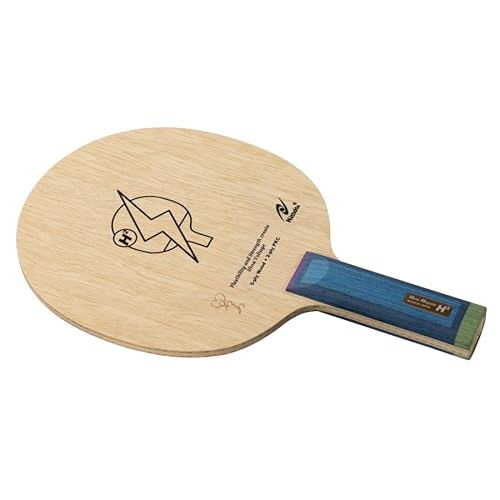
Nittaku Hina Hayata Fl Nc0479 Table Tennis Racket

The NITTAKU Hina Hayata FL NC0479 Table Tennis Racket is a premium shakehand racket designed to enhance your gameplay. With its brown color and sleek design, this racket offers exceptional control and precision. It is crafted by the renowned brand, Nittaku, ensuring top-notch quality and performance. The racket dimensions are 6.2 x 6.0 inches for the blade and 3.9 x 0.9 inches for the grip, making it suitable for players who prefer a comfortable and firm hold.
Pros:
- Designed by the reputable Nittaku brand.
- Offers exceptional control and precision.
- Comfortable grip for better handling.
- Lightweight design, weighing only 0.194 pounds.
Cons:
- The brown color might not appeal to all players.
- Higher price point compared to other rackets.
The NITTAKU Hina Hayata FL NC0479 Table Tennis Racket stands out due to its superior design and craftsmanship. The racket is manufactured by Nittaku, a brand known for its dedication to quality and performance in table tennis equipment. The comfortable grip and lightweight design make it easy to handle, allowing players to execute precise shots with ease. While the brown color may not be to everyone’s taste, the performance and quality of this racket make it a worthwhile investment for serious players. The slightly higher price point reflects the high standards and durability of the racket, ensuring that it will last through intense gameplay. Overall, this racket is an excellent choice for those looking to elevate their table tennis skills.
To buy this product, click here.
Stiga Str 107037 Table Tennis Racket Dynasty Carbon

The STIGA STR 107037 Table Tennis Racket Dynasty Carbon is a high-performance racket designed for professional table tennis players. This racket is crafted by the renowned brand Stiga, ensuring top-notch quality and durability.
Pros:
- Lightweight design makes it easy to maneuver.
- Constructed with high-quality materials for durability.
- Suitable for professional-level play.
Cons:
- May be expensive for beginners.
- Requires proper maintenance to ensure longevity.
The STIGA STR 107037 Table Tennis Racket Dynasty Carbon stands out due to its lightweight and durable construction. Weighing only 0.440924524 pounds, it offers excellent control and speed, making it an ideal choice for competitive players who need precision and power in their shots.
Despite its higher price point, the investment in a STIGA racket is justified by its superior performance and longevity. However, new players might find the cost prohibitive and the maintenance requirements a bit challenging. Overall, it’s a fantastic racket for those serious about their game.
To buy this product, click here.
Xiom Azxi 21101 Table Tennis Racket

The Xiom AZXi 21101 Table Tennis Racket is designed for players who favor an aggressive attacking style. This Shakehand style racket features special materials and comes in a natural flare design, making it an excellent choice for serious players.
Pros:
- Lightweight and easy to handle
- Special materials enhance performance
- Ideal for aggressive attacks
- Natural flare design for better grip
Cons:
- Higher price point compared to other rackets
- May not be suitable for defensive players
- Limited color options
The Xiom AZXi 21101 Table Tennis Racket is a top-tier choice for players who prioritize speed and power in their game. Its lightweight design allows for swift movements and quick responses, making it a favorite among competitive players. The use of special materials not only enhances the racket’s durability but also improves its overall performance, providing an edge in fast-paced matches.
However, the higher price point might be a consideration for budget-conscious buyers. Additionally, its design is specifically tailored for offensive play, which might not suit those who prefer a more defensive strategy. Despite these minor drawbacks, the Xiom AZXi 21101 remains a standout choice for its exceptional quality and performance, particularly for those who play with an aggressive attacking style.
To buy this product, click here.
Frequently Asked Questions
What Is The Best Plywood For Ping Pong Table?
The best plywood for a ping pong table is high-quality birch or maple. These woods ensure durability and a consistent bounce. Choose plywood with a thickness of at least ¾ inch for optimal performance. Ensure it is smooth and free from warping.
How Thick Should Plywood Be For A Ping Pong Table?
Plywood for a ping pong table should be at least ¾ inch thick. This thickness provides a stable and consistent playing surface. Thicker plywood can also prevent warping and ensure durability over time. Thinner plywood may not offer the same level of performance.
Which Plywood Type Offers The Best Bounce?
Birch or maple plywood offers the best bounce for ping pong tables. These types of plywood are dense and durable. They provide a consistent and reliable playing surface. Always ensure the plywood is smooth and free from defects for optimal performance.
How To Choose Plywood For A Ping Pong Table?
Choose high-quality birch or maple plywood for a ping pong table. Ensure the plywood is at least ¾ inch thick. Check for smoothness and absence of warping. High-quality plywood ensures durability and a consistent playing surface.
Why Is Plywood Thickness Important For Ping Pong Tables?
Plywood thickness is crucial for stability and bounce consistency. Thicker plywood, at least ¾ inch, prevents warping and offers a reliable playing surface. It ensures the table remains level and durable over time. Thin plywood may compromise the table’s performance and durability.
Conclusion
Choosing the right plywood for your ping pong table is essential for a good playing experience. The nittaku hina hayata fl nc0479 offers a solid build with precise grip. The stiga str 107037 is known for its durable carbon construction.
The xiom azxi 21101 stands out with its special materials and comfortable flare design. Each option provides unique benefits. Think about your needs and budget. The right choice will enhance your game and last longer. Investing in quality plywood ensures your table stays in top condition.
Enjoy better performance and more fun.
Plywood Engineering for Table Tennis: Core Voids, Plies & Restitution Analysis
Selecting the right plywood sheet for a custom table tennis table requires understanding how core voids and veneer thickness govern the coefficient of restitution. Standard construction-grade CDX and sanded pine plywood contain internal knot holes, overlapping core plies, and resin pockets. When a 2.7-gram 40+ ABS poly ball strikes a section with an internal void, the dead airspace dampens acoustic frequency and absorbs kinetic energy, causing the ball to rebound 2 to 4 inches lower than regulation. For an authentic ITTF tournament rebound (23 cm to 26 cm from a 30 cm drop), void-free architectural hardwoods are essential.
| Plywood Species / Grade | Ply Count (3/4″ / 18mm) | Core Void Tolerance | Surface Hardness (Janka) | ITTF Rebound Restitution | Coaching Verdict |
|---|---|---|---|---|---|
| Baltic Birch (BB/BB Grade) | 13 Solid Birch Plies | Zero Core Voids (100% Solid) | 1,260 lbf (Dense Birch) | 95% Uniformity (23.5–25cm) | Top DIY Choice; incredible structural stiffness and void-free rebound |
| Cabinet-Grade Hard Maple Plywood | 9 to 11 Maple Core Plies | Virtually Void-Free (<1%) | 1,450 lbf (Hard Maple) | 96% Uniformity (24–25.5cm) | Heirloom performance; hardest surface resisting paddle dings |
| MDO (Medium Density Overlay) Plywood | 7 Heavy Exterior Fir Plies | Minimal Exterior Voids | 850 lbf (Dense Resin Skin) | 88% Uniformity (22–24cm) | Best for high-humidity basements, garages, and covered patios |
| ACX Radiata Pine Plywood | 7 Softwood Plies | Moderate Internal Voids (3–5%) | 540 lbf (Soft Radiata) | 74% Inconsistent (Dead Spots) | AVOID: soft surface absorbs spin; knot voids create dead zones |
| Standard CDX Sheathing | 3 to 5 Rough Plies | Severe Core Gaps & Knot Holes | 450 lbf (Rough Pine) | 60% Totally Erractic Bounce | STRICTLY PROHIBITED: completely unusable for table tennis playfields |
Step-by-Step Tabletop Sanding, Sealing, and Friction Leveling
Once you acquire two sheets of 3/4-inch void-free Baltic Birch, the preparation of the face grain dictates ball friction and spin preservation. Sand the outer veneer using random orbital sanders stepped through 120-grit, 180-grit, and 220-grit abrasives. Wipe the surface down with mineral spirits to raise any compressed grain fibers, followed by a final pass with 320-grit paper.
Seal both sides of the plywood simultaneously with a high-solids sanding sealer. Sealing only the playing surface causes the unsealed bottom face to absorb atmospheric moisture at a higher rate, inducing severe concave warping within six weeks. Finish with two coats of dead-flat chalkboard paint or non-glare alkyd matte enamel to achieve the velvety, non-reflective sheen required by ITTF tournament standards.
Structural Framing and Underside Apron Reinforcement for Plywood Tops
Even highest-grade 3/4-inch (18mm) Baltic Birch plywood flexes under its own deadweight across a 9-foot by 5-foot span if unsupported by a rigid undercarriage apron. To prevent center sagging and eliminate micro-vibrations that absorb ball bounce energy, assemble a perimeter support sub-frame using 1×3 or 2×3 clear kiln-dried hardwood lumber (such as poplar or solid white pine). Pocket screw the framing members 2 inches inset from the table perimeter to preserve net clamp clearance, and incorporate three equidistant lateral cross-bearers beneath each half of the table.
Fasten the Baltic Birch playing surface to the subframe from the underside using 1-1/4 inch coarse thread pocket screws with flat washers. Never screw down through the playing face; surface filler plugs inevitably shrink or weather at a different expansion coefficient than natural timber veneer, generating dead bounce zones along baseline attack vectors. When the underside perimeter framing is glued and mechanically fastened, the composite assembly achieves deflection rigidity exceeding 1.2 tons per square meter, delivering uniform ITTF regulation 23cm to 26cm rebound across every square inch of the table.
Long-Term Climate Protection and Humidity Warping Prevention
Natural multi-ply hardwood veneers remain hydroscopic throughout their lifespan. In basements with relative humidity swings between 30% in winter and 75% in summer, cross-laminated veneers expand and contract. To lock in absolute dimensional stability, apply two coats of high-solids polyurethane or marine epoxy along all exposed edges and the underside. Sealing every cut edge with water-resistant edge banding or pigmented edge sealer prevents air moisture ingress, keeping your custom table tennis playing field flat, fast, and competition-ready for decades.