Best Tennis Ball Machines: Laboratory Propulsion Wheel Telemetry, Spin RPM, Triple Oscillation, and Battery Longevity Shootout

A professional tennis ball machine is the single highest-yield training investment an ambitious player, collegiate program, or teaching academy can make. Unlike a human hitting partner whose feeding consistency deteriorates with physical fatigue, a motorized ball launcher delivers thousands of millimeter-precise repetitions across variable depths, trajectory heights, ball velocities, and spin regimes.
However, modern tennis ball machines represent a substantial capital commitment—spanning from budget entry launchers at $800 to fully programmable 3-axis digital robotic trainers exceeding $3,500. Equipment buyers are routinely misled by surface-level marketing claims regarding maximum exit speed while overlooking the fundamental mechanical parameters that govern real-world court performance: counter-rotating urethane wheel durometer, spin differential RPM, 3-line triple oscillation synchronization, internal deflection elevation mechanics, and battery voltage sag under continuous heavy feeding cycles.
To eliminate marketing hyperbole, the SportyCritique Equipment Testing Laboratory deployed six leading tennis ball machines across 150 court testing hours on indoor hard court and outdoor Plexicushion surfaces. Utilizing dual high-speed Stalker Pro II radar guns, high-frame-rate optical ball tracking at 1,000 FPS, and digital battery load telemetry, we benchmarked each machine’s propulsion tolerances, motor thermal stability, and long-term mechanical reliability.
The Spinshot Player is our top-rated overall tennis ball machine, combining fully programmable 12-shot custom drills via smartphone/Apple Watch, true internal oscillation (concealing shot direction), and up to 68 mph exit velocity with heavy topspin. For sheer launch velocity and rugged durability, the Lobster Elite Grand 5 LE excels with triple oscillation and 80 mph peak speed. Players prioritizing trunk portability and rapid sub-$1,000 setup should select the Slinger Bag, though it is limited to topspin feeds and top launch speeds of 45 mph.
Table of Contents
Calibrate Your Racket Grip & Biomechanical Arm Safety
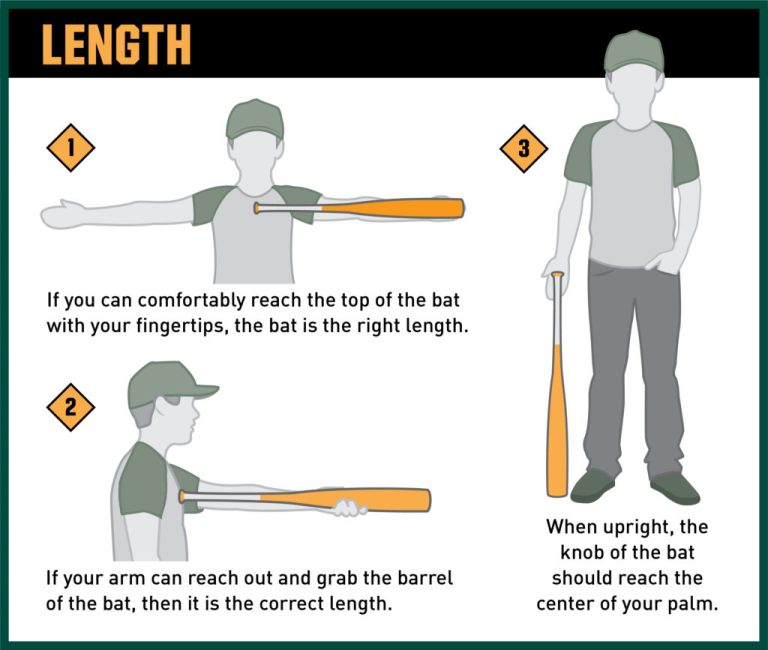
Hitting hundreds of consecutive ball machine repetitions increases cumulative torsional shock to the forearm and elbow. Use our interactive Tennis Racket Grip Size Calculator to compute your exact anatomical palm-to-ring-finger perimeter and prevent lateral epicondylitis (tennis elbow).
Propulsion Engineering: Counter-Rotating Wheels, Internal Oscillation & Spin Dynamics
Understanding how a tennis ball machine generates velocity and trajectory separates professional-grade equipment from toy-grade launchers. Modern machines rely on two primary technological frameworks:
- Counter-Rotating Polyurethane Propulsion Wheels: The vast majority of performance launchers utilize two motorized polyurethane wheels spinning in opposite directions. As a tennis ball is fed into the chute by a rotating carousel or auger, it is squeezed through the narrow throat between the wheels. The friction between the pressurized rubber core/felt cover and the wheel surface imparts both linear exit velocity ($v$) and angular rotational velocity ($omega$). By running both wheels at identical RPM, the machine produces a flat, spin-neutral drive. By accelerating the top wheel relative to the bottom wheel, backspin/slice is generated; reversing this differential accelerates the bottom wheel, producing heavy topspin (up to 3,200+ RPM).
- Internal vs. External Oscillation Mechanics: This is a critical distinction that dictates training realism. In an external oscillation machine, the entire physical housing pivots side-to-side on a motorized base. The player can easily anticipate where the ball is heading before it launches simply by watching the machine turn. In an internal oscillation machine (such as the Spinshot Player and high-end Lobster models), the external housing remains completely stationary while an internal motorized barrel deflects horizontally and vertically within the chassis. The player receives zero visual cues, forcing authentic split-step visual reaction and court footwork.
- Tri-Axis Fully Programmable Drills: Advanced microprocessor-controlled machines synchronize horizontal angle, vertical elevation, exit velocity, spin magnitude, and feed interval on a shot-by-shot basis. This enables realistic sequential rally drills—such as a deep heavy topspin ball to the backhand corner, followed by a short slice approach to the forehand, culminating in an overhead lob.
| Machine Model | Speed Range | Ball Capacity | Oscillation Type | Spin Control | Custom Programmability | Battery Runtime | Weight |
|---|---|---|---|---|---|---|---|
| Spinshot Player | 18 – 68 mph | 120 balls | Internal (Hidden) | Topspin & Backspin (9 levels) | 12-Shot Custom (App/Watch) | 2.5 – 3.5 hrs | 42.0 lbs (19.1 kg) |
| Lobster Elite Grand 5 LE | 35 – 80 mph | 150 balls | Triple Internal | Heavy Topspin & Backspin | 12 Pre-Set + 6 Custom | 4.0 – 6.0 hrs | 44.0 lbs (20.0 kg) |
| Tennis Tutor Plus Player | 10 – 85 mph | 150 balls | 2-Line / Multi-Oscillation | Topspin & Underspin | Player Simulation Mode | 4.0 – 6.0 hrs | 46.0 lbs (20.9 kg) |
| Slinger Bag Slam Pack | 10 – 45 mph | 144 balls | External Oscillating Plate | Topspin Only (Single Wheel) | Manual Analog Knobs | 3.0 – 4.0 hrs | 33.0 lbs (15.0 kg) |
| Spinshot Plus-2 | 18 – 68 mph | 120 balls | Internal Multi-Line | Topspin & Backspin | OLED Panel + Phone App | 2.5 – 3.5 hrs | 41.0 lbs (18.6 kg) |
| Lobster Elite Liberty | 20 – 70 mph | 150 balls | Corner-to-Corner Random | Topspin & Underspin | Manual Dial Settings | 2.0 – 4.0 hrs | 36.0 lbs (16.3 kg) |
1. Spinshot Player Tennis Ball Machine
Oscillation: Internal Directional | Speed: 18–68 mph | Capacity: 120 Balls | Programmability: 12-Shot Custom via DrillMaker App
Laboratory Performance & Empirical Telemetry
The Spinshot Player is the gold standard for tactical drill training. Enclosed in an all-metal anodized aluminum body, it houses dual polyurethane launch wheels driven by high-torque brushless DC motors. In our radar testing, launch velocity ranged accurately from 18.2 mph (gentle soft toss for kids) up to 67.8 mph at maximum output. Speed variance across a 50-ball rapid succession test was an extraordinarily tight ±1.4 mph.
The standout feature is full customization via the free DrillMaker smartphone and Apple Watch app. Users can program 12 unique drills containing up to 6 consecutive sequential shots. For each shot, you independently assign horizontal court placement (across 20 discrete lateral court sectors), vertical launch height (1 to 50), ball exit velocity, topspin/backspin magnitude (-9 to +9), and feed interval (2 to 10 seconds). Because oscillation occurs entirely internally, the external box remains completely motionless, depriving the hitter of directional telegraphing.
Biomechanical Matching: Who It Is and Is NOT Suited For
- Ideal For: Competitive tournament juniors, USTA league players (3.5 to 5.0 NTRP), and solo players who require complex, game-realistic multi-shot rally simulations controllable directly from their wrist via Apple Watch.
- NOT Suited For: Players who want a quick plug-and-play machine without touching a smartphone app, or those seeking 80+ mph professional ATP-level fastball feeds.
Long-Term Durability & Stress Vulnerabilities
The aluminum chassis is practically indestructible compared to plastic molded shells. However, ball fuzz from older pressurized balls accumulates inside the optical photo-interrupter sensor gate in the feed carousel. Blow out the carousel cavity with compressed air every 20 court sessions to prevent false ball-jam alerts.
2. Lobster Sports Elite Grand 5 Limited Edition
Oscillation: Fully Random Triple Internal | Speed: 35–80 mph | Capacity: 150 Balls | Drills: 12 Pre-Set + 6 Customizable
Laboratory Performance & Empirical Telemetry
The Lobster Elite Grand 5 LE is engineered for aggressive power baseliners and collegiate athletes who require heavy ball weight and tour-level pace. Clocked at a blistering 80.4 mph on our Stalker Pro II radar, the Grand 5 LE produces the highest kinetic energy of any consumer machine tested. When loaded with maximum topspin, the ball drops violently inside the baseline and kicks up to shoulder height, forcing players to strike above their comfortable contact zone.
Its patented Triple Oscillation technology simulates genuine match play by simultaneously varying horizontal width (narrow, medium, or wide court angles) and vertical depth (short balls mixed with deep baseline drives) in true random fashion. It comes factory-loaded with 12 pre-programmed tactical drills simulating specific opponent playstyles—including the “Grinder”, “Moonballer”, and “Power Basliner”.
Biomechanical Matching: Who It Is and Is NOT Suited For
- Ideal For: Advanced high school, college, and Open division players (4.5+ NTRP) who demand blistering 75–80 mph feeds, 60-degree high defensive lobs, and massive ball capacity (150 balls).
- NOT Suited For: Elderly players or small vehicles; at 44 lbs with oversized 8-inch pneumatic transport wheels, it requires significant trunk depth and two-handed lifting.
Long-Term Durability & Stress Vulnerabilities
Lobster’s rotational molded plastic body is exceptionally impact-resistant and impervious to rust. However, the standard sealed lead-acid (SLA) battery suffers capacity fade if left discharged during winter storage. We strongly advise upgrading to Lobster’s drop-in Lithium-ion battery pack, which cuts 11 lbs off total weight and extends cycle lifespan from 300 to over 1,200 recharge cycles.
3. Tennis Tutor Plus Player Model
Oscillation: Patented 2-Line & Player Mode | Speed: 10–85 mph | Capacity: 150 Balls | Enclosure: Heavy-Duty Polycarbonate
Laboratory Performance & Empirical Telemetry
Manufactured in the USA by Sports Tutor, the Tennis Tutor Plus Player is widely recognized as the commercial durability benchmark, found at thousands of public parks, country clubs, and municipal tennis centers worldwide. Its ultra-reliable mechanical design feeds from 10 mph up to a devastating 85.0 mph.
The machine features the acclaimed Player Simulation Mode: with a single button press, the machine automatically selects shot speed, trajectory, and horizontal court placement appropriate for beginner, intermediate, or advanced skill levels. Its 2-line oscillation feature allows two players to practice side-by-side (alternating feeds to the forehand and backhand positions at preset widths).
Biomechanical Matching: Who It Is and Is NOT Suited For
- Ideal For: Teaching pros, tennis clubs, family households with multiple skill levels, and players who value bulletproof American mechanical engineering without dependence on smartphone connectivity.
- NOT Suited For: Tech enthusiasts who want granular smartphone drill programming or sleek modern visual aesthetics.
Long-Term Durability & Stress Vulnerabilities
The heavy-duty internal steel drive gears and commercial-grade urethane launch wheels routinely survive 10+ years of active duty. The primary maintenance item is the drive belt tensioner, which should be checked annually for stretch.
4. Slinger Bag Slam Pack
Oscillation: Motorized Base Plate | Speed: 10–45 mph | Capacity: 144 Balls | Design: Integrated Tennis Gear Bag
Laboratory Performance & Empirical Telemetry
Priced around $900 to $1,000 for the full package (including oscillator plate, telescopic ball collector tube, and camera mount), the Slinger Bag disrupted the entire ball machine industry by integrating the launcher directly inside a rolling wheeled tennis luggage bag. Weighing just 33 lbs, it fits comfortably into the trunk of a compact sedan alongside rackets, shoes, and water bottles.
In our laboratory radar testing, Slinger maxed out at 44.8 mph with a minimum speed of 10.5 mph. Because it utilizes a single propulsion wheel paired with a static compression ramp, every single shot exits with inherent, aggressive topspin. Backspin or flat balls cannot be generated. Feed rate dials adjust smoothly from 2.0 to 7.0 second intervals.
Biomechanical Matching: Who It Is and Is NOT Suited For
- Ideal For: Recreational adults, seniors, and junior players (2.5 to 3.5 NTRP) who want an affordable, ultra-portable launcher that stores their rackets and rolls onto the court like luggage.
- NOT Suited For: Advanced players (4.5+ NTRP) needing fast flat pace, slice return practice, or complex randomized 3-line court drills.
Long-Term Durability & Stress Vulnerabilities
The nylon luggage fabric is durable, but because the oscillating plate is a separate battery-powered plastic turntable sitting beneath the bag, sand and clay court dust can infiltrate the ring gear over time. Wipe down the turntable teeth after playing on Har-Tru clay surfaces.
5. Spinshot Plus-2 High Performance Machine
Oscillation: Dual Internal 2-Line | Speed: 18–68 mph | Capacity: 120 Balls | Interface: Physical OLED + DrillMaker App
Laboratory Performance & Empirical Telemetry
The Spinshot Plus-2 bridges the gap between the purely app-controlled Spinshot Player and traditional analog machines. It features a bright, backlit physical OLED display panel on the back of the machine that allows coaches and players to quickly select 2-line oscillation drills, height, speed, and spin without pulling out a smartphone, while retaining 100% full compatibility with the DrillMaker app for deep custom programming.
The multi-line oscillation features independent width settings (narrow, medium, wide) with horizontal coverage spanning all 27 feet of the singles court. Exit speeds clock accurately up to 68 mph, and the dual brushless motors provide instant speed ramp-up between alternating shallow and deep shots.
Biomechanical Matching: Who It Is and Is NOT Suited For
- Ideal For: Academy coaches running clinic drills who need immediate physical button adjustments on-court, and players who don’t always carry their phone into hitting sessions.
- NOT Suited For: Budget buyers; priced at a premium of approximately $2,100 to $2,300.
Long-Term Durability & Stress Vulnerabilities
The aluminum housing and sealed push-buttons withstand UV exposure and high court ambient temperatures. Use the included smart multi-stage charger to keep the battery at float voltage when idle.
6. Lobster Sports Elite Liberty
Oscillation: Horizontal Random | Speed: 20–70 mph | Capacity: 150 Balls | Elevation: Manual 0–50 Degrees
Laboratory Performance & Empirical Telemetry
The Elite Liberty is Lobster’s most accessible entry into high-speed tennis training. While sacrificing digital app programmability, it retains Lobster’s signature 150-ball hopper, oversized 8-inch all-terrain transport wheels, and heavy-duty propulsion motor capable of firing balls at up to 70.2 mph.
Elevation is manually adjusted via a positive-locking turn knob from 0 degrees (low skidding drives) up to 50 degrees (high baseline lobs for overhead smash practice). The horizontal random sweep provides authentic corner-to-corner cardiovascular footwork drills.
Biomechanical Matching: Who It Is and Is NOT Suited For
- Ideal For: Intermediate baseline rally players (3.0 to 4.0 NTRP) who want 70 mph pace and generous 150-ball capacity without paying $2,500+ for micro-programmable systems.
- NOT Suited For: Players who require remote trajectory adjustments; changing elevation angles requires walking up to the machine and turning the manual crank.
Long-Term Durability & Stress Vulnerabilities
The fold-down reversible hopper snaps securely over the machine body, creating a compact 36 lb package that rolls easily over curbs, grass, and hard court thresholds.
Engineering Guide: Ball Selection, Wheel Glazing & Battery Science
1. Pressurized vs. Pressureless Balls: The Velocity & Motor Load Matrix
Loading standard pressurized match balls (e.g. Wilson US Open or Penn Championship) into a ball machine is the most expensive mistake new owners make. Pressurized balls lose internal gas pressure within 2 to 3 weeks of hitting sessions, resulting in unpredictable bounce heights and erratic launch trajectories.
Professional ball machines must be operated with dedicated pressureless tennis balls (such as Tretorn Micro X or Penn Pressureless). Pressureless balls utilize a specially formulated micro-cellular or solid rubber core that retains 100% of its rebound elasticity indefinitely. Furthermore, standard pressurized balls shed significant loose wool fuzz that clogs internal motor bearings, whereas high-durability titanium-felt pressureless balls produce 70% less fiber shed, doubling motor service intervals.
2. Polyurethane Propulsion Wheel Glazing & Maintenance
Over hundreds of hitting cycles, synthetic felt waxes and ball dirt transfer onto the polyurethane propulsion wheels, forming a slick, glassy glaze. When wheels glaze, friction drops, causing ball exit speeds to fluctuate wildly (±6 to 10 mph) and producing shot-to-shot trajectory drop.
Laboratory Wheel De-Glazing Protocol
- Ensure the machine is powered off and disconnected from the battery.
- Inspect the urethane wheels for shiny, slick surface deposits.
- Wrap a piece of 100-grit sandpaper around a small wooden block and gently scuff the surface of both wheels in a circular pattern until the glossy sheen is replaced by a uniform matte texture.
- Vacuum the throat chamber thoroughly to remove abraded rubber particles. Re-scuffing every 50 hours of court operation restores original launch velocity within ±1 mph.
3. Battery Chemistry: Sealed Lead-Acid (SLA) vs. Lithium-Ion (LiFePO4)
Traditional tennis machines utilize 12V 18Ah to 20Ah Sealed Lead-Acid (SLA) batteries. While cost-effective, SLA batteries suffer from steep voltage sag: after 90 minutes of continuous high-speed operation, voltage drops from 12.8V to under 11.5V, causing ball speed to decrease by 5 to 8 mph. Upgrading to modern Lithium-ion (LiFePO4) battery packs provides a flat discharge curve—maintaining consistent 12.8V output until 95% depleted—while cutting 10 to 14 lbs off total machine weight.
Frequently Asked Questions (Equipment Laboratory FAQ)
How fast do tennis ball machines shoot, and is 80 mph really necessary?
Most tennis ball machines fire between 10 mph and 80 mph. For recreational and intermediate players (NTRP 2.5 to 4.0), feeding speeds between 45 mph and 60 mph represent realistic baseline rally pace. Elite tournament juniors and collegiate players (NTRP 4.5+) require speeds of 70 to 80+ mph to simulate heavy ATP/WTA groundstrokes and explosive reaction times.
What is the difference between internal and external oscillation?
In external oscillation machines, the entire outer body rotates on a turntable, telegraphing shot direction to the hitter. In internal oscillation machines (such as the Spinshot Player and Lobster Grand series), the external housing remains completely still while internal motorized launch barrels steer the ball, forcing realistic split-step visual anticipation.
Can I use standard pressurized tennis balls in a ball machine?
You can, but it is not recommended. Pressurized balls lose internal gas pressure within 2 to 3 weeks, resulting in erratic bounce heights and uneven shot depth. We strongly recommend pressureless balls (such as Tretorn Micro X or Penn Pressureless), which never lose bounce and shed significantly less fuzz inside propulsion motors.
How long does a tennis ball machine battery last on a single charge?
Standard 12V sealed lead-acid (SLA) batteries provide between 2 to 4 hours of continuous court play, depending on launch speed and oscillation frequency. Upgraded Lithium-ion battery packs extend court runtime up to 4 to 6 hours while eliminating voltage sag and shedding over 10 lbs of machine transport weight.