How to Develop an Independent Seat in the Saddle

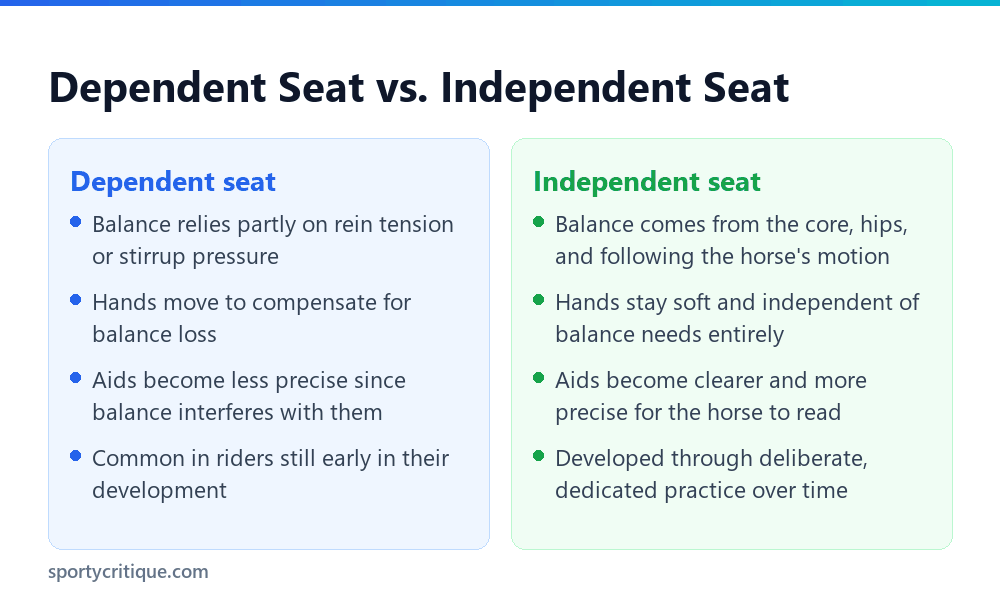
Independent seat horseback riding means a rider’s balance comes entirely from their core, hips, and the ability to follow the horse’s motion, without relying on rein tension, stirrup pressure, or gripping with the legs to stay balanced. Developing it takes deliberate practice, commonly through exercises like riding without stirrups, riding without reins under safe supervision, and specific core and balance work both on and off the horse. An independent seat matters because it frees the hands to give clear, precise aids rather than being used, even unconsciously, as a balance tool.
Many riding fundamentals ultimately trace back to this one concept, since a rider who hasn’t developed an independent seat inevitably compensates with hand and rein tension whenever balance feels uncertain, undermining the clear, consistent aids that effective riding actually depends on. This is why experienced instructors return to seat development repeatedly throughout a rider’s training, not just during a rider’s earliest lessons.
- →An independent seat means balancing through the core and hips, not the reins or stirrups
- →Relying on rein tension for balance directly undermines clear, precise riding aids
- →Riding without stirrups is one of the most effective exercises for building this skill
- →Riding without reins, only under safe, supervised conditions, isolates seat balance specifically
- →Off-horse core and balance work meaningfully supports on-horse seat development
Table of Contents
What an Independent Seat Actually Means
An independent seat describes a rider’s ability to maintain balance and stability in the saddle using their own core strength and the ability to absorb and follow the horse’s movement, entirely separate from the reins, stirrups, or gripping with the legs, all of which should be available for their actual intended purposes rather than pressed into service as balance aids.
⚠️ Watch out: A rider unconsciously gripping the reins tighter when they feel unbalanced sends an unintended, confusing signal to the horse through the bit, exactly when clear communication matters most. This specific pattern, balance-driven rein tension, is one of the clearest signs an independent seat still needs development.
Why an Independent Seat Matters So Much
Every meaningful rein, leg, and weight aid a rider gives depends on those aids being applied deliberately and precisely, and a rider whose balance depends even partly on the reins can’t apply a clean, intentional rein aid without simultaneously risking their own stability, creating a fundamental conflict between balance and communication.
This is why instructors emphasize seat development so heavily even for riders who’ve moved well past complete beginner status, since seat quality directly gates how effectively every other riding skill, from basic steering to advanced dressage movements, can actually be executed with precision and consistency.
Riding Without Stirrups
Removing the stirrups forces a rider to find balance through their seat, hips, and core rather than pressing down into stirrups for stability, which is exactly why this exercise is one of the most consistently recommended tools across different riding disciplines for developing independent seat quality.
Starting this exercise at a walk before progressing to trot and eventually canter, rather than attempting faster gaits without stirrups before basic balance feels secure, builds the skill safely and progressively. Many instructors incorporate short, regular no-stirrup work into regular lessons specifically for this gradual development purpose.
💡 Pro tip: Focusing on relaxing the hip joints and allowing them to absorb the horse’s motion, rather than tensing the legs to compensate for the missing stirrups, produces better long-term seat development than simply gripping harder with the thighs to stay on.
Riding Without Reins
Riding without reins, typically on a lunge line under an instructor’s control so the rider doesn’t need to steer or manage speed, isolates seat balance specifically by removing the temptation to use rein tension for stability entirely, since there are no reins available to grip in the first place.
This exercise requires appropriate supervision and a suitably calm, reliable horse, since the rider has no steering or speed control during the exercise itself. It’s not something to attempt independently without proper instruction and a controlled setting specifically designed for this kind of focused seat work.
Building an Independent Seat
- ✓Practice riding without stirrups regularly, starting at a walk and progressing gradually
- ✓Try riding without reins specifically under instructor supervision on a lunge line
- ✓Focus on relaxing and following the horse’s motion through the hips and core
- ✓Incorporate off-horse core and balance training to support on-horse development
- ✕Gripping harder with the legs or thighs to compensate for balance uncertainty
- ✕Attempting no-stirrup or no-rein work at faster gaits before basic balance feels secure
- ✕Using rein tension unconsciously as a balance tool during moments of instability
- ✕Relying purely on time in the saddle without any deliberate, focused seat exercises
Off-Horse Training That Supports Seat Development
Core strength training, planks, stability ball exercises, and general balance work done off the horse, builds the underlying physical capacity an independent seat actually depends on, complementing on-horse practice rather than replacing it entirely.
Yoga and Pilates specifically are popular cross-training choices among riders focused on seat development, given their emphasis on core stability, hip mobility, and body awareness, qualities that translate directly to the physical demands an independent seat places on a rider’s body.
Common Compensation Patterns to Watch For
Gripping tightly with the knees or lower legs, a common instinctive response to feeling unbalanced, actually tends to push a rider’s seat up and out of the saddle rather than securing it, working directly against the goal of a stable, following seat despite feeling instinctively protective in the moment.
A stiff, braced lower back that doesn’t absorb the horse’s motion, instead of a relaxed, following spine that moves with each stride, is another common compensation pattern that undermines seat quality even when a rider isn’t consciously gripping with hands or legs. Instructor feedback often catches this specific pattern more reliably than a rider’s own self-assessment.
Independent Seat Challenges by Gait
The sitting trot presents one of the more difficult independent seat challenges specifically, since its bouncier, more jarring motion compared to the walk or canter makes it far easier for a rider to tense up and revert to balance-compensation habits than during the smoother, more flowing motion of the other gaits.
Canter, by contrast, has a rocking, three-beat rhythm that many riders find easier to sit and follow with a relaxed, independent seat once they’ve built basic confidence at the gait, though transitions into and out of canter present their own specific balance challenge worth practicing deliberately alongside the gait itself.
Independent Seat Over Fences
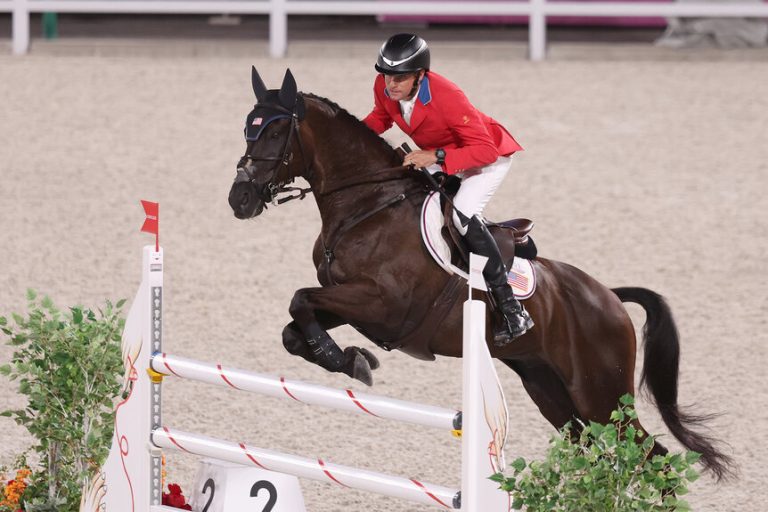
Jumping introduces an additional layer of complexity to seat independence, since a rider needs to fold forward over the fence and then return to a balanced seat on landing, all while maintaining the same core-driven balance rather than catching themselves on the reins during the moment of takeoff or landing.
Riders specifically training for jumping disciplines often practice no-stirrup work over ground poles or small cross-rails before progressing to full-height fences, building the same independent seat foundation in a lower-stakes setting before applying it to more demanding jumping efforts.
Why Instructor Feedback Matters So Much Here
Seat quality is genuinely difficult for a rider to self-assess accurately, since the compensation patterns that undermine an independent seat, subtle rein tension, unconscious gripping, a braced lower back, often happen without full conscious awareness from the rider actually doing them.
A knowledgeable instructor watching from the ground catches these patterns far more reliably than a rider working entirely alone, which is part of why consistent lessons, even for a rider well past complete beginner status, remain valuable specifically for ongoing seat refinement rather than becoming unnecessary once basic riding skills feel comfortable.
How Different Disciplines Approach Seat Training
Dressage places particularly heavy emphasis on independent seat development, given the discipline’s focus on subtle, precise aids that simply can’t function correctly if a rider’s balance interferes with clean rein, leg, and weight communication throughout increasingly complex movements.
Western riding disciplines and reining specifically also value a deep, secure, independent seat, though the specific exercises and terminology used to develop it sometimes differ somewhat from English riding traditions, reflecting each discipline’s own particular history and specific technical demands.
Working Through Plateaus in Seat Development
Seat development often progresses in noticeable jumps followed by periods where improvement feels stalled, a normal pattern in skill development generally rather than a sign that something is specifically wrong with a rider’s training approach or effort level.
Returning to fundamental exercises, no-stirrup work, ground pole exercises, or even a lesson focused purely on the walk, during a perceived plateau often reveals a compensation habit that’s been quietly limiting further progress, addressing it directly rather than simply pushing forward with more advanced work despite the underlying issue.
Frequently Asked Questions
How long does it take to develop an independent seat?
It varies significantly by rider, but it’s a gradual, ongoing process built through consistent, deliberate practice over months and years, not something mastered in a handful of lessons.
Is riding without stirrups safe for beginners?
Yes, when started at a walk and progressed gradually under instructor guidance, rather than attempting it at faster gaits before basic balance feels secure.
Why shouldn’t I grip tighter when I feel unbalanced?
Gripping with the legs or knees tends to push a rider’s seat up and out of the saddle rather than securing it, working against the stable, following seat an independent seat actually requires.
Can off-horse exercise really help my riding?
Yes. Core strength and balance work done off the horse builds the underlying physical capacity an independent seat depends on, complementing rather than replacing on-horse practice.
Do I need a special horse for no-rein exercises?
A calm, reliable horse and proper lunge-line supervision from an instructor are both necessary, since the rider has no steering or speed control during this specific exercise.
How do I know if I’m using my reins for balance without realizing it?
Watch for unconscious tightening of rein contact during moments of instability, like a transition or an unexpected movement. Instructor feedback often identifies this pattern more reliably than self-assessment alone.
For a rider unsure where to start, asking an instructor to spend even a portion of a single lesson specifically on seat-focused exercises, rather than assuming this development will happen automatically as a side effect of general riding practice, sets a clearer, more intentional path toward the goal covered throughout this guide.
An independent seat underlies nearly every other riding skill a rider hopes to develop, which is exactly why dedicated, patient practice toward this specific foundation pays off across every other part of a rider’s progression, not just in isolated seat-focused exercises alone.
Tracking progress over months rather than individual rides helps a rider recognize this longer arc of development, since day-to-day variation in how balanced a session feels is normal and doesn’t necessarily reflect the actual underlying trend in overall seat quality building steadily over time.
A rider who approaches seat development with this kind of patience, expecting gradual, sometimes uneven progress rather than a quick fix, tends to stick with the deliberate practice this skill actually requires far longer than one expecting fast, linear improvement from every single session in the saddle.
Whatever discipline or goal ultimately motivates a rider’s training, the underlying seat work covered throughout this guide pays dividends across every direction that training eventually takes, making it one of the few genuinely universal investments in a rider’s long-term development, regardless of which specific competitive or recreational path they eventually choose to follow for many good years to come in the saddle.
As an Amazon Associate, we earn from qualifying purchases through links on this page.