How to Measure a Lacrosse Stick: A Step-by-Step Guide

| Official Inspection Dimension | NFHS / NCAA High School & College Rule | USA Lacrosse Youth Rule | Measurement Reference Points | Penalty for Non-Compliance |
|---|---|---|---|---|
| Short Stick Overall Length | 40 to 42 inches (101.6 – 106.7 cm) | 37 to 42 inches (36 in permitted for U9) | Top lip of head scoop to base of butt-end | 3-minute non-releasable locked-in penalty & stick ejection |
| Long Pole Overall Length (D/LSM) | 52 to 72 inches (132.1 – 182.9 cm) | 47 to 54 inches (U11-U13 recommended) | Top lip of head scoop to base of butt-end | 3-minute non-releasable penalty; turnover on ground ball |
| Head Width at Widest Point | Minimum 6.0 inches (15.24 cm) | Minimum 6.0 inches | Widest point across top scoop interior rails | Illegal equipment stick penalty |
| Head Width at Throat / 1.25 in up | Minimum 3.0 inches (7.62 cm) | Minimum 3.0 inches | Measured 1.25 inches above narrowest throat point | Pocket or head violation penalty |
| Pocket Depth Regulation | Top of ball must not drop below bottom of sidewall | Top of ball must not drop below bottom of sidewall | Horizontal sight line along lower edge of plastic sidewall | 1-minute releasable equipment penalty |
Table of Contents
Official Stick Measurement and Inspection Standards for Competitive Play
In competitive men’s and women’s lacrosse, referees conduct random and coach-requested stick checks before, during, and after contests. Wielding an illegal stick results in severe penalties: a three-minute non-releasable penalty served in full by the offending player, loss of possession, and the immediate ejection of the stick from the remainder of the game. Mastering the exact measurement protocols ensures your equipment passes official scrutiny every time.
1. Measuring Total Length: The Straight-Line Technique
Referees measure overall stick length by placing the stick flat against a calibrated measuring board or rigid metal rule on the scorer’s table. The measurement must follow a continuous straight line from the highest point of the head scoop down the length of the shaft to the absolute base of the rubber butt-end cap.
If a player cuts their shaft down to exactly 30 inches and attaches a compact head, the total length might fall to 39.75 inches—a quarter-inch shy of the mandatory 40-inch minimum. Players and stringers must account for head throat insertion depth (how far the shaft slides inside the throat socket) and butt-end cap thickness before cutting metal or carbon handles. Leaving an extra half-inch during initial cutting protects against disqualification.
2. Pocket Depth and Rollout Tests
Beyond external stick length, officials conduct two critical pocket measurements: the depth test and the rollout test. During the depth test, a regulation lacrosse ball is dropped into the deepest channel of the mesh pocket. The referee holds the stick horizontally at eye level; daylight must be clearly visible between the top curve of the ball and the lower edge of the plastic sidewall rail. If the entire ball drops below the bottom rail, the pocket is ruled illegally deep.
During the rollout test, the official tilts the stick forward to 90 degrees and slowly rotates it inverted. The ball must roll freely out of the scoop without snagging, catching on shooting strings, or sticking to the mesh. Keeping shooting strings tensioned evenly and checking pocket depth before game day prevents costly man-down situations for your team.
To measure a lacrosse stick, you need a tape measure. Measure from the end of the handle to the top of the head.
Lacrosse sticks come in different sizes for various positions and players. Accurate measurement ensures the stick fits the rules and suits the player’s needs. Knowing how to measure your stick can improve your game. In this guide, we will walk you through the process.
You will learn the correct way to measure each part of the stick. This will help you choose the right size and type for your position. Keep reading to make sure your stick meets the standards and helps you perform your best on the field.
Understanding Lacrosse Stick Anatomy
To measure a lacrosse stick accurately, you must first understand its anatomy. A lacrosse stick has various parts that contribute to its overall length and functionality. Knowing these parts helps you choose the right stick for your game.
Parts Of A Lacrosse Stick
A lacrosse stick is made up of several key components:
- Head: The top part of the stick used to catch, cradle, and shoot the ball.
- Shaft: The long, cylindrical part you hold. It connects to the head.
- Throat: The area where the head and shaft join together.
- Pocket: The netting within the head that holds the ball.
- Butt End: The bottom part of the shaft, often covered with a cap.
Differences Between Men’s And Women’s Sticks
Men’s and women’s lacrosse sticks have some differences:
| Component | Men’s Sticks | Women’s Sticks |
|---|---|---|
| Head | Wider and more angled | Narrower and less angled |
| Shaft Length | Longer for field players, shorter for goalies | Standard length, generally shorter |
| Deeper for better ball control | Shallower for quick release |
Understanding these differences ensures you get the right stick for your needs. Men’s sticks are designed for power and control. Women’s sticks focus on speed and accuracy.
Credit: www.lacrosseunlimited.com
Determining The Correct Length
Determining the correct length for a lacrosse stick is crucial. It ensures you play effectively and comfortably. This guide will help you measure your stick accurately.
Regulations And Standards
Every lacrosse player must adhere to specific regulations. The rules differ based on the level of play and gender.
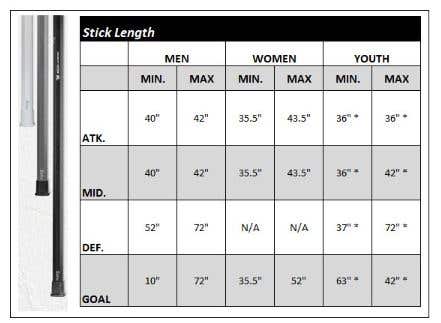
According to the National Federation of State High School Associations (NFHS), men’s lacrosse sticks must be:
- Attack and midfield: 40-42 inches
- Defense: 52-72 inches
- Goalie: 40-72 inches
Women’s lacrosse sticks have different measurements:
- Field players: 35.5-43.25 inches
- Goalie: 35.5-48 inches
Ensure your stick meets these standards to avoid penalties.
Adjusting For Position
Each lacrosse position requires a different stick length for optimal performance.
For attack and midfield players, a shorter stick provides better control and maneuverability. This is crucial for dodging and quick passes.
Defense players benefit from a longer stick. It offers extended reach, ideal for blocking and checking opponents.
Goalies have the most flexibility in stick length. A longer stick can help block shots, while a shorter stick improves quick passes.
Consider your playing style and position when adjusting your stick’s length.
Measuring The Shaft
Having the correct lacrosse stick length is crucial for optimal play. The shaft length is a key aspect. It determines comfort and control. Here, you’ll learn how to measure the shaft of a lacrosse stick accurately. Follow these steps to ensure your stick meets regulation standards.
Using A Tape Measure
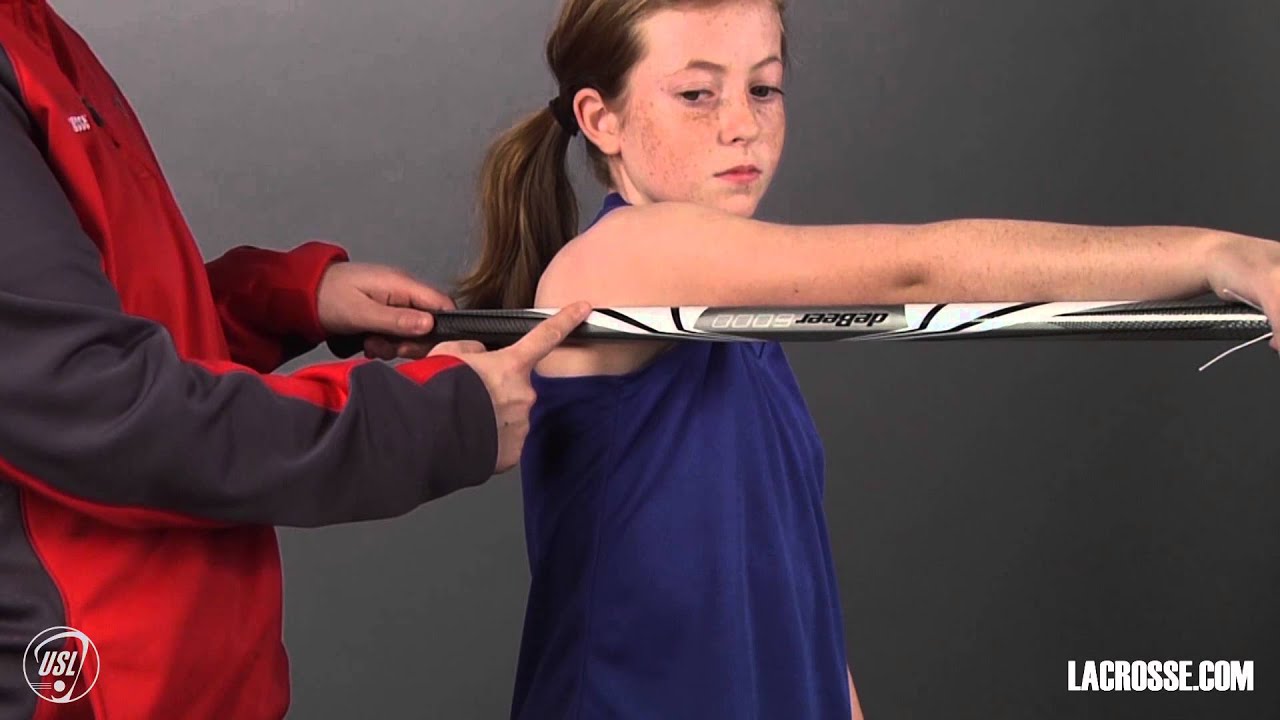
First, you need a reliable tape measure. Lay the lacrosse stick flat on a surface. Ensure the stick is straight and not bent. Position the tape measure at the very bottom of the shaft. Hold it firmly to keep it in place.
Extend the tape measure along the shaft. Keep it aligned with the stick’s length. Ensure there are no kinks or twists in the tape. This guarantees an accurate measurement.
Recording The Measurement
Once the tape measure reaches the top of the shaft, take note of the measurement. The length should be visible on the tape. Record this measurement in inches or centimeters. Ensure you measure to the nearest fraction for precision.
Compare your measurement with standard regulations. Here is a quick reference:
| Player Type | Shaft Length (Inches) |
|---|---|
| Attack/Midfield | 30-32 |
| Defense | 52-72 |
| Goalie | 40-72 |
Adjust your stick if necessary. Having the correct length ensures better control and adherence to rules.

Credit: www.dimensions.com
Measuring The Head
Measuring the head of a lacrosse stick is crucial for players. It helps ensure the stick meets regulations and performs well. This section will guide you on how to measure the head correctly.
Width And Length
Start by measuring the width. Use a ruler or measuring tape. Place it across the widest part of the head. Make sure the measurement is accurate. Next, measure the length. Measure from the top of the head to the bottom of the throat. Accurate measurements ensure the stick is the right size.
Ensuring Compliance With Rules
Lacrosse has specific rules for stick dimensions. The head width and length must comply. Check the official rulebook. Different leagues may have different requirements. Always ensure your stick meets these standards. This helps avoid penalties during games.
Customizing Stick Length
Customizing the length of a lacrosse stick can improve your game. It allows you to adjust the stick to your personal preference and playing style. A properly fitted stick enhances control and comfort. This process involves cutting the shaft and adding end caps. Let’s explore each step in detail.
Cutting The Shaft
First, gather the necessary tools: a measuring tape, marker, and a saw. Measure the desired length of the shaft. Mark the cutting point with the marker. Make sure the cut is precise. A clean cut ensures a smooth end. Use a fine-toothed saw for the best result. Saw slowly and carefully to avoid splinters. Sand the edges after cutting for a smooth finish.
Adding End Caps
End caps are essential for safety and grip. Choose an end cap that fits snugly. Place the cap on the cut end of the shaft. Press firmly to secure it in place. Some end caps may require adhesive for extra security. Check the fit regularly. A loose cap can affect your grip and control. With the end cap in place, your stick is ready for action.
Maintaining Accurate Measurements
Maintaining accurate measurements of your lacrosse stick is crucial. It ensures the stick remains within the legal limits and performs optimally. Regular checks and understanding how temperature affects the stick are essential for accuracy. This section provides practical tips to help you maintain precise measurements.
Regular Checks
To maintain accurate measurements, perform regular checks on your lacrosse stick. Use a reliable measuring tape or ruler to measure the stick’s length, head width, and pocket depth.
- Length: Measure from the top of the head to the bottom of the shaft. Ensure it meets the legal requirements for your level of play.
- Head Width: Measure the widest point of the head. This is usually near the top. Ensure it complies with regulations.
- Pocket Depth: Measure the depth of the pocket when the ball is in it. The pocket should not be too deep.
Keep a record of these measurements. This helps track any changes over time.
Handling Variations In Temperature
Temperature changes can affect your lacrosse stick’s measurements. Both heat and cold can cause the stick to expand or contract.
- Heat: High temperatures can cause the stick to expand. This may alter the length and head width.
- Cold: Low temperatures can cause the stick to contract. This may also affect the measurements.
Store your stick in a cool, dry place. Avoid leaving it in extreme temperatures. Check the measurements after exposure to temperature changes.
By following these tips, you can maintain accurate measurements of your lacrosse stick. This ensures better performance and compliance with regulations.

Credit: www.youtube.com
Frequently Asked Questions
What Is The Standard Lacrosse Stick Length?
A standard lacrosse stick length for adults is 40-42 inches for attackers and midfielders. Defensemen’s sticks are 52-72 inches long.
How Do You Measure A Lacrosse Stick?
To measure, place the stick on a flat surface. Measure from the top of the head to the bottom of the handle.
Why Is Lacrosse Stick Length Important?
Stick length affects control, reach, and gameplay effectiveness. The correct length ensures better handling and performance during play.
Can Lacrosse Sticks Be Customized?
Yes, players can customize their sticks. Customization includes adjusting the shaft length and changing the head to suit personal preferences.
Conclusion
Measuring a lacrosse stick is simple with the right steps. First, determine the correct length. Then, measure the head and shaft. Ensure it meets official standards. A proper measurement helps improve your game. Now you know the basics. Follow these guidelines for accurate results.
Enjoy playing lacrosse with confidence. Remember, a well-measured stick can make a big difference. Happy playing!