Cuetec Cynergy 15K Shaft Review: Verified Price and Live Stock

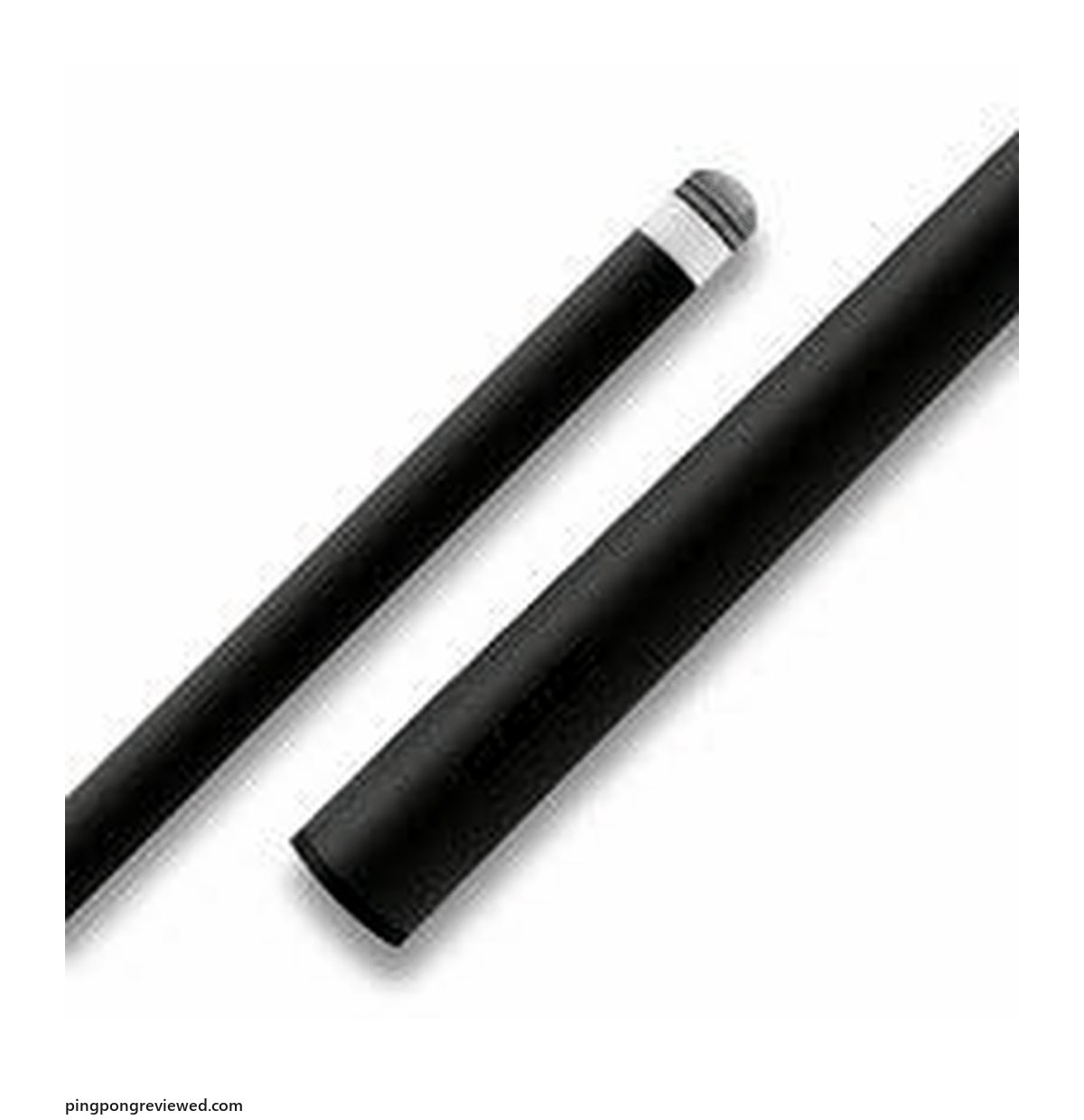
Carbon fiber shafts get recommended constantly for players chasing lower deflection, and Cuetec’s Cynergy 15K is one of the names that comes up most often specifically. A live, authenticated check confirms it is exactly what it claims to be: a currently buyable, if low-stock, carbon fiber shaft at a real, verified price.
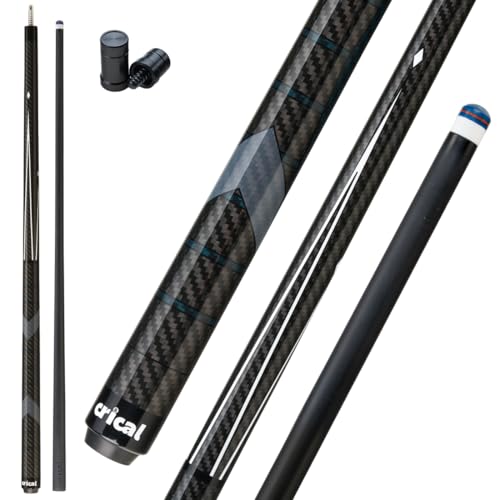
Short answer: the Cuetec Cynergy 15K is confirmed active and buyable across the diameters and joint styles checked for this review, currently showing low stock counts on Amazon (as few as 1 to 3 units per listing), not a discontinuation, just limited inventory. Verified pricing: $449.00 for the 12.5mm shaft, $499.00 for the 11.8mm shaft. It uses a spun 15K carbon fiber tow construction with a poly-foam core, developed with input from five-time U.S. Open champion Shane Van Boening. Verified on 13 September 2026.
⚠️ Watch out: This is not a hands-on tested review. What follows is an honest availability and specifications report built from a live, authenticated Amazon product check plus Cuetec’s own published specifications, not a played-with, on-table comparison.
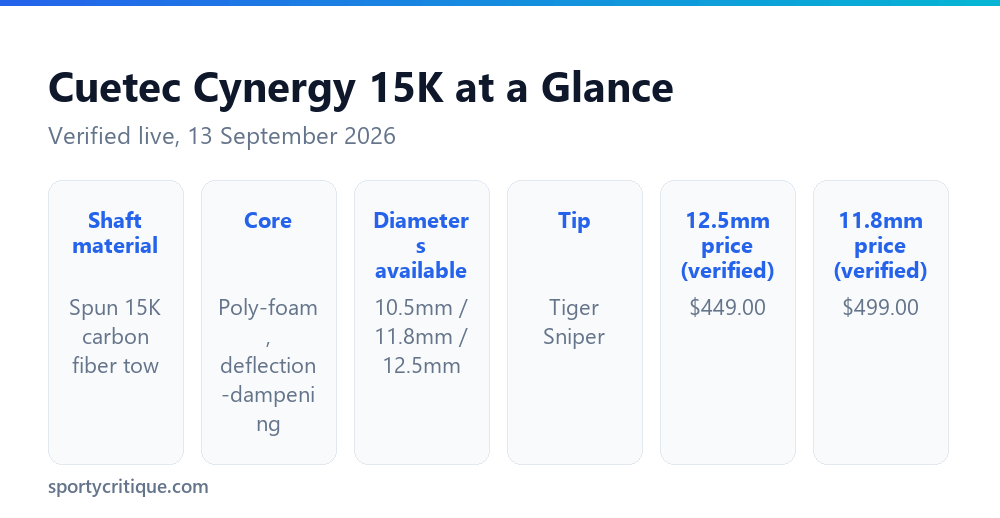
Table of Contents
Confirming It’s Actually Live
Three separate ASINs across different diameters and joint styles all returned active listings with real prices attached, not the “Currently unavailable” flag this site has found on several other named-product searches recently. The stock counts are thin, “only 1 left” on the 11.8mm listing and “only 3 left” on the two 12.5mm listings checked, worth knowing before clicking through expecting a large in-stock buffer.
What the 15K Construction Actually Means
Cuetec builds the Cynergy 15K from a spun 15K carbon fiber tow, the “15K” refers to the tow size, a measure of how many individual carbon filaments are bundled into each fiber strand before weaving, not a model number chosen for marketing. A poly-foam core sits inside that carbon fiber shell, which Cuetec markets as dampening feedback and reducing cue ball deflection compared to a solid wood shaft of similar dimensions. The shaft uses an elongated, super-slim straight taper and a Tiger Sniper tip, both aimed at the low-deflection, consistent-accuracy profile carbon fiber shafts are chosen for in the first place.
📊 Note: No customer review count or star rating was returned for the specific ASINs checked in this review. That is disclosed here rather than filled in with a guessed figure, check the linked listing directly for current review volume before buying.
Why Shane Van Boening’s Involvement Is Worth Noting
Cuetec markets the Cynergy 15K as developed with direct input from Shane Van Boening, a five-time U.S. Open champion, a real, verifiable credential rather than a generic celebrity endorsement slapped on after the fact. That context matters for evaluating the shaft’s design priorities specifically, a shaft built around an elite competitive player’s feedback tends to prioritize consistency and low deflection specifically at the fine accuracy margins that matter most at a high competitive level, not necessarily the same priorities a casual weekend player might weigh most heavily. A recreational player who mostly cares about a comfortable feel and consistent tip contact may get less practical benefit from the shaft’s competition-grade deflection tuning than an advanced player chasing a smaller error margin on long, thin cuts across a full rack rather than a single showcase shot.
Diameter and Joint Choice Matters More Than Brand Name
The Cynergy 15K ships in three diameters, 10.5mm, 11.8mm, and 12.5mm, and multiple joint styles including 5/16×18, 5/16×14, Uni-Loc, Radial, 3/8×14, and 3/8×10. Buying the wrong diameter or joint style for an existing cue’s butt section is a common, entirely avoidable mistake, a carbon fiber shaft this well regarded does nothing for a player’s game if it physically does not thread onto their existing cue. Confirming the exact joint pin size and thread pattern on the current cue before ordering matters more than any performance comparison between diameters.
Who the Cynergy 15K Is Actually For
This shaft targets a specific player: someone who already plays regularly enough to notice and value reduced squirt and deflection on off-center hits, and who is upgrading an existing cue’s front end rather than buying a complete cue from scratch. A beginner still developing fundamental stroke mechanics is unlikely to notice or benefit from this level of deflection control the way an intermediate-to-advanced player chasing smaller accuracy margins will.
💡 Pro tip: A carbon fiber shaft upgrade is most noticeable on a cue with a joint and butt section already suited to the player’s grip and stroke. Pairing this shaft with a mismatched or overly heavy butt section can undercut the deflection benefits the shaft itself is built to deliver.
Break-In Feel and Adjustment Period
Switching from a traditional wood shaft to a carbon fiber shaft like the Cynergy 15K typically changes the feel and sound of contact noticeably, carbon fiber tends to feel stiffer and produce a different hit sound than wood, even when the actual deflection numbers are objectively better. Players switching for the first time often need several sessions to recalibrate their feedback expectations before fairly judging whether the deflection improvement outweighs the different feel, rather than judging the shaft on the first few shots alone.
Comparing Within Cuetec’s Own Cynergy Line
Cuetec sells the Cynergy shaft technology across multiple tow counts and product tiers beyond the specific 15K reviewed here, and a buyer comparing options within the same brand should understand that a higher or lower tow-count sibling shaft trades off stiffness and weight characteristics differently, not simply a better-or-worse hierarchy. The 15K specifically sits as one point on that spectrum, chosen here because it is the variant most frequently named in competitor coverage and carries the Van Boening development credential directly.
Installing a New Shaft Yourself
Swapping a shaft onto an existing cue’s joint is generally a straightforward, tool-free process for a standard threaded joint like the ones this shaft ships in, thread the new shaft in by hand until it seats snugly against the joint collar, without over-tightening. A Uni-Loc or Radial joint uses a quarter-turn locking mechanism instead of threads, and forcing a threaded install technique onto one of those joint types risks damaging the pins. Confirming which joint type an existing cue actually uses, not just assuming based on the brand, is worth doing before the shaft arrives.
Storage and Long-Term Care
Carbon fiber holds up to humidity and temperature swings noticeably better than a traditional wood shaft, one of the practical selling points beyond deflection performance alone. That durability advantage does not mean the shaft is entirely maintenance-free, wiping down the surface after use to remove chalk residue and hand oils, and storing the cue in a proper case rather than leaning it against a wall, both extend the life of the low-friction surface finish Cuetec builds into this shaft specifically for smooth, consistent stroke feel over time.
What This Review Doesn’t Cover
This page reports a live availability finding and Cuetec’s own stated construction details, not a hands-on assessment of how the shaft actually performs across a full season of league or tournament play, how its deflection numbers compare directly against specific competing carbon fiber shafts from other brands, or how the poly-foam core holds up to years of regular use. Independent player reviews and cue-testing forums, where available, remain a better source for that kind of experiential detail than any single specs-and-availability review, this one included.
How to Verify This Yourself
Stock levels on a low-inventory listing like this one can change quickly, similarly to how this site has documented tight stock situations directly in other equipment categories. Checking the exact ASIN for current stock count and price, or checking authorized Cuetec dealers like pooldawg.com or billiards.com directly, both confirm whether this availability picture still holds at the time of reading rather than relying on this review indefinitely.
Check current price and availability (Cuetec Cynergy 15K, 12.5mm, Amazon)As an Amazon Associate, we earn from qualifying purchases through links on this page.
- ✓Confirm your existing cue’s joint pin size and thread before ordering
- ✓Check current stock directly on the linked listing given the low counts found here
- ✓Give yourself a few sessions to adjust to the different feel versus a wood shaft
- ✓Understand 15K as a tow-size spec, not a marketing-only model number
- ✕Assume every Cynergy 15K listing shares the same diameter or joint style
- ✕Assume a thinner diameter is automatically better for deflection
- ✕Judge the shaft’s feel from a single practice session
- ✕Skip checking the linked listing’s current stock given how low it was at review time
Where to Buy It
The Amazon listings verified for this review are legitimate channels, but given the low stock counts found here, checking authorized Cuetec dealers directly, including pooldawg.com and billiards.com, both of which carry the Cynergy line, is reasonable if a specific diameter or joint style shows out of stock on Amazon at the time of reading.
💡 Pro tip: If a specific diameter or joint style shows out of stock by the time you check, waiting a few days and rechecking is often more productive than settling for a different diameter that does not match your existing playing habits, stock on a niche, low-count listing like this one can and does refresh.
The Verdict
In short: the Cuetec Cynergy 15K is confirmed live and buyable across the diameters and joint styles checked, currently at low stock counts rather than any sign of discontinuation. Verified pricing is $449.00 for the 12.5mm shaft and $499.00 for the 11.8mm shaft. It is built for an intermediate-to-advanced player already noticing deflection on off-center hits and upgrading an existing cue’s front end, carrying a real, verifiable development credential in Shane Van Boening’s involvement rather than a generic endorsement.
Common Questions
Is the Cuetec Cynergy 15K shaft still available?
Yes, confirmed active across three ASINs checked, though stock counts were low (1 to 3 units) on a live check on 13 September 2026.
How much does the Cuetec Cynergy 15K cost?
Verified pricing was $449.00 for the 12.5mm shaft and $499.00 for the 11.8mm shaft on the listings checked for this review.
What makes the Cynergy 15K different from a wood shaft?
A spun 15K carbon fiber tow construction with a poly-foam core, marketed for lower cue ball deflection and dampened feedback compared to a solid wood shaft of similar dimensions.
Who developed the Cuetec Cynergy 15K?
Cuetec markets it as developed with input from Shane Van Boening, a five-time U.S. Open champion.
Has this review actually tested the Cynergy 15K on a table?
No, this is a verified-availability and specifications review based on Cuetec’s own product materials, not a hands-on tested assessment.
The Short Version
- →Cuetec Cynergy 15K is confirmed active across three ASINs checked, not discontinued.
- →Stock is low, 1 to 3 units per listing at the time of this review.
- →Verified pricing: $449.00 (12.5mm) and $499.00 (11.8mm).
- →Spun 15K carbon fiber tow shaft with a poly-foam core for deflection control.
- →Developed with input from five-time U.S. Open champion Shane Van Boening.
- →Confirm your cue’s exact joint pin size and thread before ordering.