Badminton Net Shot Technique: The Soft, Early Contact That Wins the Point


Badminton net shot technique is a low-power, high-precision skill: get to the shuttle early, contact it as high as possible, and use a relaxed grip with almost no backswing to brush it gently over the net. Here’s that technique broken into footwork, contact, and touch you can actually drill.
Good badminton net shot technique comes from getting to the shuttle early with a forward lunge, contacting it as high as possible with a short to no backswing, and using a relaxed grip to brush rather than hit the shuttle. The racket face should be in line with the falling shuttle, palm facing up, with the lift coming from the shoulder rather than a wrist flick, so the shuttle drops just over the net with almost no forward pace on it. Rushing the shot or gripping tightly are the two most common reasons a net shot pops up instead of staying tight to the tape.
The net shot doesn’t look like much on video, a small tap that barely clears the tape, but it’s one of the highest-skill shots in badminton precisely because there’s so little margin for error. A net shot that pops up even slightly hands your opponent an easy attacking lift, while a tight one forces a weak return or opens the whole back court. Most players learn to hit a net shot early on; far fewer learn to hit a genuinely tight one under real match pressure.
- →Getting to the shuttle early, before it drops too low, matters more than raw racket technique
- →Contact should happen as close to the top of the net as your reach allows
- →A relaxed grip and short to no backswing produce a soft brushing touch, not a hit
- →Palm-up racket face with lift from the shoulder, not a wrist flick, keeps the shuttle low
- →A net shot with no pace forces a weak lift return; one with too much pace sets up an easy attack
Table of Contents
Footwork: get there before the shuttle drops
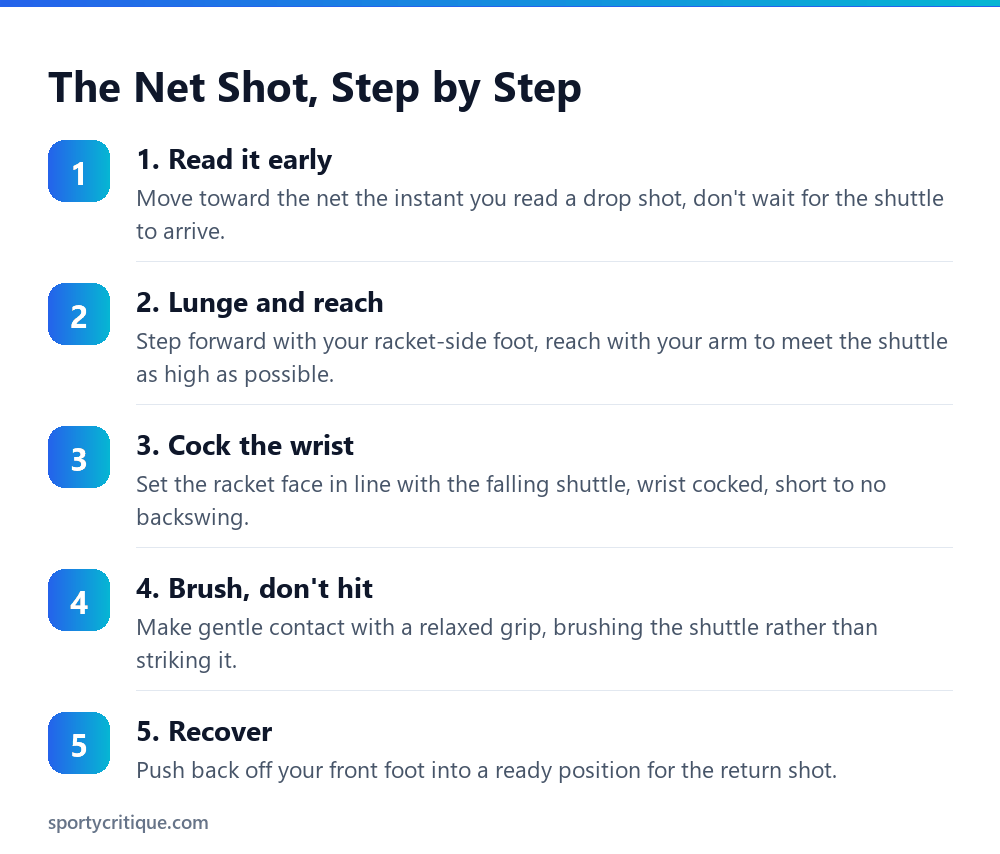
Net shot technique starts well before your racket touches the shuttle. The moment you read that your opponent is playing a drop shot or a net shot themselves, start moving forward rather than waiting to see exactly where the shuttle lands. Step forward with your racket-side foot in a controlled lunge, reaching with your racket arm to extend your effective range without overcommitting your whole body.
Arriving early gives you the option to contact the shuttle higher, which is the single biggest factor in net shot quality. A shuttle contacted well above net height gives you a much wider range of safe angles to play; one contacted below the tape severely limits what you can do without popping it up into an easy attack for your opponent.
Contact point: as high and as early as you can reach
⚠️ Watch out: Waiting for the shuttle to fall lower before you commit to the shot feels safer in the moment but is actually the opposite. The lower the shuttle drops before contact, the more you’re forced to lift it just to clear the net, and a lifted net shot is an invitation for your opponent to attack. Commit to the forward movement as soon as you read the shot, not after you’ve watched the shuttle fall.
When you reach the shuttle, put the racket face in line with its falling path rather than swinging across it. This is a small positioning detail that makes a large difference in consistency, since a racket face angled correctly to meet the shuttle head-on needs far less compensating wrist or arm adjustment than one that’s off-angle at the moment of contact.
The brushing touch: grip and backswing
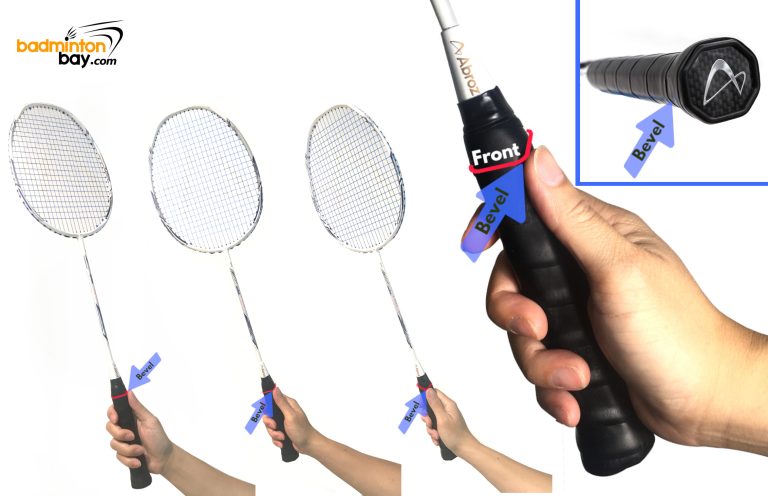
This is where most players who otherwise have decent footwork still lose points at the net. A net shot uses a relaxed grip, not the firm grip you’d use for a drive or a smash, and a short to no backswing, since any real backswing adds pace you don’t want on this shot. Cock your wrist as you approach, then let the shuttle essentially bounce softly off a nearly still racket face rather than swinging through it the way you would on almost every other shot in the game.
The finishing motion, the actual moment of contact, should come from the shoulder guiding a gentle lift, not a wrist snap. A wrist-driven net shot tends to add exactly the pace you’re trying to avoid, which is counterintuitive since the wrist generates so much power on other badminton shots. Here, it’s the opposite: less wrist involvement generally means a softer, tighter shot.
💡 Pro tip: Practice net shots against a wall or with a partner feeding easy, slow shuttles specifically focused on how little racket-face movement you can get away with while still clearing the net cleanly. Most players over-swing net shots out of habit built from every other stroke in the game; deliberately practicing minimal movement retrains that instinct.
Reading and creating a spinning net shot
A tight net shot with a slight tumble or spin on the shuttle is harder for an opponent to read and attack than a flat one, even at the same height and pace. The spin comes from a brushing, slightly sliced contact across the base of the shuttle rather than a completely flat touch, similar in concept to slicing a tennis or table tennis shot, though the exact mechanics differ sport to sport. This takes more feel and more reps to develop consistently than a basic flat net shot, and it’s worth treating as a separate skill to add once the fundamental brushing touch is already solid.
📊 Note: Spin on a net shot doesn’t need to be dramatic to be effective. Even a subtle tumble that makes the shuttle land base-first instead of point-first disrupts an opponent’s timing on the return more than most players expect from such a small technical adjustment.
Strategic purpose: why a good net shot sets up everything else
A tight net shot forces your opponent into one of two bad options: a weak, short lift that you can attack immediately, or another tight net shot that keeps you locked in a net battle where whoever blinks first, whoever pops the shuttle up even slightly, loses the exchange. This is why net shot quality correlates so strongly with results at higher levels of play; it’s not a flashy shot, but it’s the one that most consistently creates the attacking opportunities that actually win points.
Net shots are also a tactical tool for drawing an opponent out of position. A tight, well-disguised net shot pulls your opponent forward and out of central court coverage, opening the back court for a deep clear or a cross-court shot on the very next exchange if they’re forced to lift the return.
Equipment that helps net play
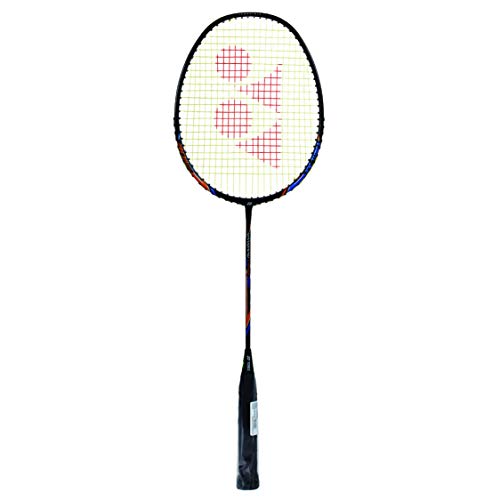
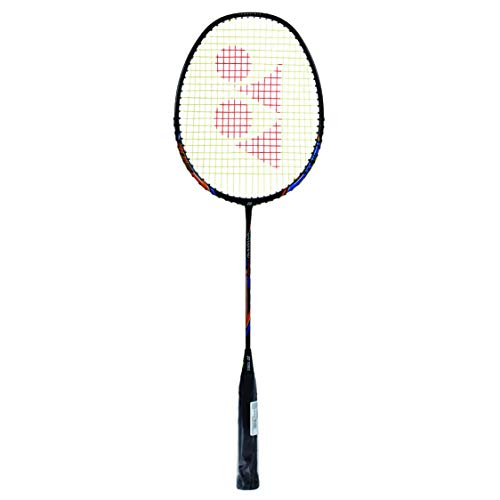
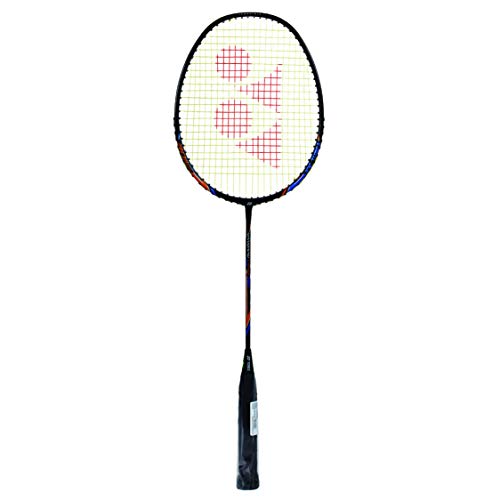
A head-light, more flexible racket generally makes fast net exchanges and quick directional changes easier to control than a head-heavy power racket built for smashing. The YONEX Nanoray Light Graphite Badminton Racquet is built with exactly this kind of head-light, control-oriented balance, worth considering if your current racket feels sluggish or hard to maneuver specifically during fast net exchanges even though it might feel fine on clears and smashes.
Common mistakes and quick fixes
- ✓Move forward the instant you read a net or drop shot
- ✓Contact the shuttle as high above the net as your reach allows
- ✓Use a relaxed grip and short to no backswing
- ✓Let the lift come from the shoulder, not a wrist flick
- ✕Wait to see exactly where the shuttle lands before moving
- ✕Let the shuttle drop low before you commit to contact
- ✕Grip tightly and swing through the shot like a drive
- ✕Snap the wrist through contact, adding unwanted pace
A simple drill progression
Start with a partner or coach feeding easy, slow net shots to your forehand side only, focusing purely on footwork and a soft, controlled brush. Once that’s consistent, add the backhand side, which most players find noticeably harder to keep tight since the grip and reach change. From there, progress to random placement between forehand and backhand so you’re reacting rather than anticipating, and finally to live net exchanges where both players are trying to win the point rather than feeding cooperatively.
Net shot usage: singles versus doubles
In singles, a net shot buys you time and forces your opponent to cover a lot of court on the return, since a lifted reply gives you the whole back court to attack. It’s used more sparingly than in doubles, often as a change-of-pace shot mixed in with clears and drops rather than a constant tactic, since you’re the only player covering your entire half of the court and a string of tight net exchanges can pull you badly out of position if your opponent reads it and counters with a fast, flat reply instead of lifting.
In doubles, net shots and net exchanges happen constantly, since the front player on each side is specifically positioned to contest exactly this battle. Doubles net play rewards extremely fast reflexes and very tight, low shuttle control even more than singles does, because the net is closer to a continuous exchange than a shot you set up and then reset from. If you play doubles more than singles, net shot technique is worth disproportionate practice time relative to how often it comes up in a typical singles match.
Recovery footwork after the shot
A net shot isn’t finished once the shuttle leaves your racket. Push back off your front foot immediately into a balanced ready position, since a well-disguised net shot from your opponent can come right back at the net and catch you still leaning forward from your own shot. Players with good net shot technique but poor recovery footwork often lose the very next exchange because they’re stuck in a lunge instead of already resetting toward center court.
This recovery step should become part of the same practiced sequence as the shot itself, not an afterthought you add once the racket-work feels comfortable. Drill the full cycle, approach, contact, recover, together from early on rather than treating recovery as a separate skill to bolt on later.
Bottom line
Good badminton net shot technique comes down to arriving early, contacting the shuttle as high as possible, and using a relaxed grip with almost no backswing to brush rather than hit it. It’s a low-power, high-precision shot where footwork and touch matter more than strength, and it rewards deliberate, patient practice more than almost any other stroke in the game.
Why does my net shot keep popping up?
The most common causes are contacting the shuttle too low, after it’s already dropped past net height, or gripping too tightly and swinging through the shot instead of using a relaxed grip with a short to no backswing. Fix your footwork to arrive earlier first, then check your grip tension.
Should the wrist or the shoulder power a net shot?
The shoulder should guide the gentle lift; the wrist should stay relatively passive. A wrist-driven net shot tends to add pace you don’t want, even though the wrist generates most of the power on other badminton shots.
How do I make my net shot harder to read?
A slight brushing, slicing contact across the base of the shuttle creates spin or tumble that disrupts an opponent’s timing, even at the same height and pace as a flat net shot. This is worth adding once your basic flat net shot is already consistent.
What racket type is best for fast net exchanges?
A head-light, more flexible racket generally maneuvers faster through quick net exchanges than a head-heavy power racket built primarily for smashing, which matters most if your current racket feels sluggish specifically at the net.
As an Amazon Associate, we earn from qualifying purchases through links on this page.