How to Play Badminton: Rules, Serving & the Lines That Change

Quick Answer: Badminton is first to 21 points, a point on every rally, win by two. Serve underarm and diagonally — from the right court when your score is even, left when it’s odd. The shuttle must not bounce, each side gets one hit, and the court lines change depending on whether you’re playing singles or doubles. That last one catches everybody.
Badminton is the strangest gap in sport between how it looks in a garden and how it plays in a hall. Same net, same shuttle, and yet one is a gentle rally and the other is the fastest racket sport in the world. This guide takes you from zero to playing real games with real rules — including the two things that confuse literally every new player: the serving-position rule and the fact that the court’s boundaries move.
Table of Contents
The court — and the lines that change
A badminton court is 13.41 m (44 ft) long. Its width depends on the game: 5.18 m (17 ft) for singles, 6.10 m (20 ft) for doubles. The net stands 1.55 m (5 ft 1 in) at the posts and dips slightly to 1.524 m (5 ft) in the middle — that dip is deliberate and it’s in the rules.
Now the part that trips up everyone. The court has two sets of side lines and two back lines, and which ones count depends on the game and even on the moment:
| Boundary | Singles | Doubles |
|---|---|---|
| Side lines | Inner lines — the outer alleys are OUT | Outer lines — the alleys are IN |
| Back line (during rallies) | The rear line | The rear line |
| Back line (for SERVING) | The rear line | The short inner back line — the long service line for doubles |
| Front service line | 1.98 m from the net | Same |
⚠️ Read that third row again. In doubles, the serve must land before the inner back line — but once the rally is underway, the full rear line is live. So the same shuttle landing in the same spot is a fault on the serve and a winner two shots later. This single rule causes more confused arguments in club badminton than everything else combined.
In singles it’s the reverse trap: the court is narrow (alleys out) but long (full back line, even on serve). Singles players serve deep and high; doubles players serve short and low. The court geometry dictates the tactics, not the other way around.
What you need to start
| Item | What matters | Honest advice |
|---|---|---|
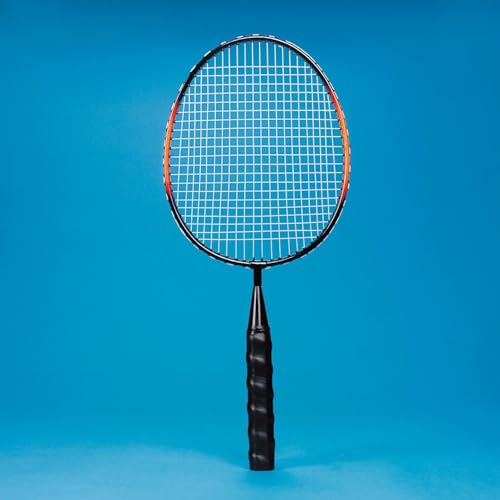
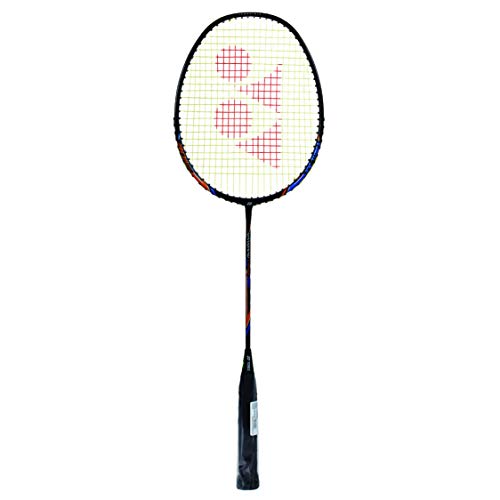
| Racket | Weight (usually 80–90g), balance, string tension | Any $30 racket beats a $300 one in new hands — but avoid supermarket steel rackets; they’re genuinely unplayable. See our racket guide |
| Shuttles | Feather vs nylon | Nylon to start: they last 10x longer and survive wind. Feathers fly better and die in an evening |
| Shoes | Non-marking gum sole, lateral support | Running shoes are actively dangerous here — they’re built to roll forward, badminton moves sideways |
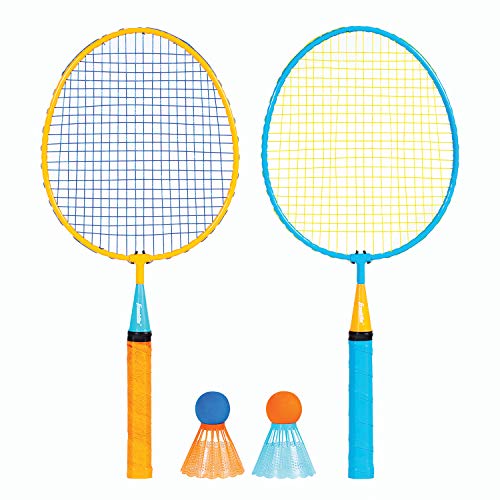
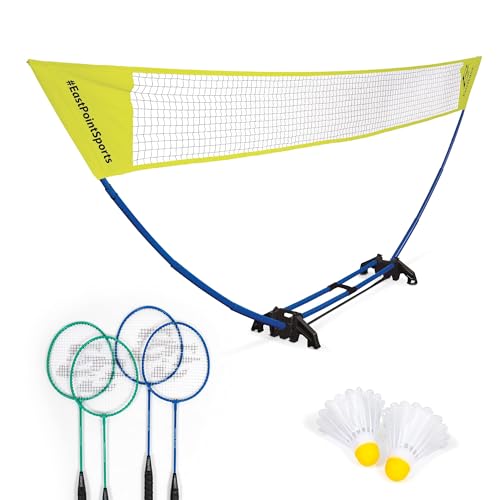
| Net | 1.55 m at posts | Garden sets are fine for fun; a real net changes the game entirely |
| Grip | Overgrip or towel grip | $3 and it transforms a slippery handle. See our grip guide |
On shuttles: this is the decision that shapes your experience. Feather shuttles fly with the precise deceleration the sport was designed around — and a serious rally destroys them in an evening. Nylon shuttles fly slightly differently (a touch flatter, less brake at the end) but survive months and shrug off a breeze. Play indoors with feathers if you’re serious; play with nylon everywhere else, and never feel bad about it. For garden play, a proper backyard set covers everything at once.
⚠️ Badminton is an indoor sport. Not snobbery — physics. A shuttle weighs about 5 grams and decelerates faster than any other projectile in sport. Even a light breeze turns rallies into a lottery. Play outside for fun; judge nothing about your game from it.
Scoring: rally points to 21
- Games go to 21 points. Matches are best of three games.
- Every rally scores — whoever wins the rally gets the point, server or not. (The old ‘you only score on serve’ system died in 2006. If someone insists otherwise, they learned before then.)
- At 20-20, you must win by two. 22-20, 23-21, and so on.
- At 29-29, the next point wins it — 30-29. This is the hard cap; there is no infinite deuce.
- The rally winner serves next. Winning a rally as receiver takes the serve and the point.
- Change ends after each game, and in the deciding game when the leading score reaches 11.
Practical consequence of rally scoring: there is no free point anywhere. Under the old system you could serve badly with impunity — your opponent could only win the serve back, not a point. Now every loose serve is a gift. That one change reshaped the sport into what you see today: short, low serves and instant attacking.
The serving rule everyone gets wrong
Here’s the rule in one line: your score decides which side you serve from. Even score → right court. Odd score → left court. Always diagonal. That’s it — there’s nothing else to remember, and yet it undoes every beginner for about two weeks.
| Your score | Serve from | Shuttle travels to |
|---|---|---|
| 0 (even) | Right service court | Opponent’s right service court (diagonal) |
| 1 (odd) | Left service court | Opponent’s left court |
| 2 (even) | Right | Diagonal right |
| 7 (odd) | Left | Diagonal left |
| 14 (even) | Right | Diagonal right |
| 20 (even) | Right | Diagonal right |
Why this design? Because it self-corrects. You never have to remember whose turn it is or which side you served from last — the scoreboard tells you. Look at your own score, walk to the correct box, serve. In singles that’s the entire rule.
Doubles serving: the same rule with a rotation on top
Doubles adds one layer: only one player on the serving side serves, and that side keeps serving (with the two partners swapping service courts) as long as they keep winning rallies. Lose a rally, and the serve passes to the opponents — and the player who serves for them is determined by their own score’s even/odd position.
The critical detail beginners miss: your partner and you don’t take turns serving within one turn. If your side wins the rally, the same server serves again — you just swap courts with each other. A worked sequence, with team A (Anna & Ben) vs team B (Xu & Yara):
| Score (A–B) | Server | Serves from | What happened |
|---|---|---|---|
| 0–0 | Anna | Right | Anna’s team’s score is even |
| 1–0 | Anna | Left | A won the rally — Anna serves again, swaps to left |
| 1–1 | Xu | Left | B won — serve passes. B’s score is odd → left court |
| 1–2 | Xu | Right | B won again — same server, swaps court |
| 2–2 | Ben | Right | A won the rally back — A’s score even → right; Ben serves this time |
💡 The shortcut that makes doubles click: positions swap only when you WIN a rally on your own serve. If you lose the rally, nobody on your side moves — you just stop serving. Watch one game with that in mind and it stops being confusing forever.
The serve height law (and why elite players’ serves look different)
The classic rule: at contact, the whole shuttle must be below the server’s waist (defined as the lowest rib), and the racket shaft must point downward with the head clearly below the hand. That’s still the rule you’ll play under in clubs and casual games.
At elite level, the BWF replaced this with a fixed height of 1.15 m above the court — measured, not judged. The reason is the honest kind: ‘waist height’ meant tall players legally served higher than short ones, and umpires were making eyeball calls on a sport played at 400 km/h. A fixed line is fairer and reviewable. It’s why professional serves look uniformly, almost comically low.
What this means for you: play the waist rule, but groove your serve low — under the fixed height — from the start. It’s the same habit either way and it survives every level of the sport. Our serving guide covers the technique itself.
Faults: every way to lose a rally
| Fault | Result | Note |
|---|---|---|
| Shuttle lands outside the lines | Point against | Lines are IN — a shuttle on the line is good |
| Shuttle into or under the net | Point against | Clipping the net and going over is legal |
| Touching the net (body or racket) | Point against | Even accidentally, even after the shuttle’s dead |
| Hitting before the shuttle crosses | Point against | Following through over the net is fine — striking over isn’t |
| Double hit on one side | Point against | One touch per side, no exceptions |
| Shuttle hits your body or clothing | Point against | Wherever it hits, even if it was going out |
| Serve above the waist / shaft up | Service fault | The most commonly broken rule in casual play |
| Serve into wrong service court | Service fault | The even/odd rule again |
| Receiver moves before serve contact | Fault | Both feet must stay planted until the serve is struck |
| Shuttle hits the ceiling | Point against | House rules vary in low halls — agree first |
Your first three skills, in order
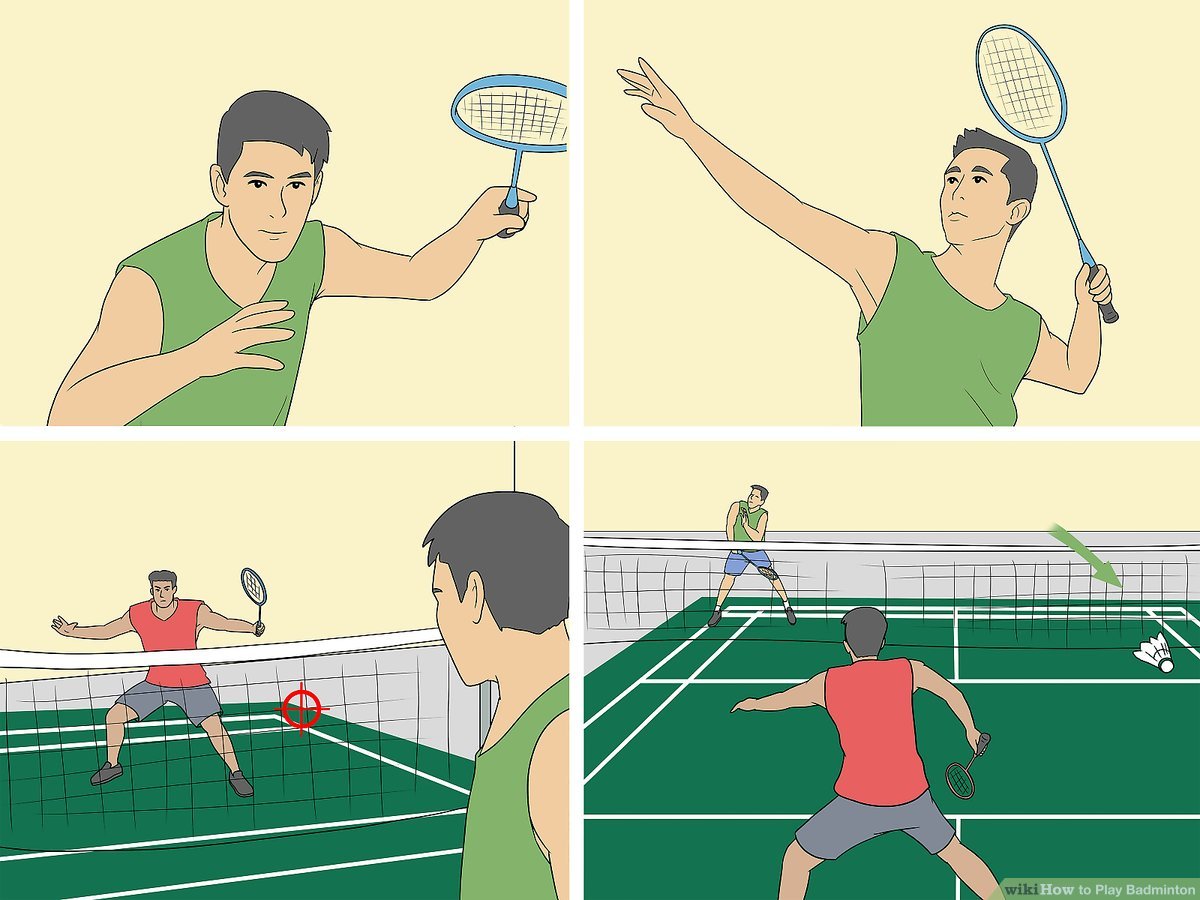
1. The grip (ten minutes that save years)
Shake hands with the handle for forehands; rotate slightly and press your thumb flat on the wide bevel for backhands. Hold it loose enough that someone could pull it from your hand. The alternative — the ‘panhandle’ frying-pan grip — feels natural, works fine for gentle rallies, and quietly caps your game forever. Fix this before anything else: our grip guide covers both grips and the switching drill.
2. The high serve and the clear
The clear — hitting the shuttle high and deep to your opponent’s back line — is badminton’s rally engine. It buys you time, pushes them back, and resets the point. If you can clear consistently, you can rally; if you can rally, the sport becomes instantly fun. Beginners who chase smashes before they can clear spend their evenings picking shuttles out of the net.
3. The ready position and the split step
Knees soft, racket up in front of your chest, weight on the balls of your feet. As your opponent strikes, do a tiny hop and land — the split step — so you’re already loading when the shuttle leaves their racket. This is the single biggest difference between people who look like players and people who look like they’re at a barbecue. Racket at your hip and flat feet is the beginner uniform; take it off early.
💡 Skip the smash for your first few sessions. Everyone wants it immediately — it’s the sport’s dessert. But clears and drop shots win beginner games while smashers hand over free points.
Singles vs doubles: pick your poison
| Singles | Doubles | |
|---|---|---|
| Court width | Narrow (17 ft) — alleys out | Full (20 ft) — alleys in |
| Serve | Long, high, to the back line | Short, low, to the front service line |
| Rally style | Patient; move them corner to corner | Fast, flat, attacking |
| Fitness demand | Brutal — you cover everything | High but shared |
| Formation | Base position, centre court | Attack: front/back. Defence: side by side |
| Beginner friendly? | Fitness will humble you | Start here — half the running, more rallies |
The tactical heart of doubles is the formation switch: when your side is attacking (hitting down), you stand front-and-back; when defending (hitting up), you stand side-by-side. Watching two good pairs rotate between those shapes mid-rally is the sport at its best — and doing it yourself is genuinely satisfying within a few sessions.
The mistakes that hold beginners back
- Arm-only hitting. Power comes from rotation and wrist snap, not from swinging harder. If your shoulder aches and your clears still fall short, this is why.
- Standing flat-footed. No split step means you start moving after the shuttle does. You will always be late.
- Death-gripping the racket. Kills the wrist snap that makes every stroke work.
- Serving high in doubles. A free smash for your opponents, delivered by you, on purpose.
- Watching your shot instead of recovering. Admire it later; return to base now.
- Playing only outdoors and drawing conclusions. Wind makes everyone look bad — you’re probably better than you think.
Frequently asked questions
Can the shuttle touch the net during a rally?
Yes — clipping the tape and dribbling over is completely legal and completely infuriating. Even on the serve: a net-cord serve that lands in is good and play continues. There’s no ‘let’ in badminton for net serves the way tennis has.
Is it a fault if the shuttle hits me?
Yes, wherever it hits you and whatever it was about to do. If it was flying out and it strikes your shirt, you lose the point. Dodge first, complain later.
Why does my score decide where I serve from?
It’s a self-correcting design — it means no one has to remember the last serve. Even means right, odd means left. Trust it; it never lies.
How high is a badminton net exactly?
1.55 m (5 ft 1 in) at the posts, dipping to 1.524 m (5 ft) at the centre. The dip is in the rules, not a sagging net.
Are the alley lines in or out?
Singles: out (narrow court). Doubles: in (wide court). And in doubles the serve must also land inside the short back line, not the rear one — the rule that causes the most arguments in club play.
How do I get better fastest?
Fix your grip, learn to clear consistently, and play people slightly better than you. Then work through our improvement guide — the drills there are the difference between playing for ten years and improving for ten years.