How to Scoop a Ground Ball in Lacrosse


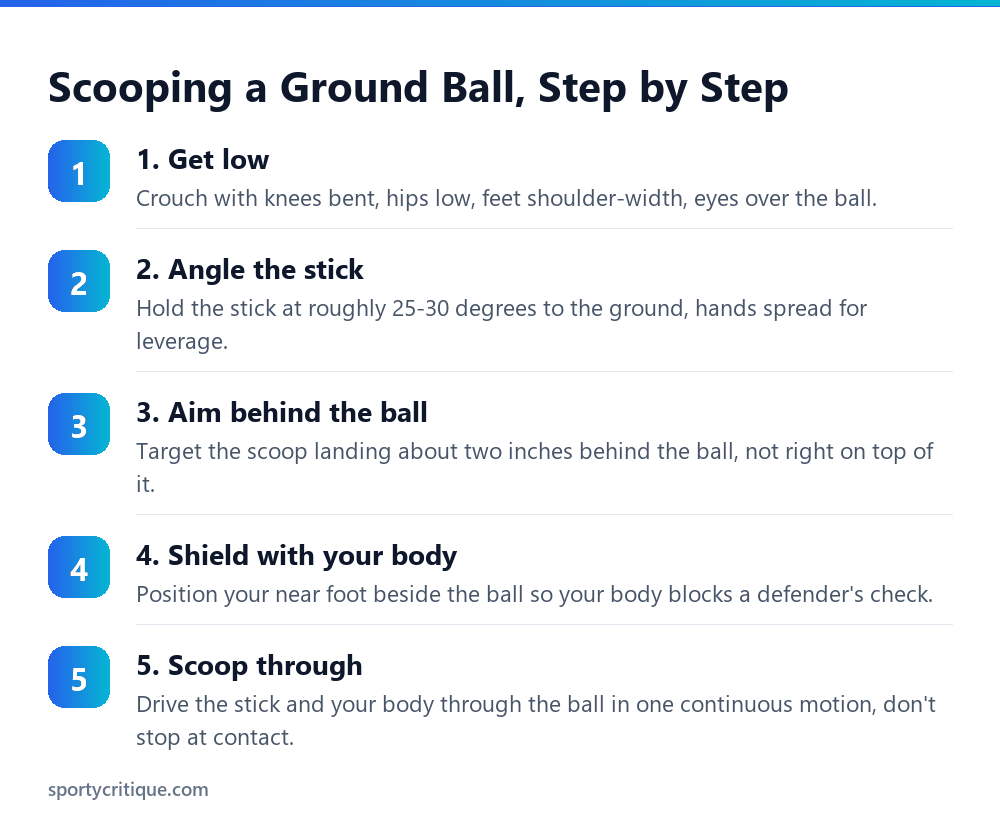
Learning how to scoop a ground ball in lacrosse comes down to a repeatable sequence: get low, angle the stick correctly, aim behind the ball, shield it with your body, and scoop through. Here’s that sequence broken into mechanics you can drill and check against your own technique.
Scooping a ground ball in lacrosse starts with getting your body low, knees bent and hips down, feet shoulder-width apart, with your bottom hand near the butt end and top hand just below the throat for leverage. Angle the stick at roughly 25 to 30 degrees to the ground and aim the scoop to land about two inches behind the ball, then drive through the ball in one continuous motion rather than stopping at contact. Position your body between the ball and the nearest defender as you scoop, since a ground ball you can’t protect from a check is a ground ball you’re about to lose again.
Ground balls decide games more often than highlight-reel goals do. Every loose ball is a possession up for grabs, and the difference between a clean scoop and a fumbled one usually isn’t athleticism, it’s technique that most players never drill deliberately. The coaching cliche is “low man wins,” and it’s accurate, but it undersells how much of ground ball success is a specific, repeatable sequence rather than just hustling harder than the other player.
- →Get your whole body low before you reach the ball, not just your stick angle
- →The stick should aim about two inches behind the ball, not directly on top of it
- →Body position matters as much as stick technique; shield the ball from the nearest defender
- →Scoop through the ball in one continuous motion, don’t stop the stick at contact
- →The lowest player to the ball wins possession more often than the fastest or strongest one
Table of Contents
Body position: low before you’re even close
The single biggest factor in ground ball success is how low your body is as you approach the ball, and this has to start before you arrive, not as a last-second adjustment. Bend your knees and drop your hips as you close the distance, keeping your feet roughly shoulder-width apart for a stable base. Your eyes should be looking down over the ball itself, not glancing up at the field, which keeps your head and shoulders correctly positioned through the scoop.
A player who stays upright and bends only at the waist to reach for the ball is both slower to actually get the stick head to ground level and far easier to knock off balance with a check, since a high center of gravity is inherently less stable. Getting genuinely low, bent at the knees and hips rather than just leaning over, is what “low man wins” is actually describing.
Hand position and stick angle
Place your bottom hand around the butt end of the stick and your top hand just below the throat, where the plastic head meets the shaft. This spread gives you leverage to control the stick’s angle precisely rather than muscling it with one hand doing most of the work. Hold the stick at roughly 25 to 30 degrees relative to the ground, angled down toward the ball rather than flat or too vertical.
Too flat an angle and the stick head slides past or over the ball instead of scooping under it. Too steep an angle and you’ll jab down at the ball rather than sweeping through it, which usually pops the ball away instead of collecting it. The 25 to 30 degree range is a starting point to feel out, not a number to measure with a protractor mid-game, but it’s a useful mental target while you’re grooving the motion in practice.
Aim behind the ball, not at it
This is the detail that trips up newer players most often. Aim the scoop’s landing spot about two inches behind the ball, not directly on top of it. Scooping right at the ball tends to push it forward away from the pocket instead of collecting it, while starting the scoop slightly behind lets the stick head sweep underneath and gather the ball into the pocket as it comes through.
⚠️ Watch out: Rushing this detail under pressure, reaching straight for the ball instead of aiming behind it, is one of the most common reasons a ground ball squirts away from a player who otherwise did everything else right. It’s worth drilling in isolation, slowly, before adding speed or defensive pressure.
Foot placement and shielding your body
The foot on the same side as your top hand should land roughly 4 to 8 inches beside the ball as you scoop, not directly over it and not too far away. This placement puts your body between the ball and an approaching defender, using your own frame as a shield against a check while you gather the ball. A ground ball scooped without any thought to body position is one you’re likely to lose to a check the instant after you pick it up, even if the scoop itself was technically clean.
💡 Pro tip: Practice ground balls with a partner applying light, controlled pressure from behind or the side, not just scooping in isolation. Game-speed ground balls almost always happen with a defender closing in, and a scoop technique that only works uncontested isn’t fully game-ready yet.
Scoop through, don’t stop at contact
The most important word in ground ball technique is “through.” Keep the stick moving in one continuous motion as it sweeps under and past the ball, and keep your body moving through the ball too rather than stopping the instant you make contact. A player who scoops and then freezes is both easier to check and more likely to have the ball bounce back out of a pocket that hasn’t fully closed around it yet.
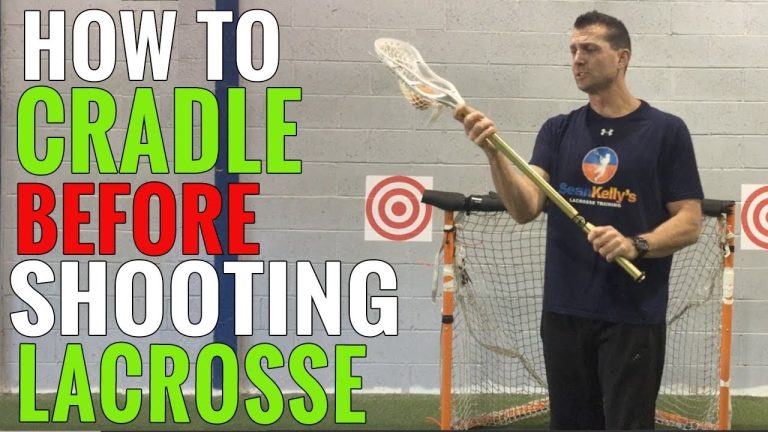
Immediately after the scoop, bring the head of the stick up and across your body toward your face, protecting it in a ready cradling position rather than carrying it low and exposed. This transition from scoop to protected cradle should feel like one motion, not two separate steps with a pause between them.
Equipment that actually helps
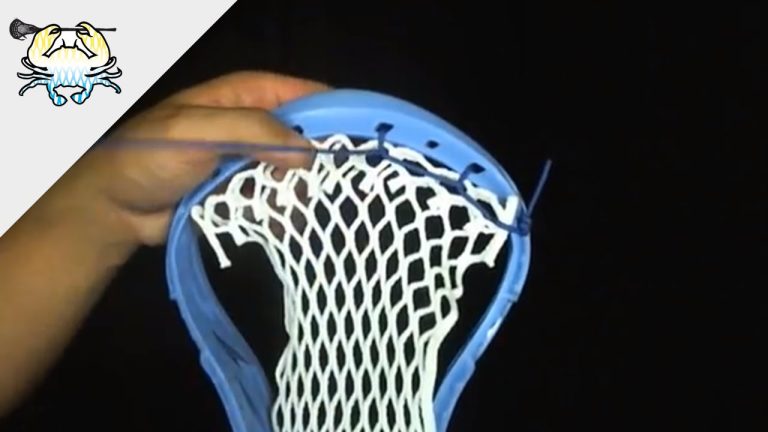
A pocket that’s too deep or too loose makes clean scoops harder, since the ball rattles around instead of settling predictably, and a pocket that’s too shallow or tight can reject the ball on contact instead of gathering it. If ground balls have felt inconsistent lately and your technique checks out against everything above, it’s worth checking your stick’s pocket before assuming the problem is purely technique. The STX Hyper Power Head Strung with Memory Mesh comes strung with a mesh pocket built for consistent ball control, a reasonable reference point if you’re troubleshooting an older, worn-out pocket that’s stopped holding its shape.
Common mistakes and quick fixes
- ✓Get low before you arrive at the ball, not as a last-second lunge
- ✓Aim the scoop about two inches behind the ball
- ✓Position your body between the ball and the nearest defender
- ✓Scoop through and immediately transition into a protected cradle
- ✕Stay upright and bend only at the waist to reach for the ball
- ✕Aim directly at or on top of the ball
- ✕Ignore where the nearest defender is coming from
- ✕Stop the stick motion right at contact and pause
A drill to build the sequence
Set a ball down and practice the full sequence at a slow, deliberate pace first: approach low, angle the stick, scoop about two inches behind the ball, sweep through, transition to a protected cradle. Repeat this ten times slowly before adding any speed. Once the motion feels automatic, add a jog-speed approach, then have a partner roll the ball so you’re scooping a moving target instead of a stationary one, which is a meaningfully different skill and closer to how ground balls actually happen in a game.
📊 Note: Scooping a rolling or bouncing ball requires reading its path and timing your approach so you arrive as it’s at or near the ground, not mid-bounce. This takes more repetitions to feel comfortable than a stationary-ball drill, so don’t be discouraged if it takes noticeably longer to click.
Scooping with your off hand
A ground ball doesn’t always land conveniently on your dominant side, and defenders will actively push you toward your weaker hand once they figure out you avoid it. The mechanics don’t change, low body, correct stick angle, scoop behind and through, but the comfort level does, and that gap only closes with dedicated off-hand repetitions rather than picking them up incidentally during regular practice. Set aside specific reps for off-hand ground balls the same way you would for off-hand shooting or passing, since it’s just as exploitable a weakness if a defender notices you avoiding it.
A useful test: count how often you rotate your body awkwardly to scoop a ball on your weak side with your dominant hand instead of just scooping it naturally with your off hand. If that’s a frequent habit, it’s a sign the off-hand mechanics haven’t been drilled enough yet, not that your dominant-hand technique needs more work.
Ground balls in traffic versus in the open field
An uncontested ground ball in open space and a ground ball in a scrum after a face-off are different situations that reward slightly different instincts. In open space, a clean, controlled scoop followed by an immediate transition upfield is the priority. In a crowded scrum, protecting the stick and using your body to box out opponents matters as much as the scoop technique itself, since multiple players are often going for the same loose ball at once and a technically perfect scoop still gets knocked loose by a check you didn’t see coming.
In scrum situations, a shorter, more controlled scoop with your body already turned to shield the stick on the far side from traffic beats a longer, more aggressive sweep that leaves the stick exposed. Face-off specialists and midfielders who see a lot of scrum ground balls usually develop this instinctively through repetition, but it’s worth practicing deliberately with two or three players contesting the same ball in a drill rather than only ever scooping uncontested.
Bottom line
Scooping a ground ball cleanly comes down to a specific, repeatable sequence: get low before you arrive, angle the stick correctly, aim behind the ball, shield it with your body, and scoop through into a protected cradle. Players who drill this sequence deliberately win far more loose-ball battles than players relying on speed or hustle alone, and it’s one of the few skills in lacrosse where technique improvement shows up almost immediately in games.
Why do I keep missing or fumbling ground balls?
The two most common causes are staying too upright instead of getting genuinely low, and aiming the scoop directly at the ball instead of about two inches behind it. Check both before assuming the issue is speed or hand-eye coordination.
What angle should my stick be at when scooping?
Roughly 25 to 30 degrees relative to the ground. Too flat and the head slides past the ball; too steep and you’ll jab down at it instead of sweeping through, which tends to pop it away rather than collecting it.
How do I protect a ground ball from a defender right after I scoop it?
Position your body between the ball and the nearest defender as you scoop, then immediately bring the stick head up and across your body into a protected cradling position rather than carrying it low and exposed.
Does stick pocket type affect ground ball success?
Yes. A pocket that’s too loose or too deep makes the ball bounce unpredictably on contact, and one that’s too tight can reject it instead of gathering it. If your technique checks out and ground balls still feel inconsistent, check the pocket next.
As an Amazon Associate, we earn from qualifying purchases through links on this page.