Common Lacrosse Cradling Mistakes and How to Fix Them



Credit: signaturelacrosse.com
The most common cradling mistakes are holding the stick flat instead of vertical, gripping too tightly, cradling with the whole arm instead of the wrist, keeping your hands too close together, and stopping the cradle motion to look around or decide what to do next. Each one has a specific, quick fix rather than needing you to relearn the whole technique.
This isn’t an introduction to cradling. It’s a diagnostic for players who already know the motion but keep losing the ball anyway, or whose coach keeps saying “fix your cradle” without saying exactly what’s wrong. If you’re starting from zero, how to cradle a lacrosse ball: grip, wrist snap and stick angle fundamentals is the right place to begin instead. Come back here once the basic motion is in place and something still feels off.
- →A flat, hip-level stick is the single most common mistake, and the easiest for a defender to punish.
- →Over-gripping locks the wrist and forces the motion into the arm, which is slower and less secure.
- →Hands bunched too close together reduce leverage and stability.
- →Stopping the cradle to look, pass, or decide is when most turnovers actually happen.
- →Telegraphing a dodge direction before you move lets a defender react before you’ve committed.
Table of Contents
How These Mistakes Show Up Differently by Position
Attackers and midfielders tend to fall into the arm-driven motion and telegraphing mistakes most often, since both usually show up while trying to create separation for a shot or a dodge in tight space. Defensemen, working with a longer stick, more often struggle with hands too close together and a flat stick angle, since a longer shaft makes both mistakes easier to fall into and harder to feel. None of the fixes change based on position, but knowing which mistake is more likely for the stick length you’re using is a reasonable place to start checking first.
Mistake 1: Carrying the Stick Flat
Letting the stick head drop to roughly hip height, parallel to the ground, is the most common error at every level below advanced play. A flat stick turns the pocket into an open target and makes it noticeably harder to transition into a pass, shot, or dodge from that position.
- ✓Keep the stick head close to vertical
- ✓Hold it in front of your shoulder, not out at hip level
- ✕Let the head drop flat at your hip
- ✕Carry the stick out away from your body where it’s easy to reach
Mistake 2: Gripping Too Tight
A death grip on the shaft feels like control, but it does the opposite. A locked, tight fist restricts wrist rotation, which forces the cradling motion into your forearm and shoulder. That’s slower to execute, easier for a defender to read, and it tires your forearms out much faster over the course of a game.
💡 Pro tip: Loosen your grip until you can still feel your wrist rotate freely without the stick slipping in your hands. That’s the tension level you’re aiming for, not a tight fist and not a loose dangle.
Mistake 3: Cradling With the Arm Instead of the Wrist
This usually shows up alongside the over-gripping mistake, since a locked wrist has nowhere else to send the motion. Watch for a big, visible swinging motion at the elbow or shoulder instead of a small, quick rotation at the wrist. The fix is mechanical: slow down, isolate the wrist, and rebuild the motion smaller before adding speed back in.
Mistake 4: Hands Too Close Together
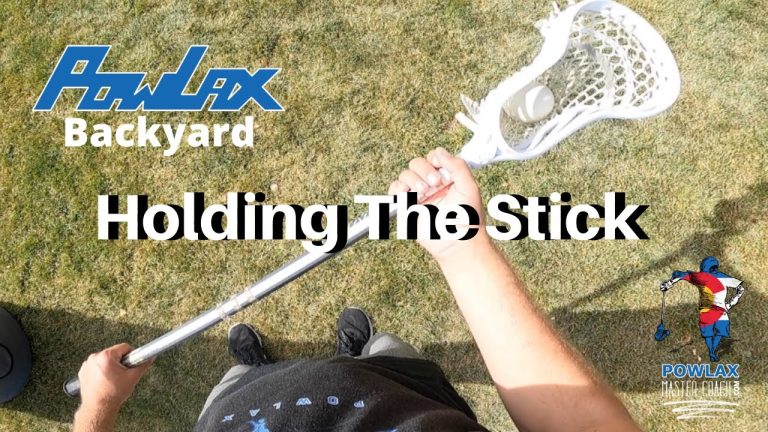
Bunching both hands near the middle of the shaft feels natural but reduces the leverage either hand has over the stick. Your bottom hand should sit near the butt end of the stick, well separated from your top hand, so it can actually function as a stable pivot point instead of just following the top hand around.
Mistake 5: Stopping the Cradle to Decide
Watch any turnover in a beginner game closely and a large share of them happen in the half second a player stops cradling to look for a pass, plant their feet, or think about what to do next. The stick goes still, the ball loses the force holding it in the pocket, and a defender who was already close enough to check takes advantage of exactly that pause.
⚠️ Watch out: Cradling and decision-making are two separate skills that have to run at the same time. Practicing them together on purpose, cradling while scanning the field and calling out a teammate’s name, closes this gap faster than cradling drills done in silence.
Mistake 6: Telegraphing the Dodge
Shifting your weight, dropping your shoulder, or changing your cradle rhythm right before a change of direction gives a defender a visual cue before you’ve actually moved. Keep your cradle rhythm and body language consistent until the instant you commit to the direction change, not a half-second before it.
Mistake 7: Only Ever Practicing One-Sided
A player who can only cradle with their dominant hand on top is playing with half a skill set. Defenders learn quickly which side a one-sided player is weaker on and push the play toward it. This mistake doesn’t cause fumbles in isolation the way a locked wrist does, but it caps how far the other fixes on this list can take you, since you’re only ever fixing the technique on one side of your body.
Mistake 8: Only Cradling in Quiet Practice Reps
A cradle that only gets tested standing alone in a driveway or an empty gym is untested against the two things that actually break it in games: a defender’s stick and the mental load of making decisions while moving. If every rep you run is quiet and uncontested, the first time your cradle meets real pressure will be in a game, which is the worst possible time to find out which of the mistakes above you still have.
Quick Reference
Why a Mistake Can Survive Being Pointed Out
Being told “keep your stick up” or “use your wrist” during a practice doesn’t automatically change what your hands do the next time you’re moving and thinking about something else, like where a teammate is or whether a defender is closing in. Verbal correction identifies the problem; it doesn’t replace the repetition needed to actually retrain the motion. That’s why the same mistake can get called out by a coach for an entire season without disappearing: the player understands the note intellectually but hasn’t drilled the new motion enough times for it to hold up once attention shifts elsewhere.
The practical result is that fixing one of these mistakes usually takes more repetition than it takes understanding. Once you know which mistake applies to you from the list above, the fix itself is simple. Making it automatic under game conditions is the part that actually takes the practice time.
How These Mistakes Cluster Together
These rarely show up in isolation. A tight grip almost always drags an arm-driven motion along with it, since a locked wrist has nowhere else to send the movement. A flat stick angle often travels with hands bunched too close together, since both come from the same instinct to keep everything compact and close to the body rather than extended and controlled. That’s useful to know because fixing the root mistake, usually the grip or the hand spacing, often clears up a second symptom you hadn’t separately diagnosed.
This clustering is also why a single self-check drill, described next, tends to reveal more than one mistake at a time. Don’t be discouraged if video review turns up two or three items from this list at once; that’s the normal pattern, not a sign that your technique is worse than average.
A Simple Self-Check
Record yourself cradling on your phone from the side, both stationary and while jogging. Two things are usually obvious on video that are hard to feel in the moment: whether the stick head is actually staying vertical, and whether the motion is visibly coming from your wrist or from your whole arm. Comparing that footage against the fixes above is faster than guessing which mistake applies to you. Film both a stationary rep and a jogging rep, since some of these mistakes, especially the flat stick and the arm-driven motion, only show up once your feet are moving and your attention splits between running and cradling.
What to Do if Several of These Apply to You
If three or four of these sound familiar at once, resist trying to fix all of them in the same practice session. Pick the one most likely to be causing the others, usually the grip or the stick angle, and spend a full session on nothing else. Once that one holds up consistently at a jog, move to the next. Trying to consciously police your grip, your stick angle, your hand spacing, and your decision-making all at the same time tends to produce a cradle that’s worse than any single uncorrected mistake, simply because there’s too much to think about at once.
Building Back Up
Fixing a mechanical habit is often less about relearning the whole cradle and more about slowing back down to the fundamentals for a session. Revisit grip, wrist snap and stick angle fundamentals if the flat-stick or arm-driven mistakes above sound familiar, since both usually trace back to skipping the stationary-to-walking-to-running progression. And once your form is clean, cradling under pressure covers what changes once a real defender is testing it.
Why does my cradle keep getting knocked loose?
The most common causes are a flat, hip-level stick, an over-tight grip that locks the wrist, or stopping the cradle motion to look around or decide what to do next. Check each of those before assuming it’s a pressure or speed problem.
Is it bad to grip the lacrosse stick tightly?
Yes. A tight grip locks your wrist and forces the cradling motion into your arm, which is slower and easier for a defender to read than a relaxed, wrist-driven motion.
How far apart should my hands be on the stick?
Far enough apart that your bottom hand sits near the butt end and functions as a real pivot point, not bunched together near the middle of the shaft.
Why do I lose the ball right when I try to pass or look up?
Most players unconsciously stop cradling for a moment while making a decision. Practice cradling while scanning the field or calling out a name so the two actions stop competing.
My coach keeps telling me to fix my cradle. Why hasn’t it worked?
Verbal feedback identifies the mistake but doesn’t retrain the motion by itself. The fix usually requires deliberate, repeated reps of the correct mechanics, not just knowing what the correct mechanics are.
Should I fix multiple cradling mistakes at once?
Focus on one at a time where possible. Over-gripping and arm-driven motion often improve together since they’re related, but trying to overhaul your grip, hand spacing, and stick angle simultaneously usually slows progress rather than speeding it up.