‘H’o’w’ ‘t’o’ ‘C’r’a’d’l’e’ ‘a’ ‘L’a’c’r’o’s’s’e’ ‘B’a’l’l’:’ ‘G’r’i’p’,’ ‘W’r’i’s’t’ ‘S’n’a’p’ ‘&’#’0’3’8′;’ ‘S’t’i’c’k’ ‘A’n’g’l’e’ ‘F’u’n’d’a’m’e’n’t’a’l’s’



Credit: signaturelacrosse.com
🥍 Lacrosse Hub: Explore all 32 gear reviews, stick stringing guides, and skill tutorials in our Complete Lacrosse Resource Hub.
Cradle a lacrosse ball by holding the stick with your dominant hand near the top and your non-dominant hand near the bottom, keeping the head close to vertical, and rocking your top wrist back and forth in short, quick motions. The centrifugal force from that wrist motion, not your arm, is what keeps the ball pinned in the pocket.
Cradling is the first real skill every new lacrosse player has to learn, and it’s also the one that separates a player who can move with the ball from one who has to stand still to hold onto it. This guide covers the two-handed cradle from the ground up: how to grip the stick, what your wrist is actually doing, how to angle the head, and how to build the motion into something you can do without thinking about it.
If you already have the two-handed basics down and want to know how cradling changes once a defender is close enough to check you, see cradling under pressure and at game speed. If your cradle already looks right but the ball keeps popping loose, jump to common cradling mistakes and how to fix them instead. This page is the starting point for both.
- →Cradling works through centrifugal force created by wrist rotation, not by squeezing the stick.
- →Dominant hand goes near the top of the shaft, non-dominant hand near the bottom.
- →Keep the stick head close to vertical; a flat, horizontal stick spills the ball and invites checks.
- →The motion comes from the wrist and forearm. Moving your whole arm makes the cradle choppy and slow.
- →Learn it stationary first, then walking, then running, in that order.
Table of Contents
What Cradling Actually Does
The lacrosse pocket holds the ball loosely enough to let you catch, throw, and shoot, which also means it’s loose enough for the ball to fall out or get knocked out if the stick sits still. Cradling solves that by keeping the stick in constant motion. As you rock the head back and forth, the ball is pushed outward against the mesh by the same centrifugal force that keeps water in a bucket you’re swinging in a circle. Stop moving the stick and that force disappears, along with your control of the ball.
That’s why cradling is a motion skill, not a grip skill. A player who grips the stick hard and holds it dead still will lose the ball faster than one with a relaxed grip who keeps the head rocking.
Grip and Hand Position
Your two hands do different jobs on the stick, and mixing them up is the most common reason a beginner’s cradle feels stiff.
Keep both grips relaxed. A tight fist locks your wrist, and a locked wrist forces the movement into your forearm and shoulder instead, which is slower and easier for a defender to read and knock apart.
💡 Pro tip: Hold the stick the way you’d hold a bird you don’t want to crush or let fly away: firm enough that it stays put, loose enough that your wrist can still rotate freely.
Stick Angle and Stance
Keep the head of the stick close to vertical, tilted only slightly away from your body. A stick held flat at hip height turns the pocket into an open target and makes it harder to transition into a pass or shot. Stand with your feet roughly shoulder-width apart, knees slightly bent, and the stick held comfortably in front of your shoulder rather than out at arm’s length.
⚠️ Watch out: A flat, low stick isn’t just a beginner habit that looks wrong. It’s the single biggest reason a defender can reach in and dislodge the ball. Everything else in this guide assumes you’re already keeping the head up.
Why the Stance Matters as Much as the Stick
It’s easy to focus entirely on hand position and forget that cradling starts from the ground up. A narrow stance or locked knees makes the whole body stiffer, and that stiffness travels up into the shoulders and wrists exactly where you’re trying to stay loose. Bending the knees slightly and keeping weight balanced over both feet gives your upper body the freedom to let the wrist do the work instead of bracing against a rigid lower body. This is one of the easiest fixes to overlook because it has nothing to do with the stick itself.
The Wrist Snap, Step by Step
Building Speed the Right Way
Almost every player who struggles to cradle while running skipped a step: they tried to add speed before the wrist motion was automatic while standing still. Build it in this order.
1. Stationary
Practice the wrist snap standing in place until you can hold the ball securely for a full minute without looking down at the stick.
2. Walking
Add slow walking while keeping the same wrist motion. Most players’ cradle tightens up and reverts to arm movement the moment their feet start moving, so consciously stay in your wrist.
3. Jogging, then running
Only once the cradle survives a walk without your form breaking down should you add jogging and then a full sprint. Rushing this progression is why a cradle that looks fine standing still falls apart the moment a game gets fast, which is exactly the situation the cradling under pressure guide picks up from.
Choosing a Stick That Doesn’t Fight You
Equipment can’t fix a bad wrist motion, but the wrong stick makes learning that motion harder than it needs to be. Beginners generally do better with a wider head, since it forgives an off-center catch and keeps the ball from bouncing straight out before you’ve even started cradling. A lighter shaft also matters more early on than it will later: a heavy stick makes your arm want to do the work that your wrist should be doing, which reinforces exactly the habit this guide is trying to avoid.
Stick length should match your position and your height rather than being picked at random. Attackers and midfielders generally use shorter sticks for closer, quicker stick handling, while defenders use longer sticks that trade some of that quickness for reach. If you’re not sure which position you’ll end up playing, a shorter stick is the easier one to learn fundamentals on.
Practicing Both Hands, Not Just Your Dominant One
It’s tempting to only ever practice cradling with your stronger hand on top, since that’s the version that feels comfortable fastest. Resist that. A player who can only cradle one way is predictable, and predictable is exactly what a defender wants. Every drill in this guide should be run with your dominant hand on top and then repeated with your non-dominant hand on top, even though the second version will feel clumsy at first. That discomfort is the point; it’s the same motion your body hasn’t automated yet on that side.
Two Drills to Start With
Run all three regularly rather than picking a favorite. Wall ball is the one you can do alone and repeat the most, the cradle walk is what actually teaches your body to hold the motion while your feet are doing something else, and the partner drill is the first version of cradling that includes another person’s timing instead of just your own.
- ✓Keep the stick head near vertical
- ✓Let the motion come from your wrist
- ✓Practice both hands so you’re not one-sided
- ✓Progress from standing to walking to running
- ✕Grip the stick in a tight fist
- ✕Cradle with your whole arm swinging
- ✕Hold the stick flat at hip level
- ✕Jump straight to full speed before the motion is automatic
How Your Pocket Affects the Learning Curve
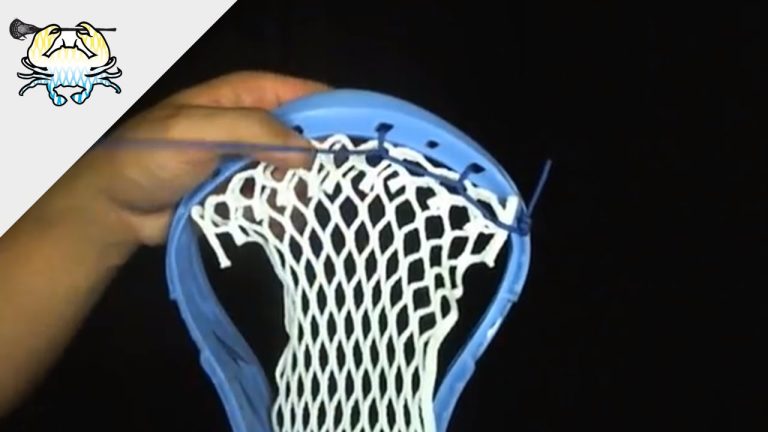
The stick itself, not just your technique, has a real effect on how fast cradling clicks. A deeper pocket holds the ball more securely and forgives a rougher wrist motion, which is why beginner sticks are usually strung deeper than what an advanced player would legally use. A shallow, tightly strung pocket demands cleaner mechanics because there’s less room for the ball to sit before it’s at risk of rolling out. If you’re borrowing equipment or using an older stick with a flat, worn pocket, some of what feels like a personal cradling problem may actually be the stick working against you.
Signs You’re Ready for the Next Step
Before adding speed or moving on to game-speed pressure work, check for these signs first. You can hold the ball cradling in place for a full minute without looking down at the stick. You can switch which hand is on top without the motion falling apart completely. You can cradle while walking a straight line without the stick drifting toward horizontal. And you can carry on a conversation, or at least follow instructions being shouted at you, while still cradling. If any of those still break down, that’s the specific piece to drill before moving on rather than a sign to abandon the fundamentals and skip ahead.
A Note on Patience
It’s normal for this to take longer than it feels like it should. A wrist motion that has to compete with running, watching the field, and thinking about a play is doing three things at once, and each of those layers is a real jump in difficulty even after the last one felt solid. Slowing back down a level when a new layer breaks your form isn’t a setback; it’s the same progression this section already described, just applied honestly instead of skipped.
What to Work On Next
Once the two-handed cradle holds up while you’re jogging and looking around instead of down at the stick, the next real test is a defender standing next to you. That’s covered in cradling under pressure: protecting the ball from a check, which builds on everything here rather than repeating it. And if you’ve been cradling for a while but keep losing the ball anyway, run through common cradling mistakes and how to fix them to check your form against the usual culprits.
What is cradling in lacrosse?
Cradling is the technique of rocking the stick back and forth with your wrist so centrifugal force keeps the ball secured in the pocket while you move.
Which hand should be on top when cradling?
Your dominant hand goes near the top of the shaft and drives the wrist motion. Your non-dominant hand stays near the bottom as a stabilizing pivot point.
Why does my cradle fall apart when I start running?
Most players revert to arm movement instead of wrist movement once their feet start moving. Slow down, rebuild the wrist motion at a walk, and only add speed once it holds up.
Should the stick be vertical or flat while cradling?
Vertical, or close to it. A flat stick at hip height exposes the pocket and makes it far easier for a defender to knock the ball loose.