Best Riding Gloves for Cold Weather


Cold hands are the fastest way to lose feel for your horse’s mouth, and the wrong glove makes that worse, not better. Here are three real winter riding gloves, one per price tier, and what actually separates them.
For most riders, the best winter horse riding gloves balance three things: a grippy palm that still works on cold, stiffening reins, insulation thin enough to let you close your fingers around the rein without bulk, and a cuff long enough to overlap a jacket sleeve. A budget fleece-lined glove like the SSG Winter Gripper covers casual winter hacking for under $20. Riders schooling through a full cold season tend to be happier in a technical glove such as Ovation’s ThermaFlex, which trades a few extra dollars for a windproof shell and touchscreen fingertips.
Riding in the cold is a different problem than just being cold. A ski glove keeps your hands warm and does nothing else for you. A riding glove has to keep your hands warm while still letting you feel a horse’s mouth through the reins, close a buckle with stiff fingers, and hold a stirrup leather without the leather sliding out of your grip the second it gets cold. That’s a narrower problem than “warm gloves,” and it’s why a $12 pair of work gloves from a hardware store almost never works for riding, no matter how insulated they are.
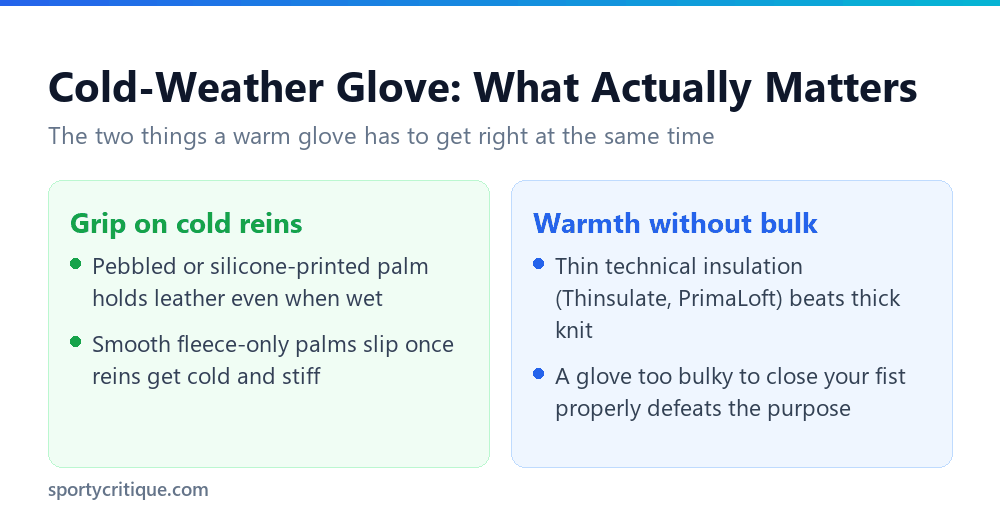
- →Grip matters more than raw warmth. A glove that’s warm but slippery on cold leather reins is a safety problem, not a comfort one.
- →Thin technical insulation (Thinsulate, PrimaLoft, Polartec) beats thick knit fleece for the same warmth with far less bulk in your fist.
- →SSG Winter Gripper ($18.95) is the honest budget pick: pebbled grip palm, fleece lining, nothing fancy.
- →Heritage Arctic Winter Gloves ($42.99) add real wind resistance and warmer insulation for riders out in seriously cold, windy conditions.
- →Ovation ThermaFlex ($50.66) is the technical option: waterproof/windproof shell plus touchscreen fingertips, for riders who want one glove for everything short of deep winter.
Table of Contents
Why cold-weather riding gloves are a different category
Three things separate a real winter riding glove from a generic cold-weather glove. First, palm material: reins get cold and slightly stiff below about 40°F, and a smooth fleece or cotton palm loses grip on them fast. Every glove worth buying for riding has some kind of textured or silicone-printed palm, not just insulation. Second, finger dexterity: you need to close your fingers enough to actually take a contact on the rein, which rules out thick ski-glove-style insulation even though it’s warmer on paper. Third, cuff length: a short cuff lets cold air straight up your sleeve every time you lift the reins, which is a bigger comfort problem than most riders expect until they’ve ridden in both.
⚠️ Watch out: A glove that feels warm standing in a tack room can still be too slippery to trust once you’re actually holding contact on cold leather. If you can, test grip by gripping a rein or lead rope indoors before you commit to riding in a new pair outside.
Our picks across three price tiers
We picked one glove per price bracket rather than a long list, because most riders buying winter gloves are really asking one question: how much do I need to spend to stop my hands hurting on a 20-degree morning. Prices below are what each listing showed as of this writing and can shift with Amazon’s own pricing, so check the current price on the listing before you buy.
Budget pick: SSG Winter Gripper Riding Gloves
The SSG Winter Gripper Riding Gloves is the glove most barns already have a pair of hanging somewhere, and there’s a reason it’s stuck around: fleece lining, a pebbled grip palm, and a Velcro wrist closure cover the basics for well under $20. It won’t block wind the way a shelled glove does, so a truly cold, gusty morning will still get through to your fingers eventually. For a rider who needs warm hands on maybe half the winter, not the whole season, this is the glove to buy first and see if you need more.
Mid-tier pick: Heritage Arctic Winter Gloves
The Heritage Arctic Winter Gloves steps up the insulation and adds real wind resistance, which is the part a fleece-only glove is missing. If your winter riding includes actual wind, not just cold still air in an indoor arena, this is where the extra $24 over the budget pick starts to matter. It’s still built for riding first, with a grip palm and a cut that doesn’t bunch up when you close your hand around a rein.
Technical pick: Ovation ThermaFlex Winter Riding Gloves (Black, Large)
The Ovation ThermaFlex Winter Riding Gloves (Black, Large) is built around a waterproof, windproof shell rather than just a warm lining, which is the actual difference between a glove that’s fine in the cold and one that’s fine in cold rain or wet snow too. The touchscreen fingertips are a small thing until you’re standing at the gate in January trying to text someone with numb hands through a glove that won’t register on your phone. At just over $50 it’s not cheap, but it’s priced like the technical outerwear it actually is, not like a novelty glove.
How to pick the right one for your riding
- ✓Buy based on how cold your actual riding conditions get, not just the calendar month
- ✓Check that the palm has some kind of texture or grip coating, not just smooth fleece
- ✓Size close to your normal glove size; too loose and you lose the rein feel these gloves are built for
- ✓Keep a thinner backup pair for milder days so you’re not overheating your hands in a heavy glove
- ✕Assume thicker automatically means warmer; bulk that keeps you from closing your fist is a real downgrade
- ✕Buy ski gloves or generic work gloves and expect rein contact to feel normal
- ✕Ignore the cuff length if you ride in a barn with drafty aisles or ride outside regularly
- ✕Wait until the coldest week of the year to order; sizes in the exact style you want sell out first
💡 Pro tip: If you’re between sizes, size up rather than down for winter gloves specifically. A slightly loose winter glove still lets your hand generate heat inside it; a slightly tight one restricts blood flow to your fingers, which makes cold hands worse, not better, regardless of how much insulation is inside.
Common myths about winter riding gloves
What to check before you buy
Read the palm material description specifically, not just the word “grip” in the title. Pebbled leather-look synthetic, silicone dot printing, and genuine leather palms all hold reins differently in the cold; silicone printing tends to stay grippy even when it’s damp, while smooth synthetic leather can get slick once it’s wet or very cold. Check the cuff style too: a longer gauntlet-style cuff that goes over your jacket sleeve blocks more cold air than a short cuff that tucks under it, which matters more than most buyers expect on a genuinely cold day.
📊 Note: If you ride in an unheated indoor arena rather than fully outdoors, you likely don’t need the heaviest option on this list. Indoor cold without wind chill is a different, milder problem than being outside in genuine winter weather, and the budget or mid-tier pick usually covers it fine.
Sizing and layering for real winter conditions
Most winter riding gloves run true to standard glove sizing, but the fit you want for winter is slightly different from the snug fit you’d choose for a summer schooling glove. Summer gloves are meant to feel almost like a second skin so you get maximum rein feel. Winter gloves need a little more room inside for your fingers to stay loosely curled rather than fully extended, since flexing your fingers even slightly keeps blood moving and keeps them warmer than holding them rigid inside a snug shell.
Layering is worth considering before you spend more on a single heavier glove. A thin liner glove, the kind sold for running or cycling in cold weather, under a mid-tier riding glove often beats jumping straight to the heaviest single glove on the market, and it gives you flexibility: pull the liner on a colder day, leave it off on a milder one, without buying two separate pairs of riding gloves. The tradeoff is a small loss of dexterity, so test the combination on the ground handling a rein or lead rope before you rely on it in the saddle.
A quick fit check before you buy
Make a loose fist with the glove on. You should be able to close your hand most of the way without the seams pulling tight across your knuckles or the fingertips bunching up past the ends of your fingers. If either happens, size up rather than settling for a fit that will only get worse once your hands are cold and slightly swollen, which is normal in freezing temperatures.
Caring for winter riding gloves
Let leather-palmed gloves air dry away from direct heat after a wet ride; a radiator or heater vent dries leather too fast and leaves it stiff and cracked by midwinter. Synthetic-palm gloves are more forgiving and can usually go straight into a low-heat dryer cycle if the manufacturer’s tag allows it, which is worth checking before your first wash rather than after a glove comes out warped.
Salt from winter roads and de-icing products left on a barn aisle can dry out both leather and synthetic palms faster than cold alone. A quick rinse with plain water after a ride where you’ve handled a gate latch or lead rope covered in road salt residue adds maybe thirty seconds to your routine and meaningfully extends how long the grip coating on a palm stays tacky instead of turning brittle and cracked.
What’s the warmest material for winter riding gloves?
Thin technical insulation like Thinsulate or PrimaLoft under a windproof shell is generally warmer in practice than thick fleece alone, because it blocks wind without adding enough bulk to stop you closing your hand. Wind resistance matters as much as the insulation’s rated warmth once you’re actually outside.
Do I need waterproof gloves for winter riding?
Only if you regularly ride in rain, wet snow, or slush. For dry cold, a fleece-lined glove with a grip palm is enough; waterproofing adds cost and is worth it mainly for riders who can’t avoid wet conditions.
How should winter riding gloves fit?
Close enough that you can still feel rein pressure and close a buckle, but not so tight that circulation is restricted, since restricted blood flow makes cold hands worse. If you’re between sizes, sizing up is usually the safer call for a winter glove specifically.
Can I just wear regular winter gloves instead of riding-specific ones?
You can, but expect reduced rein feel and grip once the gloves get cold or damp. Riding gloves are built with a textured or silicone palm specifically for holding leather in the cold, which most general winter gloves don’t have.
Should I size winter riding gloves differently than summer ones?
Usually yes, by a small margin. Summer schooling gloves fit snug for maximum feel, but a winter glove needs a little extra room so your fingers can stay slightly curled rather than fully extended, since that keeps blood flowing and your hands warmer than a too-tight fit would.
As an Amazon Associate, we earn from qualifying purchases through links on this page.