Best Beach Volleyball Ball: Sand-Ready Picks by Level

The best beach volleyball ball for most players is the Mikasa Beach Classic BV552C-WYBR, an FIVB-approved ball that matches the design standard used in official sanctioned competition at a truly affordable price. Serious competitive players training for AVP-style tournament play should consider the Wilson AVP OPTX, the actual tour ball. Beginners still developing basic passing and serving technique benefit from a softer ball like the RUN2PEAK, which is more forgiving on forearms during early-stage practice.
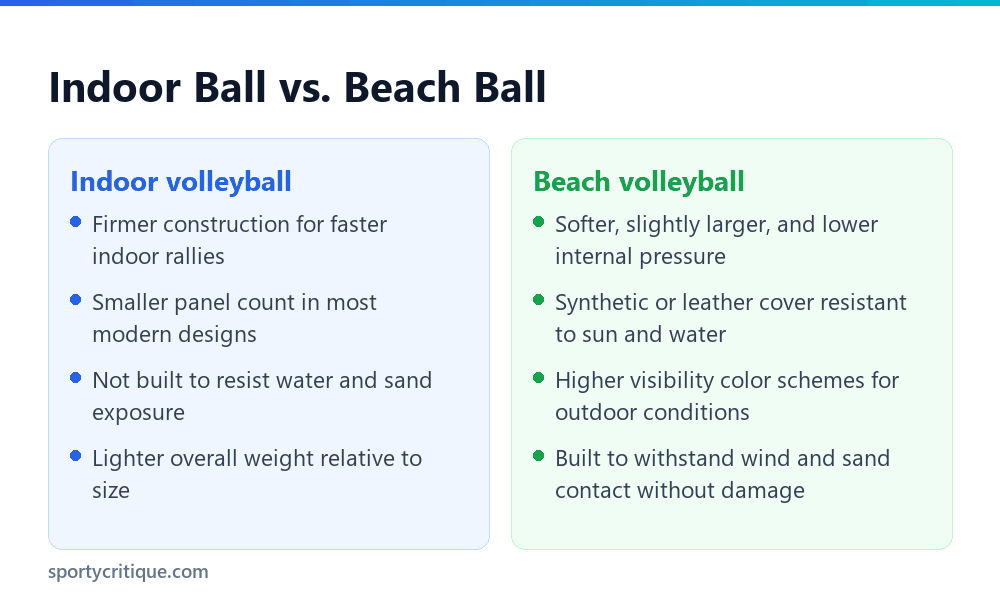
A beach volleyball isn’t simply an indoor ball taken outside. The differences in construction, internal pressure, and cover material exist specifically because sand, water, sun, and wind put different stresses on a ball than a climate-controlled indoor gym ever does, and using the wrong ball type outdoors shows up quickly in how the ball handles and how long it lasts.
- →Beach volleyballs use lower internal pressure and a softer feel than indoor volleyballs
- →FIVB-approved balls meet the same construction standard used in official sanctioned play
- →A softer ball is more forgiving for beginners still developing passing and serving technique
- →Sun exposure and sand contact require a cover material built to resist fading and abrasion
- →Tournament-grade balls like the Wilson AVP OPTX cost significantly more but suit serious competitive training
Table of Contents
What Sand Actually Does to a Volleyball
Sand is abrasive enough that repeated contact gradually wears down a ball’s cover material, particularly on synthetic balls not specifically treated for outdoor durability. Fine sand particles can also work their way into stitching and seams over time, which is part of why beach-specific balls use construction methods designed to resist this kind of gradual infiltration better than a standard indoor ball ever would.
⚠️ Watch out: Leaving a beach volleyball sitting directly in sun-baked sand for extended periods between uses accelerates both material degradation and color fading more than actual play does. Storing the ball in shade or a bag between sessions extends its usable life meaningfully.
Water exposure, whether from ocean spray, rain, or a player diving into wet sand, is another factor beach balls are specifically built to tolerate that indoor balls aren’t. A synthetic cover resists water absorption far better than a leather one, which is one reason budget synthetic options remain popular for casual beach play despite leather being the traditional premium material choice.
4 Real Options, Compared
📊 Note: The roughly $75 gap between the Mikasa FIVB-approved ball and the Wilson AVP tournament ball reflects tour-level construction and branding rather than a dramatic difference in everyday recreational performance. Most players, including club and league competitors, get excellent results from the Mikasa without needing the tour-specific ball.
What FIVB Approval Actually Means
FIVB approval means a ball has been tested and certified to meet the international volleyball federation’s specifications for size, weight, internal pressure, and material performance, the same standard used in officially sanctioned tournament play worldwide. It’s a meaningful quality signal, but it doesn’t mean every FIVB-approved ball performs identically; different manufacturers still produce their own distinct feel within that shared specification.
For a casual or recreational player, FIVB approval mostly serves as a reliable shortcut for quality assurance rather than a strict requirement. A non-approved ball built by a reputable manufacturer can still perform perfectly well for backyard or casual beach play, where matching an exact competition standard matters far less than for organized tournament play.
Why Beginners Benefit From a Softer Ball
New players learning to pass and serve are still developing the forearm conditioning and technique needed to comfortably absorb contact from a firmer, higher-pressure ball. A softer ball reduces the sting and discomfort of early, technically imperfect passing attempts, which can otherwise discourage a beginner from getting the repetitions needed to actually improve.
💡 Pro tip: Transitioning to a firmer, more standard-pressure ball once basic passing technique feels comfortable helps a developing player adjust gradually to tournament-standard equipment rather than facing an abrupt jump in difficulty later on.
Choosing by Skill Level
- ✓Choose a softer ball for beginners still building forearm conditioning and technique
- ✓Choose an FIVB-approved ball for club, league, or serious competitive practice
- ✓Reserve tour-level tournament balls for players training at a genuinely competitive level
- ✓Store beach balls in shade or a bag between uses, not left in direct sun
- ✕Starting a complete beginner on a firm, high-pressure tournament ball
- ✕Assuming a non-approved ball is automatically lower quality for casual play
- ✕Overspending on a tour-level ball before it actually matches a player’s competitive level
- ✕Leaving a ball in sun-baked sand for extended periods between sessions
Wind and Visibility Considerations
Beach volleyball is played outdoors in conditions that can include meaningful wind, unlike a controlled indoor gym environment, and a ball’s weight and surface texture affect how predictably it flies through moving air. Beach balls are generally tuned with this in mind, though very windy conditions still affect play regardless of ball choice, a factor experienced beach players adjust their technique around rather than expecting equipment alone to solve.
High-visibility color schemes, common on dedicated beach volleyballs, also matter more outdoors than indoors, where bright sun, reflective sand, and a wide-open sky background can all make a poorly contrasted ball harder to track than the same ball would be against a plain indoor gym backdrop.
Caring for a Beach Volleyball
Rinsing a ball with fresh water after ocean play removes salt residue that can otherwise degrade the cover material faster than plain sand exposure alone. Letting the ball air dry fully before storing it in a bag or closed container prevents moisture from being trapped against the material for extended periods.
Checking inflation pressure periodically, since beach balls can lose a small amount of air over time even without any puncture, keeps the ball performing consistently rather than gradually feeling softer and less predictable across a season of regular use without the player necessarily noticing the slow decline.
Synthetic vs. Leather Cover Material
Synthetic cover material, common on budget and mid-range balls, resists water absorption well and holds up reasonably to sand contact, making it a practical default for casual and recreational beach play where a ball spends significant time exposed to sun, water, and gritty sand. It also tends to cost less to manufacture, which keeps entry-level balls affordable.
Leather, used on some premium and tournament-grade balls, offers a distinct feel that many experienced competitive players prefer for touch and control, but it requires more careful handling around water exposure and generally costs more. For a player deciding purely on performance feel rather than price or durability, trying both materials in person before committing to a purchase is worth the extra effort.
Panel Count and Seam Construction
Beach volleyballs typically use fewer, larger panels than indoor volleyballs, a design choice that affects both flight characteristics and how visible the ball is at a distance in bright outdoor light. Fewer, larger panels also mean fewer total seams, which can translate into somewhat better durability against sand working its way into stitched seams over repeated use.
Seam construction quality varies more between budget and premium balls than most buyers expect, and a ball with poorly bonded or stitched seams is more likely to develop soft spots or seam separation earlier in its usable life. Reading reviews specifically for mentions of seam durability, not just overall star ratings, helps identify balls that hold up well under sustained outdoor use.
Size and Weight Standards
Regulation beach volleyballs measure roughly 26 inches in circumference and weigh between 260 and 280 grams, a standard that applies consistently across FIVB-approved balls and most reputable recreational options as well. This standardization means players moving between different brands of properly sized balls won’t encounter a jarring size or weight difference that affects their timing and technique.
Novelty or toy-marketed “beach balls,” distinct from actual sport volleyballs despite similar branding language, don’t meet these specifications and aren’t suitable for real practice or play beyond casual, non-competitive backyard fun. Checking that a listing specifically states official size and weight, rather than assuming any ball labeled for beach use meets sport standards, avoids this mismatch.
Choosing a Ball for Youth and Family Beach Play
Younger players and families playing casually benefit most from a softer, more forgiving ball similar to what’s recommended for adult beginners, since the priority for this group is comfort and enjoyment rather than matching a competitive standard. A durable synthetic cover also matters more for this use case, given how much rougher casual family play on sand tends to be on equipment compared to structured, careful training sessions.
Bringing a spare ball along for a beach day is a simple, low-cost way to avoid an entire outing being cut short by a single lost or damaged ball, particularly at a public beach where wind and waves can carry an errant ball out of easy reach faster than expected.
Frequently Asked Questions
Can I use an indoor volleyball for beach play?
It will technically work, but indoor balls aren’t built to handle sand abrasion, water exposure, and outdoor sun the way beach-specific balls are, and they’ll wear out and degrade noticeably faster in those conditions.
Is FIVB approval necessary for casual or recreational play?
No. It’s a reliable quality signal and matters for organized tournament play, but a non-approved ball from a reputable manufacturer performs perfectly well for casual or backyard beach volleyball.
Why do beach volleyballs feel softer than indoor ones?
Beach balls use lower internal pressure by design, which makes them easier to control and less painful to pass, especially in sandy, less controlled outdoor conditions.
What’s the price difference between a recreational and tournament-grade ball actually for?
It largely reflects tour-level branding, construction precision, and official licensing rather than a dramatic difference in how the ball performs for everyday recreational or club play.
How often should I replace a beach volleyball?
It depends heavily on frequency of use and storage habits, but visible cover wear, noticeable softness from air loss that persists after reinflating, or seam separation are all clear signs it’s time to replace.
Does color actually matter for gameplay?
Yes, to a meaningful degree outdoors. High-visibility colors help track the ball against bright sun, reflective sand, and open sky, conditions that don’t exist in a typical indoor gym setting.
Matching the ball to actual skill level and how seriously a player competes matters more than chasing the most expensive option on the shelf. A well-chosen recreational or FIVB-approved ball covers the needs of the large majority of players, with the tour-level option reserved specifically for those training at a genuinely competitive level.
Whichever ball ends up in the bag, checking size and weight standards, cover material fit for the actual conditions it will see, and matching the price tier to how competitively the ball will actually be used covers nearly every practical decision a buyer needs to make before heading to the sand.
As an Amazon Associate, we earn from qualifying purchases through links on this page.