Best Lacrosse Mouthguards

The best lacrosse mouthguard depends mainly on communication needs and helmet setup. The SISU Aero’s ultra-slim, remoldable design suits players who find standard guards interfere with calling plays or breathing during a fast-paced game. The Shock Doctor Gel Max with strap is a solid overall choice for players needing helmet-cage attachment with reliable gel-lined comfort. Younger players on a budget do well with the Oral Mart strapped youth guard, built specifically for a connected-strap setup at a lower price point.
Lacrosse’s full-face helmet setup makes mouthguard choice slightly different from sports without a cage, since strap attachment and communication clarity matter more here than in many other contact sports. Getting the fit and strap setup right protects both teeth and jaw during lacrosse’s frequent stick and body contact without sacrificing a player’s ability to call plays clearly to teammates.
- →Most youth lacrosse leagues require a strapped mouthguard attached to the helmet cage
- →Ultra-slim designs like SISU Aero reduce speech and breathing interference during play
- →Boil-and-bite fitting technique matters more to actual protection than brand name
- →A gel-lined guard generally offers more comfort than a basic, unlined boil-and-bite design
- →Youth players should recheck mouthguard fit periodically as their mouths continue developing
Table of Contents
Why Strap Attachment Matters in Lacrosse
Lacrosse’s full helmet with a face cage creates a specific practical need: a mouthguard that falls out during play has nowhere to go but onto the field, and a strap connecting it to the cage prevents this loss while also reducing the choking hazard an unsecured guard can pose during the sport’s fast running and contact.
⚠️ Watch out: Many youth and scholastic lacrosse leagues explicitly require a strapped mouthguard attached to the helmet, not just a loose, unstrapped guard, as part of their mandatory safety equipment rules. Checking a specific league’s exact requirements before purchasing avoids buying equipment that doesn’t meet local rules.
3 Real Options, Compared
📊 Note: The SISU Aero doesn’t come pre-strapped in this listing, so a player specifically required to use a strapped design should confirm strap compatibility or attach a separate strap kit before relying on it for a league requiring that setup.
Communication and Breathing During Play
Lacrosse is a fast-paced team sport where calling for a pass, alerting a teammate to defensive pressure, or communicating a play matters as much as it does in football or hockey, and a bulky mouthguard that muffles speech can create a genuine tactical disadvantage beyond simple personal discomfort.
Ultra-slim designs specifically engineered to reduce this interference, like the SISU Aero, have found a strong following among midfielders and attackers who communicate frequently during fast transitions, while some defensive players prioritize maximum protection over slimness given their position’s higher contact frequency.
Fitting Technique Matters More Than Brand
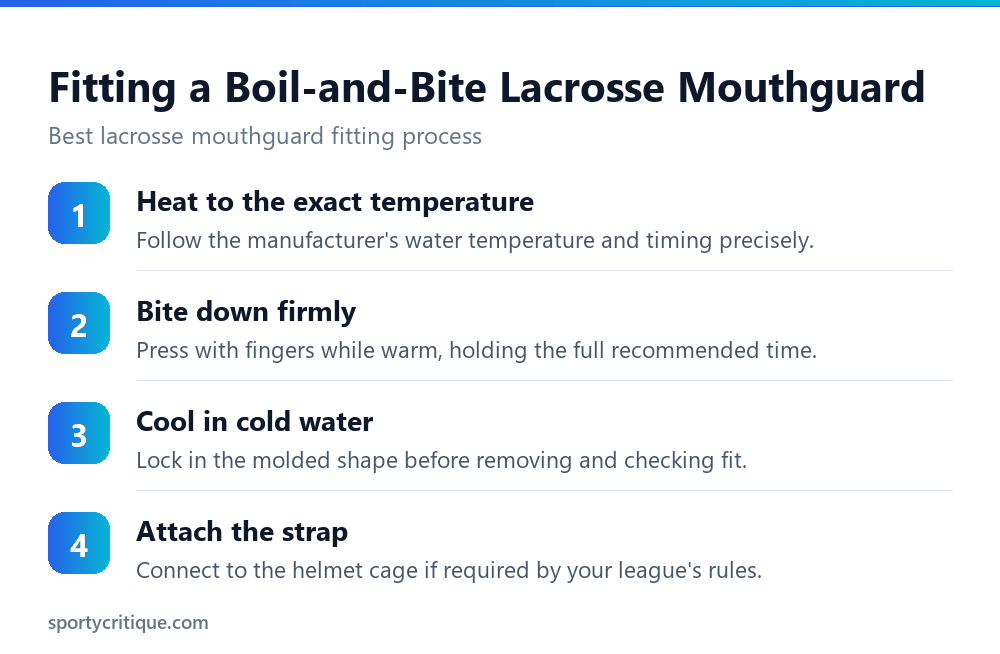
Following a boil-and-bite guard’s exact water temperature and molding instructions, rather than guessing or rushing the process, produces a dramatically better fit than any specific brand choice alone. Biting down firmly with finger pressure while the material is still warm and holding that position for the full recommended time locks in a tighter, more custom-feeling result.
💡 Pro tip: Remolding a guard is usually possible a limited number of times if the first attempt doesn’t produce a satisfying fit, though most manufacturers note that repeated reheating gradually degrades the material’s ability to hold a precise shape over time.
Choosing the Right Guard
- ✓Confirm your league’s specific strap and mouthguard requirements before buying
- ✓Choose an ultra-slim design if speech and breathing clarity matter to your position
- ✓Follow molding instructions precisely for the best possible fit
- ✓Recheck fit periodically for youth players whose mouths are still developing
- ✕Assuming any mouthguard automatically satisfies a league’s specific strap requirement
- ✕Rushing the boil-and-bite molding process and settling for a loose, poor fit
- ✕Ignoring communication needs specific to your position on the field
- ✕Continuing to use a guard well past visible wear or a noticeably loosened fit
Mouthguards for Players With Braces
Players with braces need a guard specifically compatible with that orthodontic hardware, since a standard boil-and-bite guard molded directly over braces can trap brackets and wires in a way that makes removal difficult or damages the orthodontic work. Some designs, including certain SISU models, are specifically marketed as brace-compatible.
Consulting an orthodontist directly about mouthguard compatibility, rather than assuming any standard guard works safely with braces in place, avoids a painful and potentially costly mistake. This is a low-cost precaution worth taking for any player currently in active orthodontic treatment.
Care and Replacement
Rinsing a mouthguard with cool water after every use and periodically cleaning it with a toothbrush and mild soap prevents bacterial buildup on equipment worn directly in the mouth during intense physical activity. Storing it in a ventilated case rather than a sealed bag helps it dry properly between uses and reduces odor over time.
Replacing a mouthguard once it shows visible tears, thinning material, or a fit that’s noticeably loosened from its original molded shape protects against reduced impact absorption that isn’t always obvious from a casual visual check alone.
Mouthguard Considerations for Goalies
Lacrosse goalies face a specific and distinct risk profile compared to field players, absorbing direct shots at high speed from close range rather than primarily stick and body contact during general play. This difference sometimes leads goalies to prioritize maximum coverage and impact absorption over the ultra-slim, communication-focused designs some field players prefer.
That said, goalies still need to communicate constantly, directing their defense and calling out opposing player positioning, so the same tradeoff between protection and speech clarity applies to them as much as to any other position, just with protection weighted slightly more heavily given the nature of direct shot-facing contact.
Team Color and League Visibility Rules
Some leagues and teams require mouthguards in a specific color, often matching team colors or a bright, easily visible shade, so coaches and officials can quickly confirm a player is wearing required equipment during a fast-paced game without needing to stop play for a closer look. This requirement varies significantly by league and level, so checking specific team or league rules before purchasing avoids buying equipment in a color that technically doesn’t meet local requirements.
Most of the mouthguards covered in this comparison come in multiple color options specifically to accommodate this kind of team-color or league-visibility requirement, making color choice a simple matter of checking the specific product listing’s available options against a team’s actual uniform colors or league rules.
How Lacrosse Mouthguard Needs Differ From Hockey
While lacrosse and hockey mouthguards often come from the same manufacturers and sometimes even share identical product lines, lacrosse’s typically higher on-field communication demands, calling plays across a wider field compared to hockey’s more compact rink, push a larger share of lacrosse players toward the slimmer, communication-focused designs than the hockey market tends to favor.
Lacrosse also generally sees a higher percentage of players using a full helmet cage across all positions compared to hockey, where cage use varies more by level and league, which is part of why strapped designs are so consistently emphasized throughout lacrosse-specific buying recommendations compared to some other contact sports covered elsewhere on this site.
Sizing Across Youth, Junior, and Adult Players
Most mouthguard manufacturers offer distinct youth and adult sizing, reflecting the real differences in mouth and jaw size between a young player and a fully grown adult, and choosing the size category matched to actual age and mouth size produces a better fit than assuming a single universal size works reasonably well for every player regardless of age.
Junior or intermediate sizing, offered by some but not all manufacturers, bridges the gap for players whose mouth size falls between standard youth and adult categories, and checking whether a specific brand offers this middle option is worth doing for a player who doesn’t clearly fit either standard size category comfortably.
Considerations for Multi-Sport Athletes
A player competing in both lacrosse and another contact sport, football or hockey being common combinations, can often use the same general mouthguard across sports given the significant overlap in protective needs, though strap attachment requirements and specific league color or visibility rules may differ between the two sports and need separate checking.
Owning two separate, sport-specific mouthguards rather than trying to make one guard work across multiple sports with different strap and attachment requirements is often simpler and more reliable than attempting to adapt a single guard’s strap setup between a lacrosse helmet cage and a different sport’s specific attachment points.
Frequently Asked Questions
Do I need a strapped mouthguard for lacrosse?
Many youth and scholastic leagues require it specifically, since a strap prevents the guard from being lost during play and reduces choking hazard. Checking your specific league’s rules confirms the exact requirement.
Is an ultra-slim mouthguard as protective as a bulkier one?
It depends on the specific design and material engineering, not thickness alone. A well-engineered slim guard like the SISU Aero can offer solid protection while improving speech and breathing clarity.
Can I use a lacrosse mouthguard with braces?
Only if it’s specifically designed for brace compatibility. A standard boil-and-bite guard can trap brackets and wires, so consulting an orthodontist before choosing a specific model is worthwhile.
How do I get a better fit from a boil-and-bite guard?
Follow the manufacturer’s exact water temperature and timing instructions, bite down firmly with finger pressure while the material is warm, and hold the position for the full recommended time.
How often should I replace my mouthguard?
Once it shows visible tears, thinning, or a fit that’s noticeably loosened from its original molded shape, since these signs indicate reduced impact absorption.
Should defensive players use a different mouthguard than attackers?
Not necessarily a different guard, but defensive players facing more frequent contact sometimes prioritize maximum protection over slimness, while attackers and midfielders often value communication clarity more.
A correctly fitted, properly strapped mouthguard remains one of the cheapest, most effective pieces of protective equipment in a lacrosse player’s bag relative to the injury risk it actually addresses, which makes it worth getting right rather than treating as an afterthought purchase grabbed at the last minute before a season starts, when there’s no time left to test fit or order a replacement if the fit or color turns out to be wrong once the actual season is already well underway.
Matching a mouthguard to your league’s strap requirements, your position’s communication needs, and any orthodontic considerations, then fitting it carefully, protects both teeth and jaw without sacrificing the on-field communication lacrosse’s fast pace demands.
None of this needs to feel overly complicated at purchase time. Confirm league and team requirements first, color and strap type included, then choose between a slim, communication-focused design or a more standard protective option based on position and personal preference, and finally take the extra few minutes to mold it correctly rather than rushing that final, most important step, since a rushed molding job undermines every other careful choice made earlier in the buying process.
As an Amazon Associate, we earn from qualifying purchases through links on this page.