How to Groom a Horse Before Riding


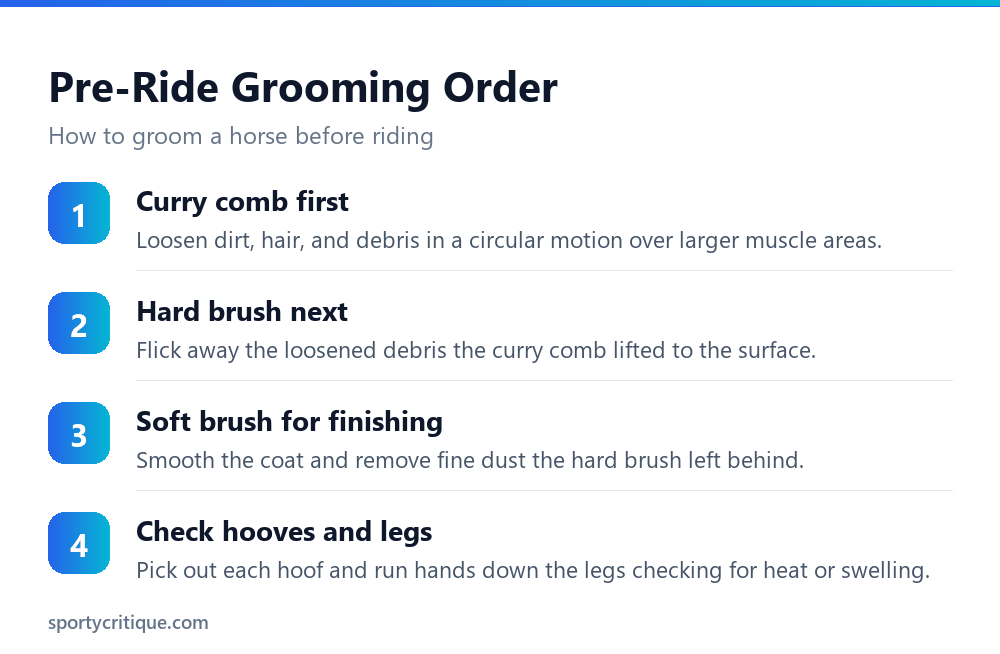
Learning how to groom a horse before riding means following a specific order for a reason: curry comb first in circular motions to loosen dirt and hair, a hard or dandy brush next to flick away what the curry comb lifted, a soft or body brush to finish and smooth the coat, then picking out each hoof and running hands down each leg checking for heat, swelling, or injury before tacking up. This routine isn’t just about appearance; it removes debris that could cause discomfort under tack and catches injuries before they get aggravated by riding.
Pre-ride grooming often gets treated as a quick, optional cosmetic step, but the routine actually serves several practical safety and comfort purposes that go well beyond making a horse look presentable. Skipping steps or rushing through the routine can mean missing debris that causes discomfort during a ride or an injury that needs attention before any riding happens at all.
- →The curry comb, hard brush, soft brush sequence follows a specific logic, not just tradition
- →Grooming removes debris that could cause discomfort or rubbing once tack and a rider are added
- →Checking hooves and legs during grooming catches injuries before riding aggravates them
- →This grooming routine is distinct from both a full tacking-up sequence and a deep, thorough bath
- →Rushing through grooming to save time increases the risk of missing an early injury sign
Table of Contents
Starting With the Curry Comb
A curry comb, typically a rubber or plastic tool with small teeth or nubs, is used in circular motions over the larger muscle areas, the neck, shoulders, barrel, and hindquarters, to loosen embedded dirt, dead hair, and dried mud or sweat before any other tool touches the coat. This step does the heavy lifting that later brushes can’t accomplish on their own.
⚠️ Watch out: Currying directly over bony areas like the legs below the knee, the face, or the spine can cause discomfort, since these areas lack the same muscle padding that makes circular curry motions comfortable elsewhere on the body. Most curry combs are meant for the larger, well-muscled areas only.
The Hard or Dandy Brush
Following the curry comb with a stiffer-bristled hard brush, sometimes called a dandy brush, in short, flicking strokes in the direction of hair growth removes the dirt and hair the curry comb loosened but didn’t actually remove from the coat. This is the step that does most of the visible cleaning work in the overall routine.
The flicking motion, rather than a long, dragging stroke, is specifically what throws loosened debris off the coat rather than just pushing it around or redistributing it across a different part of the body. This technique takes a bit of practice to execute effectively compared to a simple, straightforward brushing motion.
Finishing With the Soft or Body Brush
A softer-bristled body brush finishes the routine, smoothing the coat and removing the finer dust and debris the hard brush left behind, gentle enough to use across the entire body including more sensitive areas like the face, with appropriate care and a smaller brush size for those spots specifically.
This final step is also where a groomer typically notices any skin issues, bumps, or areas of sensitivity that weren’t obvious during the more vigorous curry and hard-brush steps, since the lighter, closer contact of a soft brush surfaces these details more readily than the firmer pressure used earlier in the routine.
💡 Pro tip: Using a separate, dedicated face brush, smaller and softer than the body brush, respects the increased sensitivity of a horse’s face compared to the rest of the body, and most horses tolerate face grooming better with a tool specifically suited to that area.
Checking Hooves and Legs
Picking out each hoof with a hoof pick, removing packed dirt, mud, and small stones from the sole and around the frog, prevents discomfort and reduces the risk of a stone bruise or an abscess developing from trapped debris. This step also gives a direct, close look at the hoof’s general condition before any weight-bearing exercise begins.
Running hands down each leg from the top to the hoof, feeling for heat, swelling, or any flinching reaction from the horse, is a quick but genuinely valuable check that can catch an early injury before riding aggravates it into something more serious. A horse that reacts unusually to this check anywhere along a leg deserves a closer look before any riding proceeds.
📊 Note: This hoof and leg check takes only a minute or two but is arguably the single most important safety step in the entire pre-ride grooming routine, since it directly addresses whether the horse is physically sound enough to be ridden that day.
Common Grooming Mistakes
- ✓Follow the curry comb, hard brush, soft brush order for a reason, not just tradition
- ✓Use gentler tools and technique specifically for the face and bony areas
- ✓Check hooves and run hands down legs every single time before riding
- ✓Take the full grooming routine seriously even when short on time
- ✕Skipping the curry comb step and going straight to a hard brush
- ✕Using a stiff curry comb on the legs below the knee or on the face
- ✕Rushing through hoof and leg checks or skipping them to save time
- ✕Treating grooming as purely cosmetic rather than a safety routine
How This Differs From a Full Bath or Tacking Up
This pre-ride grooming routine is distinct from a full bath, which uses water, shampoo, and typically happens less frequently for deeper cleaning rather than as a daily pre-ride habit. Daily brush grooming maintains coat and skin condition between the less frequent full baths a horse actually needs.
Grooming is also a separate step that happens before tacking up, not part of the tacking-up sequence itself, which covers placing the saddle pad and saddle, girthing, and bridling once grooming and the safety checks covered here are already complete. Treating grooming as its own distinct first step, rather than skipping straight to tacking up, keeps the full safety and comfort routine intact.
Adjusting Grooming for Season and Coat Condition
A horse’s winter coat, thicker and often carrying more mud and debris than a summer coat, sometimes needs a longer or more thorough curry comb session to work through the denser hair before the hard and soft brush steps can be as effective as they are on a shorter summer coat.
Sweaty or particularly muddy conditions, common after turnout in wet weather, may call for a quick rinse or a damp sponge wipe-down before or instead of a full dry-brush routine, since brushing heavily caked, dried mud can be uncomfortable and less effective than addressing it while still slightly damp or freshly rinsed.
Mane and Tail Care Before Riding
A quick pass through the mane and tail with a wide-tooth comb or a dedicated detangling brush, working out any small tangles or debris caught overnight or during turnout, rounds out the coat-focused portion of the routine before moving to hoof and leg checks. This step matters more for comfort and appearance than for any direct safety reason, but a badly tangled mane can catch on tack or a rider’s hands during a ride.
Aggressive daily brushing of the tail specifically can gradually thin it out over time by pulling out more hair than necessary, so many experienced handlers use a lighter touch or a detangling spray on the tail specifically, reserving firmer brushing for genuine tangles rather than a full, vigorous daily brush-through.
Checking the Girth and Saddle Areas Specifically
Paying particular attention to the girth area and the section of the back where the saddle will sit, checking for any caked mud, sweat residue, or loose hair specifically in these zones, matters more than an equally thorough check anywhere else on the body, since debris trapped under the saddle or girth during a ride causes rubbing and discomfort far more directly than debris elsewhere on the coat.
A horse that seems unusually sensitive or reactive specifically when this area is groomed or touched may be signaling an existing girth gall, saddle sore, or other localized irritation that deserves attention and possibly a break from riding until it resolves, rather than proceeding to tack up over an already irritated area.
Grooming as Part of the Handler-Horse Relationship
Beyond its practical safety and comfort functions, a consistent pre-ride grooming routine gives a handler regular, hands-on time with a horse that builds familiarity and trust over repeated sessions, which can make a horse more relaxed and cooperative during grooming itself and, by extension, during the tacking-up and riding that follows.
This relationship-building aspect is part of why many experienced riders treat grooming as an unhurried, attentive routine rather than a rushed formality to get through as quickly as possible before riding. A horse that associates grooming with calm, attentive handling often settles into the rest of a ride more easily than one accustomed to a rushed, purely mechanical routine.
Basic Grooming Tools Worth Having
A basic grooming kit covering the tools discussed throughout this guide, a curry comb, a hard brush, a soft brush, a hoof pick, and a mane and tail comb, covers the core routine without requiring an extensive or expensive equipment collection. Additional specialized tools exist for specific needs, but this core set handles the large majority of everyday pre-ride grooming situations.
Keeping grooming tools reasonably clean themselves, periodically washing brushes to remove accumulated hair, dirt, and oils, maintains their effectiveness and prevents transferring old, trapped debris back onto a freshly groomed coat. A grooming kit that’s never cleaned gradually becomes less effective at the exact job it’s meant to do.
Frequently Asked Questions
What order should I groom my horse in?
Curry comb first in circular motions, followed by a hard or dandy brush to flick away loosened debris, then a soft body brush to finish, and finally checking hooves and legs before tacking up.
Why can’t I use a curry comb everywhere on the horse?
Curry combs are meant for larger, well-muscled areas. Using one on bony areas like the lower legs or face can cause discomfort, since those areas lack the same muscle padding.
How important is checking hooves and legs really?
Very. This quick check can catch an early injury or issue before riding aggravates it into something more serious, making it arguably the most important safety step in the routine.
Is grooming the same as tacking up?
No. Grooming is a separate step that happens before tacking up, which covers saddle placement, girthing, and bridling once grooming and safety checks are complete.
Do I need to groom differently in winter?
Often yes. A thicker winter coat may need a longer curry comb session to work through denser hair before the hard and soft brush steps become as effective as on a shorter summer coat.
What should I do if my horse reacts to a leg check?
Take it seriously and look closer before riding. An unusual reaction to a leg check can indicate an injury that needs attention before any riding proceeds.
A consistent pre-ride grooming routine takes only a few extra minutes but delivers real value beyond appearance, catching potential injuries early and removing debris that could otherwise cause discomfort once tack and a rider’s weight are added. Treating it as a genuine safety habit, not just a cosmetic formality, protects both horse and rider over the long run.
None of this needs to take more than ten or fifteen minutes once the routine becomes familiar, and that small investment of time pays back consistently in a more comfortable horse, a cleaner saddle fit, and an early warning system for the kinds of small injuries that are far easier to manage before they’ve had a chance to worsen under saddle.
As an Amazon Associate, we earn from qualifying purchases through links on this page.