Best Table Tennis Robots with Multi-Ball Oscillators: Programmable Drills & Topspin Precision

In table tennis, mastering stroke consistency, split-second footwork transitions, and reading incoming spin variations requires thousands of structured repetitions. For players without access to full-time training partners or professional club coaches, an advanced table tennis robot equipped with multi-ball oscillators and independent motor drives is the single most transformative training investment you can make. A modern robot delivers hundreds of precision-calibrated balls directly into your training zone, allowing you to groove muscle memory at your own pace.
However, the capabilities of table tennis robots vary dramatically across price points. Entry-level tabletop hoppers eject rudimentary balls with limited trajectory variability, while professional multi-wheel robotic systems utilize microprocessors and Bluetooth apps to simulate complex tournament match sequences. In this comprehensive technical guide, we evaluate the best table tennis robots featuring multi-ball oscillation, recycling net catch systems, and programmable drill sequencing.
Table of Contents
Drive Head Mechanics: Single-Wheel, Dual-Wheel, and Triple-Wheel Motors
The friction drive head is the mechanical core of any table tennis robot. How the wheels contact the 40+ ABS plastic ball dictates spin realism:
Single-Wheel Systems (iPONG, Basic Robots): Single-wheel robots utilize one motorized friction roller opposing a stationary guide plate. As the wheel spins, it imparts both forward velocity and spin simultaneously. The critical limitation of a single-wheel system is that spin and speed are mechanically intertwined: you cannot receive a slow ball with heavy topspin, nor can you practice hitting a fast no-spin ball. To change from topspin to underspin, you must physically pause and rotate the robot head upside down.
Dual-Wheel Systems (Paddle Palace, Suz S102): Dual-wheel robots feature top and bottom rollers driven by independent variable-speed motors. By spinning the top wheel faster than the bottom wheel, the robot produces aggressive topspin. Spinning the bottom wheel faster generates heavy backspin. Setting both wheels to identical RPMs produces true, dead no-spin knuckleballs—essential for practicing flip-kill returns.
Three-Wheel Systems (Power Pong, Butterfly Amicus): The pinnacle of robotic engineering, three-wheel heads arrange three motorized friction rollers at 120-degree intervals around the ejection barrel. Independent microprocessor control of all three wheels allows the robot to generate authentic sidespin curves, corkscrew serves, and heavy loop trajectories without requiring mechanical head tilting.
Table Tennis Multi-Ball Robots: Motor Drive, Oscillation & Drill Matrix
| Robot Model | Drive Head Motors & Wheels | Ball Recycling Net System | Oscillation & Landing Precision | Control Interface & Programmable Drills | Amazon Price & Recommendation |
|---|---|---|---|---|---|
| Power Pong Alpha+ / Omega | 3-wheel friction drive head | Integrated full-table collection net | Random & programmable multi-point landing | Bluetooth tablet/phone app; custom drill library | Check Power Pong Price (Top Professional Coaching Unit) |
| Newgy Robo-Pong 2055 | Single-wheel drive with manual spin head | Full recycling net with continuous feed | Precision mechanical oscillation (1-8 zones) | Digital control box; 64 pre-programmed drills | Check Robo-Pong Price (The Classic Club Workhorse) |
| Paddle Palace Robot Pro | Dual-wheel independent motors | Integrated recycling catch net | Electronic sweeping oscillator | Digital wireless remote; independent spin & speed | Check Paddle Palace Price (Top Realistic Spin Transitions) |
| Suz Table Tennis Robot S102 | Dual-wheel spin drive system | Recycling net included with auto-feed | Multi-point fixed and random oscillation | Wired digital remote; 9 spin varieties | Check Suz S102 Price (Best Value Under $500) |
| iPONG Trainer Motion | Single-wheel entry-level hopper | Tabletop bucket hopper (No recycling net) | Basic left-to-right sweeping oscillation | Wireless pocket remote control | Check iPONG Price (Best Budget Under $150) |
Detailed Reviews: The Best Table Tennis Robots on the Market
1. Power Pong Alpha+ / Omega: The Professional Coaching Benchmark
The Power Pong Alpha+ Table Tennis Robot represents the elite standard in competitive table tennis training. Built with a sophisticated three-wheel drive head and Bluetooth tablet connectivity, Power Pong allows players to customize every single ball in an 8-ball rally sequence.
You can program Ball 1 as a short backspin serve to your forehand, Ball 2 as a long no-spin push to your middle, and Ball 3 as a heavy topspin loop to your wide backhand. The robot transitions between different spins and landing points in fractions of a second, replicating authentic human match play and forcing you to execute proper recover-and-plant footwork.
2. Newgy Robo-Pong 2055: The Legendary Digital Workhorse
For over two decades, Newgy has built the most reliable club training robots in North America. The Newgy Robo-Pong 2055 features a digital control box loaded with 64 pre-programmed drills covering everything from beginner stroke basics to advanced tournament footwork routines.
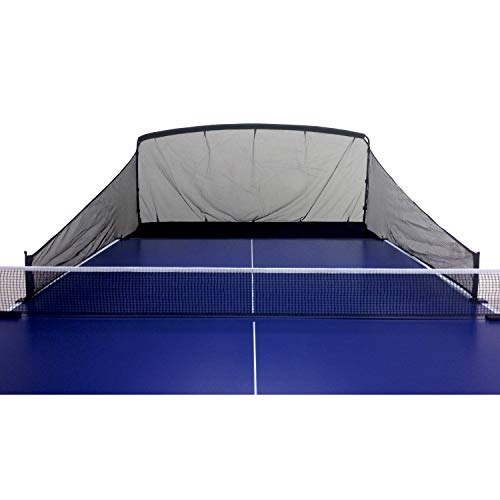
The Robo-Pong 2055 mounts directly onto the end table rail and includes an integrated recycling net system that catches your returns and recirculates balls continuously. Its mechanical oscillation sweeps across eight distinct table zones with surgical repeatability, making it an exceptional tool for grooving rock-solid forehand loop consistency.
3. Suz Table Tennis Robot S102: Feature-Packed Performance Under $500
For home game rooms and recreational basements, the Suz S102 Table Tennis Robot with Net delivers unmatched value. Equipped with dual-wheel drive motors, an automatic recycling catch net, and a wired digital remote, the S102 provides capabilities usually found only on robots costing twice as much.
The dual wheels allow you to independently dial in top and bottom speeds to produce nine distinct spin variations (including pure topspin, heavy chop backspin, and left/right sidespins). The collection net setup is quick to assemble, allowing players to practice 15-minute high-cadence cardio sets without manual ball retrieval.
4. Paddle Palace Robot Pro: Realistic Spin and Transition Drills
The Paddle Palace Robot Pro is engineered for serious club competitors who demand realistic ball trajectory arcs. Featuring dual-wheel motors and a wireless digital remote, the Robot Pro allows you to alternate spin types within custom programmed drill routines.
Its wide electronic sweeping oscillation covers the entire table surface, from deep baseline corners to tight over-the-table short touch drops, making it an outstanding platform for practicing the modern backhand banana flick receive against variable spin.
5. iPONG Trainer Motion: The Ultra-Budget Compact Entry
If floor space and budget are your primary considerations, the iPONG Trainer Motion Table Tennis Robot provides a simple, fun entry point. Sitting directly on top of the table surface like a small bucket hopper, it holds up to 100 balls and features a wireless remote control.
While it lacks a continuous recycling net and cannot vary spin within a rally, its oscillating sweeping head feeds balls at rates from 30 to 70 balls per minute, providing an enjoyable aerobic workout and helping beginners master basic stroke contact mechanics.
Recycling Catch Net Hygiene: Preventing Ball Jams
The most common issue encountered by ping pong robot owners is ball jamming inside the feed mechanism. Ball jams are rarely caused by motor failure; they are almost always caused by floor dust and hair contamination:
When balls hit the floor, their static-charged plastic surface picks up pet hair, carpet fibers, and fine dust. When these dirty balls are shoveled back into the recycling net, the hair wraps around the motor drive axles and gums up the rubber wheels. To prevent jamming, wipe your balls with a microfiber cloth before filling the hopper, and sweep your playing floor clean before training.
Ball Quality: 1-Star Training Balls vs. Cheap Plastic Eggs
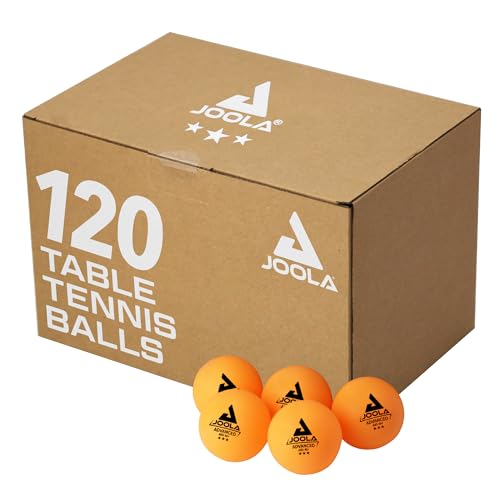
Never fill an advanced table tennis robot with cheap novelty balls or warped toy balls. Inconsistent ball diameters cause the drive wheels to grip unevenly, spraying balls in random directions. Fill your robot with a bulk pack of durable 1-star or 2-star 40+ ABS training balls from reputable manufacturers (such as Butterfly, Sanwei, or Nittaku) to ensure consistent trajectory and feed reliability.
The Final Verdict: Which Ping Pong Robot Should You Choose?
Choose Power Pong If: You are an aspiring competitive tournament player who requires realistic multi-spin rally sequencing, independent 3-wheel drive precision, and customizable smartphone app drill programming.
Choose Newgy Robo-Pong 2055 If: You want a proven, ultra-durable North American classic with 64 pre-programmed drills and a rock-solid recycling net system.
Choose Suz S102 If: You want dual-wheel independent spin control and an automatic recycling net on an accessible budget under $500.
Dual vs. Triple-Wheel Friction Drive Head Dynamics
To understand the difference between dual-wheel and triple-wheel table tennis robots, examine the physics of contact friction vectors. Dual-wheel robots place motorized rollers at the 12 o’clock and 6 o’clock positions of the barrel. By independently controlling top and bottom motor RPMs, the robot can generate vertical topspin or backspin. However, to produce sidespin, the entire head assembly must be physically rotated by hand or motorized pivot, tilting the flight path.
Triple-wheel drive systems (such as Power Pong Alpha+ and Butterfly Amicus) position three rollers at 120-degree intervals around the ball circumference. Each motorized roller is managed by a micro-controller executing real-time vector calculus. By adjusting the relative speeds of all three wheels, the robot can generate any combination of topspin, backspin, left sidespin, right sidespin, or dead float without mechanically turning the head, delivering authentic human serve trajectories.
Programming Classic Footwork Drills: The Falkenberg Routine
The true power of a programmable multi-ball oscillator is grooving footwork patterns. The gold standard training drill across national table tennis academies is the classic Falkenberg Drill:
Ball 1: The robot feeds a topspin ball to your backhand corner; you strike a backhand counter-drive.
Ball 2: The robot feeds a second topspin ball to the same backhand corner; you execute a rapid side-step around the corner and strike an aggressive inside-out forehand loop.
Ball 3: The robot feeds a fast topspin ball wide to your forehand corner; you crossover-sprint across the table and strike a running forehand loop.
Repeating this 3-ball Falkenberg sequence for 15-minute sets builds aerobic stamina, dynamic recovery balance, and explosive lateral footwork transitions that transfer directly into competitive match victories.
Third-Ball Attack Simulation: Underspin Opening to Topspin Drive
Another essential match skill unlocked by advanced robots is third-ball attack execution. Program the robot to deliver a short, heavy backspin serve to your forehand, followed immediately by a long, floating topspin push to your deep backhand. This sequence trains you to step in over the table for a delicate touch drop or banana flick, recover your balance, and immediately load your legs for an aggressive counter-loop.
Ball Feeder Basin Agitation and Anti-Jam Reversing Sensors
Cheap ping pong robots frequently suffer from feed basin clogging, where two balls wedge simultaneously into the intake opening. High-end robots incorporate rotating plastic agitator sweepers and motorized reverse-pulse sensors. If the optical feed sensor detects resistance or a ball stoppage, the motor instantaneously reverses rotation for 200 milliseconds, dislodging the jam and resuming continuous multi-ball feed without human intervention.
Drive Wheel Maintenance: Restoring Friction Grip with Isopropyl Alcohol
Over months of daily training, the rubber and silicone friction wheels inside the ejection barrel accumulate white wax and paraffin residue from 40+ ABS balls. As the wheels become slick, ball exit velocity drops and spin becomes erratic. Every 20 playing hours, unplug the unit and gently clean the rubber rollers using a cotton swab moistened with 70% isopropyl alcohol. This strips oil and restores natural tackiness to the drive wheels.
Catch Net Side-Wing Extensions and Barrier Enclosures
When practicing high-speed counter-smash rallies, errant balls frequently spray off the side edges of the table, bypassing standard recycling nets. High-level training setups incorporate clip-on mesh side wings that extend two feet beyond the net posts, guiding ricocheting balls down into the recovery funnel. Surrounding your playing area with lightweight PVC court barriers prevents missed balls from rolling behind heavy basement furniture.
High-Cadence Cardio Conditioning: 30-Minute Interval Sets
Beyond technical stroke refinement, table tennis robots are unmatched tools for high-intensity cardiovascular conditioning. Set the ball ejection rate to 65 to 75 balls per minute on random wide oscillation. Executing continuous forehand and backhand loop drives for 3-minute rounds with 60 seconds of rest drives your heart rate into the anaerobic zone, forging the rapid recovery endurance required for fifth-game tournament tiebreaks.
Digital Microprocessor Voltage Protection and Power Surges
Modern robots (such as the Power Pong Alpha+ and Newgy 2055) utilize sensitive digital circuit boards and pulse-width modulation (PWM) motor controllers. Running these units directly from unconditioned wall outlets in older basements risks voltage spikes when heavy appliances (like chest freezers or dehumidifiers) kick on. Always connect your robot power supply to a dedicated surge protector to protect internal microchips from voltage fluctuations.