BBCOR vs USA Baseball Bats: Trampoline Effect, Drop Weight Regulations, Barrel Sizing, and Exit Velocity Analysis

In the modern landscape of amateur baseball, navigating bat certification standards is one of the most confusing challenges confronting players, parents, and coaches. Stroll into any sporting goods pro shop or browse online retailers, and you are immediately bombarded with an alphabet soup of regulatory stamps: BBCOR, USA Baseball (USABat), and USSSA 1.15 BPF. Choosing the incorrect certification does not merely result in an illegal bat call and an automatic out at the plate; it fundamentally alters swing mechanics, exit velocity generation, and player safety.
The two most vital non-commercial standards governing youth through collegiate baseball are BBCOR baseball bats (mandated in high school NFHS and collegiate NCAA competition) and USA Baseball bats (mandated across Little League, Cal Ripken, Babe Ruth, and Pony youth leagues). This comprehensive technical guide analyzes the underlying physics of restitution coefficients, drop weight biomechanics, barrel wall engineering, and the critical transition protocols young hitters must execute to succeed at the high school level.
Table of Contents
The Physics of Trampoline Effect: Restitution Coefficients Explained
To grasp why governing bodies enforce strict bat standards, one must understand the mechanical interaction between a hollow metal or composite cylinder and a solid cork-and-rubber-wound baseball. When a pitched baseball (traveling between 60 and 95 mph) strikes a baseball bat, the baseball compresses by nearly 30% to 50% of its original spherical volume.
A solid wood bat has high material stiffness and almost zero barrel compression. Most kinetic energy is lost as internal friction and heat within the collapsing leather ball. Hollow aluminum alloy and carbon fiber composite bats, however, behave like a mechanical spring. Upon impact, the thin metal or composite barrel walls flex inward and immediately rebound outward. This phenomenon is known scientifically as the “trampoline effect.”
In the late 1990s and early 2000s, unregulated Besr (Ball Exit Speed Ratio) metal bats generated dangerous exit velocities exceeding 105 to 110 mph in collegiate play. Pitchers and corner infielders lacked sufficient reaction time (often under 0.35 seconds) to protect themselves from line drives, sparking serious safety concerns and distorting offensive statistics.
What is BBCOR? The 0.50 Coefficient Standard for High School and NCAA
In response to escalating exit velocities, the NCAA and the National Federation of State High School Associations (NFHS) implemented the BBCOR standard in 2011 and 2012. BBCOR stands for Batted Ball Coefficient of Restitution.
The BBCOR protocol measures the ratio of relative velocity between the bat and the baseball before and after collision. Under laboratory testing protocols conducted at Washington State University’s Sports Science Laboratory, the maximum allowable BBCOR value is capped at 0.50. This mathematical threshold ensures that non-wood metal and composite bats perform with the exact same trampoline profile as a high-density solid Northern White Ash or hard rock maple wood bat.
In addition to the 0.50 restitution ceiling, BBCOR mandates strict physical dimensions: all bats must feature a maximum barrel diameter of 2 5/8 inches and must adhere strictly to a -3 drop weight ratio. Any bat failing these requirements cannot receive the permanent laser-engraved BBCOR .50 certification stamp on its barrel taper.
BBCOR vs. USA Baseball Bats: Technical Regulations & Performance Matrix
| Governing Metric / Rule | BBCOR Standard (High School & College) | USA Baseball (USABat) Standard | USSSA 1.15 BPF (Travel Ball) | Amazon Recommendation |
|---|---|---|---|---|
| Governing Body & League Scope | NFHS (High School) and NCAA (Collegiate Baseball) | Little League, Pony, Cal Ripken, Babe Ruth, AABC, Dixie | USSSA Travel Baseball Tournaments | Check Marucci CATX BBCOR Price |
| Performance Standard & Physics | Batted Ball Coefficient of Restitution (Max 0.50 factor) | Wood-equivalent exit velocity standard across all barrel zones | 1.15 Bat Performance Factor (Significant trampoline effect) | Check Louisville Slugger Meta Specs |
| Mandatory Drop Weight | Strictly -3 drop weight (Length in inches minus 3 oz) | Flexible drop weights: -5, -8, -10, -11, and -12 drops allowed | Flexible drop weights: -5, -8, and -10 common | View Easton Hype Fire USA Deals |
| Maximum Barrel Diameter | Strict 2 5/8 inches maximum barrel diameter | Up to 2 5/8 inches barrel diameter (2 1/4 inches permitted) | Up to 2 3/4 inches maximum barrel diameter | Check DeMarini The Goods Specs |
| Trampoline Effect & Sweet Spot | Strictly dampened barrel flex; matches solid Northern White Ash wood | Moderate barrel compression dampening; limits youth exit velocities | Maximum spring flex; explosive trampoline exit velocities | View High-Performance Alloy |
| Player Transition Age Window | Mandatory beginning at age 14 / high school freshman level | Ages 4 through 13 in Little League and recreational play | Ages 7 through 14 in private tournament travel circuits | Check Sizing Guides |
What is USA Baseball (USABat)? The Youth League Standard
For decades, youth leagues permitted bats stamped with the USSSA 1.15 BPF (Bat Performance Factor) mark. These bats featured thin barrel walls that maximized the trampoline effect, allowing 10-year-olds to launch moonshot home runs on 200-foot Little League fences. However, in 2018, USA Baseball (the national governing body for amateur baseball in the United States) united major youth organizations (including Little League, Cal Ripken, Babe Ruth, PONY, Dixie Youth, and AABC) under a unified standard: the USABat standard.
The USABat standard was engineered to mimic the performance profile of solid wood bats for youth hitters. Unlike BBCOR, which is restricted to adult physical dimensions, the USABat standard permits lighter drop weights (ranging from -5 down to -11 or -12) to accommodate the developing physical strength and swing speeds of youth athletes.
When comparing identical drop weights, a USSSA bat produces significantly higher exit velocities (approximately 5 to 8 mph faster) than a USA Baseball bat. USABat regulations prioritize player development, defensive fundamentals, and pitcher safety over artificial offensive power.
Drop Weight Mechanics: Navigating the Feared -3 Jump
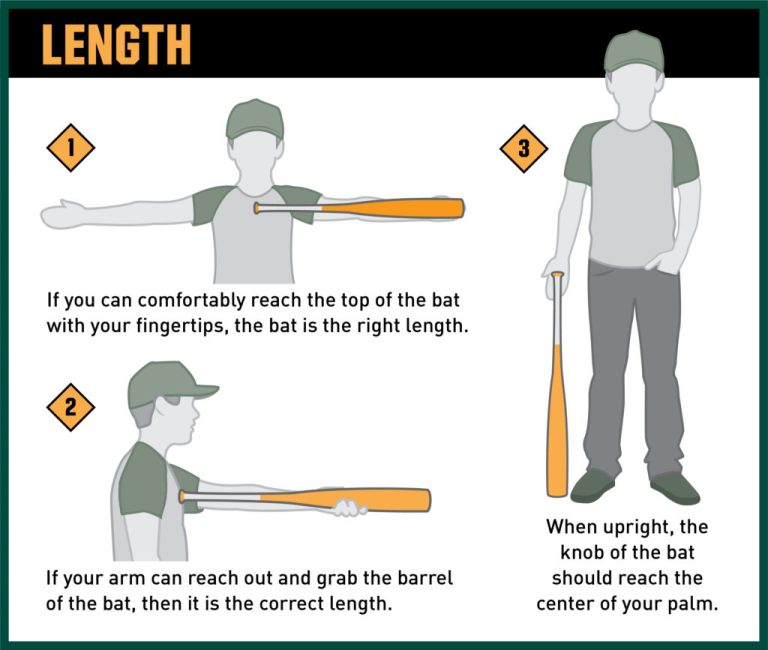
In baseball terminology, “drop weight” (often expressed as simply “drop”) is the numerical difference between the bat length in inches and the bat weight in ounces:
$$ ext{Drop Weight} = ext{Length (inches)} – ext{Weight (ounces)}$$
A higher numerical drop indicates a lighter, easier-to-swing bat. A 30-inch youth bat with a -10 drop weighs 20 ounces. A 31-inch bat with an -8 drop weighs 23 ounces.
The single greatest hurdle confronting 13- and 14-year-old ballplayers transitioning from middle school or youth leagues to high school freshman ball is the mandatory shift to BBCOR -3. A 32-inch high school BBCOR bat weighs 29 ounces. Moving from a 31-inch / 21-ounce (-10) youth bat directly to a 32-inch / 29-ounce (-3) BBCOR bat represents an 8-ounce (38%) increase in physical mass.
This sudden mass jump drastically increases the bat’s Moment of Inertia (MOI). Players who have not prepared their core rotational muscles and forearm grip strength experience a severe drop in swing speed, casting their hands away from the body, dragging the barrel through the zone, and popping up inside fastballs.
One-Piece Alloy vs. Two-Piece Composite Bat Construction
Both BBCOR and USA Baseball bats are manufactured across two primary structural formats: one-piece alloy and two-piece composite. Understanding their distinct mechanical characteristics helps players match the bat to their swing profile:
One-Piece Alloy Bats: Constructed from a continuous, extruded aerospace-grade aluminum alloy tube (such as AZR or SC900 scandium alloy). One-piece bats are extremely stiff, providing instant, uninterrupted energy transfer upon contact. Strong power hitters who want maximum feedback, zero barrel lag, and a traditional ping sound gravitate toward one-piece alloy bats like the Marucci CATX BBCOR. The primary downside is painful vibration and hand sting on mishits near the taper or end cap.
Two-Piece Composite Bats: Feature a carbon fiber composite barrel joined to a composite or alloy handle via an elastomeric dampening connection joint. Two-piece bats flex during the swing, creating a slight “whip” effect that assists contact hitters with moderate swing speeds. The dampening collar eliminates hand sting entirely, isolating vibrations within the barrel. However, composite barrels require a break-in period of 150 to 200 swings before reaching peak trampoline potential, and they should not be swung in ambient temperatures below 55°F (13°C) due to composite resin brittleness.
Swing Weight vs. Scale Weight: Moment of Inertia (MOI) Explained
Two bats that register the exact same weight on a digital scale can feel radically different when swung in a batter’s box. This variance is governed by Moment of Inertia (MOI), commonly referred to as “swing weight.”
Balanced Swing Weight: Mass is concentrated closer to the player’s hands and the middle of the barrel. Balanced bats provide low MOI, allowing contact hitters and leadoff batters to generate rapid bat speed, adjust to off-speed pitches, and control the barrel through the strike zone.
End-Loaded Swing Weight: Additional alloy or composite mass is positioned toward the end cap. End-loaded bats feature high MOI. While harder to accelerate, once an end-loaded barrel reaches speed, its angular momentum carries immense kinetic punch through the baseball, producing higher maximum exit velocities for clean pull-side power hitters.
In-Depth Bat Evaluations: Top BBCOR and USA Models
Here are the premier high-performance bats currently setting the standard across BBCOR and USA Baseball divisions:
1. Marucci CATX BBCOR / CATX USA: Marucci’s precision-balanced one-piece alloy design remains the benchmark of high school and collegiate dugouts. The CATX features custom AZR alloy with a multi-variable wall profile that expands the sweet spot outward. Its patented Liquid Gel dampening knob absorbs stinging shockwaves, delivering the cleanest feel of any one-piece bat on the market.
2. Louisville Slugger Meta BBCOR / USABat: Louisville Slugger’s flagship two-piece composite bat is engineered with the EKO composite barrel, delivering a massive sweet spot, a distinct stiff sound, and balanced swing weight. Its 3FX connection system provides a stiff feel on contact while neutralizing harsh vibrations.
3. Easton Hype Fire USA / BBCOR: Easton’s thermo-composite technology pushes barrel wall flexibility to the legal limit. The Hype Fire USA is widely celebrated for producing the largest effective sweet spot in the youth division, while the BBCOR version delivers elite swing speeds for top-of-the-order hitters.
4. DeMarini The Goods BBCOR: The undisputed king of end-loaded hybrid bats. The Goods combines an X14 alloy barrel with a stiff composite handle connected by the Type V collar. Built specifically for middle-of-the-order sluggers who can handle an end-loaded swing weight, it produces staggering ball exit velocities.
5. Rawlings Icon BBCOR / USA: Featuring Rawlings’ cutting-edge In/Tense carbon composite construction, the Icon maximizes barrel elasticity while maintaining strict BBCOR and USA compliance. The Zero-Loss collar directly links the handle and barrel, eliminating drag and dampening off-center feedback without robbing the hitter of exit velocity.
Cold-Weather Bat Performance: Temperature Thresholds and Composite Fractures
A critical consideration often overlooked in early spring baseball seasons is the effect of ambient temperature on bat materials and ball density:
Composite Resin Brittleness Below 55°F: Two-piece composite bats rely on epoxy resin matrices to bond layered carbon fiber sheets. When ambient temperatures drop below 55°F (13°C), these epoxy resins lose their elastic flexibility and turn brittle. Striking a cold baseball can cause internal delamination or catastrophic barrel cracking, which voids manufacturer warranties.
Dense Cold Baseballs: As temperatures plummet, the rubber and cork core inside baseballs contracts and hardens. Striking a rock-hard 40°F baseball transmits substantially higher shockwaves into the bat barrel. For cold early-season games or damp outdoor cage sessions, players should always keep a one-piece alloy bat (such as the Marucci CATX) in their bat bag as a reliable cold-weather workhorse.
Grip Wrap Thickness and Axe Handle Ergonomics
Customizing your bat handle directly influences barrel control, wrist roll timing, and hand comfort:
Polymer Bat Grip Thicknesses: Polymer bat wraps (such as Lizard Skins DSP) are available in three standard thicknesses: 0.5mm, 1.1mm, and 1.8mm. Contact hitters and wood-bat purists favor thin 0.5mm wraps for maximum tactile feedback and thinner handle feel. Power hitters and players swinging stiff one-piece alloy bats prefer 1.1mm or 1.8mm wraps to cushion sting and prevent hand blisters over long batting practice sessions.
Axe Handle Ergonomics vs. Traditional Round Knobs: Ergonomically shaped Axe handles align the flush planar face of the knob with the palm of the bottom hand. This bio-mechanical alignment promotes a natural flush wrist release, prevents hook-knob hamate bone bruising, and encourages an inside-out swing path through the hitting zone.
Strategic Transition Roadmap: Moving from USA -10 to High School BBCOR -3
To prevent mechanical breakdown and swing speed collapse when advancing to high school baseball, follow this structured two-year transition blueprint:
Phase 1 (Age 12): Move to a -8 Drop: Do not wait until the summer before freshman year to swing a heavy bat. At age 12, transition from a -10 bat to a -8 drop bat in travel ball or practice sessions. This adds approximately 2 ounces of mass, initiating forearm and shoulder strength development.
Phase 2 (Age 13): Advance to a -5 Drop: The year prior to high school, swing a -5 drop bat exclusively during cage batting practice and live scrimmage play. A 31-inch / 26-ounce (-5) bat prepares the central nervous system for the swing timing required for heavy bats.
Phase 3 (Off-Season Before Freshman Year): Introduce Wood and BBCOR -3: Incorporate heavy solid maple wood bats into daily tee work and front-toss drills. Wood bats force hitters to square up the baseball on the true sweet spot, instantly exposing bat casting or barrel drop. Once the hitter transitions back to a balanced BBCOR alloy bat (such as the Marucci CATX), the bat feels feather-light through the zone.