Best Badminton Racket for Professional-Level Play

A badminton racket for professional-level play means a genuine tournament-tier frame, not just an intermediate racket with aspirational marketing. Here’s what actually separates elite-tier gear, honestly assessed, and why it isn’t automatically the right choice for every player.

A badminton racket built for professional-level play means a true elite-tier frame, extra-stiff shaft, head-heavy attacking balance, advanced graphite or composite construction, usually priced well above what a casual or intermediate racket costs. Be honest with yourself before buying one: this tier rewards fast, technically consistent swing mechanics, and it can feel worse than a forgiving intermediate racket in the hands of a player who hasn’t developed that yet.
“Professional” gets used loosely in racket marketing, stuck on intermediate frames that have nothing in common with what tournament players actually use. This guide is about the real category: rackets built with the stiffest shafts, the most aggressive head-heavy balance points, and premium frame materials, the specs that show up on rackets professional and serious competitive players actually choose, not just anything with the word in its title.
- →True elite-tier rackets use extra-stiff shafts and aggressive head-heavy balance
- →Premium graphite/composite construction and higher price generally track real build quality here
- →This tier is demanding, it rewards fast, consistent technique more than it forgives mistakes
- →Most recreational and casual players are honestly better served by an intermediate racket
- →Check current stock and price before buying, elite-tier rackets run limited quantities
Table of Contents
What actually makes a racket tournament-grade
Three things separate a genuine elite-tier racket from an intermediate one marketed with aspirational language. First, shaft stiffness: tournament rackets are built extra-stiff far more often than intermediate frames, which transfers more of the player’s own swing energy directly into the shuttle instead of absorbing it in shaft flex, at the cost of forgiveness on a mistimed swing. Second, balance point: elite attacking rackets lean noticeably head-heavy, putting real mass out at the string bed to maximize smash pace for a player with the technique to generate racket head speed. Third, frame construction: advanced graphite composite layups, sometimes with added materials for stiffness or vibration control, cost more to manufacture and show up almost exclusively at this price tier.
None of these traits are forgiving. A stiff shaft that doesn’t get a technically clean, fast swing produces less power than a more flexible intermediate shaft would, not more. That’s the central honesty point of this whole category: buying tournament gear doesn’t make you play like a tournament player, it removes some of the forgiveness a lower tier racket was giving you.
Our pick at this tier

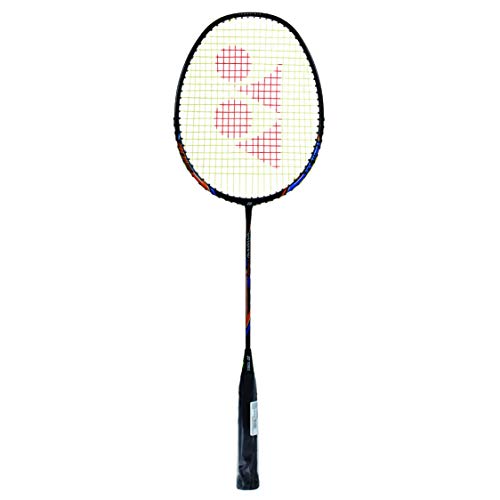
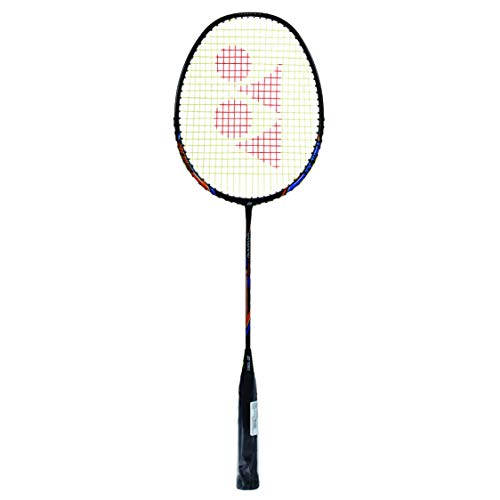
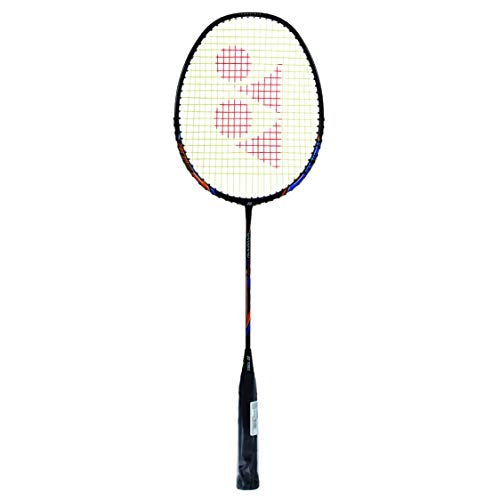
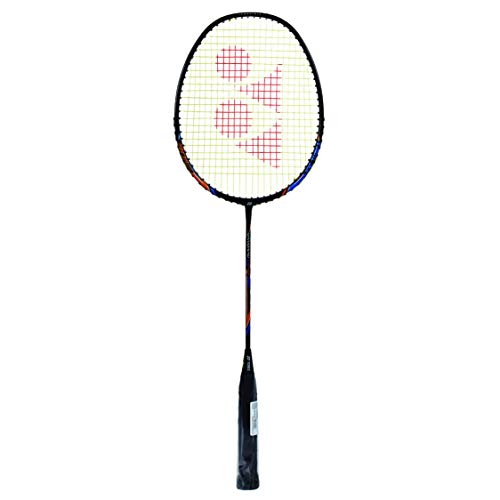
The YONEX ASTROX 100 Game Strung Badminton Racket is a genuine flagship racket from Yonex’s Astrox line, the family built around head-heavy attacking power that’s widely used at the competitive level. At roughly $195, it’s priced well above every other racket in this site’s badminton coverage, and that price reflects real tournament-tier positioning rather than inflated marketing. Stock on this model runs limited, the listing showed only a handful of units left at last check, so verify current availability before counting on it.
This is not a racket to buy on aspiration alone. It rewards a player who already generates real racket head speed with a fast, clean swing and wants a frame that won’t cap their smash pace. A player still developing that swing will likely get more practical performance, and more enjoyment, out of an intermediate racket while they build toward this tier.
⚠️ Watch out: Double-check the listing’s current price and stock before buying at this tier. Elite rackets sell in smaller quantities than intermediate ones, and a model that’s in stock today can sell out or reprice by the time you’re ready to order.
A step below flagship
If $195 for a single racket is more commitment than you want to make right now, the YONEX Muscle Power 29 Carbon Graphite Badminton Racket is worth knowing about as a sub-elite step, an 85-gram intermediate-tier racket from Yonex’s Muscle Power line rated for a 30 lbs max string tension. It’s not tournament-grade in the way the Astrox 100 is, but it’s a legitimate bridge for a player advancing toward that tier rather than a beginner set. Worth flagging honestly: at last check this model was showing as available to order rather than immediate ship, so confirm current stock status before counting on fast delivery.
Who should actually spend this much
- ✓You compete in sanctioned or club tournaments and train multiple times a week
- ✓You already generate consistent racket head speed with clean technique
- ✓You’ve outgrown an intermediate racket and can feel it capping your smash power
- ✓You understand the stiffer shaft demands more precise timing, not less effort
- ✕You play casually or a few times a month for exercise and fun
- ✕You’re still building consistent swing mechanics and timing
- ✕You’re buying based on brand recognition rather than your actual skill level
- ✕You want a forgiving racket that helps compensate for mishits
String tension at the elite level
Elite-tier rackets are typically rated for higher maximum string tensions than intermediate frames, sometimes into the low-to-mid 30s in pounds, and serious competitive players often string closer to that ceiling for maximum control and feel. That’s a tradeoff, not a free upgrade: higher tension reduces the trampoline effect that generates free power, so it only makes sense once a player’s swing supplies enough of its own power that the trampoline effect isn’t needed to hit hard. Stringing a tournament racket at a casual player’s typical lower tension partially defeats the purpose of buying the stiffer frame in the first place.
💡 Pro tip: If you’re moving up to this tier for the first time, string a notch or two below the racket’s rated maximum rather than jumping straight to the ceiling. It gives you a season to adjust to the stiffer feel before chasing maximum tension.
Durability expectations at this price
A $150-plus racket isn’t meaningfully more durable than a $50 one in terms of surviving accidental impacts, frame cracks from a hard collision or a bad string job can happen to any racket regardless of price. What the higher price buys is consistency of performance over the racket’s usable life and tighter manufacturing tolerances, not indestructibility. Competitive players who train several times a week still typically expect a working life measured in a few years before performance noticeably degrades, not permanence.
Attacking singles versus attacking doubles at this tier
Even within tournament-tier gear, competitive players make different tradeoffs depending on format. Singles players covering the full court on their own often favor a slightly more balanced head-heavy racket over the most extreme attacking frame available, since they also need to recover into position for the next shot without a partner to cover the court behind them. Doubles attacking players, especially those playing the back-court smashing role, lean toward the most aggressively head-heavy frames in this tier, since their partner at the net covers the fast exchanges and their own job is generating maximum smash pace on the shots that reach them. Neither approach is wrong, but it’s worth matching the specific racket within this tier to the role you actually play, not just the tier itself.
Training volume and frame fatigue
Competitive players training multiple sessions a week put far more total swings through a racket in a season than a casual once-a-week player does, and frame materials do fatigue under that kind of repeated stress, even without a single dramatic impact. Most players at this level start noticing a subtle drop-off in feel, slightly less crisp response, a bit more vibration transmitted to the hand, somewhere in the three-to-five year range of regular competitive use, sooner if training volume is especially high. That’s not a defect, it’s an expected part of owning gear at this tier, and it’s part of why serious competitive players often keep a second racket in rotation rather than relying on a single frame for years of high-volume training.
If you’re investing in a tournament-tier racket for the first time, budget mentally for this. A $195 racket that performs at its best for three to four seasons of serious training is a different value proposition than expecting a single racket to last a decade the way a casual player’s intermediate frame might.
Grip weight and swing weight at the elite level
Beyond the racket’s stock spec sheet, competitive players frequently adjust swing weight and balance slightly using grip tape layers or small strips of lead tape near the frame’s tip, a common practice at the club and tournament level to fine-tune a racket’s feel without buying a different frame entirely. Adding weight at the tip pushes the balance point further head-heavy for more smash momentum; adding it near the handle pulls balance back toward control. This kind of fine-tuning only makes sense once you already know your stock racket’s baseline feel well, and it’s generally not something a player new to a tournament-tier frame should experiment with in their first few months of using it.
Full racket cover and travel care
Tournament-tier rackets typically ship with a full-length padded cover, and that’s not a throwaway accessory at this price point. Frame tips and string beds on elite rackets are more exposed to chip damage from being tossed loose into a bag alongside shoes and other gear than a cheaper backyard set, where the low replacement cost makes that kind of wear less consequential. Using the included cover for every transport, not just flights or long trips, protects the investment without adding meaningful bulk to a kit bag. If you travel to tournaments regularly, a hard racket case is worth the extra cost on top of the soft cover that ships with the frame, since checked luggage handling is rougher than carrying gear by hand.
Bottom line
Tournament-tier gear is built for players whose technique can actually use it, stiff shafts and aggressive head-heavy balance reward fast, consistent swings and can actively work against a developing one. If you’re already competing seriously and feel capped by an intermediate racket, this tier is worth the investment. If you’re not there yet, an intermediate racket will likely outperform a tournament frame in your actual hands, regardless of price. The honest test is simple: if you can already smash consistently and cleanly with your current racket and still feel like the frame is holding you back rather than your own timing, that’s the signal this tier is worth the jump. If the mistakes are still mostly technique rather than equipment, spend the money on lessons or court time first and revisit the upgrade later.
Do I need a professional-tier racket to compete in local tournaments?
Not necessarily. Many club and local tournament players compete successfully on intermediate rackets. Tournament-tier gear becomes worth it once your technique is consistent enough to actually load a stiff shaft and use an aggressive head-heavy balance.
What’s the real difference between a $50 racket and a $195 racket?
Shaft stiffness, balance point aggressiveness, and frame construction quality. The expensive racket isn’t automatically ‘better’ for every player, it’s built for a specific, demanding swing profile.
Will a stiffer shaft help my smash if I’m still learning technique?
Probably not yet. A stiff shaft rewards racket head speed you generate yourself; a more flexible intermediate shaft does more of that work for you while your technique develops.
How do I know if a racket is genuinely tournament-grade versus just marketed that way?
Check the actual spec sheet for shaft stiffness rating, balance point, and frame material, not just the word ‘professional’ in the title. Price is a reasonable secondary signal, true elite-tier rackets are rarely inexpensive.
As an Amazon Associate, we earn from qualifying purchases through links on this page.