Best Badminton Rackets for Smash Power: Head-Heavy Balance, Stiff Shaft Flex, High String Tension, and Aerodynamic Frame Physics

In competitive badminton, the overhead smash is the ultimate offensive weapon, converting a defensive lift into an unreturnable downward missile exceeding four hundred kilometers per hour. Executing a punishing smash demands more than raw physical arm strength; it requires the precise synchronization of racket aerodynamics, carbon graphite frame stiffness, head-heavy kinetic mass distribution, and optimal string bed repulsion. Selecting the wrong frame—such as a headlight defensive racket with a whippy flexible shaft—dissipates swing torque, softens shuttlecock departure velocity, and flattens your attack trajectory into easily countered drive returns.
This technical equipment guide analyzes the engineering factors governing smash velocity: static balance point physics, shaft flex rebound mechanics, aerodynamic frame cross-sections, string tension dynamics, and biomechanical swing alignment. Whether configuring your first competition racket or dialing in tournament string beds, this breakdown matches offensive playstyles with proven carbon hardware.
Table of Contents
Physics of Racket Dynamics: How Head-Heavy Balance Multiplies Smash Impact
Racket balance is quantified by the balance point measurement—the exact distance in millimeters from the butt cap of the handle to the center of gravity along the shaft. Standard rackets fall into three distinct operational categories:
Head-Light (280mm to 290mm): Positioned for rapid defensive recovery, net tumbling shots, and reactive doubles flat drives. Head-light frames minimize swing inertia, allowing lightning-fast wrist repositioning but lacking the kinetic mass required to smash through deep defensive blocks.
Even Balance (290mm to 300mm): Versatile all-around setups favored by tactical singles players who rely on alternating clears, slice drops, and controlled half-smashes.
Head-Heavy (305mm to 320mm): Pure offensive weapons designed for maximum smash velocity. Shifting additional graphite and tungsten weight toward the top of the frame head significantly increases the racket’s swing weight (rotational moment of inertia). When accelerated through an overhead striking arc, the extra mass at the frame tip generates immense kinetic momentum that drives directly through the shuttlecock skirt, resulting in steeper downward angles and higher exit velocity.
Shaft Flex and Carbon Core Rebound Mechanics
The shaft functions as the energy storage and release spring of the badminton racket. During the initial overhead swing stroke, arm acceleration causes the shaft to flex backward, storing potential mechanical energy. At the precise millisecond of contact, the shaft snaps forward to transfer that stored energy directly into the shuttlecock.
Flexible Shafts: Slower arm swings benefit from flexible shafts because the extended flexing action creates an artificial whip effect that aids shuttlecock clearance without requiring explosive forearm rotation. However, for aggressive smashers with fast arm speeds, a flexible shaft will lag behind the swing, contacting the shuttlecock late while the shaft is still bent, which flattens the shot trajectory and bleeds swing velocity.
Stiff and Extra-Stiff Shafts: Power hitters require stiff or extra-stiff shafts (such as those engineered with high-modulus Namd graphite or solid core carbon). A stiff shaft flexes minimally and recovers instantly, matching the lightning-fast rotational pronation of an advanced arm swing. The result is zero timing lag, crisp tactile feedback, and direct energy transfer that translates full body torque into shuttlecock speed.
Top Badminton Rackets for Steep Smash Power: Technical Comparison Matrix
| Racket Model | Balance Point & Weight Class | Shaft Flex & Carbon Core | Max String Tension Spec | Primary Attacking Attribute |
|---|---|---|---|---|
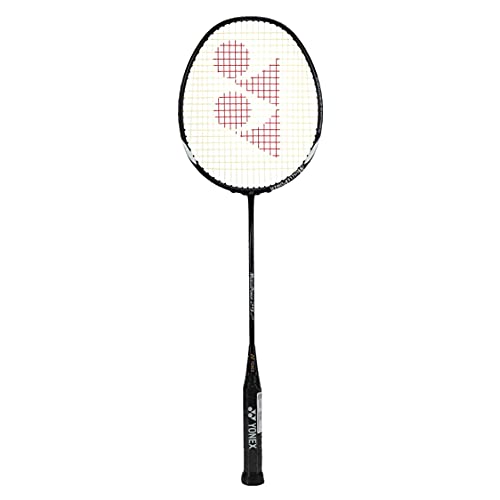
| Yonex Astrox 100ZZ | Head-Heavy (310mm), 3U/4U | Extra Stiff Solid Core Namd | 28 lbs (4U) / 29 lbs (3U) | Hyper-slim shaft with explosive rotational whip |
| Yonex Astrox 99 Pro | Extreme Head-Heavy (315mm), 3U/4U | Stiff Namd Carbon Composite | 28 lbs (4U) / 29 lbs (3U) | Heavy kinetic head momentum for downward drive |
| Victor Thruster K Falcon Claw | Head-Heavy (308mm), 4U (83g) | Stiff 6.5mm Anti-Torsion Core | 31 lbs | Hard Cored tech with rapid frame snap-back |
| Li-Ning Axforce 80 | Head-Heavy (305mm), 4U/5U | Medium-Stiff TB Nano Carbon | 30 lbs (4U) / 29 lbs (5U) | UHB shaft flex with reduced vibration shock |
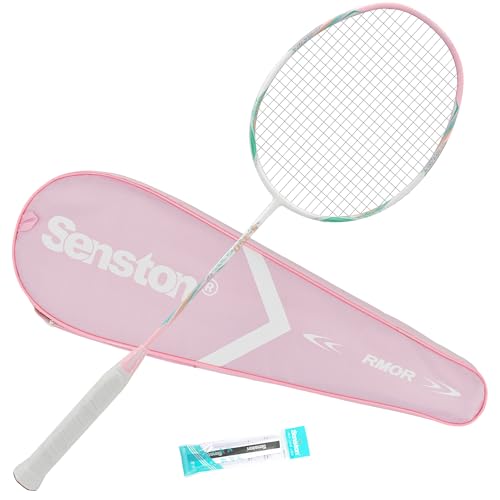
| Senston N80 Graphite Racket | Even-to-Head-Heavy (295mm), 4U | Medium Flex High-Modulus Carbon | 26 lbs | Budget-friendly power sweet spot for club players |
Top Badminton Racket Reviews for Smash Power
1. Yonex Astrox 100ZZ: The definitive benchmark in modern attacking badminton. Wielded by international champions and world number ones, the 100ZZ pairs an extra-stiff solid-core hyper slim shaft with an advanced Rotational Generator head-heavy balance. Its modified isometric head shape expands the sweet spot while maintaining razor-sharp aerodynamic head speed. The top choice for players demanding steep, devastating smash angles, pinpoint control, and rapid recovery between explosive backcourt attacks.
2. Yonex Astrox 99 Pro: Engineered for pure, unadulterated baseline smashing power. Featuring an extreme head-heavy balance point (315mm) reinforced by an integrated tungsten Power-Assist Bumper at the top of the frame, the Astrox 99 Pro delivers the heaviest kinetic impact momentum in the sport. The full-length Namd carbon weave flexes deeply and snaps forward with punishing force on full jump smashes, crushing defensive blocks effortlessly.
3. Victor Thruster K Falcon Claw: Renowned for its explosive whip and rapid frame recovery. Victor integrates a 6.5mm ultra-thin anti-torsion shaft with Hard Cored multilayer carbon technology, allowing string tensions up to an astonishing 31 pounds. Its Tri-Formation frame cuts through air with razor-sharp acceleration, making it deadly for fast backcourt smashes and steep half-court attacks.
4. Li-Ning Axforce 80: Designed for attacking players who value buttery smooth feedback and dynamic shot control. The Axforce 80 utilizes TB Nano carbon composites and a responsive UHB shaft that flexes predictably, delivering explosive smash speed without punishing your shoulder or elbow during grueling three-set tournament matches.
5. Senston N80 Graphite Racket: The premier value choice for recreational and intermediate club players looking to upgrade to carbon technology. Arriving pre-strung with a responsive isometric head and balanced graphite shaft, the N80 delivers accessible smash power and generous sweet spot forgiveness at an affordable price point.
Racket Weight Classifications: 3U vs 4U Mass Mechanics
Badminton rackets utilize standardized U weight designations that significantly dictate striking kinetic energy and fatigue rates:
3U Classification (85 to 89 grams): The traditional standard for singles power specialists. The higher physical mass of a 3U frame provides immense stability during heavy baseline clashes. When moving at maximum swing speed, a 3U head-heavy racket generates superior kinetic energy transfer, bludgeoning the shuttlecock with unmistakable downward authority. However, swinging a 3U racket repeatedly places higher physical stress on the rotator cuff and forearm flexors, requiring dedicated physical conditioning.
4U Classification (80 to 84 grams): The modern tournament standard favored across competitive doubles and fast-paced singles. Weighing roughly five grams lighter than 3U, a 4U frame allows noticeably faster swing acceleration, enabling players to generate rapid head speed on abbreviated stick smashes and fast drive exchanges without sacrificing substantial power.
5U Classification (75 to 79 grams): Ultra-lightweight frames designed primarily for lightning-fast front-court net kills and rapid defensive reactions. While exceptionally easy to swing, 5U frames lack the structural mass required for crushing baseline smashes against deep clears.
String Tension Dynamics: Sweet Spot vs Repulsion Mechanics
String tension directly shapes the contact mechanics between the racket face and the shuttlecock cork:
Lower Tension (20 to 24 lbs): Trampoline Repulsion: Lower tension creates a looser string bed that deflects significantly upon impact. This elastic trampoline effect holds the shuttlecock on the strings for a fraction of a millisecond longer before snapping it forward. It provides effortless deep clears and forgiving power for club players with developing arm speed, but compromises directional precision.
High Tension (26 to 30+ lbs): Instant Board-Like Transfer: High tension strings form a tight, stiff plane that exhibits virtually zero string deflection. Shuttlecock contact time is reduced to microseconds, producing an explosive acoustic crack and razor-sharp directional accuracy. However, high tensions shrink the sweet spot down to the exact center of the racket face. Mishitting off-center transmits severe vibration through the carbon shaft into your wrist, requiring immaculate footwork and striking consistency.
String Gauge Selection: Repulsion Speed vs Longevity
String diameter (gauge) controls aerodynamic drag, friction bite, and durability under repeated maximum-power overhead strikes:
Thin Gauge Strings (0.61mm to 0.65mm): Exemplified by strings like Yonex Exbolt 63, Aerosonic, or BG66 Ultimax. Thin strings cut through the air with minimal drag and bite sharply into the synthetic nylon or feather cork, yielding sensational acoustic resonance, crisp shuttlecock feedback, and lightning-fast repulsion. The critical tradeoff is accelerated wear; high-tension string beds strung with 0.63mm strings can fray or snap within ten to fifteen playing hours under heavy off-center slicing.
Medium to Thick Gauge Strings (0.68mm to 0.70mm): Exemplified by legendary strings like Yonex BG80 (0.68mm with Vectran fibers) and BG65 (0.70mm multi-filament core). The BG80 combines a hard textured outer braid with exceptional tension holding capability, delivering devastating smash punch and spin control with robust durability against premature breakage.
Aerodynamic Frame Geometry: Box vs Aero Profiles
The structural cross-section of the racket head dictates how cleanly the frame slices through air resistance during the forward acceleration phase of the smash stroke:
Box Frame Construction: Featuring a squared, rigid structural cross-section, box frames prioritize torsional stability and solid impact resistance. When striking the shuttlecock at high velocity, the box architecture prevents the head from twisting or flexing off-axis, delivering maximum kinetic energy directly into the shot with exceptional directional stability.
Aero Frame Construction: Engineered with curved, tear-drop aerodynamic contours that slice through air friction like an airplane wing. Aero frames dramatically reduce air drag, enabling faster swing acceleration through the hitting zone, which compensates for lighter head weights.
Hybrid Dynamic Frames: Modern elite frames (such as the Yonex Astrox series) combine an aero profile at the top of the hoop for swing acceleration with a rigid box profile along the lower frame sides for structural stability and power delivery.
Grommet System Architecture and Frame Integrity
Grommets are the individual nylon or fluoropolymer sleeves lining the perimeter holes of the racket frame. While frequently overlooked, grommet design plays a foundational role in both frame longevity and string bed performance:
Single-Pass Grommet Hole Construction: Advanced attacking rackets utilize independent single-pass grommet drill patterns. By providing a dedicated grommet hole for each vertical main string and horizontal cross string, this engineering configuration eliminates string overlap friction within the frame hoop, equalizing tension distribution across the entire face.
Tungsten Infused Power Grommets: Manufacturers strategically insert heavier tungsten-weighted grommet strips at the 12 o’clock and 10-to-2 o’clock positions of the frame head. These localized micro-weights increase rotational swing inertia without widening the racket hoop profile, concentrating extra hammer-like striking power at the peak of the overhead contact point.
Routine Grommet Maintenance: High string tensions exert immense localized shear force against the grommet barrel. A split or flared grommet allows the razor-sharp edge of high-modulus carbon graphite to saw directly into the synthetic string core, causing immediate string snapping during hard smashes. Inspect and replace damaged grommets every time your racket is restrung.
Smash Variations: Full Jump Smash vs Stick Smash Tactics
Attacking players must master two distinct offensive striking techniques depending on court positioning and shuttlecock elevation:
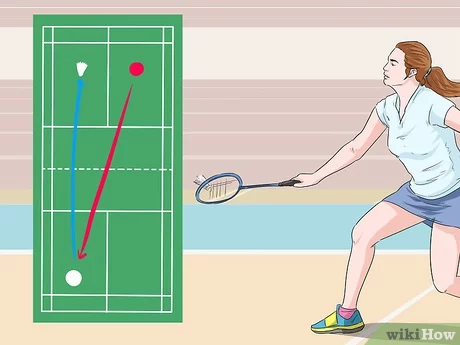
Full Baseline Jump Smash: Executed when the opponent hits a weak, floaty clear that gives you ample time to retreat behind the shuttlecock. Jumping vertically off the back foot allows you to strike the shuttlecock at its highest attainable altitude (frequently ten to twelve feet above the floor). Striking from this raised contact height enables an aggressive downward trajectory that clips the tape and hits the floor before the defender can drop their racket head.
Abbreviated Stick Smash: Used when caught in mid-court or when dealing with a fast, flat attacking clear. Rather than committing to a full windup, the stick smash uses a shortened backswing powered almost entirely by explosive forearm pronation and a sudden finger squeeze. The stick smash sacrifices ten to fifteen percent of top-end velocity in exchange for deception and rapid recovery, catching defensive players off-balance while keeping you positioned to pounce on weak returns.
Biomechanical Alignment: Forearm Pronation and Kinetic Chain Sequencing
A power racket is only as effective as the physical mechanics delivering it into the shuttlecock:
Forearm Pronation vs Wrist Flexion: The single most common mechanical flaw in recreational badminton is attempting to smash by flexing the wrist forward. The wrist joint possesses limited musculature and is highly vulnerable to sprains and chronic tendonitis under heavy repetitive impacts. Elite smash power is generated by forearm pronation—rapidly rotating the radius bone around the ulna, exactly like turning a doorknob inward with explosive velocity. This rotational motion recruits the large pectoral, latissimus dorsi, and rotator cuff muscle groups, channeling full body torque through the carbon shaft.
Kinetic Chain Sequencing: The overhead smash begins from the ground up. The sequence flows from leg drive (jumping off the rear dominant foot), through hip rotation, torso coiling, shoulder tilt, elbow extension, and finally explosive forearm pronation. Clamping the fingers tightly onto the handle only at the exact instant of impact whips the racket head through the shuttlecock with maximum kinetic energy.
Grip Size Classifications (G4 vs G5): Badminton grips are categorized by G numbers, where G4 represents a standard medium circumference (roughly 84mm) and G5 represents a smaller circumference (roughly 81mm). Attacking players overwhelmingly favor smaller G5 handles because a thinner grip allows the fingers to wrap tightly, facilitating rapid micro-adjustments and explosive rotational pronation.
Tacky Polyurethane Overgrips: Never play directly on the factory base grip. Wrapping a thin (0.6mm) tacky polyurethane overgrip (such as Yonex Super Grap) absorbs palm sweat and prevents the racket from twisting during hard off-center smashes. Replace your overgrip every four to six playing sessions to maintain peak friction.
Thermal Protection for High-Tension String Beds: Never leave high-tension carbon rackets inside a hot car trunk or near baseboard radiators. High heat softens epoxy resins in the graphite frame while elevating string tension stress, causing warped racket heads and cracked frame grommets.