Best Arm Sleeves for Volleyball Passing Protection

The best volleyball arm sleeves depend on whether impact cushioning or comfort matters more to a specific player. The Newcotte padded sleeves offer genuine forearm padding at a low price for players passing a high volume of hard-driven balls. Younger players do well with the FitsT4 youth-sized option, which includes a thumbhole for a secure fit. Players prioritizing cooling and sun protection over impact cushioning should look at the Achiou ice silk sleeves, while those wanting a premium, established brand without dedicated padding can consider the Mizuno compression sleeve.
Volleyball passing and digging repeatedly drive a hard ball into the forearms, and over a season of regular play this repeated impact can cause real, cumulative bruising and discomfort for many players. Arm sleeves address this in different ways depending on whether they include actual padding or simply offer compression and sun coverage, a distinction worth understanding before choosing a specific product.
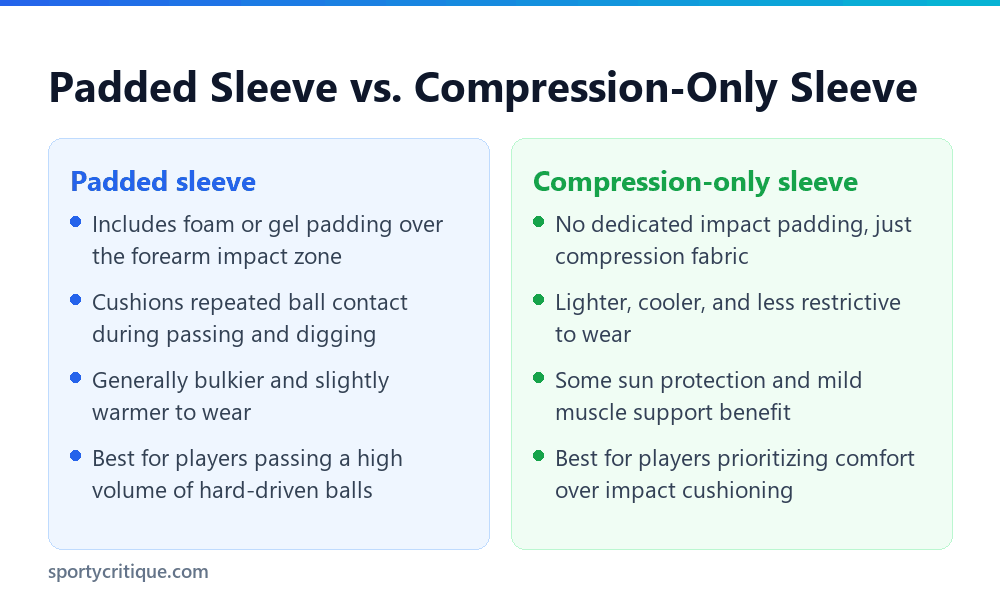
- →Only some volleyball arm sleeves include actual padding; others are compression-only
- →Padded sleeves directly cushion the repeated impact of passing and digging a hard-driven ball
- →Compression-only sleeves offer sun protection and mild muscle support but no impact cushioning
- →Youth-specific sizing matters for younger players rather than scaling down an adult sleeve
- →Sleeve fit should be snug enough to stay in place without restricting wrist and forearm movement
Table of Contents
Do Arm Sleeves Actually Reduce Passing Bruising?
A sleeve with genuine foam or gel padding over the forearm impact zone does provide a real cushioning layer between the ball and skin, meaningfully reducing the sting and bruising that repeated hard passes can cause over a long practice or match. This benefit is specific to padded designs; a compression-only sleeve without dedicated padding doesn’t offer the same direct impact protection.
⚠️ Watch out: Not every product marketed as a “volleyball arm sleeve” actually includes forearm padding. Checking the specific product description for mentioned padding material, rather than assuming any volleyball-branded sleeve offers impact protection, avoids buying a compression-only sleeve expecting cushioning it doesn’t provide.
4 Real Options, Compared
📊 Note: The Mizuno sleeve costs roughly double the padded Newcotte option while offering less direct impact protection, since its value comes from brand-name compression fabric quality rather than dedicated forearm padding. Players specifically wanting passing cushioning should weigh this tradeoff carefully rather than assuming the pricier option automatically protects better.
Getting the Right Fit
A sleeve that’s too loose slides down or bunches up during play, reducing whatever protective or compression benefit it’s meant to provide, while one that’s too tight can restrict circulation and wrist movement in a way that actually interferes with clean passing technique. Checking a specific brand’s sizing chart against actual forearm measurements avoids both these mismatches.
💡 Pro tip: A thumbhole design, present in several options in this comparison, helps keep a sleeve properly positioned during fast, repeated arm movements, reducing the mid-play slipping and readjusting that a simple tube-style sleeve without this feature is more prone to.
Choosing the Right Sleeve
- ✓Check for actual mentioned padding material if impact cushioning is the priority
- ✓Choose youth-specific sizing for younger players rather than a scaled adult sleeve
- ✓Confirm sizing against actual forearm measurements before buying
- ✓Consider a thumbhole design if mid-play slipping has been an issue with past sleeves
- ✕Assuming any volleyball-branded sleeve includes forearm padding automatically
- ✕Buying a sleeve so tight it restricts wrist and forearm movement during play
- ✕Ignoring youth sizing charts and guessing at fit for a younger player
- ✕Overpaying for brand name alone when a specific budget option meets the actual need
When Padding Matters Most
Liberos and defensive specialists, who handle the highest volume of hard-driven passes and digs during a match, benefit most directly from genuine forearm padding compared to other positions facing fewer total forearm-contact touches over a typical game. This makes padding a higher priority purchase consideration specifically for these positions.
Players at positions with less frequent passing responsibility, or those playing primarily recreational or lower-intensity games, may find a compression-only sleeve’s cooling and sun protection benefits more relevant to their actual needs than dedicated impact padding they’ll rarely put to heavy use.
Material, Breathability, and Washing
Moisture-wicking fabric, common across most modern sleeve designs regardless of padding, helps manage sweat during long practices and matches, though padded designs are generally somewhat less breathable than compression-only options given the added material bulk over the forearm.
Machine washing most sleeves on a gentle, cold cycle and air drying rather than using a hot dryer preserves both the compression fabric’s elasticity and any padding material’s cushioning properties over repeated wash cycles across a season of regular use.
One Sleeve or a Pair?
Most passing contact happens with both forearms together in a standard platform pass, which is why buying a pair rather than a single sleeve makes practical sense for the vast majority of players, even though some listings sell sleeves individually or in single-unit packaging that requires ordering two to cover both arms.
Checking a listing’s exact quantity, whether it ships as a single sleeve, a matched pair, or multiple pairs like the Newcotte 2-pack in this comparison, avoids the common mistake of ordering what looks like a complete set only to receive a single sleeve covering just one arm.
Alternatives and Complements to Arm Sleeves
Some players use athletic tape wrapped directly around the forearms as a lower-cost, more minimal alternative to a full sleeve, though tape typically offers less consistent cushioning and needs to be reapplied each session rather than simply pulled on and off like a reusable sleeve.
A small number of players layer a thin compression sleeve underneath a separate padded forearm guard for maximum protection during especially intense passing drills or matches, though this combination adds bulk and cost that most recreational and even many competitive players find unnecessary for typical play. Reserving this layered approach for truly high-impact situations, rather than everyday practice, keeps the setup proportional to actual need.
Skin Sensitivity and Material Allergies
Players with sensitive skin or known fabric allergies should check a sleeve’s specific material composition before purchasing, since synthetic compression fabrics vary in their latex, spandex, or other synthetic fiber content, and a reaction to one brand’s fabric blend doesn’t necessarily predict a reaction to every other brand’s slightly different material composition.
Testing a new sleeve for a shorter session before committing to extended, repeated wear throughout a full season is a reasonable precaution for anyone with a history of skin sensitivity to compression or athletic wear, since a minor irritation caught early is far easier to address than one that’s already become a persistent, recurring issue.
How Long Sleeves Actually Last
Padded sleeves used regularly throughout a competitive season typically show padding compression and reduced cushioning effectiveness before the fabric itself visibly wears out, meaning a sleeve can look outwardly fine while actually offering less real impact protection than it did when new.
Replacing padded sleeves at least once per competitive season, rather than assuming a visually intact sleeve still performs at its original protective level indefinitely, is a reasonable practice for players who rely heavily on the padding during frequent, intense passing situations. Compression-only sleeves without padding degrade more through fabric elasticity loss than through any impact-related wear.
Team Color and Uniform Requirements
Some teams and leagues specify approved sleeve colors matching team uniforms, similar to other equipment color rules covered elsewhere in volleyball-specific content on this site, so checking a team’s specific uniform policy before purchasing avoids buying sleeves in a color that doesn’t match required team standards.
Most of the products in this comparison come in multiple color options specifically to accommodate this kind of team-uniform matching requirement, making color selection a straightforward final step once the more important padding, sizing, and fit decisions have already been made.
Frequently Asked Questions
Do volleyball arm sleeves actually prevent bruising?
Padded sleeves genuinely help by cushioning repeated ball impact. Compression-only sleeves without dedicated padding don’t offer the same direct impact protection, even though they’re still marketed as volleyball sleeves.
How do I know if a sleeve actually has padding?
Check the specific product description for mentioned padding material, like foam or gel, rather than assuming any volleyball-branded sleeve includes it automatically.
Which position benefits most from padded sleeves?
Liberos and defensive specialists, who handle the highest volume of hard passing and digging contacts during a typical match, benefit most directly from genuine forearm padding.
Should I buy youth-specific sleeves for a younger player?
Yes, generally. Youth-specific sizing fits better than a scaled-down adult sleeve, which often doesn’t match a younger player’s actual forearm proportions well.
Is a more expensive sleeve always better protection?
Not necessarily. Some premium sleeves prioritize compression fabric quality over dedicated impact padding, so price doesn’t automatically correlate with better passing protection specifically.
How should I wash my volleyball arm sleeves?
Machine wash on a gentle, cold cycle and air dry rather than using a hot dryer, which helps preserve both compression elasticity and any padding material over repeated use.
None of this needs to feel like an overly technical purchase decision. A quick read of the specific product description for padding claims, a size chart check, and a rough sense of position-based need cover almost everything that actually matters before adding an item to cart, and none of it requires special expertise beyond a few minutes of attention.
Matching sleeve choice to actual playing position and priority, impact cushioning versus cooling and sun protection, matters more than chasing the most expensive or popular option available. Checking for genuine padding claims and correct sizing covers the practical decisions that actually affect how well a sleeve performs its intended job, season after season, without needing to be revisited every time a new player joins the roster.
For anyone still unsure where to start, the safest default is a padded sleeve at a reasonable price point, since it covers the core protective need most players actually have, with an upgrade to a premium compression-only option reserved for players who’ve already confirmed padding isn’t their priority.
Trying a lower-cost option first before investing in a premium brand also gives a new player time to figure out their own preferences around padding thickness, fabric feel, and fit before committing to a more expensive purchase that might not actually suit their personal comfort and playing style.
Coaches outfitting an entire team often standardize on one padded option purchased in bulk for consistency and easier reordering, while individual players buying for themselves have more room to experiment across brands and styles until they find the specific fit and feel that suits them best over a full season of use, adjusting the following year based on what actually held up well in practice and what quietly fell apart much sooner than the price tag alone would have suggested it should.
As an Amazon Associate, we earn from qualifying purchases through links on this page.