Best Volleyball Shoes for Men: Top Picks for Cushion, Grip & Lateral Support (2026)


SportyCritique is reader-supported. When you purchase through links on our site, we may earn an affiliate commission at no extra cost to you. As an Amazon Associate, we earn from qualifying purchases.
Stepping onto a competitive volleyball court in regular running sneakers is a recipe for rolled ankles, bruised heels, and uncontrollable sliding on dusty hardwood floors. Running shoes are engineered strictly for linear forward propulsion; their tall, pillowy heel-to-toe drops create an unstable, wobbly platform during lateral crossover steps, while their hard carbon rubber outsoles fail to grip indoor varnished courts.
Volleyball demands a specialized athletic shoe: non-marking gum rubber outsoles with circular pivot points for rapid direction changes, rigid midfoot trusses to resist torsional twisting, lateral outriggers that prevent ankle rollover during aggressive penultimate brake plants, and shock-absorbing foam capable of handling 6 to 8 times your body weight on jump landings. This buyer’s guide evaluates the best men’s volleyball shoes across cushioning, traction, positional needs, and budget. For a broader overview across all player categories, visit our primary Volleyball Shoes Hub or explore our central Volleyball Guide.
Table of Contents
The Best Men’s Volleyball Shoes: Comparison Table
We tested and compared the top five men’s indoor court shoes across traction grip, cushioning technology, lateral stability, and weight:
| Shoe Model | Best For / Position | Cushioning Technology | Outsole & Traction | Weight (Men’s 10.5) | Key Performance Trait | Check Price |
|---|---|---|---|---|---|---|
| ASICS Sky Elite FF 3 | Best Overall / Hitters & Jumpers | FF BLAST™ PLUS ECO Foam | Curved N.C. Rubber with Riseruss plate | 12.4 oz | Curved heel design and springy foam maximize vertical approach jump height | View on Amazon |
| Mizuno Wave Momentum 3 | Best Cushion / Middle Blockers | Mizuno Enerzy Foam + Wave Plate | Broad-base XG Gum Rubber | 12.8 oz | Disperses heavy vertical landing shock across the full footbed to save knees | View on Amazon |
| ASICS Gel-Rocket 11 | Best Budget / Beginners | Forefoot GEL® Technology + EVA | Full-contact Gum Rubber + Trusstic | 11.2 oz | Unmatched sub-$75 court grip, lightweight flexibility, and dependable heel stability | View on Amazon |
| ASICS Gel-Tactic 12 | Best Mid-Tier Value / All-Around | Rearfoot & Forefoot GEL® + FlyteFoam | Wrap-up lateral outrigger gum sole | 11.9 oz | Combines durable upper mesh with responsive landing protection for league players | View on Amazon |
| Nike Zoom Hyperset 2 | Best Lateral Containment / Power Attackers | Full-length Nike React Foam + Zoom Air | High-abrasion herringbone gum rubber | 13.1 oz | Lateral midfoot lockdown strap and Flywire cables eliminate foot slippage on stops | View on Amazon |
Volleyball Shoes vs. Basketball Shoes vs. Running Shoes
Understanding the anatomical differences between athletic footwear categories helps players make the right selection for hardwood performance:
| Design Feature | Indoor Volleyball Shoes | Basketball Shoes | Running Shoes |
|---|---|---|---|
| Outsole Material | Soft, tacky gum rubber optimized for varnished indoor hardwood | Durable solid rubber formulated for indoor and outdoor asphalt courts | Hard carbon rubber designed for linear abrasive asphalt pavement |
| Lateral Stability Outrigger | Prominent lateral outrigger flange to prevent rollover on penultimate brakes | Strong lateral outrigger and high midfoot containment | Zero lateral outrigger; narrow sole creates high rollover risk on side-steps |
| Heel-to-Toe Drop | Low profile (6–9 mm) for low center of gravity and fast reaction time | Medium profile (8–11 mm) with substantial heel crash pads | High profile (10–14 mm) designed to roll the foot forward into running strides |
| Weight & Breathability | Lightweight (11–13 oz) with open mesh uppers for rapid vertical takeoff | Heavier (13–16 oz) with reinforced synthetic sidewalls for contact play | Ultralight (8–10 oz) with flexible knit uppers lacking lateral containment |
In-Depth Reviews: The Top 5 Men’s Volleyball Shoes
1. ASICS Sky Elite FF 3: The Vertical Jumping Leader
The ASICS Sky Elite FF 3 is widely regarded as the benchmark competition shoe for outside hitters, opposites, and high-flying attackers. What makes the Sky Elite unique is its curved heel geometry combined with ASICS’s proprietary RISETRUSS™ technology. When you take a 4-step spike approach, the curved heel facilitates a smooth rolling transition from horizontal braking into vertical takeoff. The FF BLAST™ PLUS ECO foam delivers springy, energetic rebound under the ball of the foot, giving hitters an extra boost on explosive jumps. The fit is snug and streamlined, locking the heel securely in place.
2. Mizuno Wave Momentum 3: Maximum Landing Cushioning
If you are a middle blocker, a heavier power hitter, or an athlete managing patellar tendonitis (jumper’s knee), the Mizuno Wave Momentum 3 is the premier choice. Unlike lightweight speed shoes, the Momentum 3 utilizes a wide, stable outrigger base combined with a full-length Mizuno Wave Plate and plush Enerzy foam. The Wave plate disperses vertical impact shock across the entire footbed rather than concentrating it in the heel or metatarsals. Its integrated bootie construction hugs the foot like a supportive sock, eliminating friction and hot spots during long multi-set tournament matches.
3. ASICS Gel-Rocket 11: The Undisputed Budget Champion
The ASICS Gel-Rocket series has served as the entry-level workhorse for volleyball players for over a decade. At roughly half the price of flagship models, the Gel-Rocket 11 provides everything a beginner or recreational league player needs: a tacky gum rubber outsole that grips gym floors reliably, forefoot GEL® cushioning that absorbs basic landing forces, and a midfoot TRUSSTIC® system that prevents excessive torsional twist. While it lacks the high-rebound foams of the Sky Elite, it delivers remarkable durability and comfort under $75.
4. ASICS Gel-Tactic 12: High-Value Performance
Positioned between the budget Gel-Rocket and the premium Sky Elite, the Gel-Tactic 12 delivers exceptional balance for competitive club players. It upgrades the cushioning system by adding both rearfoot and forefoot GEL® units combined with responsive FlyteFoam. The upper features breathable engineered mesh with synthetic overlays that resist blowout during lateral crossover blocking steps. For players who want tournament-grade impact protection without paying premium flagship prices, the Gel-Tactic represents outstanding value.
5. Nike Zoom Hyperset 2: Ultimate Lateral Containment
Derived from Nike’s proven basketball lineage but re-engineered for indoor court sports, the Zoom Hyperset 2 provides the most secure foot containment in volleyball. A prominent midfoot strap pulls tight over the lacing system, working in tandem with Flywire cables to lock the foot completely over the footbed. If you have narrow ankles or tend to slide forward inside your shoes during abrupt stops, the Hyperset eliminates internal movement. Its full-length React foam midsole offers firm, responsive court feel paired with a grippy herringbone gum sole.
Diagnostic Troubleshooting: 6 Footwear Problems & Fixes
If your shoes are slipping on the court, pinching your toes, or causing arch fatigue, use this diagnostic table to isolate the problem:
| Observable Problem | Root Cause | Immediate Correction Cue |
|---|---|---|
| Slipping on dusty gym floors | Gym dust and dirt coating the soft micro-pores of the gum rubber outsole | Wipe soles with a damp court towel or use a sticky court traction mat; never wear indoor shoes outdoors |
| Black toenails / bruised big toes | Foot sliding forward into the toe box during abrupt penultimate brake steps | Utilize the “runner’s loop” (heel-lock lacing technique) through the top extra eyelets; verify a half-thumb width of toe space |
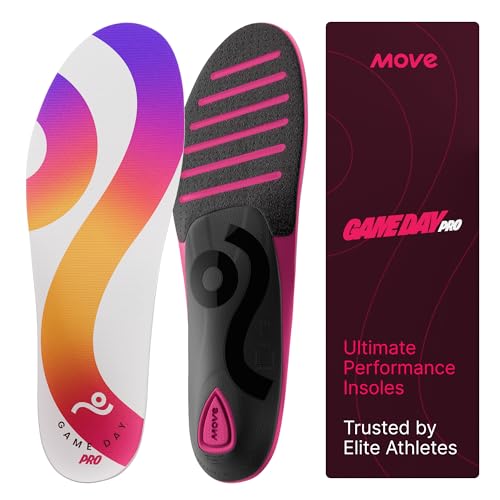
| Severe arch pain or plantar fasciitis flare-ups | Stock EVA foam insole collapsing under repetitive jump landings without arch support | Replace thin factory insoles with firm, semi-rigid orthotic inserts (plantar fasciitis guide) |
| Shin splints after heavy practice weeks | Outsole foam “packing out” (bottoming out) after 60+ hours of jumping | Volleyball shoes lose cushioning after 1 season; rotate two pairs across consecutive days to allow foam rebound |
| Ankle rollover sensation on lateral steps | Shoe lacks a wide lateral outrigger flange, or collar is laced too loosely | Choose shoes with wide outriggers (Momentum 3 / Sky Elite); pair with rigid lace-up ankle braces if hypermobile |
| Premature outsole wear along the ball of the foot | Wearing indoor gum rubber shoes on outdoor concrete or asphalt pavements | Keep volleyball shoes in a gym bag; put them on strictly after stepping onto the wooden court surface |
Frequently Asked Questions
How long do men’s volleyball shoes last?
For a competitive player practicing 3 to 4 times per week, a quality pair of volleyball shoes lasts approximately one full season (4 to 6 months). While the gum rubber outsole may still look intact, the internal midsole foam (FlyteFoam, Enerzy, or React) packs out after roughly 60 to 80 hours of high-impact jumping, losing its shock absorption and increasing knee stress.
Can you wear basketball shoes for volleyball?
Yes. Many competitive collegiate and international men’s volleyball players wear low-top or mid-top basketball shoes (such as Nike Kobe, Sabrina, or LeBron lines). Basketball shoes share similar requirements: lateral stability, herringbone traction, and impact cushioning. However, dedicated volleyball shoes are typically 1 to 2 ounces lighter and feature stickier gum rubber outsoles specifically formulated for dustier volleyball hardwoods.
How should men’s volleyball shoes fit?
Volleyball shoes should fit snugly around the midfoot and heel, with roughly a half-thumb’s width (about 3/8 inch) of space between your longest toe and the end of the toe box. Your heel must remain completely locked without slipping upward when you roll onto the balls of your feet during an approach.
Why do volleyball shoes use gum rubber outsoles?
Gum rubber is a naturally soft, pliable rubber compound that creates microscopic suction against smooth, polished indoor surfaces. Hard carbon rubber (used in outdoor running shoes) slides on gym varnish, while soft gum rubber bites into the wood, providing instant stopping traction during high-speed split-step hops and directional changes.
How do you clean the soles of volleyball shoes to restore grip?
To restore sticky court grip, wipe the outsoles with a clean towel moistened with warm water and a tiny drop of dish soap to dissolve skin oils and gym dust. Allow them to air dry completely. Never use harsh rubbing alcohol or bleach, which dries out the natural oils in the gum rubber and causes the sole to harden and crack.
Explore Related Volleyball Guides:
- Volleyball Cornerstone Guide — Master rules, court dimensions, positions, and gear guides.
- Best Shoes for Volleyball Hub — Complete decision guide by gender, position, and foot condition.
- Best Volleyball Shoes for Hitters — Footwear optimized for approach speed and landing cushion.
- Vertical Jump Training for Hitters — 8-week periodized plyometric program and landing mechanics.
- How to Spike a Volleyball — In-depth vertical approach, penultimate brake, and attack timing.
- How to Block in Volleyball — Swing blocking, net penetration, and stopping the tool.
- What Does an Outside Hitter Do? — Pin attacking, out-of-system scoring, and transition.
- What Does a Middle Blocker Do? — Antenna-to-antenna net defense and 1st-tempo quick attacks.
- Best Indoor Volleyballs — Weight, grip, and leather vs. composite comparison.