Best Carbon Fiber Pool Cue Shafts Low Deflection: End-Mass Physics, Radial Consistency, and Pro Taper Flex Profiles

The transition from traditional kiln-dried Canadian hard rock maple to advanced aerospace-grade carbon fiber composite represents the most profound technological advancement in cue sports since the invention of the leather cue tip in 1807. For over a century, serious pool players accepted that applying side spin (english) to the cue ball required compensating for cue ball deflection—commonly referred to in billiards physics as squirt. When a cue tip strikes the cue ball off-center to apply right or left spin, the cue ball does not travel precisely down the line of aim; instead, it squirts outward at an angle away from the contact point. Carbon fiber shafts resolve this physical challenge by drastically reducing end-mass in the first five inches of the shaft, allowing players to execute complex spin shots with near-zero compensation.
Beyond squirt reduction, carbon fiber composites offer unmatched environmental stability and structural longevity. Organic maple shafts are hygroscopic structures whose cellular fibers continually expand, contract, and twist in response to changes in barroom humidity and temperature, eventually leading to permanent warpage. In contrast, multi-directional carbon fiber filaments bonded with high-grade epoxy resins remain impervious to atmospheric moisture, chalk oils, and seasonal temperature swings. In addition, carbon fiber eliminates the natural grain irregularities, knot variations, and directional flex inconsistencies inherent in organic wood, delivering absolute 360-degree radial symmetry. This technical evaluation tests five premier carbon fiber pool cue shafts on the market, analyzing end-mass physics, vibration-dampening foam cores, taper geometries, surface friction, and joint pin compatibility.
Table of Contents
Billiards Physics: Squirt Deflection, Effective End-Mass, and Flex Dynamics
To understand why carbon fiber shafts outperform wood shafts, players must analyze the mechanics of cue ball deflection. According to Dr. Dave Alciatore’s fundamental billiards physics research, when a cue tip impacts a cue ball off-center, two primary force vectors are generated: a normal force directed into the cue ball surface, and a frictional force that initiates rotational spin. At the instant of contact, the inertia of the cue shaft pushes back against the cue ball. Because the cue ball has mass (typically six ounces or 170 grams), the lighter the front end of the shaft is, the more easily the shaft flexes sideways out of the way. This deflection allows the cue ball to travel along its intended line with minimal lateral diversion.
This physical principle is defined as effective end-mass. In traditional solid maple shafts, the ferrule, tenon, and solid wood fibers within the first five inches behind the tip contribute substantial forward mass. Low-deflection carbon fiber shafts deploy hollow or low-density foam-filled tubular construction with ferrule-less or ultra-lightweight composite pad designs. By eliminating forward mass, the shaft’s end-mass drops by over fifty percent compared to solid maple. Consequently, when striking with extreme english, the shaft tip deflects laterally, transferring clean rotational torque to the cue ball without pushing its center of gravity off line.
In addition, carbon fiber exhibits a significantly higher modulus of elasticity than maple. When a player drives through a power draw or break shot, the carbon tube stores and returns kinetic energy with minimal radial distortion, producing higher cue ball exit velocity for a given stroke speed while dampening high-frequency acoustic vibrations through internal polyurethane foam silencers.
Top 5 Carbon Fiber Pool Cue Shafts: Laboratory Comparison Matrix
The comparative data matrix below details tip diameters, taper configurations, internal dampening cores, ferrule constructions, and available joint pin options across the five leading carbon fiber shafts on the market.
| Model | Tip Diameter & Taper | Carbon Fiber Architecture | Internal Core & Dampening | Ferrule / Tip Pad Design | Available Joint Pins |
|---|---|---|---|---|---|
| Predator Revo Carbon | 11.8 mm, 12.4 mm, 12.9 mm Pro | Unidirectional aerospace carbon tow | Polyurethane low-density foam core | Ferrule-less design with Vault Plate | Uni-Loc Quick Release, Radial |
| Cuetec Cynergy 15K | 11.8 mm, 12.5 mm SST Pro | Multi-directional 15K carbon weave | High-density polyurethane foam core | 0.25-inch lightweight white phenolic | Radial, Uni-Loc, 3/8×10, 5/16×14, 5/16×18 |
| Mezz Ignite Carbon | 12.2 mm Extended Pro Taper | Custom Japanese composite carbon | Vibration dampening composite core | IG Tip Plate + IG Powerplate | United Joint, Wavy, Wavy II |
| McDermott Defy Carbon | 12.0 mm, 12.5 mm, 13.0 mm Pro | Smacwrap vibration-dampened carbon | Sound-deadening composite foam | Ultra-thin polymer strike pad | 3/8×10, Quick Release, Radial, 5/16×14 |
| Jacoby Black Carbon | 11.8 mm, 12.3 mm, 12.7 mm Pro | Custom American braided carbon fiber | Balsa-dampened core construction | Minimalist white phenolic ferrule | Radial, 5/16×14, 5/16×18, 3/8×10, Uni-Loc |
1. Predator Revo Carbon Fiber Shaft: The Deflection-Killing Benchmark
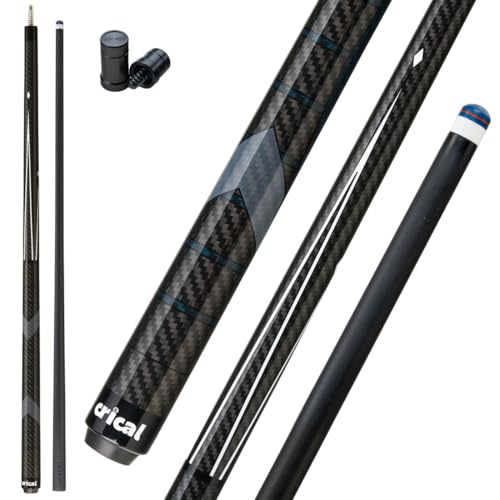
The Predator Revo represents the culmination of more than two decades of research and development by the undisputed leader in low-deflection cue technology. Engineered from aerospace-grade unidirectional carbon fiber tow wrapped at precise angular orientations, the Revo is completely hollow in its forward section and filled with a proprietary low-density polyurethane foam that silences hollow clacking noises, producing a solid, crisp acoustic feedback reminiscent of premium aged maple.
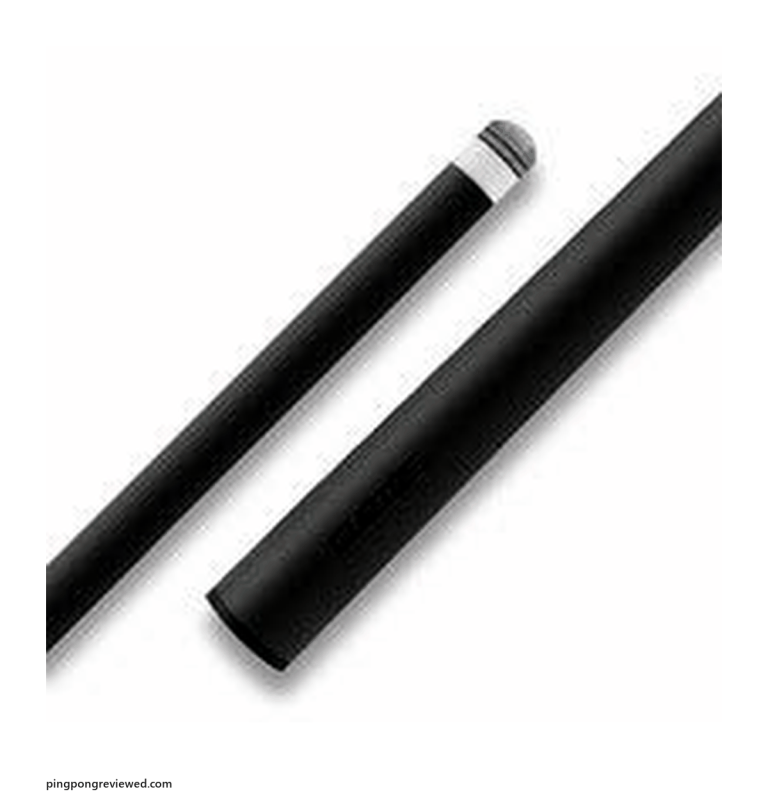
What distinguishes the Revo is its radical ferrule-less construction. Instead of a heavy synthetic ferrule that adds unwanted front-end weight, Predator caps the shaft with a patented Vault Plate and thin V-Tek silencer pad, placing the multi-layered Victory leather tip directly onto the reinforced carbon crown. This achieves the lowest effective end-mass in the billiards industry, practically eliminating squirt even when striking at maximum tip-offset distances. Available in 11.8 mm, 12.4 mm, and 12.9 mm tip diameters with a low-rise pro taper, the Revo provides effortless bridge glide without requiring talcum powder or specialized shooting gloves.
Technical Specifications: Construction: Unidirectional aerospace-grade carbon fiber | Tip Diameters: 11.8 mm, 12.4 mm, and 12.9 mm | Taper: Predator Revo Low-Rise Pro Taper | Front-End Architecture: Vault Plate with V-Tek Tip Silencer (ferrule-less) | Factory Tip: Predator Victory Soft | Joint Options: Uni-Loc Quick Release, Radial Pin | Shaft Length: 29 inches (optional 30 inches).
2. Cuetec Cynergy 15K Carbon Fiber Shaft: Shane Van Boening’s Weapon of Choice
Developed in close collaboration with five-time US Open champion Shane Van Boening, the Cuetec Cynergy 15K combines the precision of high-modulus carbon fiber with the traditional visual aesthetic favored by classic pool purists. Constructed with multi-directional carbon fiber filaments woven in an ultra-fine 15K pattern, this shaft is cured under extreme hydraulic heat to ensure absolute structural density and radial uniformity.
Unlike pure black carbon shafts, the Cynergy features a slim quarter-inch white sighting ferrule that provides an authentic contrast line against the cue ball, helping players visualize their exact contact point and tip placement. Internally, Cuetec fills the shaft with an engineered polyurethane foam core that suppresses metallic resonance and replicates the tactile hit sensation of a fine custom wood shaft. Featuring Cuetec’s Super Slim Taper (SST) that remains parallel for over fifteen inches from the tip, the Cynergy glides through open and closed bridges with frictionless consistency.
Technical Specifications: Carbon Architecture: Multi-directional 15K carbon fiber weave | Tip Diameters: 11.8 mm and 12.5 mm | Taper: Super Slim Taper (SST) with 15.5-inch parallel run | Ferrule: 0.25-inch lightweight white sight ferrule | Factory Tip: Tiger Sniper Laminated Leather | Joint Options: Radial, Uni-Loc, 3/8×10, 5/16×14, 5/16×18 | Finish: Satin micro-polished carbon finish.
View Cuetec Cynergy 15K on Amazon
3. Mezz Ignite Carbon Fiber Shaft: Japanese Precision Engineering
Manufactured in Japan by Miki Co., the Mezz Ignite is regarded by high-level professionals as the pinnacle of carbon fiber craftsmanship. Mezz utilizes custom-tailored Japanese carbon fiber prepreg sheets, wrapping them at proprietary bias angles to generate maximum flexural strength without adding excessive radial stiffness.
The Ignite features an advanced front-end dampening system comprising an IG Plate and IG Powerplate that absorb harsh impact shockwaves while preserving crystal-clear vibrational feedback to the player’s bridge hand. Its 12.2 mm tip diameter represents an optimal sweet spot between pinpoint draw action and broad-face ball control. With Mezz’s legendary joint tolerances—especially when paired with their proprietary Wavy or United joint systems—the Ignite feels like a continuous, unibody extension of the cue butt, delivering unmatched ball speed control on delicate positional shots.
Technical Specifications: Carbon Material: Custom aerospace-grade Japanese prepreg carbon | Tip Diameter: 12.2 mm | Taper: Ignite Pro Taper | Front Construction: IG Tip Plate with IG Powerplate | Factory Tip: Zan Plus M (Medium) 9-layer pigskin | Joint Options: Wavy Joint, Wavy II, United Joint (5/16×14 compatible) | Weight: Approx 4.2 oz (119 g).
4. McDermott Defy Carbon Fiber Shaft: Smacwrap Acoustic Dampening
One of the historic complaints leveled against early carbon fiber cues was their hollow, metallic pinging sound upon impact. McDermott solved this sensory challenge in their Defy shaft by licensing Smacwrap, a patented viscoelastic composite material developed for the aerospace industry to dampen vibration in aircraft fuselages and hypercars.
By co-molding Smacwrap directly between carbon fiber layers, the Defy dissipates high-frequency vibration instantly, yielding a muted, solid thud upon ball strike that closely replicates the acoustic warmth of prime Wisconsin sugar maple. In addition, McDermott applies a proprietary super-slick polymer coating that feels silky smooth against bare skin, completely eliminating bridge stickiness even in humid pool rooms. Available with McDermott’s versatile 3/8×10 joint pin and several custom configurations, the Defy provides exceptional performance at a highly competitive price point.
Technical Specifications: Carbon Architecture: High-modulus carbon fiber with Smacwrap dampening layer | Tip Diameters: 12.0 mm, 12.5 mm, and 13.0 mm | Taper: McDermott Pro Taper | Coating: Ultra-slick non-friction polymer surface finish | Factory Tip: Navigator Pro Medium | Joint Options: 3/8×10, Quick Release, Radial, 5/16×14 | Warranty: Lifetime warranty including warpage.
5. Jacoby Black Carbon Fiber Shaft: Custom American Handcrafted Excellence
For players who value the individualized touch of American custom cue makers, the Jacoby Black delivers handcrafted excellence. Built in Wisconsin by Jacoby Custom Cues, this shaft utilizes a proprietary braided carbon fiber layout cured under high autoclave pressure to maximize torsional resistance.
Jacoby utilizes a featherweight balsa wood and composite foam dampening core that cushions the hit without absorbing kinetic stroke energy. A miniature 0.125-inch white phenolic ferrule provides an intuitive visual aim line without adding unwanted end-mass. Jacoby’s signature feature is their extensive joint customization: the shaft can be threaded to match almost any custom or production cue pin ever manufactured, including radial, uniloc, 5/16×18, 5/16×14, and various flat-faced wood-to-wood configurations.
Technical Specifications: Carbon Material: Custom American braided carbon composite | Tip Diameters: 11.8 mm, 12.3 mm, and 12.7 mm | Core: Balsa-composite hybrid dampening core | Ferrule: 0.125-inch micro-white phenolic pad | Factory Tip: Kamui Original Soft | Joint Options: Extensive universal pin availability | Finish: Smooth micro-matte carbon polish.
Taper Geometry and Tip Diameter: 11.8 mm vs 12.5 mm vs 12.9 mm
Choosing the correct tip diameter and taper profile directly dictates your cue ball control, bridge comfort, and shot accuracy:
- 11.8 mm to 12.0 mm (Surgical Precision): The narrowest tip profile. This compact diameter concentrates stroke force into a tiny contact patch on the cue ball, generating extreme spin RPM with minimal wrist effort. It excels at delicate inside english, deep draw shots, and tight positional maneuvering on 9-foot tables. However, it requires flawless stroke mechanics, as slight tip delivery errors produce unintended side spin.
- 12.4 mm to 12.5 mm (The Universal Standard): The most popular diameter in modern competitive pool. A 12.5 mm tip provides the perfect compromise: it offers substantial squirt reduction and high spin capability while providing a stable, forgiving platform for long straight-in shots and firm break deliveries.
- 12.9 mm to 13.0 mm (Maximum Forgiveness): Preferred by players transitioning from traditional 13 mm wooden shafts or those who play American 8-ball with heavy, firm center-ball follow and stun shots. The broader contact patch provides a reassuring sight picture and resists off-axis deflection when stroke delivery is slightly off-center.
- Pro Taper vs Conical Taper: A pro taper maintains a cylindrical, parallel shaft diameter for twelve to fifteen inches behind the tip before flaring outward toward the joint. This ensures that as the shaft slides through your bridge hand during long backswings, the shaft thickness does not change, preserving consistent finger contact and smooth stroke tracking.
Maintenance and Cleaning Protocol: Preserving Carbon Fiber Glide
Unlike wooden shafts that require sandpaper, burnishing leather, and conditioning oils, carbon fiber shafts require specialized care to maintain their ultra-low-friction surface:
1. Never Use Abrasive Sandpaper: Applying sandpaper or scotch-brite pads to a carbon fiber shaft removes the micro-polished resin coating, exposing bare carbon filaments and permanently damaging the shaft’s frictionless glide. Never use abrasive cleaning pads on composite shafts.
2. Isopropyl Alcohol Cleaning: To remove skin oils, hand sweat, and chalk dust, wipe the shaft down using a clean microfiber towel lightly moistened with 70% or 90% isopropyl alcohol. Alcohol dissolves chalk grease and evaporates in seconds without leaving sticky residue.
3. Specialized Alcohol Wipes: Manufacturers like Predator and Cuetec provide specialized cleaning wipes infused with antistatic agents that repel airborne dust and chalk particles, keeping the shaft feeling silky smooth through long tournament sessions without requiring shooting gloves.
Frequently Asked Questions About Carbon Fiber Pool Cue Shafts
Here are authoritative answers to common inquiries regarding carbon fiber cue shafts, joint compatibility, and playing dynamics.
Can a carbon fiber pool cue shaft warp?
No, carbon fiber shafts are completely immune to warpage. Unlike organic wood shafts that absorb atmospheric moisture, composite carbon fibers bonded with epoxy resin do not swell, shrink, or twist when exposed to temperature and humidity fluctuations.
Do carbon fiber shafts really reduce cue ball deflection?
Yes, carbon fiber shafts significantly reduce cue ball deflection (squirt). By eliminating ferrule weight and utilizing hollow or foam-filled tubular construction, the forward end-mass is drastically reduced, allowing the tip to flex out of the way on side-spin shots.
Can I put a carbon fiber shaft on my existing cue butt?
Yes, manufacturers produce carbon fiber shafts with a wide variety of joint pin threads, including Uni-Loc, Radial, 5/16×14, 5/16×18, and 3/8×10. Simply match the joint collar diameter and thread pitch of your existing cue butt.
Do you need to wear a glove when playing with a carbon fiber shaft?
Most modern carbon fiber shafts feature satin micro-polished or polymer-coated surfaces that glide smoothly through bare hands without requiring a glove. However, players who experience heavy palm perspiration may still prefer a glove in humid pool rooms.
How do you clean a carbon fiber pool cue shaft?
Clean your carbon fiber shaft by wiping it with a microfiber cloth dampened with isopropyl alcohol (rubbing alcohol). Never use sandpaper, abrasive scouring pads, or furniture wax, as these will permanently ruin the micro-smooth surface finish.
Investing in a high-performance carbon fiber shaft like the Predator Revo or Cuetec Cynergy 15K eliminates squirt deflection, guarantees warp-free reliability, and delivers consistent rotational torque on every shot. With reduced forward end-mass, smooth pro tapers, and precision dampening cores, you can execute complex english and positional caroms with total confidence on every rack.