
Best Elbow Band for Tennis Elbow: Counterforce Strap Picks Compared

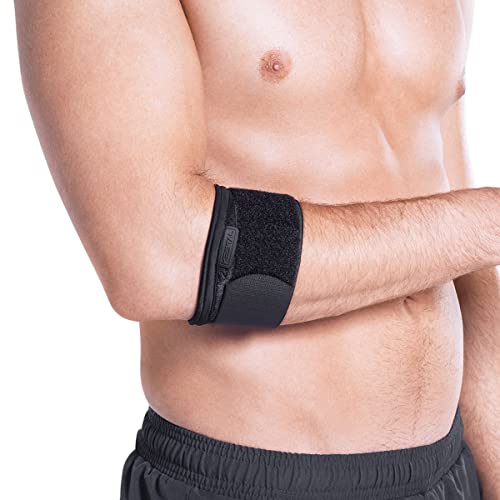
The term elbow band for tennis elbow almost always describes a counterforce strap: a narrow band that wraps around the forearm just below the elbow and applies focused pressure over the extensor tendon, rather than a full sleeve that compresses the whole joint. That distinction matters because the two styles fit differently and suit different situations. This guide covers the strap-style band specifically, with four real picks checked against current Amazon listings for accurate pricing and stock.
A counterforce strap is a narrow band worn just below the elbow, tightened to apply focused pressure over the extensor tendon rather than compressing the whole forearm. For tennis elbow specifically, a strap with a built-in compression pad, like the Mueller Hg80 or a generic 2-pack with a gel or foam pad, tends to target the sore spot more precisely than a plain elastic band. If you want broader forearm compression instead of targeted pressure, a full sleeve-style brace is the better fit, covered in our separate sleeve guide.
- →A counterforce strap targets the extensor tendon with focused pressure, unlike a full sleeve
- →A built-in compression pad (gel or foam) over the tendon generally improves how well a strap works
- →All four picks below were checked against live Amazon listings for real pricing and stock
- →Sizing usually means forearm circumference, not elbow circumference, measure a few inches below the joint
- →Straps are typically cheaper than full sleeves and easier to layer under long sleeves
Table of Contents
Strap vs. sleeve: which style should you actually buy
The two most common tennis elbow product styles get mixed together in a lot of shopping guides, which is exactly the confusion this guide is trying to avoid. A counterforce strap is a narrow band, usually 1.5 to 2.5 inches wide, that sits just below the elbow and applies targeted pressure to one spot on the tendon. A compression sleeve is a wider, stretchier tube that slides over the whole elbow and forearm, spreading pressure across a larger area and adding warmth. Neither is objectively better, they solve slightly different problems.
- ✓Pick a strap if your pain is localized to one specific spot on the outer elbow
- ✓Pick a strap if you want something thin enough to wear under a long sleeve at work
- ✓Pick a strap if you play a racquet sport and want minimal bulk during play
- ✓Look for a strap with a raised compression pad positioned directly over the sore spot
- ✕Pick a strap if your pain and stiffness feel spread across the whole forearm, not localized
- ✕Expect a strap alone to feel like meaningful all-day joint support the way a sleeve does
- ✕Buy based on size alone without checking forearm circumference against the size chart
- ✕Assume a tighter strap always works better, overtightening can restrict circulation
How a counterforce strap actually works
The mechanism behind a counterforce strap is straightforward: it changes where the pulling force of the forearm extensor muscles gets absorbed. Normally, every time you grip something or extend your wrist, that force travels all the way to the tendon’s attachment point near the elbow, the exact spot that is irritated and inflamed in tennis elbow. A strap positioned a couple of inches below that attachment point creates a new pressure point, effectively giving the muscle a secondary anchor so less of the repetitive load reaches the damaged tendon tissue directly.
This is why position matters more than raw tightness. A strap sitting in the wrong spot, too high, too low, or centered on the joint instead of the forearm, will not create that secondary anchor point effectively no matter how tight it is cinched. Most manufacturers include a small diagram or sizing guide showing the recommended placement, and it is worth following that rather than guessing.
Material and breathability differences
The four picks above use slightly different strap materials, and that affects comfort over a full day more than it affects the core mechanism. Neoprene-backed straps tend to grip the skin well and stay in place during activity, but trap more heat, which matters if you plan to wear one under a long sleeve at an office job. Straps built on a woven elastic band with a separate foam or gel compression pad, which describes most of the budget 2-pack options here, breathe better for all-day wear but can shift slightly more during high-intensity activity like a tennis match, making periodic readjustment worth checking for.
💡 Pro tip: If you plan to wear a strap during a workday and during exercise, consider one of the 2-packs above and using one for daily wear and a spare for sport, rather than expecting a single strap to hold position perfectly through both very different use cases.
How we checked these picks
Every product below was checked directly against Amazon’s current catalog data before writing this guide, real ASIN, real listed price, and real stock status at the time of the check. Prices on Amazon change often, so treat the prices quoted here as a snapshot rather than a guarantee, and check the live listing before buying. All four were in stock at the time of writing.
Our picks for a counterforce strap-style elbow band
ACE Sport Tennis Elbow Strap, Adjustable
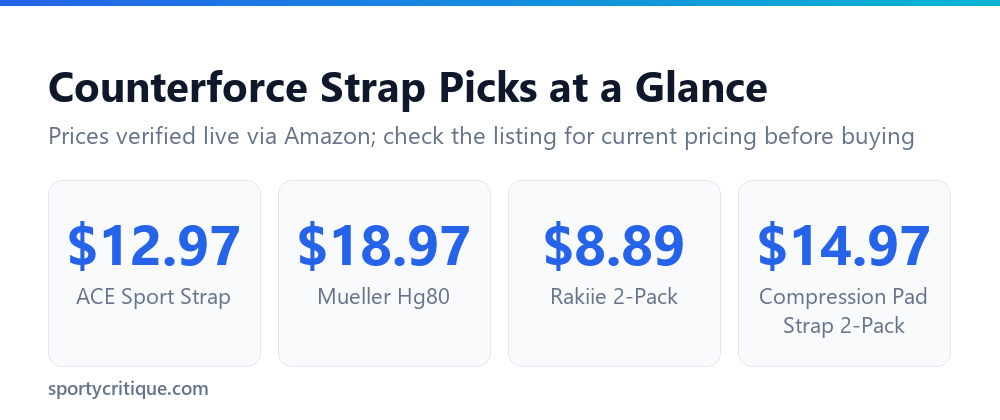
The ACE Sport Tennis Elbow Strap, Adjustable (verified in stock at $12.97 at the time of writing) is a straightforward single-pad strap at the lower end of the price range. It uses a simple hook-and-loop closure for adjustment, which makes it easy to fine-tune tightness during the day as swelling changes. It is a reasonable starting point if you have not tried a counterforce strap before and do not want to spend much to find out whether the style helps.
Mueller Sports Medicine Hg80 Premium Tennis Elbow Support
The Mueller Sports Medicine Hg80 Premium Tennis Elbow Support (verified in stock at $18.97 at the time of writing) is a well-established name in sports medicine bracing, and the Hg80 line is built specifically around a compression pad designed to sit directly over the extensor tendon. It costs more than the budget options here, and the tradeoff is generally sturdier stitching and a more deliberately shaped pad, which some users find holds its position better through a full day of wear than a flatter generic pad.
Rakiie 2 Pack Tennis Elbow Brace with Adjustable Strap
The Rakiie 2 Pack Tennis Elbow Brace with Adjustable Strap (verified in stock at $8.89 at the time of writing (2-pack)) comes as a 2-pack, which brings the effective per-unit cost down and also means you have a spare to keep at a second location, a gym bag, an office desk, or a second one for the other arm if needed. The adjustable strap design is similar in concept to the ACE Sport pick, simple hook-and-loop tightening.
Tennis Elbow Brace With Compression Pad (2-Count)
The Tennis Elbow Brace With Compression Pad (2-Count) (verified in stock at $14.97 at the time of writing (2-pack)) is another 2-pack in a similar price range to the Rakiie option, with a raised compression pad built into the strap. Having two on hand is genuinely convenient if you want one for exercise or sport and a second, less bulky one to wear during a full workday.
Side-by-side comparison
Sizing and fit
Counterforce straps are typically sized by forearm circumference rather than elbow circumference. Measure a few inches below the elbow joint, roughly where the strap will sit, rather than around the elbow itself, since that is where the strap actually needs to fit snugly. Most of the picks above use an adjustable hook-and-loop closure that covers a wide range without needing an exact size match, which is one advantage straps have over some fixed-size sleeves.
💡 Pro tip: Position the compression pad directly over the sore spot on the outside of your forearm, roughly one to two inches below the elbow joint, rather than centering the whole strap on the joint itself. A strap that is technically ‘on’ but positioned wrong will not apply pressure where it is needed.
⚠️ Watch out: A strap that is too tight can restrict circulation, watch for numbness, tingling, or color change in the hand and loosen it if that happens. This is general product guidance, not medical advice; if pain is severe, worsening, or not improving with a strap and activity changes, see a doctor or physical therapist.
Caring for a counterforce strap
Most of the straps above use hook-and-loop closures and a separate foam or gel pad, both of which hold up better with basic care. Hand-washing in cool water and air-drying is the safer default for the elastic and hook-and-loop material; a machine wash and dryer cycle can degrade the closure’s grip faster than expected, which shows up as a strap that no longer holds its tension after a few months. If the compression pad is removable, taking it out before washing keeps it from losing its shape.
A strap that has visibly lost elasticity, no longer holds tension at your usual setting, or has a compression pad that has flattened out and no longer applies noticeable pressure, is worth replacing rather than continuing to use. At these price points, a fresh strap is a small cost compared to losing the actual mechanical benefit that made it worth wearing in the first place. Keeping a spare on hand, which is exactly what the two 2-pack options above offer, means you are not stuck without support while a worn-out strap gets replaced.
What is the difference between an elbow band and an elbow brace?
In most product listings, ‘elbow band’ refers to a narrow counterforce strap that applies targeted pressure over the tendon, while ‘elbow brace’ more often (though not always) refers to a fuller compression sleeve. The terms overlap loosely in marketing copy, so check the product photos and description rather than the title alone.
Where exactly should a tennis elbow strap sit?
Just below the elbow joint, roughly one to two inches down the forearm, with the compression pad positioned directly over the sore spot on the outside of the arm rather than centered on the joint itself.
Can I wear a counterforce strap all day?
Many people do, but it is worth loosening or removing it periodically to check for numbness, tingling, or skin irritation, and to give the skin a break from constant pressure.
Is a 2-pack worth it over a single strap?
If you want a spare for a second location, sport, or the other arm, yes, the per-unit cost is usually lower. If you only need one, a single-pack option like the ACE Sport strap is a reasonable standalone choice.
Will a strap alone fix tennis elbow?
No. A strap reduces strain and can ease pain during activity, but pairing it with activity changes and a structured strengthening program addresses the underlying tendon issue more directly. See our separate guide on non-brace treatment approaches for that side of it.
As an Amazon Associate, we earn from qualifying purchases through links on this page.


