Best Fly Masks and Fly Sprays for Horses

Looking for the best fly mask for horses? For most horses, it’s the Cashel Crusader Standard, a widely trusted design covering the eyes in 7 sizes without ear coverage. Horses specifically bothered by flies around the ears do better with the Cashel Crusader version that includes ear coverage. Foals need a properly foal-sized mask like the Farnam SuperMask II rather than a scaled-down adult design. Pairing any mask with a fly spray, the long-lasting Farnam Endure or the botanical Farnam Equisect for owners preferring a plant-based option, covers the rest of the body a mask alone doesn’t protect.
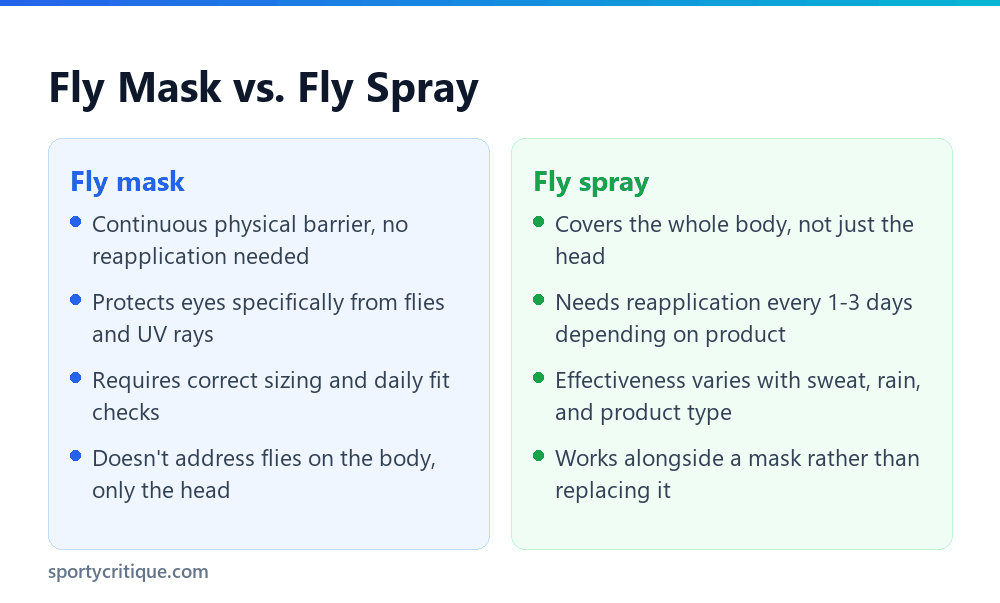
Fly masks and fly sprays solve different, complementary problems rather than competing options for the same job. A mask provides continuous, no-reapplication eye and UV protection, while a spray covers the rest of the body but needs regular reapplication to stay effective. Most horse owners in fly-heavy seasons or climates end up using both together rather than choosing one over the other.
- →Fly masks and fly sprays protect different areas and work best used together
- →Correct sizing matters more than brand for how well a fly mask actually performs
- →Foals need masks sized specifically for foals, not a scaled-down adult design
- →Fly spray needs reapplication every 1-3 days depending on the specific product and sweat exposure
- →Ear coverage matters only for horses specifically bothered by flies in that area
Table of Contents
Why Fly Masks Matter Beyond Comfort
Beyond the obvious discomfort flies cause, repeated eye irritation from flies landing near a horse’s eyes can contribute to more serious issues over time, including increased risk of certain eye infections and irritation-related conditions. A properly fitted fly mask also blocks a meaningful amount of UV exposure, relevant for horses with lighter-colored or pink skin around the eyes that’s more prone to sun-related irritation.
⚠️ Watch out: A poorly fitted mask, whether too loose or too tight, can cause its own problems, rubbing against the skin, restricting natural blinking, or shifting enough to actually let flies in near the eyes despite the horse wearing a mask. Correct sizing and daily fit checks matter as much as the mask’s basic design and brand.
4 Real Fly Masks, Compared
📊 Note: Ear coverage adds roughly $4-5 to the Cashel Crusader’s price and is worth it specifically for horses that shake their heads or show visible irritation around the ears during fly season, but unnecessary for horses that don’t show this specific issue.
2 Real Fly Sprays, Compared
Getting Mask Sizing Right
Fly mask sizing typically follows the same general categories as halter sizing, pony, cob, horse, and warmblood or extra-large, but exact measurements vary somewhat between manufacturers, making it worth checking a specific brand’s sizing chart against the horse’s actual head measurements rather than assuming a size that fits one brand’s halter will fit identically in a different brand’s fly mask.
A mask that’s too large shifts and gaps, letting flies in around the edges and potentially irritating the horse more than wearing no mask at all, while one that’s too small can rub and cause discomfort or press uncomfortably against sensitive areas around the eyes. Checking fit within the first few uses, not just at initial purchase, catches sizing issues before they become a recurring problem.
Choosing the Right Mask
- ✓Check the specific brand’s sizing chart against actual head measurements
- ✓Choose ear coverage specifically for horses showing ear-related fly irritation
- ✓Use a properly foal-sized mask for foals rather than a scaled adult design
- ✓Check mask fit within the first few uses, not just at initial purchase
- ✕Assuming halter size translates directly to the same fly mask size across brands
- ✕Buying ear coverage for every horse regardless of whether it’s actually needed
- ✕Using a scaled-down adult mask on a foal instead of a properly foal-sized design
- ✕Ignoring shifting or gapping that develops after the first few days of use
Applying Fly Spray Effectively
Applying spray to a clean, dry coat generally improves how well it adheres and how long it lasts, compared to spraying over a sweaty or freshly bathed, still-damp horse. Sweat and rain both reduce a spray’s effective duration meaningfully, which is why reapplication frequency varies so much depending on weather, exercise intensity, and the specific product’s formulation.
Focusing spray application on areas flies target most heavily, the legs, belly, and around the face and ears while avoiding direct eye contact, uses product more efficiently than spraying evenly and thinly across the entire body regardless of where flies actually congregate most on a specific horse.
💡 Pro tip: Wiping spray on with a cloth around the face specifically, rather than spraying directly near the eyes and nostrils, avoids irritation while still delivering repellent to the areas where face flies are most persistent.
Synthetic vs. Botanical Fly Sprays
Synthetic sprays like Farnam Endure generally offer longer-lasting protection between applications, making them a practical default for horses in heavy fly pressure or for owners who can’t reapply as frequently throughout the day. Some owners prefer to limit synthetic pesticide exposure, particularly for horses with sensitive skin or specific health considerations, which is where a botanical option becomes the more sensible choice.
Botanical sprays like Farnam Equisect typically need more frequent reapplication to maintain comparable effectiveness to a synthetic product, a tradeoff worth factoring into a purchase decision based on how much daily attention an owner can realistically dedicate to fly control throughout a season.
Cleaning and Maintaining a Fly Mask
Regularly hand-washing a fly mask, following the manufacturer’s specific care instructions, removes accumulated dirt, sweat, and dust that can otherwise irritate the skin underneath and degrade the mesh material’s UV-blocking properties over time. A visibly dirty mask isn’t just a cosmetic issue; it can reduce the mask’s actual protective performance.
Inspecting a mask periodically for tears, stretched elastic, or worn Velcro closures catches wear before it causes a mask to fail or fall off during turnout, when a horse has no way to signal that their protection has failed until an owner physically checks or notices new irritation developing.
Fly Masks for Turnout vs. Riding
Most fly masks are designed specifically for turnout use, worn while a horse is in a pasture or paddock rather than under saddle, and removing the mask before riding is standard practice for most disciplines since it can interfere with a bridle’s fit and a rider’s ability to clearly see the horse’s eyes and expression during work.
Some specialized masks are built to fit underneath or alongside riding equipment for horses that need fly protection even during exercise, particularly in extremely fly-heavy conditions or for horses with genuine eye sensitivity issues that make even brief unprotected exposure a real concern. These specialized designs are less common and typically cost more than standard turnout masks.
Seasonal Fly Protection Planning
Fly pressure varies dramatically by region and season, and owners in areas with a long, intense fly season benefit from having a backup mask on hand, since masks do wear out or occasionally get damaged during a long season of daily use. Having a spare avoids a gap in protection while waiting for a replacement to arrive during peak fly activity.
Starting fly protection measures, both masks and spray, before fly populations peak rather than reactively after a horse already shows irritation, keeps a horse more consistently comfortable throughout the season. Many experienced owners begin mask and spray routines as soon as temperatures warm enough for flies to become active, rather than waiting for visibly heavy fly activity to begin treatment.
Horses With Fly Allergies or Sensitive Skin
Some horses develop a genuine allergic reaction to fly bites specifically, a condition sometimes called sweet itch or insect bite hypersensitivity, that causes far more severe irritation, hair loss, and skin damage than typical fly annoyance in an unaffected horse. These horses benefit from more aggressive fly protection, often including full-body fly sheets in addition to masks and spray, rather than standard measures alone.
A veterinarian consultation is worthwhile for a horse showing unusually severe or disproportionate reactions to fly bites, since sweet itch and similar conditions sometimes benefit from additional medical management beyond physical barrier methods and repellents covered in this guide. Standard fly masks and sprays remain a useful part of managing these conditions, just not necessarily sufficient on their own for a severely affected horse.
Frequently Asked Questions
Do I need both a fly mask and fly spray?
For most horses in meaningful fly season, yes. A mask protects the eyes and face continuously without reapplication, while spray covers the rest of the body that a mask doesn’t address.
How do I know what size fly mask to buy?
Check the specific brand’s sizing chart against your horse’s actual head measurements, since sizing varies between manufacturers even for horses of similar general size.
Does my horse need ear coverage on their fly mask?
Only if they show specific signs of ear-related fly irritation, like head shaking or visible discomfort around the ears. It’s not necessary for every horse.
How often should I reapply fly spray?
It varies by product and conditions, generally every 1 to 3 days, with sweat and rain shortening the effective duration meaningfully compared to dry conditions.
Are botanical fly sprays as effective as synthetic ones?
They generally need more frequent reapplication to achieve comparable protection, making them a tradeoff worth considering based on how much daily attention you can dedicate to reapplication.
What size fly mask does a foal need?
A properly foal-sized mask like the Farnam SuperMask II, not a scaled-down adult design, since foals have different proportions than a smaller adult horse.
None of the equipment covered here requires a large budget or complicated routine to use effectively; consistency in application and fit checks matters far more than spending extra on premium branding within either the mask or spray category.
Combining a well-fitted mask with a spray suited to the specific fly pressure and sensitivity level of a particular horse covers the large majority of fly-season protection needs without requiring an elaborate or expensive setup. Getting sizing and application habits right matters more than chasing the single most expensive product in either category.
A little planning at the start of fly season, correct sizing, a spare mask on hand, and a spray matched to actual reapplication realities, saves both money and a horse’s comfort compared to scrambling for solutions once irritation has already set in.
As an Amazon Associate, we earn from qualifying purchases through links on this page.