Best Rugby Boots for Forwards vs Backs: 8-Stud Traction, Scrum Stability, Kicking Zones, and Outsole Flex Mechanics

Rugby is a game of radical physical contrasts. On the same pitch, a one-hundred-and-twenty-kilogram tighthead prop engages in grinding scrum collisions that transmit massive compressive forces through the lower body, while an eighty-kilogram outside center sprints at ten meters per second, executing sharp sidesteps and fifty-meter tactical kicks. Equipping every player in generic athletic footwear fails to satisfy these divergent physical realities. Footwear demands on the rugby pitch are sharply divided between the trench warfare of the forward pack and the high-speed agility of the backline.
Selecting the ideal rugby boots requires analyzing positional biomechanics: eight-stud deep-penetration outsoles for scrum anchors versus hybrid sprint soleplates for elusive runners, World Rugby Law 4 stud compliance, 10mm raised heel drops for Achilles preservation, and reinforced protective upper cages. This technical guide examines the premier rugby boots built for tight-five forwards, loose forwards, and explosive backs.
Table of Contents
Positional Biomechanics: Forward Drive vs Backline Agility
The biomechanical forces generated at the foot-turf interface vary widely based on jersey number:
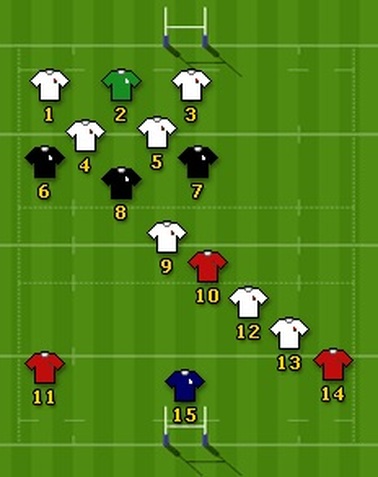
The Tight Five (Numbers 1 through 5): Props, hookers, and locks require unyielding grip and torsional soleplate stiffness. In a contested scrum, opposing packs drive into each other with thousands of Newtons of force. If a prop’s studs slip backward by even two inches, the scrum collapses, conceding a penalty or risking severe neck injury. Forward boots must anchor into soft, muddy turf while shielding the metatarsals from heavy boot stomps during breakdown rucks.
The Loose Forwards (Numbers 6, 7, and 8): Flankers and the Number 8 must balance scrum solidity with the explosive mobility required to be first to the breakdown, tackle runaway backs, and carry ball into contact. They favor agile eight-stud or six-stud configurations with slightly lighter synthetic uppers.
The Backline (Numbers 9 through 15): Scrum-halves, fly-halves, centers, wingers, and fullbacks prioritize acceleration, lateral cutting responsiveness, and clean ball striking. They demand lightweight boots with flexible forefoot soleplates, hybrid molded stud layouts, and streamlined uppers that provide pinpoint feel when executing spiral and box kicks.
Top Rugby Boots for Forwards and Backs: Technical Comparison Matrix
| Boot Model | Stud Configuration & Pitch Type | Upper Construction & Protection | Outsole Rigidity & Heel Drop | Target Positional Role |
|---|---|---|---|---|
| Canterbury Stampede Team | 8-stud interchangeable aluminum (SG) | Reinforced PU upper with padded toe box | Rigid TPU plate with 8mm raised heel | Tight Five Forwards (Props & Locks) |
| Adidas Kakari Z.0 SG | 6×2 aluminum stud matrix for deep turf | Ripstop textile with internal support cage | Split-frame power outsole with heel lift | Back Row & Loosehead Forwards |
| Gilbert Kaizen 8-Stud | Classic 8-stud layout with long studs | Durable synthetic leather, wide fit | Full-length anti-torsion stability shank | Club props, locks, heavy scrummagers |
| Mizuno Waitangi PS | 6×2 aluminum rounded stud configuration | Primeskin synthetic upper, diagonal flex | Reinforced resin outsole with wide last | Power forwards demanding wide toe box |
| Canterbury Phoenix Genesis Elite | Hybrid 6 metal studs + molded TPU cleats | K-leather forefoot with Vaposkin cage | Lightweight wishbone responsive soleplate | Backs (Fly-halves, Centers, Wingers) |
Top Rugby Boots for Forwards and Backs: Expert Reviews
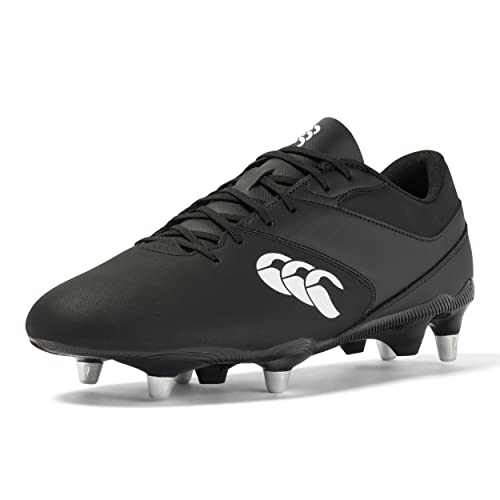
1. Canterbury Stampede Team: The definitive benchmark for tight-five scrummagers. Canterbury constructs the Stampede on an ultra-wide last with a rigid full-length TPU outsole hosting eight interchangeable aluminum studs (six forefoot, two heel). Its reinforced synthetic upper features heavy padding across the toe box and tongue to resist ruck stomps, while a raised 8mm heel drop relieves Achilles tension during sustained scrums.
2. Adidas Kakari Z.0 SG: Engineered specifically for modern, dynamic back-row forwards and agile front-rowers. The Kakari Z.0 features a ripstop textile upper reinforced by an internal support cage that locks down the midfoot during explosive line breaks. Its split-frame soft-ground outsole delivers deep turf penetration with surprising lightweight agility.
3. Gilbert Kaizen 8-Stud: A reliable, high-durability workhorse for grassroots club rugby. Built with an eight-stud aluminum configuration and an internal anti-torsion shank, the Kaizen provides dependable mud traction and stable footing for scrum drives in wet winter weather.
4. Mizuno Waitangi PS: Celebrated worldwide for its wide anatomical toe box and comfortable fit. Mizuno utilizes a Primeskin upper that breaks in instantly without stretching out of shape. Diagonal flex grooves across the forefoot allow explosive propulsion during scrum engagements and ruck drives.
5. Canterbury Phoenix Genesis Elite: Built for elite backline players who require sprint speed, agile directional changes, and surgical kicking precision. The Phoenix Genesis pairs a premium kangaroo leather forefoot with an ultralight Vaposkin mesh cage. Its hybrid soleplate combines metal screw-in studs for grip with molded TPU cleats for rapid acceleration.
Stud Length Mechanics and Seasonal Pitch Conditions
Interchangeable aluminum studs come in multiple lengths to match ground moisture levels:
Winter Soft Ground (18mm to 21mm Studs): In deep, rain-soaked mud and winter conditions, standard short studs skim over the topsoil without biting. Forwards install longer 18mm forefoot studs and 21mm heel studs that penetrate through surface slurry down into the firm subsoil layer, delivering immovable traction during scrums.
Early Autumn and Spring Firm Pitches (13mm to 15mm Studs): Playing in 21mm long metal studs on dry, rock-hard turf concentrates severe pressure into the metatarsal heads, causing painful stud pressure bruises. Switching to shorter 13mm to 15mm aluminum studs or composite nylon studs spreads the player’s weight comfortably while retaining traction.
Stud Configurations: 8-Stud vs 6-Stud vs Hybrid Cleat Layouts
The number and arrangement of studs determine how the boot grips the turf:
The Traditional 8-Stud Matrix (6×2 Configuration): The non-negotiable choice for props and locks on soft, wet winter pitches. Placing six studs under the forefoot (two along the medial edge, two along the lateral edge, and two central) creates an expansive footprint that bites deeply into turf, providing the immense reverse traction needed to resist opposing scrum drives.
The 6-Stud Matrix (4×2 Configuration): Featuring four forefoot studs and two heel studs. Six-stud boots reduce overall outsole weight and allow faster mud shedding, making them popular among loose forwards and backline runners on soft pitches.
Hybrid Outsoles (Molded TPU plus Metal Screw-In): Modern backs favor hybrid soleplates that integrate six metal screw-in studs for wet grip with molded chevron TPU cleats. This configuration provides biting traction in soft grass while offering the rapid rotational release needed for explosive sidesteps on firmer grounds.
Pitch Surfaces: Natural Grass vs 3G and 4G Artificial Turf
Rugby is increasingly played on modern rubber-crumb artificial turf facilities:
The Danger of Metal Studs on Artificial Turf: Long aluminum screw-in studs are strictly prohibited on 3G and 4G synthetic pitches. The metal studs cannot penetrate the dense synthetic carpet backing, creating dangerous joint torsion where the foot remains locked while the knee rotates, significantly increasing ACL tear risks.
Required Footwear for Synthetic Turf: On artificial pitches, players must switch to dedicated Firm Ground (FG) or Artificial Grass (AG) boots with short, molded conical TPU studs that release cleanly during rotational cutting movements.
World Rugby Law 4 and Regulation 12 Stud Compliance
Before every match, referees conduct strict pre-game boot inspections:
Regulation 12 Physical Specifications: All studs must feature a circular cross-section with a minimum tip diameter of ten millimeters. Studs must be completely smooth; any stud that has developed sharp, jagged burrs from walking on asphalt or gravel will fail inspection and must be filed down or replaced before kickoff.
Stud Material Constraints: Studs must be molded from non-rusting aluminum alloys, high-impact nylon, or rubber-tipped composites. Under no circumstances are steel-tipped spikes or sharp bladed soccer studs permitted, as they can cause horrific lacerations during ruck pile-ups.
The Raised Heel Platform: Biomechanical Protection for Forwards
Unlike flat soccer cleats, dedicated rugby forward boots incorporate a raised heel design:
The Scrum Stance Posture: In a scrum, forwards crouch with hips low and knees bent at ninety degrees, driving forward off their toes. This posture places immense tensile strain on the Achilles tendon and plantar fascia.
Achilles Tendon Strain Relief: Incorporating an 8mm to 10mm raised heel platform (exemplified by Canterbury’s Stampede and Asics Gel-Lethal series) raises the calcaneus. This slight heel lift reduces the stretch placed on the calf and Achilles tendon, preventing painful tendinopathy and muscle strains while naturally shifting the player’s center of gravity forward into the drive.
Anatomical Lasts: Wide Fit vs Narrow Sprinting Silhouettes
Foot geometry differs markedly between forwards and backs:
Wide Toe Boxes for Heavy Forwards: Under heavy scrum compression, the forefoot spreads laterally (known as metatarsal splay). Brands like Canterbury and Mizuno engineer forward boots on wide 2E and 4E lasts, providing generous room in the toe box to prevent black toenails, bunion irritation, and nerve pinching.
Contoured Glove Fits for Backs: Backs prefer snug, anatomical fits that eliminate internal foot slip during explosive changes of direction, maximizing responsiveness on lateral cuts.
Outsole Rigidity: Anti-Torsion Plates vs Forefoot Flexibility
Soleplate stiffness directly shapes power transfer and running efficiency:
Rigid Soleplates for Forwards: A prop’s boot must have an unyielding TPU or carbon-reinforced midsole shank. If a boot flexes in the middle under scrum compression, drive force is dissipated, and the metatarsal bones are subjected to severe bending stress.
Flexible Split Soleplates for Backs: Backs require soleplates that flex effortlessly across the metatarsophalangeal joints, enabling natural springing, sprint acceleration, and rapid deceleration cuts.
Upper Architecture: Protective Ruck Cages vs Kicking Sweet Spots
The upper material must be customized to positional contact demands:
Heavyweight Synthetic Leather for Forwards: Forwards endure relentless stomping from metal studs during rucks and mauls. Forward uppers use dense synthetic leather backed with high-density EVA foam along the tongue and toe box to disperse stomp impacts and protect the delicate dorsal bones of the foot.
Asymmetric Lacing and Kicking Control for Backs: Backline boots incorporate asymmetrical or off-center lacing systems that shift the laces toward the outer edge of the foot. This clears an unobstructed, smooth striking surface across the medial instep, allowing fly-halves and fullbacks to strike spiral punts, drop goals, and penalty kicks with pinpoint trajectory control.
Ankle Collar Height: Mid-Cut Stability vs Low-Cut Agility
Collar profile provides distinct biomechanical trade-offs between joint support and sprint freedom:
Mid-Cut Collars for Lineout Jumpers and Locks: Second-row locks and back-row flankers routinely jump ten feet into the air during contested lineouts, coming down on uneven ground or other players’ feet. Mid-cut padded collars cradle the malleolar ankle bones, providing supplemental proprioceptive stability that minimizes severe inversion sprains on contested landings.
Low-Cut Collars for Sprint Speed: Outside backs, wingers, and fullbacks require completely unrestricted plantarflexion and dorsiflexion to maximize stride length and top sprinting speed. Low-cut collars eliminate friction around the Achilles tendon, allowing fluid acceleration.
Upper Materials: Kangaroo Leather vs Microfiber Synthetics
The choice between natural leather and modern synthetics affects wet-weather weight:
Kangaroo Leather (K-Leather): Highly prized for its buttery softness, rapid moldability, and unmatched tactile feel when kicking. However, natural leather absorbs water in rain-soaked winter matches, increasing boot weight by up to twenty percent unless treated with hydrophobic wax coatings.
Hydrophobic Microfiber Synthetics: Premium synthetic uppers (such as Canterbury Vaposkin or Mizuno Primeskin) shed mud and water effortlessly, maintaining a consistent lightweight feel across eighty minutes of wet winter play while resisting structural stretch over multiple seasons.
Stud Maintenance, Thread Lubrication, and Mud Removal Protocols
Interchangeable screw-in studs require routine maintenance to function safely:
Anti-Seize Thread Lubrication: Apply a light coating of petroleum jelly or marine grease to the metal threads of your studs before screwing them into the soleplate. This barrier prevents moisture and mud from chemically corroding the aluminum threads, which would permanently seize the studs inside the boot.
Pre-Match Stud Key Tightening: Always use a dedicated two-prong rugby stud key to check stud tightness before every training session and match. Loose studs allow mud to pack inside the internal socket threads, ruining the soleplate.
Drying Muddy Boots: Never place wet leather or synthetic boots directly on hot radiators or inside tumble dryers. Direct high heat dries out leather and melts soleplate bonding glues. Remove the insoles, rinse surface mud with cold water, stuff the interiors tightly with dry newspaper, and let them air dry in a well-ventilated space.