Best Running Shoes for Men: Brooks, ASICS, Hoka & New Balance Compared

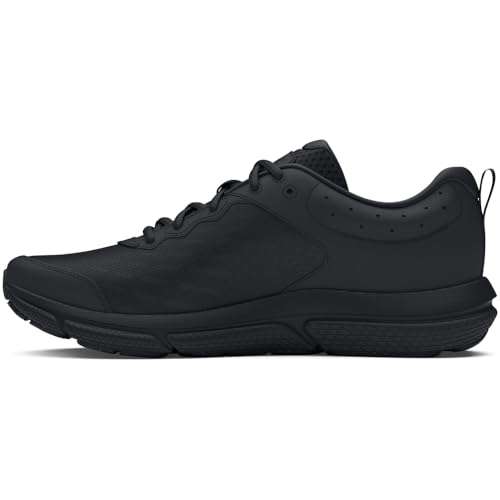
This is a cross-brand guide to the best running shoes for men, comparing four well-regarded neutral trainers from four different manufacturers, Brooks, ASICS, Hoka, and New Balance, rather than staying inside one brand’s lineup. Every stock and pricing detail below comes from a live Amazon product check, disclosed honestly where the data wasn’t available.
This is a cross-brand guide, not a single-brand roundup: it compares the Brooks Ghost 16, ASICS Gel-Nimbus 26, Hoka Clifton 9, and New Balance 880v14 side by side so you can pick the best fit across the market rather than inside one manufacturer’s lineup. If you already know you want a Nike shoe specifically, our separate Nike-only guide compares the Pegasus 41, Vomero 18, and Invincible 3 in more depth than fits here.
Most “best running shoes for men” lists quietly default to whichever brand paid for the photography, which isn’t useful if you’re actually trying to figure out how a Brooks shoe compares to an ASICS or a Hoka. This guide is deliberately cross-brand: every model here is a current, well-regarded neutral daily trainer from a different manufacturer, checked against Amazon’s live product data rather than a marketing page. That’s also what separates this guide from our Nike-specific roundup, which goes deep on Nike’s own lineup instead of comparing across brands.
- →Brooks Ghost 16: the safest all-around pick, balanced cushioning that suits nearly any foot type
- →ASICS Gel-Nimbus 26: maximum-cushion option, independently rated highly comfortable in lab testing cited by ASICS
- →Hoka Clifton 9: lightest of the four despite a tall stack, good for runners who want cushion without the weight
- →New Balance 880v14: a dependable mid-cushion trainer, this Gore-Tex version adds water resistance for wet climates
- →Stock and pricing on name-brand running shoes shift constantly on Amazon; several listings checked here showed no live price data, which is disclosed below rather than guessed
Table of Contents
Brooks Ghost 16: the default pick for most runners

The Brooks Ghost 16 has built its reputation on being unremarkable in the best sense: a balanced neutral trainer with DNA Loft v3 cushioning that doesn’t lean too soft or too firm, a segmented crash pad that smooths the landing through the heel-to-toe transition, and an upper that fits true to size for most foot shapes. It’s the shoe runners across message boards and running-store fittings tend to recommend when someone says “I just want something reliable and I don’t have a specific complaint to solve.”
The listing checked for this guide showed the shoe as currently unavailable at the listing checked. That’s common for a popular size/color combination on a fast-moving Amazon listing and doesn’t necessarily mean the model itself is discontinued. Check the current listing or a Brooks retailer directly for live stock in your size.
ASICS Gel-Nimbus 26: built for maximum cushioning

The ASICS Gel-Nimbus 26 sits at the plush end of ASICS’ neutral lineup, pairing FF Blast Plus Eco foam with a PureGEL heel insert aimed at softening impact on longer runs. ASICS has publicized an independent biomechanics-lab comfort test in which the Nimbus 26 was rated the most comfortable shoe tested by that lab’s panel; that’s a real, cited result rather than an ASICS marketing claim invented for this guide, though it reflects one lab’s testing protocol, not a universal ranking.
At the listing checked, the shoe showed as currently unavailable at the listing checked. If you want the Nimbus specifically, checking ASICS’s own site alongside Amazon is worth the extra step when a particular listing is out of stock.
⚠️ Watch out: A maximum-cushion shoe like the Nimbus 26 isn’t automatically the right call for every runner. If you do a lot of quick-turnover speed work, a taller, softer stack can feel disconnected from the ground compared to a firmer daily trainer like the Ghost.
Hoka Clifton 9: cushioned without the extra weight

The Hoka Clifton 9 solves a problem the other three shoes here don’t specifically target: a tall, cushioned stack that still stays light on the foot. Hoka added roughly 3mm of stack height over the previous Clifton generation while keeping the shoe’s weight close to the outgoing model, using a reworked foam compound to do it. For runners who’ve found other max-cushion shoes feel clunky or heavy by the end of a long run, this is the one worth trying first.
The specific listing checked (Black/Black, size 13) showed as currently unavailable at the listing checked. Hoka’s early-stage rocker geometry, a curved sole shape meant to smooth the stride, is also more pronounced on the Clifton than on the Ghost or 880v14, which some runners need a run or two to adjust to.
New Balance 880v14: a dependable, less flashy option

The New Balance 880v14 rarely tops “best of” lists the way the Ghost or Nimbus do, but it’s a consistently well-reviewed mid-cushion neutral trainer that New Balance has iterated on for over a decade. This particular listing is the Gore-Tex version, which adds a waterproof membrane, a genuinely useful feature for runners in wet climates, though it also makes the upper slightly less breathable than the standard mesh version, a real tradeoff rather than a pure upgrade.
Amazon’s product API returned no live price or stock message for this listing at check time, which the note below explains is not unusual for name-brand running shoes. If you specifically want the standard non-waterproof 880v14, search for that version separately since the Gore-Tex upper changes both the price and the fit slightly.
Side-by-side comparison
How to actually choose between four good shoes
All four shoes here are well-regarded neutral trainers from established running-shoe makers, which means the honest answer to “which is best” depends more on your own running pattern than on any one shoe being objectively superior. Runners who log a lot of easy, aerobic mileage tend to gravitate toward the Nimbus 26 or Clifton 9 for the extra cushion. Runners who split time between easy runs and faster efforts, or who simply want one shoe that does everything adequately, tend to end up with the Ghost 16. The 880v14 sits between those two groups, and this specific Gore-Tex version adds a practical reason to pick it if you run through rain or slush regularly.
- ✓Match the shoe to your typical run type (easy long runs vs. mixed-pace training) rather than star ratings alone
- ✓Check a current listing’s price and your specific size before ordering, since these figures move fast
- ✓Consider the Gore-Tex 880v14 specifically if you run in wet or cold conditions often
- ✓Try a half-size adjustment on the Clifton or Nimbus if you’re used to a firmer, lower-stack shoe
- ✕Assume a shoe is discontinued just because one size/color listing shows as unavailable
- ✕Pick a max-cushion shoe for speed work if snappy turnover matters more to you than softness
- ✕Buy a waterproof running shoe for a hot, dry climate where breathability matters more
- ✕Ignore your current shoe’s wear pattern when choosing a brand you haven’t tried before
Why cross-brand comparisons are more useful for most buyers
A single-brand list can only tell you which shoe within that brand’s lineup fits best; it can’t tell you whether that brand is even the right starting point. Brooks, ASICS, Hoka, and New Balance each build their cushioning systems differently enough that a runner who loves the Ghost’s balanced feel may actively dislike the Nimbus’s softer, taller stack, and vice versa. Comparing across brands first, then narrowing down within whichever brand’s feel you preferred, is a more efficient way to shop than starting from brand loyalty.
How each brand’s cushioning foam actually differs
Brooks, ASICS, Hoka, and New Balance each use a proprietary foam name, and it’s easy to assume they’re all roughly interchangeable marketing terms. They aren’t quite. Brooks’ DNA Loft v3, used in the Ghost 16, blends a nitrogen-infused compound aimed at staying lightweight without going overly soft, which is part of why the Ghost reads as “balanced” rather than plush. ASICS’ FF Blast Plus Eco, in the Nimbus 26, is tuned specifically for softness and energy return on longer efforts, paired with a gel heel insert for extra impact absorption. Hoka’s foam compound in the Clifton 9 prioritizes a favorable weight-to-cushion ratio over pure softness, which is why it can carry a taller stack without feeling as heavy as the numbers might suggest. New Balance’s Fresh Foam X in the 880v14 sits in the middle of that range, tuned for durability and all-around use rather than maximizing any single trait.
None of these formulations is universally “better” than another. They’re tuned for different priorities, and a runner’s own weight, stride, and typical mileage will change which tradeoff actually feels best on foot. Reading the foam name on a spec sheet won’t tell you that; running in the shoe, or at minimum reading reviews from runners with a similar build and training style, will get you closer.
Replacing your running shoes: mileage isn’t the only signal
The commonly cited 300 to 500 mile guideline for replacing a running shoe is a reasonable starting point, but it assumes average conditions that don’t apply to everyone. A heavier runner, or one who runs primarily on hard pavement rather than trails or a treadmill, will generally compress cushioning foam faster than that range suggests. Rotating two pairs, even two different models from this list, spreads wear more evenly and gives each pair roughly a day to decompress between runs, which several running-shoe manufacturers cite as a simple way to extend usable shoe life without spending more money overall.
💡 Pro tip: A visual check that doesn’t require a mileage log: look at the outsole rubber under the forefoot and heel. Visible smoothing where tread pattern used to be, especially asymmetric wear on one side, is often a more reliable replacement signal than an odometer guess, since it reflects your actual gait rather than an average runner’s.
📊 Note: Amazon’s product API frequently returns no live price for well-known athletic shoe listings, something also seen across several other shoe guides on this site. That’s disclosed rather than estimated in every case above: where you see “no live price or stock data,” that reflects exactly what the API returned at the time this guide was checked, not a guess.
What’s the difference between this guide and the Nike-specific one?
This guide compares four different brands (Brooks, ASICS, Hoka, New Balance) against each other. The Nike-specific guide instead compares three models within Nike’s own lineup in more depth. Use this one if you’re brand-agnostic; use the Nike guide if you’ve already decided on Nike and just need to pick a model.
Which of these four running shoes has the most cushioning?
The ASICS Gel-Nimbus 26 and Hoka Clifton 9 both sit at the maximum-cushion end of this group. The Nimbus leans softer and plusher; the Clifton keeps a tall stack while staying lighter on the foot, which matters if a heavy max-cushion shoe has bothered you before.
Is the Brooks Ghost 16 good for beginners?
Yes. Its balanced, moderate cushioning and true-to-size fit make it one of the more forgiving starting points for a new runner who hasn’t yet identified a specific gait issue or cushioning preference.
Do I need the waterproof (Gore-Tex) version of the New Balance 880v14?
Only if you regularly run in rain, slush, or cold wet conditions. The Gore-Tex membrane adds water resistance at the cost of some breathability, so runners in warm or dry climates are usually better served by the standard mesh version instead.
As an Amazon Associate, we earn from qualifying purchases through links on this page.