Best Volleyball Backpack and Gear Bag for Practice and Travel


The best volleyball backpack is the one that carries a ball, a pair of shoes, and a day of clothes without forcing you to dig through a pile. For most players that means a bag with an external ball holder and a separate ventilated shoe pocket, like the DSLEAF volleyball bag. The Goloni 35L lists the highest stated capacity of the four, the Goloni 30L keeps the price low, and the LOINTET adds extra compartments for players who like everything in its own pocket. One thing to know: all four of these are general ball sport backpacks that their listings also say fit a volleyball.
Volleyball players carry more than people expect. A practice day can mean kneepads, shoes you only wear indoors, a water bottle, a towel, spare socks, hair ties, tape, and a ball you want to warm up with before the coach arrives. Toss all of that into a regular school backpack and the ball ends up balanced on top, the shoes go in a plastic bag, and everything smells like a gym by Thursday.
Table of Contents
Footwear Drop & Court Gear Utility
Calculate athletic footwear parameters and weight distribution.
A purpose-built sports backpack solves most of that with two features: a place for the ball and a vented place for the shoes. This guide looks at four real options, explains what the features mean in practice, and covers how to pick a size, a material, and a carry style that fits your schedule.
- →Look for a dedicated ball holder and a separate ventilated shoe pocket before anything else
- →Capacity in liters tells you more than a marketing name, so compare the numbers on the listing
- →A padded back panel and adjustable straps matter more once the bag is loaded
- →All four bags here are shared designs that their listings also market for basketball or soccer
- →Wipe and air out the shoe pocket after every session to keep the bag from smelling
What a Volleyball Bag Actually Needs to Carry
Start with a list of what you pack, because the right bag is the one that fits your own routine. A middle school player who walks to the gym needs less room than a club player heading to a weekend tournament with three matches a day.
The core load for most players is a ball, court shoes, kneepads, a water bottle, a towel, and a change of clothes. Club and travel players often add a second pair of shoes, a foam roller or resistance band, snacks, a phone charger, and a jacket for sitting between matches.
📊 Note: Check whether your coach or club requires players to bring their own ball. If you carry one every day, an external ball holder is not a luxury. It is the feature that decides how the bag feels to use.
The Features That Matter Most
An External Ball Holder
A ball holder keeps the ball out of the main compartment, so it does not squash your clothes or pick up lint and dirt on the inside of the bag. The better designs use an adjustable strap or buckle so a ball stays snug whether it is fully inflated or a little soft.
The listings for these bags describe the holder in different ways: a collapsible design with a detachable buckle on the DSLEAF, a top pocket on the Goloni 30L, and a foam cushioned holder on the LOINTET. In each case the practical test is the same. Put your own ball in it, shake the bag gently, and see whether the ball stays put.
A Separate, Ventilated Shoe Pocket
Indoor court shoes pick up floor dust and sweat, and putting them next to a clean towel is how a bag starts to smell. A separate shoe pocket at the bottom of the bag, with ventilation holes, keeps footwear isolated and lets air move through between sessions.
The DSLEAF listing describes a PVC bottom you can wipe clean with a towel, which makes the pocket far easier to keep fresh. That matters more over a season than any single design choice, so look for something similar on any bag you consider.
Padding, Straps, and Back Panel
A volleyball bag rarely gets packed light. Padded, adjustable shoulder straps and a cushioned back panel spread the weight, and a chest buckle, which the Goloni 35L listing includes, helps keep a loaded bag from swinging when you walk or run to the car.
4 Real Options, Compared
📊 Note: These four were in stock when checked on October 7, 2026. All four are shared designs that the listings also market for basketball or soccer, so they are not volleyball-only products in the way a branded team bag from a volleyball manufacturer would be. That is not a flaw, since a volleyball is about the same size as the balls those pockets were made for, but check the listing’s ball description against your own ball before you order.
How We Picked These Four
Every bag here was checked against its live Amazon listing for current price and availability, and the descriptions come from the features each listing states. We did not test them in a gym, so the notes describe what the listings say rather than how the bags wear over a season.
These four are not a ranking of every volleyball bag on the market. They are four bags whose listings we could check for price, stock, and features on the date shown in the table.
Choosing a Size
Capacity is listed in liters on some products and in inches on others. The Goloni 35L and 30L give explicit liter numbers, the DSLEAF lists 13 x 8.1 x 20.1 inches, and the LOINTET lists its compartment count instead of a volume.
As a rough guide, a bag around 30 liters suits practice days and short trips, while 35 liters or more starts to suit tournament weekends. Bigger is not always better, though. An oversized bag tempts you to pack everything, and a heavy bag is harder to carry and to fit in a locker.
💡 Pro tip: Pack your usual kit into a duffel at home, then weigh it. If it is already heavy, choose the bag with the better straps and back panel rather than the one with the most pockets.
Practice Days vs. Tournament Weekends
On a practice day, you need the essentials and a quick way to get in and out of the gym. A lighter 30 liter bag with a ball holder does that well, and it fits in a school locker or under a bench.
A tournament weekend asks for more. Wet clothes need a place to go, a second pair of socks and a dry shirt matter between matches, and you will likely carry food and a charger. A 35 liter bag, or a backpack plus a small duffel, usually covers it. Plan on leaving the ball in the holder so it stays reachable between matches.
Choosing the Right Bag
- ✓Test the ball holder with your own ball before the first trip
- ✓Air out the shoe pocket after every session
- ✓Pick a size that matches your usual kit, not your biggest weekend
- ✓Check straps and zippers after the first few weeks of use
- ✕Zip wet shoes into the main compartment with clean clothes
- ✕Overload a bag past what the straps comfortably carry
- ✕Assume any bag with a ‘ball pocket’ fits a volleyball without checking the listing
- ✕Leave damp kneepads inside the bag overnight
Materials and Durability
The DSLEAF and LOINTET listings describe nylon, and the Goloni listings call their bags waterproof, so check each listing’s product details for the exact fabric. All four make water-resistant or waterproof claims. In practice, a water-resistant fabric will handle a splash or a short walk in light rain, but none of these bags should be treated like a dry bag in a downpour.
Stitching and zippers are where inexpensive bags usually wear out first. After you buy, look at where the shoulder straps meet the body and at the zipper on the main compartment, and return the bag early if either looks weak.
Keeping the Bag Fresh
Sweat and floor dust are the main sources of smell. Take shoes out as soon as you get home, open every pocket, and let the bag air out before you zip it again. If the shoe pocket has a wipe-clean base, clean it every week or two during the season.
Put a small dry towel or a pack of baking soda in the shoe pocket if odor is already a problem. Washing the whole bag in a machine is rarely a good idea, because the padding, the zippers, and any foam in the ball holder may not survive it. Check the listing’s care instructions first.
Youth Players and Team Orders
Youth players often do better with a lighter bag. The Goloni 30L listing describes a weight of listed at 1.19 pounds, which leaves more of a young player’s carrying budget for the actual gear. Fit also matters, so check the strap adjustment range against the player’s height.
Teams that want matching bags for a club order should look at the color options on each listing, since colors can differ by listing, and contact the seller about bulk orders and printing before committing. The Goloni 35L listing mentions a plain, patternless surface suited to custom prints, but confirm any customization details with the seller first.
Travel Considerations
A volleyball backpack makes a fine carry-on for a short trip, but airline size rules differ and change, so check your airline’s current cabin bag limits against the dimensions on the listing before you fly. A bag around 20 inches tall may fit some airlines’ limits and not others.
For team trips by bus, the bag only needs to fit under a seat or in an overhead bin. A ball holder on the outside helps here, because you can pull the ball out for a warm-up in the parking lot without unpacking.
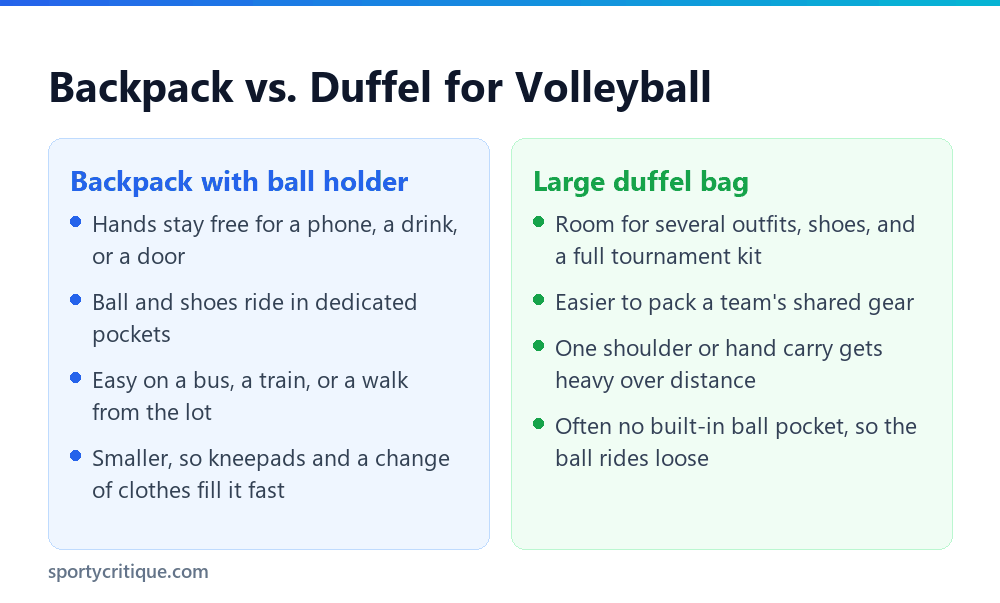
What About a Duffel or Rolling Bag?
A duffel suits players who bring a lot, such as officials, coaches, and anyone with several pairs of shoes. It is also easier to pack, since the opening is wide. The tradeoff is that most duffels have no dedicated ball holder, so you carry the ball in your hand or in a separate mesh bag.
A mesh ball bag is a cheap addition for a team and keeps several balls together. Rolling bags save your shoulders on long airport walks but add weight and are awkward on stairs and bleachers. For most players, a backpack with a ball holder remains the best balance of room and convenience.
Budget and Value Considerations
The four bags here run from about $22 to about $37 at the prices checked, and three of those were Prime-exclusive deal prices. In that range, extra money mostly buys more compartments and a more padded back, not a different kind of bag. Price is not a reliable predictor of how long the bag lasts, so read recent reviews that mention zippers and straps after a few months of use.
Listings also change. Sellers adjust prices and colors often, and a bag that was cheap last month may cost more today, which is why the table above carries a check date.
Frequently Asked Questions
What should I look for in a volleyball backpack?
A dedicated ball holder, a separate ventilated shoe pocket, padded adjustable straps, and a size that matches what you actually carry.
Does a basketball backpack fit a volleyball?
Many do, and several of the bags above are listed for volleyball as well. Check the listing for the stated ball size and test it with your own ball.
How big should a volleyball bag be?
Around 30 liters suits practice days, and 35 liters or more suits tournament weekends.
How do I stop my gym bag from smelling?
Take shoes out after every session, air out every pocket, and clean the shoe pocket regularly. A separate ventilated shoe pocket makes this much easier.
Can a volleyball backpack go on a plane?
Often as a carry-on, but airline size limits vary, so compare the bag’s listed dimensions with your airline’s current rules.
Are these bags waterproof?
The listings describe water-resistant or waterproof fabric, which usually covers the material and not the zippers or seams. Treat them as splash resistant, not fully waterproof.
A good volleyball bag is a simple tool. Pick one with a ball holder and a ventilated shoe pocket, size it to your own routine, test the carry with a loaded bag, and keep it aired out, and it will make every practice and trip a little easier.
As an Amazon Associate, we earn from qualifying purchases through links on this page.