Hockey Skate Sizing: Measure, Fit-Test & Why Brands Differ

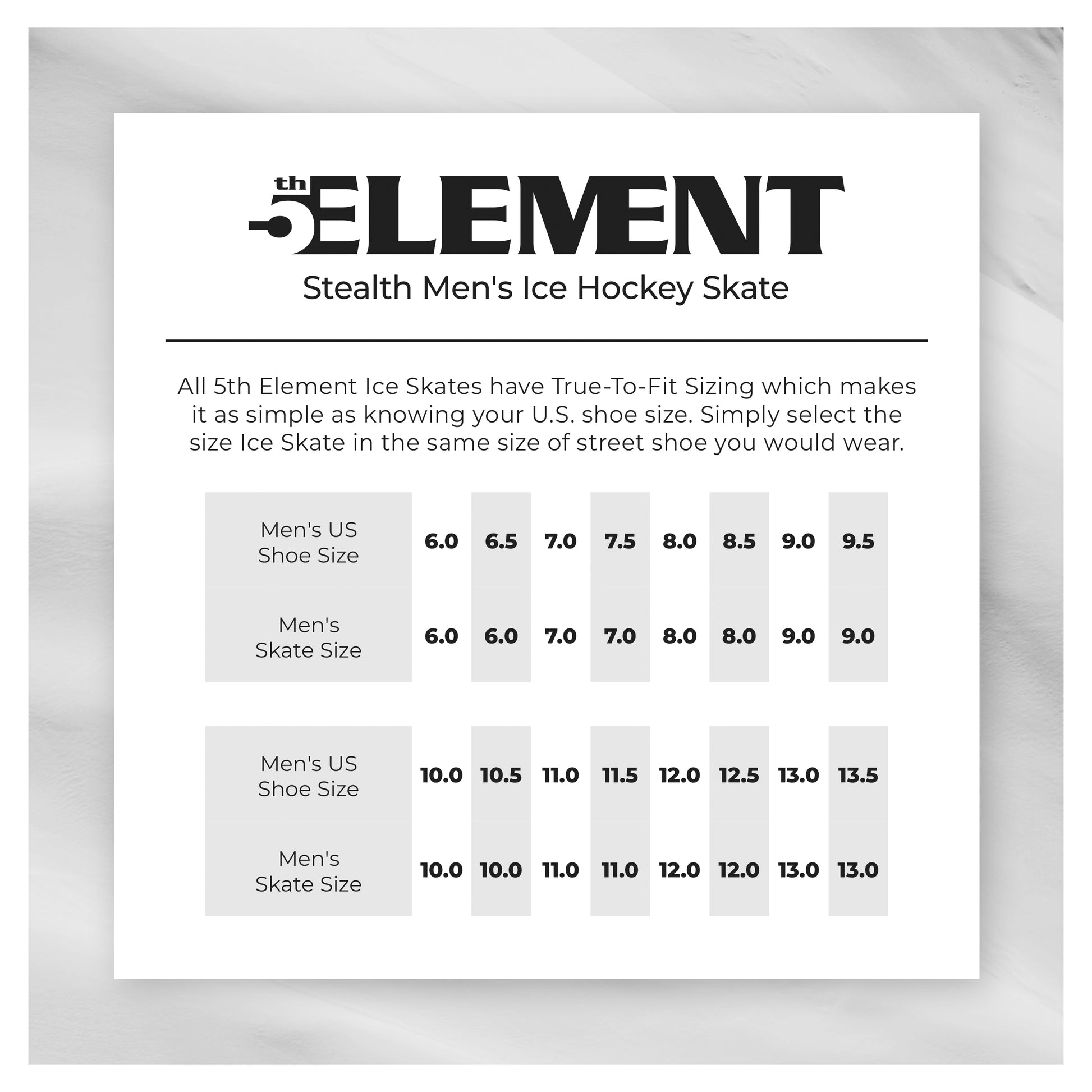
Quick Answer: Hockey skates run 1 to 1.5 sizes smaller than your US men’s shoe size (2 to 2.5 for women’s). Measure your foot in centimetres standing against a wall, use the larger foot, then apply the real test: laced and standing straight, your toes should just brush the toe cap — and pull back slightly when you bend your knees into a skating stance. Snug everywhere, painful nowhere.
🏒 Ice Hockey Hub: Explore all 36 skate reviews, shooting mechanics, and drills in our Complete Ice Hockey Resource Hub.
More beginners are ruined by wrong-size skates than by any skill gap. Too big and your foot slides inside the boot: every ounce of power you generate leaks into the empty space, your ankles roll, and you get blisters in places you didn’t know could blister. Too small and your toes go numb in fifteen minutes and you spend the session thinking about your feet instead of the puck.
The size charts are the easy part and every retailer has one. What they don’t tell you is that brands fit differently, that the fit test matters more than the number, and that the advice you’ll get about kids’ skates is usually wrong. That’s what this guide is for.
Table of Contents
Why skates are smaller than shoes
It surprises everyone the first time. The reason is that a skate isn’t a shoe — it’s a rigid boot that has to hold your foot in a fixed relationship to a blade. Any movement between your foot and the boot is power you generate and don’t deliver, and control you think you have and don’t.
A running shoe is designed with a thumb’s width of space at the toe because your foot swells and slides forward as you run. A skate is designed with essentially no spare room, because the moment your foot moves independently of the boot, your edges stop responding to your intentions. That’s why the correct fit feels alarmingly tight to anyone whose reference point is sneakers — and why the most common beginner mistake is buying a comfortable skate, which is to say a useless one.
| Your shoe size (US men’s) | Typical skate size | Women: subtract |
|---|---|---|
| 7 | 5.5–6 | ~2–2.5 from women’s shoe size |
| 8 | 6.5–7 | — |
| 9 | 7.5–8 | — |
| 10 | 8.5–9 | — |
| 11 | 9.5–10 | — |
| 12 | 10.5–11 | — |
| 13 | 11.5–12 | — |
Treat this table as a starting guess for which box to pull off the shelf — not as an answer. The fit test below is the answer.
Measure at home (two minutes)
- Put on the thin hockey socks you’ll actually skate in — not gym socks, not bare feet. Thin socks are correct here; thick ones fill space the boot needs.
- Stand on a sheet of paper with your heel against a wall, weight on the foot. Standing matters: your foot lengthens under load.
- Mark the tip of your longest toe (which is not always the big toe), keeping the pencil vertical.
- Measure heel-to-mark in centimetres.
- Repeat with the other foot. Use the larger measurement — nobody’s feet match, and you fit the bigger one.
- Compare against the brand’s own chart, not a generic one.
Length is only one of four dimensions that matter, though, and it’s the one everyone stops at. The others are width (how broad your forefoot is), volume (how much vertical space your instep needs), and arch height. A skate that’s the right length and the wrong volume will never feel right no matter how you lace it — the foot floats up or gets crushed down, and neither is fixable.
The fit test that actually decides
This is what you do in the shop, and it overrules every chart:
| Check | What you should feel | What it means if wrong |
|---|---|---|
| Standing straight, laced | Toes just brush the toe cap | Jammed = too small. Gap = too big |
| Knees bent, skating stance | Toes pull back a few mm off the cap | Still hard against it = too small |
| Heel lock | Zero lift when you rise on your toes | Heel lift = power leak and blisters, guaranteed |
| Sides | Snug contact all along the foot | Crushing at the widest point = wrong width, not wrong length |
| Instep | Firm pressure, no numbness | Numbness = wrong volume; a different brand will fix it |
| Ankle | Held, but able to flex forward | Can’t flex = over-laced or too stiff a model |
The heel lock is the one to obsess over. If your heel lifts when you rise onto your toes, that skate is wrong for you — full stop, regardless of how the length feels. Every push you make starts from the heel, and a lifting heel means you’re pushing the boot before you push the ice. It’s also the single biggest cause of the blisters that make beginners quit.
The part the charts don’t tell you: brands fit differently
This is where most online skate purchases go wrong. Two skates marked size 8 from different brands can fit like different sizes, because each brand builds around a different foot shape — and each offers multiple fit profiles within their own range.
| Brand | General reputation | Suits |
|---|---|---|
| Bauer | Multiple fit lines spanning narrow/low to wide/high volume | Most feet — the safest first try-on |
| CCM | Slightly roomier heel and forefoot on average | Medium to wide feet |
| True | Anatomical, very snug wrap; custom heritage | Narrow to medium, performance-focused |
The practical implication: if a brand doesn’t fit, it’s not your foot’s fault — try another. Beginners routinely assume discomfort is normal and buy the skate anyway because the length was right. It isn’t normal, and the right brand for your foot shape exists. If you have notably wide or flat feet, start with the wide-fit lines; our guides to skates for wide feet and flat feet narrow the field considerably.
💡 Buy in person if you possibly can, and go late in the day — feet swell as the day goes on, and a skate fitted on a fresh morning foot can be agony by evening. If you must buy online, order two sizes, test both on carpet with the blade guards on, and return one. Retailers expect it.
Kids’ skates: the advice everyone gets wrong
⚠️ Buy a half size of growth room. Not a full size. Not two. The instinct to ‘buy big so they last the season’ is understandable and it’s the single most damaging thing you can do to a child’s skating.
Here’s what actually happens in an oversized skate: the child can’t control their edges, so they can’t stop, so they can’t turn confidently, so they skate in nervous straight lines. They plateau, they get frustrated, they conclude they’re bad at it, and they quit — and the parent concludes their kid didn’t like hockey. The kid liked hockey fine. They were wearing buckets.
The honest compromise: a half size up, with an extra insole to fill the space early on. Pull the insole out when they grow into it. That gives you most of a season without destroying their ability to feel the ice. And check the fit every few months — kids’ feet move fast and a skate that fit in October can be a problem by January.
The economics are less painful than they look, too. Kids’ skates hold resale value well because everyone has the same problem, and most clubs run swap programs. Buying correctly costs less than you think and it’s the difference between a kid who skates and a kid who used to.
Stiffness: the second sizing decision nobody mentions
Skates aren’t just sized by length — they’re built at different stiffness levels, and buying the wrong one is as damaging as buying the wrong size. Manufacturers price their ranges from recreational to pro, and the price difference is mostly boot stiffness and materials.
Here’s the trap: the expensive skate is the wrong skate for most people. Top-end boots are built brutally stiff because professional players generate forces recreational players simply don’t. Put a beginner in a pro-stiffness boot and it never flexes — they can’t bend their ankles, so they can’t get into a proper knee bend, so they skate upright and slow, and their feet hurt the entire time. The boot never breaks in because their body can’t break it in.
The honest guidance: buy the stiffness that matches how often you skate and how hard you push. Skating once a week for fun? A mid-range recreational boot will be more comfortable, more forgiving, and will actually flex with you. Playing competitive beer league three times a week? Then a stiffer boot returns your energy instead of absorbing it. The rule of thumb the shops use is real: match the boot to the player, not to your ambitions.
There’s a corollary for parents: never buy a stiff, high-end skate for a child. They weigh 30 kilos. They cannot flex a pro boot. It will actively make them worse, and it will cost you four times what the right skate would have.
Signs your current skates are wrong
If you’re already skating and something feels off, these are the tells — and each points at a different problem:
- Blisters on the heel — heel lift. Your foot is moving in the boot. Either the size is too big, the volume is wrong for your instep, or you need to bake them.
- Numb toes within 15 minutes — too small, too tight at the toes, or over-laced at the forefoot. Try loosening the toe lacing first before you spend money.
- Lace bite (sharp pain across the front of the ankle) — pressure from the tongue and laces. Often a volume mismatch; a gel pad or a different brand’s tongue design usually solves it.
- Ankles rolling inward — the boot isn’t supporting you. Usually too big, sometimes too soft for your weight and power.
- You can’t bend your knees properly — the boot is too stiff for you, or laced too tight up top.
- Feet slide forward when you stop — too big. This one is unfixable by any adjustment; the skate is simply wrong.
Worth noting: a surprising number of players skate for years in skates a full size too big because they bought them as beginners, when everything felt uncomfortable and they couldn’t tell the difference between ‘snug’ and ‘wrong’. If you’ve never had your skates professionally fitted, and you’re finding your stops unreliable or your speed stuck, it’s genuinely worth a fitting. The number of adult players who discover they’ve been fighting their equipment rather than their technique is not small.
After you’ve sized: baking, break-in, and lacing
Modern skates are heat-moldable, and this changes everything about break-in. Twenty minutes in a shop oven and the boot conforms to your foot’s actual shape — filling gaps around the ankle, easing pressure at the bones, dramatically shortening the break-in period that used to take a month of painful sessions. Our skate baking guide covers the process.
What baking can’t do is fix a wrong size. It solves shape problems, not length or volume problems. A skate that’s a size too big is still a size too big after baking, and one that’s too small will be marginally less agonising and still wrong. Get the size right first, then mold.
Lacing matters more than people expect too: tight through the ankle, looser over the toes. Cranking the toes tight kills circulation and does nothing for control; leaving the ankle loose means your edges never get your body’s input. Our lacing guide covers the pattern, and the break-in guide handles the first few sessions.
Frequently asked questions
My toes touch the toe cap — are they too small?
Brushing while standing straight is correct. The test is what happens when you bend your knees: your toes should pull back slightly. Jammed, curling, or still hard against the cap in a skating stance means too small.
Should hockey skates hurt during break-in?
Pressure and stiffness, yes. Pain and numbness, no. Hot spots that persist past a few sessions are a fit problem, not a toughness problem — and toughing them out just means you get injured slowly instead of quickly.
How much smaller than my shoes?
1 to 1.5 sizes for men’s, 2 to 2.5 for women’s — as a starting guess. Then use the fit test; brands vary enough that the number is only a hint.
Can I buy hockey skates online?
You can, but order two sizes and test on carpet with guards on. Fit profile varies so much between brands that a single blind order is a coin flip.
How long do hockey skates last?
Recreational adults: several years — replace when the boot softens and stops supporting your ankle. Kids: whenever the fit test fails, which is annoyingly often.
Do I need to bake new skates?
Not mandatory, but it shortens break-in dramatically and improves the fit around your ankle. Just don’t expect it to rescue a wrong size.
What socks should I wear?
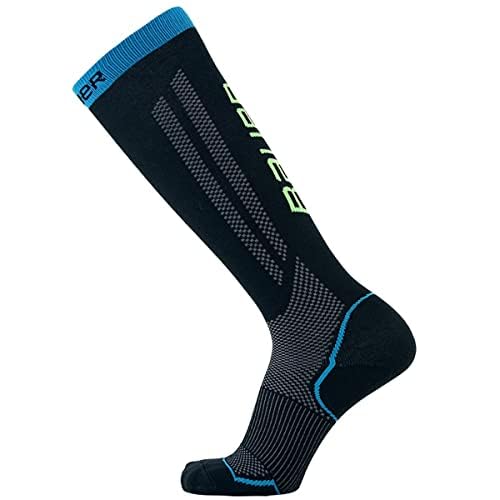
Thin, moisture-wicking hockey socks. Thick socks fill space the boot is designed to hold your foot in, and they trap sweat — which is how you get both blisters and cold feet. See our hockey socks guide.