Best Women’s Volleyball Shoes for Ankle Support (2026)

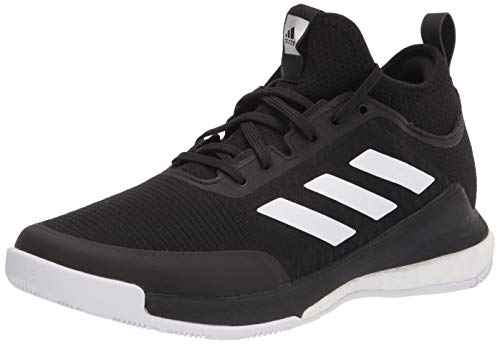
The women’s volleyball shoes that come closest to real ankle support combine a snug, structured heel counter with a lacing system that locks the midfoot down, not just a taller collar. Right now that’s the Mizuno Wave Momentum 2 for its wider, more stable platform, the Nike Zoom Hyperset 2 for a locked-in women’s specific fit, and the ASICS Upcourt 6 as a lower-priced option with a supportive heel cup. None of these are ankle braces. If you’ve had a real ligament injury, pair any shoe here with a brace or taping, not instead of one.
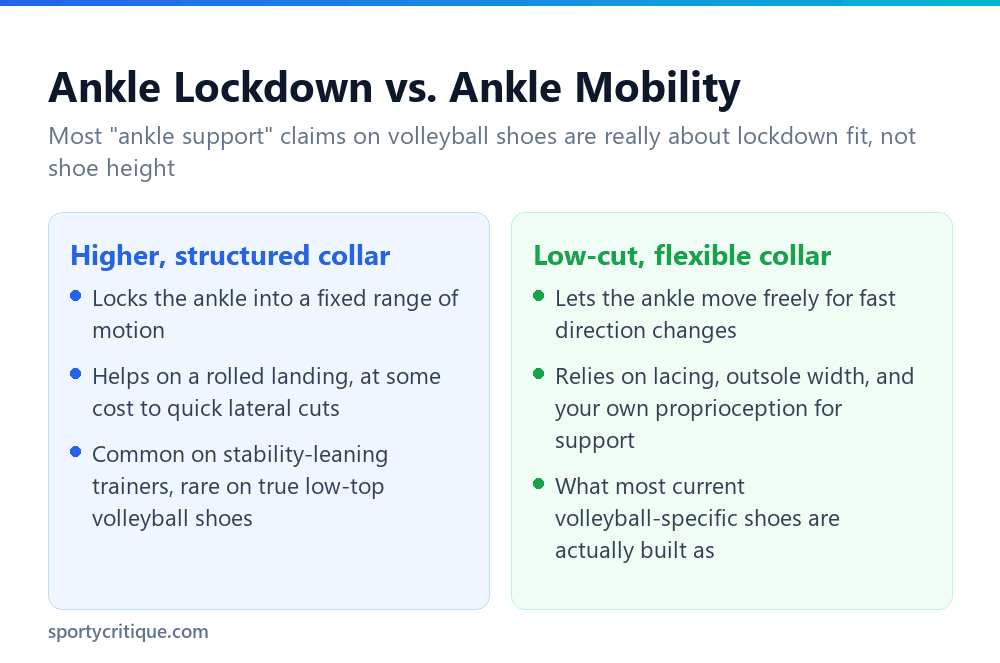
Finding women’s volleyball shoes for ankle support that actually deliver on that claim takes more digging than most buying guides do. Search “volleyball shoes for ankle support” and you’ll find a lot of listicles that just point at any women’s volleyball shoe and call the collar supportive. Most current volleyball shoes, across every major brand, are built low-cut on purpose, because a taller boot-style collar slows down the quick lateral steps a defender or setter needs. That’s a real design trade-off, not a flaw in any single shoe, and it means the honest answer to “which shoe supports my ankles” is more nuanced than a single pick.
This guide looks at what a shoe can actually do for ankle stability: a wide, stable outsole platform that resists rolling, a heel counter that holds your foot centered instead of letting it slide side to side inside the shoe, and a lacing pattern that lets you cinch the midfoot tight. We checked real, current listings for each pick below rather than repeating spec sheets, so the price and stock status you see are what the shoe is doing right now, not what it did when this page was first written.
- →A low-cut collar is standard on almost every current volleyball shoe, women’s included; taller collars are the exception, not a missing feature
- →The outsole’s width and tread pattern do more for lateral ankle stability than collar height
- →A heel counter that locks your heel in place stops the small side-to-side slide inside the shoe that leads to a rolled ankle on landing
- →None of the shoes below replace a brace or taping after a real ankle injury
- →Two of our three picks are currently in stock; we’re flagging exact availability rather than guessing
Table of Contents
Why Volleyball Puts So Much Load on the Ankles
Every attack, block, and defensive dig ends with a landing, often on an uneven surface (someone else’s foot, a slightly off-balance jump) rather than flat ground. That’s the mechanism behind most volleyball ankle rolls: not a bad shoe on its own, but a shoe that can’t do much once your foot is already rolling sideways in the air. A shoe helps most in the moment right after you land, when a wide, low-to-the-ground platform gives your foot a bigger, more stable base to catch itself on.
Women’s-specific lasts matter here too, and it’s a real, physical difference rather than just marketing. Women’s feet average narrower heels relative to the forefoot than a unisex last assumes, so a shoe built on a true women’s last holds the heel more securely without needing to over-tighten the laces across the toe box. A shoe that slides even a few millimeters at the heel with every step adds up to real instability over a five-set match.
There’s also a simple mechanical reason a shoe can only do so much once you’re already airborne and off balance: the ankle joint itself has to absorb the sideways force, and a shoe’s collar sits above the joint that’s actually rolling, the subtalar joint, not around it. That’s why trainers and physical therapists generally point to ankle strength and proprioception work, not footwear alone, as the main lever for players who roll ankles often. A shoe is one part of a bigger picture, and this guide is about picking the part that actually helps rather than the part that just markets well.
Sizing and Fit Notes That Matter More Than the Spec Sheet
A shoe that’s a half size too big undoes almost any support feature it has, because your foot still slides inside it on a hard landing even if the outsole itself is wide and stable. Women’s volleyball shoes across ASICS, Mizuno, and Nike run close to true to size on their own women’s lasts, but sizing shifts when a shoe is only offered in unisex or men’s sizing graded down; in that case go by the brand’s official conversion chart rather than your usual size, and expect the fit through the heel to be looser than a true women’s last.
Break-in time matters too. A stiffer, more supportive upper like the Mizuno Wave Momentum 2’s takes a few practices to mold to your foot, and playing a real match in a brand-new pair without at least one practice session in them is a common way to end up with hot spots or a fit that feels less locked-in than it will after a week of use.
Real Picks, Checked for Stock and Price
1. Mizuno Women’s Wave Momentum 2, Best for Lateral Stability
Mizuno Women’s Wave Momentum 2 Indoor Volleyball Shoe is built on a wider forefoot platform than most volleyball shoes in this price range, which is the single biggest lever a shoe has for resisting a lateral ankle roll on landing. Mizuno’s Wave plate sits in the midsole rather than the collar, so the support here is a wide, stable base underfoot rather than a taller cuff around the ankle. Checked live: $155.00, in stock.
💡 Pro tip: If you roll ankles on landing rather than on lateral cuts, prioritize outsole width over collar height. That’s what this shoe is actually solving for.
2. Nike Women’s Zoom Hyperset 2, Best Locked-In Fit
Nike Women’s Zoom Hyperset 2 Volleyball Shoe (White/Black) is one of the few current Nike volleyball models built and sized specifically for women rather than a unisex last graded down. The narrower heel pocket and full-length lacing give a noticeably snug midfoot lockdown once you size correctly, which reduces the small side-to-side slide that turns a normal landing into a rolled ankle. Checked live: $145.00, in stock, limited quantity, so grab your size before it sells through.
3. ASICS Women’s Upcourt 6, Best Budget Pick
ASICS Women’s Upcourt 6 Volleyball Shoes (Black/White) is a trainer-style court shoe rather than a dedicated indoor volleyball shoe, and we’re saying that plainly rather than stretching the pitch. What it does have is a padded, structured heel cup that holds the foot centered, at a price roughly a third of the two picks above. It’s a reasonable starting shoe for a recreational or school player, not a replacement for a stability-focused shoe once you’re playing multiple matches a week. Checked live: $64.95, in stock.
📊 Note: ASICS Women’s Gel-Rocket 11 Volleyball Shoes (White/Pure Silver) is a genuinely well reviewed women’s volleyball shoe with a supportive heel counter, and it would sit alongside the picks above if it were available. As of this check it’s out of stock with no listed price, so we’re disclosing that rather than recommending a shoe you can’t actually buy right now.
What “Ankle Support” Actually Means in a Shoe
- ✓Size for a snug heel and midfoot, not just a comfortable toe box
- ✓Re-lace before every match; a loosened lace is the #1 reason a locked-in shoe stops feeling locked in
- ✓Replace the shoe once the outsole tread rounds off at the forefoot, since that’s where lateral grip lives
- ✓Combine a stability-oriented shoe with a brace or tape if you have a prior ankle injury
- ✕Assume a higher collar automatically means more protection
- ✕Buy a size up “for safety”; a loose shoe slides and makes rolls more likely, not less
- ✕Play in worn-out court shoes that have lost their tread pattern
- ✕Expect any shoe to substitute for ankle-strengthening exercises if you roll ankles often
⚠️ Watch out: Skip any listing that markets a shoe as an “ankle support volleyball shoe” without naming a specific design feature (collar height, outsole width, lockdown lacing). That phrasing alone usually means the listing copy, not the shoe, was built for the search term.
If This Isn’t Quite Your Situation
This guide is specifically about ankle stability. If your main issue is heel or arch pain instead of rolling, the mechanics are different enough that a different shoe usually fits better.
For a broader look across brands rather than the ankle-support angle specifically, see our multi-brand women’s volleyball shoe guide. And if you’d rather start from a general decision tree than a single angle, our volleyball shoe guide overview links out to every angle we cover, including this one.
FAQ
Do volleyball shoes actually provide ankle support?
Mostly indirectly. Current volleyball shoes are built low-cut so they don’t restrict lateral ankle motion, so the real support comes from a wide, stable outsole and a locked-in heel and midfoot rather than a tall collar around the ankle bone itself.
Should I wear an ankle brace with volleyball shoes?
If you’ve had a prior sprain, yes, a brace or taping addresses the ligament instability directly in a way no shoe can. A stability-oriented shoe like the Mizuno Wave Momentum 2 is a reasonable complement to a brace, not a substitute for one.
Are high-top shoes better for ankle support in volleyball?
Not for most players. A higher collar can reduce rolling in a straight-line sport, but volleyball’s constant lateral cuts and quick direction changes are why almost no current volleyball-specific shoe, from any brand, ships as a true high-top.
What’s the difference between this guide and your women’s volleyball shoes guide?
This page is narrowed to ankle-support features specifically (outsole width, heel lockdown, lacing). Our broader women’s guide compares more models across ASICS, Mizuno, and Nike without that specific lens.
How often should I replace volleyball shoes if I care about ankle stability?
Once the outsole tread at the forefoot rounds off and looks smooth rather than textured, the shoe has lost a real amount of its lateral grip, regardless of how the upper still looks. For a player training multiple times a week that’s usually somewhere in the 6 to 9 month range, sooner if you play on outdoor sand or asphalt in the same pair.
Do compression ankle sleeves help the same way a shoe does?
They help differently. A sleeve adds mild proprioceptive feedback and compression, which can help you sense an ankle rolling sooner, but it doesn’t add the structural lockdown a laced shoe does. Players managing a mild, ongoing instability often use both together rather than picking one over the other.
📊 Note: Prices and stock status above were pulled directly from Amazon’s product data at the time this guide was last updated. Amazon inventory and pricing change constantly, sometimes within the same day, so treat the numbers here as a snapshot and check the live listing before you buy.
As an Amazon Associate, we earn from qualifying purchases through links on this page.