Best Volleyball Shoes for Women (2026): ASICS, Mizuno, Nike Compared

Across ASICS, Mizuno, and Nike, the best volleyball shoes for women right now are the ASICS Upcourt 6 for budget-conscious recreational play, the Mizuno Wave Momentum 2 for the most stable, cushioned option, and the Nike Zoom Hyperset 2 for a springier, more responsive feel. There isn’t one best brand across the board; each fits a different foot shape and cushioning preference, which is exactly why this guide compares real current models across brands instead of ranking a single one as universally best.
This is our multi-brand women’s volleyball shoe guide, distinct from our brand-specific and condition-specific guides on this site. If you already know you want Nike specifically, or you’re dealing with a specific foot condition like plantar fasciitis or flat feet, we have dedicated guides for those angles linked below. This page is for comparing real options across brands to find the best overall fit for your foot and playing style.
- →ASICS, Mizuno, and Nike each build women’s volleyball shoes with a different fit and cushioning philosophy, not just different branding on similar shoes
- →ASICS tends toward trainer-style comfort at accessible prices
- →Mizuno leans on Wave-plate stability and a wider platform
- →Nike leans on Zoom Air responsiveness with a narrower, performance-oriented last
- →All four in-stock picks below were checked live for real price and availability
Table of Contents
Why Brand Actually Matters Here, Not Just Marketing
Every shoe brand builds its shoes on a proprietary last, the foot-shaped mold everything else is constructed around, and those lasts differ meaningfully in width, arch height, and heel shape between brands. Two shoes marketed as the same size can fit noticeably differently on the same foot depending on which brand’s last they’re built on. That’s the real, physical reason it’s worth comparing brands rather than picking whichever one has the most aggressive marketing for “the best volleyball shoe.”
Cushioning philosophy differs by brand too, not just fit. ASICS’ trainer-style volleyball models prioritize a soft, accessible feel. Mizuno’s Wave plate spreads impact across a wider platform for a more stable, plush feel. Nike’s Zoom Air compresses and rebounds for a springier, more responsive feel. None of these is objectively correct; the right one depends on your foot and how you like a shoe to feel underfoot.
A Closer Look at Each Brand’s Approach
ASICS: Accessible, Trainer-Style Comfort
ASICS’ current women’s volleyball lineup leans on trainer-style construction, more similar to a general athletic shoe than a highly specialized performance model, which keeps prices lower without necessarily sacrificing comfort for recreational and school-level play. The trade-off is that ASICS’ entry-level models don’t carry the dedicated cushioning or stability engineering found in their higher-tier lines, so treat them as a strong starting point rather than a top-tier competitive shoe.
Mizuno: Wave-Plate Stability
Mizuno’s women’s volleyball shoes are built around the Wave plate, a midsole component shaped to spread impact force across a wider area of the foot rather than concentrating it in one spot. That design also tends to produce a wider platform underfoot, which adds real lateral stability on landings. Mizuno’s shoes generally run heavier than Nike’s more minimal performance builds, a trade-off some players accept willingly for the added stability and others find less appealing if quickness is their priority.
Nike: Zoom Air Responsiveness
Nike’s volleyball lineup centers on Zoom Air units, thin pressurized-gas pockets in the midsole that compress under impact and release energy back on push-off. That gives Nike’s shoes a noticeably springier, more energetic feel than Mizuno’s plusher Wave cushioning, at the cost of slightly less impact absorption in exchange for that responsiveness. Nike’s women’s lasts also tend to run narrower through the forefoot than ASICS or Mizuno, which suits a narrower foot better and can feel tight on a wider one.
What Actually Changes Between a Men’s and a Women’s Version of the Same Shoe
It’s a common misconception that a women’s shoe is just a men’s shoe recolored and resized down. In practice, most brands do build genuinely different lasts for their women’s lines, adjusting heel width, arch height, and sometimes the overall volume of the toe box to better match average differences in women’s foot shape. That’s why a true women’s model, like the three main picks in this guide, generally fits more securely through the heel than a unisex shoe sized down, even when the nominal size on the box looks the same.
That said, not every model in every brand’s lineup gets this treatment equally. Some budget or older models are still built on a shared unisex last with only cosmetic changes. If heel fit is a priority for you, check whether the specific model you’re considering is marketed as built on a dedicated women’s last, rather than assuming any shoe labeled “women’s” automatically has one.
Real Picks Across Three Brands, Checked for Stock and Price

ASICS Women’s Upcourt 6, Best Value
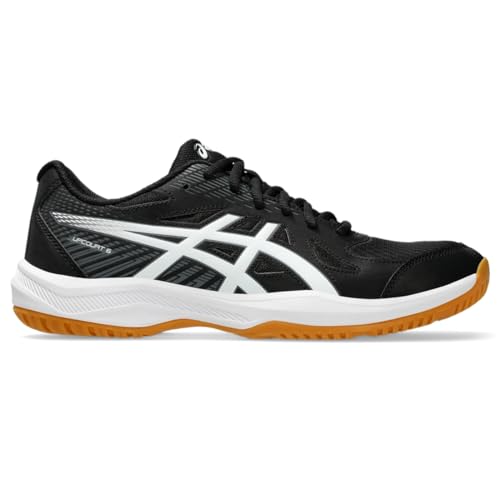
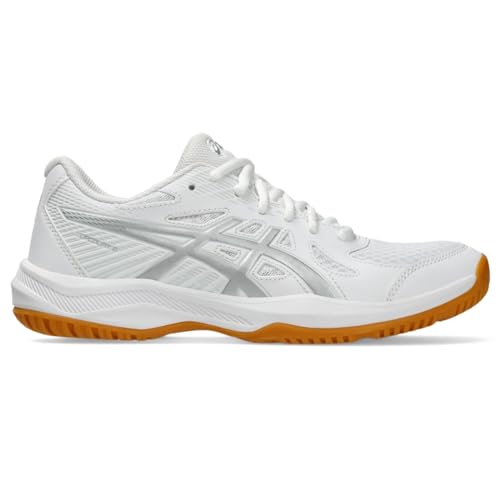
ASICS Women’s Upcourt 6 Volleyball Shoes (Black/White) is a trainer-style court shoe with a padded, structured heel cup, priced well below the Mizuno and Nike options here. It’s a reasonable pick for recreational or school-level play where a specialized, premium shoe isn’t yet worth the extra cost. Checked live: $64.95, in stock.
Mizuno Women’s Wave Momentum 2, Best Stability
Mizuno Women’s Wave Momentum 2 Indoor Volleyball Shoe uses Mizuno’s Wave-plate midsole and a wider platform for a stable, plush feel, well suited to players who land hard or often and want a wide, secure base under the foot. It’s the most expensive pick in this guide and the one we’d point most players toward if budget weren’t the deciding factor. Checked live: $155.00, in stock.
Nike Women’s Zoom Hyperset 2, Best Responsive Feel
Nike Women’s Zoom Hyperset 2 Volleyball Shoe uses a Nike Zoom Air unit for a springier, more energetic feel underfoot than the plush Mizuno option, on a narrower, more performance-oriented last. Players who prefer a livelier ride over a maximally cushioned one tend to gravitate here. Checked live: $150.00, in stock.
Mizuno Wave Luminous, Best Mid-Range Mizuno Option
Mizuno Wave Luminous Women’s Volleyball Shoe (White/Pink) sits between the Upcourt 6 and the Momentum 2 on price, carrying Mizuno’s Wave cushioning philosophy at a more accessible cost than their premium model. It’s a solid pick for a player who wants Mizuno’s stability feel without the Momentum 2’s full price. Checked live: $124.95, in stock.
📊 Note: ASICS Women’s Gel-Rocket 11 Volleyball Shoes is a well regarded ASICS option that would round out this list if it were currently available. As of this check it’s out of stock with no listed price, so we’re disclosing that rather than recommending a shoe you can’t currently buy.
How to Actually Choose Between These Three Brands
- ✓Try on more than one brand if possible before buying online, since lasts differ meaningfully by brand
- ✓Match cushioning feel to your play style; plush stability for hard landings, responsive spring for lighter footwork
- ✓Check the specific model’s own size chart rather than assuming your usual size carries across brands
- ✓Consider our condition- or position-specific guides if you have a specific need beyond general fit
- ✕Assume the most expensive brand automatically fits your foot best
- ✕Buy based on a favorite player’s endorsement alone without checking real fit and cushioning feel
- ✕Ignore how a narrower Nike last might fit differently than a wider ASICS or Mizuno last
- ✕Skip checking live stock and price; models shift between available and sold out often
💡 Pro tip: If you’ve never worn any of these three brands before, ASICS and Mizuno both tend to run slightly wider through the forefoot than Nike’s performance lasts. That’s a reasonable starting assumption if you can’t try shoes on in person, though it’s not a substitute for checking the specific model’s chart.
Ordering two sizes of a shortlisted pair from a retailer with a genuinely easy return policy, trying both at home on carpet, and returning the one that doesn’t fit is a reasonable strategy when you can’t get to a store that stocks all three brands. It costs a little more up front in shipping time, but it avoids the far more common and more expensive mistake of guessing wrong on a shoe you’ll be playing multiple times a week in.
Related Guides on This Site
Not sure a multi-brand comparison is what you need? Our volleyball shoe guide overview routes to every angle we cover, including condition-specific and position-specific guides.
FAQ
Which brand is best for women’s volleyball shoes overall?
There isn’t a single best brand across the board. ASICS tends toward accessible, trainer-style comfort, Mizuno toward stability and plush cushioning, and Nike toward a springier, responsive feel. The right choice depends on your foot shape and preferred cushioning feel.
Do women’s volleyball shoes really fit differently than unisex models?
Yes, meaningfully so. Women’s-specific lasts account for a narrower heel relative to the forefoot on average, which a unisex last graded down doesn’t replicate. A true women’s model generally holds the heel more securely.
Is Mizuno more expensive than ASICS or Nike for women’s volleyball shoes?
Generally yes at the premium tier; Mizuno’s flagship Wave Momentum line prices above both ASICS’ trainer-style options and Nike’s mid-tier volleyball models, though Mizuno also offers more accessible options like the Wave Luminous.
Should I buy the same brand I already play in, or try something new?
If your current shoes fit well and you’re not managing a specific foot issue, sticking with a brand and last that already works for you is reasonable. If you’re having fit or comfort problems, trying a different brand’s last is worth the switch.
Are men’s and women’s volleyball shoes interchangeable if the size converts correctly?
Functionally, yes for casual play, but fit quality differs. A true women’s-specific last generally holds the heel more securely than a men’s shoe sized down using a standard conversion chart, since the underlying mold is shaped differently, not just resized.
How often should these shoes be replaced?
Most players training multiple times a week see meaningful cushioning and outsole wear in the 6 to 9 month range, sooner for players who train daily or play on rougher surfaces outside of a clean indoor court, and later for players training just once or twice a week.
📊 Note: Prices and stock status above were pulled directly from Amazon’s product data at the time this guide was last updated. Inventory and pricing on Amazon change often, sometimes within the same day, so confirm the live listing for current numbers before you buy, especially on a specific size or colorway that might sell through faster than the listing overall.
As an Amazon Associate, we earn from qualifying purchases through links on this page.
This guide will keep getting rechecked as new models release and current listings shift in and out of stock across all three brands, so the specific picks above may change even when the underlying comparison between ASICS, Mizuno, and Nike’s design philosophies stays largely the same from one update to the next.