Best Shoes for Volleyball: Which Guide Fits You (2026)

Looking for the best shoes for volleyball? There isn’t one single pair that fits every player, because the right shoe depends on your gender-specific fit needs, any foot condition you’re managing, your position on court, and sometimes just which brand’s last fits your foot. This page is a short decision hub: pick the section below that matches your situation and it links straight to our full, verified guide for that angle. If you just want one solid, currently available answer without reading further, our three overall picks are the Mizuno Wave Momentum 2, the ASICS Upcourt 6, and the Nike HyperAce 3, covering a premium, a budget, and a modern middle option.
🏐 Volleyball Hub: Explore all 44 guides, court shoes, and drills in our Complete Volleyball Resource Hub.
We used to run this page as a generic top-10 list, the same format as most other volleyball shoe roundups on the web. The problem with that format is that it hides the actual decision a shopper needs to make. A women’s player managing plantar fasciitis and a male middle blocker with no foot issues at all shouldn’t end up looking at the same ranked list, because almost nothing on it applies equally to both of them. This page now works the other way: it asks what matters to you first, then sends you to the guide built around that specific question.
- →There’s no single universal best volleyball shoe; the right pick depends on your specific situation
- →We publish separate, deeply researched guides for gender fit, foot conditions, position, and brand
- →This page routes you to the right one instead of repeating a generic top-10 list
- →If you want one immediate answer, our three overall picks below are currently in stock and price-checked
- →Every linked guide verifies its own products independently rather than recycling one shared list
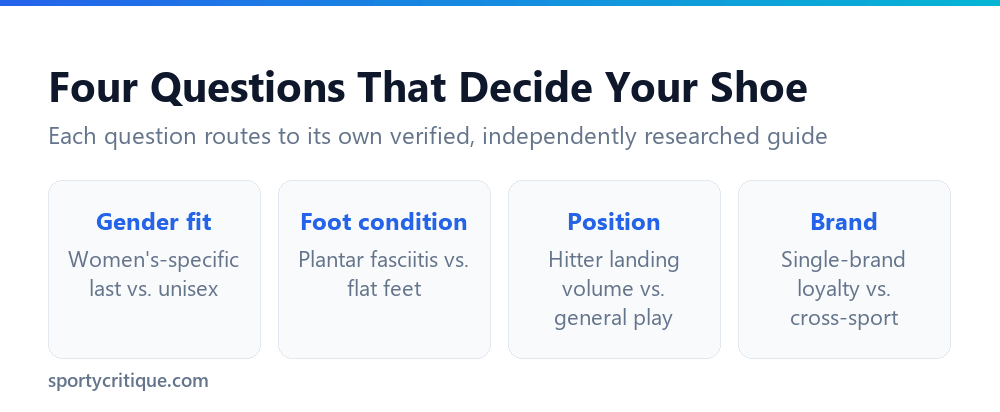
Table of Contents
Start Here: Which Question Matches You?
By Gender and Fit
Women’s feet average a narrower heel relative to the forefoot than a unisex last assumes, which is a real, physical reason a true women’s-specific shoe often fits better than a unisex model graded down. If that’s your main concern, start with our multi-brand guide covering ASICS, Mizuno, and Nike women’s models side by side.
By Foot Condition
If you’re managing a specific foot issue, the shoe features that actually help are different for each condition, and treating them as interchangeable is how a lot of generic buying guides give bad advice. Plantar fasciitis responds mainly to heel cushioning and shock absorption. Flat feet and overpronation respond mainly to motion control and arch stiffness. The two conditions share some features but aren’t the same shopping problem.
By Position or Role
Outside and middle hitters land harder and more often than most other positions, which shifts the priority toward landing cushioning and ankle lockdown after an off-center, cross-body swing. If that’s your role, don’t just grab whatever’s marketed as a generic “volleyball shoe.”
By Brand, or Crossing Over From Another Sport
Some shoppers already know they want to stick with one brand, most often Nike, and just want to see that brand’s current volleyball-relevant lineup rather than a mixed-brand list. That kind of brand loyalty is often tied to a specific last shape fitting a particular foot well, which is a legitimate reason to narrow the search rather than start from scratch across every brand each time you need a new pair. Others are asking a different question entirely: can a shoe built for another sport, most commonly basketball, actually work for volleyball. Both are real, common questions with their own dedicated answers on this site rather than a single paragraph buried in a longer post.
New to Volleyball and Not Sure Where to Start?
If you’re buying your first pair and none of the categories above obviously apply to you yet, that’s normal, and it’s fine to start with a generalist shoe rather than agonizing over which specialized guide fits. Most beginners don’t yet know whether they’ll end up hitting, setting, or playing back row regularly, and foot conditions like plantar fasciitis or flat feet usually only become a shoe-shopping priority once they’ve actually shown up as a problem during play. The three overall picks further down this page are built for exactly that starting point.
As you play more and start noticing specific patterns, whether that’s landing discomfort that points toward a hitter’s shoe, foot pain that points toward a condition-specific guide, or simply developing a brand preference, you can come back to this page and move to the guide that now actually applies. Nothing about starting with a generalist pick locks you into it long term.
How We Verify Every Pick Across These Guides
Every product mentioned across this hub and its linked guides is checked against live Amazon product data, not pulled from a spec sheet or an old cached listing. That means we’re checking the actual current price, whether the item is truly in stock, and whether the exact ASIN’s listed title matches the product we intended to recommend. When a shoe we’d otherwise recommend turns out to be out of stock or mismatched, we say so directly in the guide rather than quietly dropping it or leaving stale information in place.
That verification step is also why the specific picks on this page and its linked guides can shift over time even when the underlying advice about foot conditions, positions, and fit doesn’t change. A shoe going out of stock doesn’t mean the advice was wrong, it means the market moved, and we’d rather update the page than leave a dead link or an unavailable product recommendation sitting there.
If You Just Want One Solid Answer Right Now
Not every reader wants to read four more articles before buying a pair of shoes. If you’re a reasonably fit, uninjured player without a strong brand preference and just want a dependable current pick, here are three verified options covering different budgets, all checked for real stock and pricing rather than pulled from a spec sheet.
Premium overall pick: Mizuno Wave Momentum 2
Mizuno Women’s Wave Momentum 2 Indoor Volleyball Shoe combines a wide, stable platform with Mizuno’s Wave plate cushioning, making it a reasonable default for most playing styles and positions without needing to specialize toward one specific need. Checked live: $155.00, in stock.
Budget overall pick: ASICS Upcourt 6
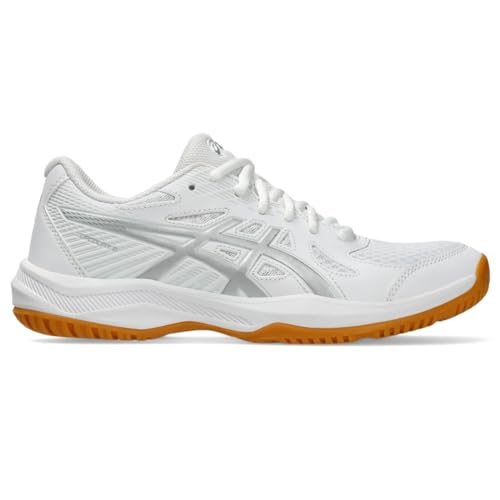
ASICS Women’s Upcourt 6 Volleyball Shoes is a trainer-style court shoe at roughly a third of the Momentum 2’s price, a reasonable starting point for recreational or school-level play where a dedicated, specialized shoe isn’t worth the extra cost yet. Checked live: $64.95, in stock.
Modern middle-ground pick: Nike HyperAce 3
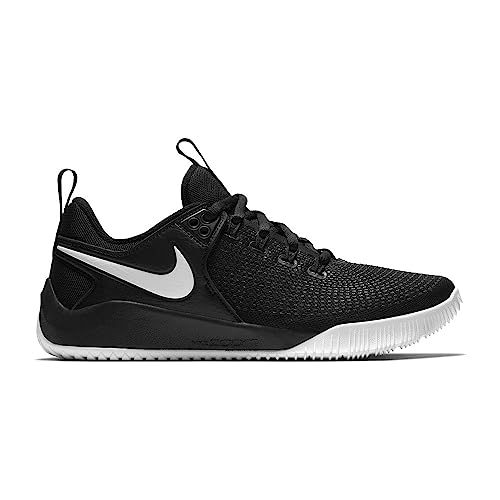
Nike HyperAce 3 Volleyball Shoes (White/Photon Dust/Team Crimson) is Nike’s current dedicated volleyball model, sitting between the two picks above on price while offering Nike’s own cushioning and outsole design rather than a repurposed trainer. Checked live: $89.77, in stock.
⚠️ Watch out: None of these three are a substitute for the specialized guides above if you have a specific need, an existing foot condition, or a demanding position. They’re a reasonable default for everyone else.
Why We Split This Into Separate Guides Instead of One List
- ✓Start with the section above that matches your actual situation, not just the shortest path
- ✓Use the three overall picks if none of the specific angles apply to you
- ✓Check the linked guide’s own price and stock check, since it’s verified independently
- ✓Come back here if you’re not sure which angle fits; that’s exactly what this page is for
- ✕Assume the cheapest or most popular shoe fits your specific foot condition or position
- ✕Skip a specialized guide just because a generic pick seems easier
- ✕Buy based on a listing’s marketing copy alone without checking real stock and price
- ✕Treat any single pick here as medical advice for an existing foot or ankle condition
FAQ
Is there really no single best volleyball shoe?
Not one that fits every player equally well. Gender-specific fit, foot conditions, position, and brand preference all shift which features actually matter, which is why we split the topic into focused guides rather than one ranked list.
Which of your volleyball shoe guides should I read first?
Whichever section above matches your actual situation. If you have a foot condition, start there. If your position is the bigger factor, start with the hitters guide. If neither applies, the three overall picks on this page are a reasonable default.
Are the three overall picks on this page good for everyone?
They’re a reasonable default for a reader without a specific need, not a replacement for a specialized guide if you have an existing foot condition, a demanding position, or a strong brand preference.
Do you update this page as your other guides change?
Yes. Since this page just routes to the other guides rather than duplicating their picks, it stays accurate as long as the linked guides themselves are kept current, which we check regularly.
What if I have more than one of these factors, like a foot condition and a specific position?
Read both relevant guides. A hitter managing plantar fasciitis, for example, benefits from checking both our hitters guide and our plantar fasciitis guide, since the shoes that satisfy both priorities at once (heavy landing cushioning plus dedicated heel support) tend to show up in both lists rather than being unique to either.
Why did this page used to be a top-10 list instead of a hub?
It followed the same generic format most other volleyball shoe roundups still use: one ranked list meant to serve every reader. We moved away from that because it forced very different shoppers, by gender fit, foot condition, position, and brand, into a single order that fit almost nobody exactly.
📊 Note: Prices and stock status above were pulled directly from Amazon’s product data at the time this guide was last updated. Inventory and pricing on Amazon change often, sometimes within the same day, so confirm the live listing for current numbers before you buy.
As an Amazon Associate, we earn from qualifying purchases through links on this page.
This hub, and every guide it links to, will keep getting rechecked as products go in and out of stock and as new models come to market, so bookmark this page if you’re not ready to buy yet and want a single place to come back to rather than re-searching from scratch later. It’s meant to save you time either way, whether that’s today with one of the three overall picks or later once you know exactly which specialized guide actually applies to your situation.