Best Grooming Kits for New Horse Owners


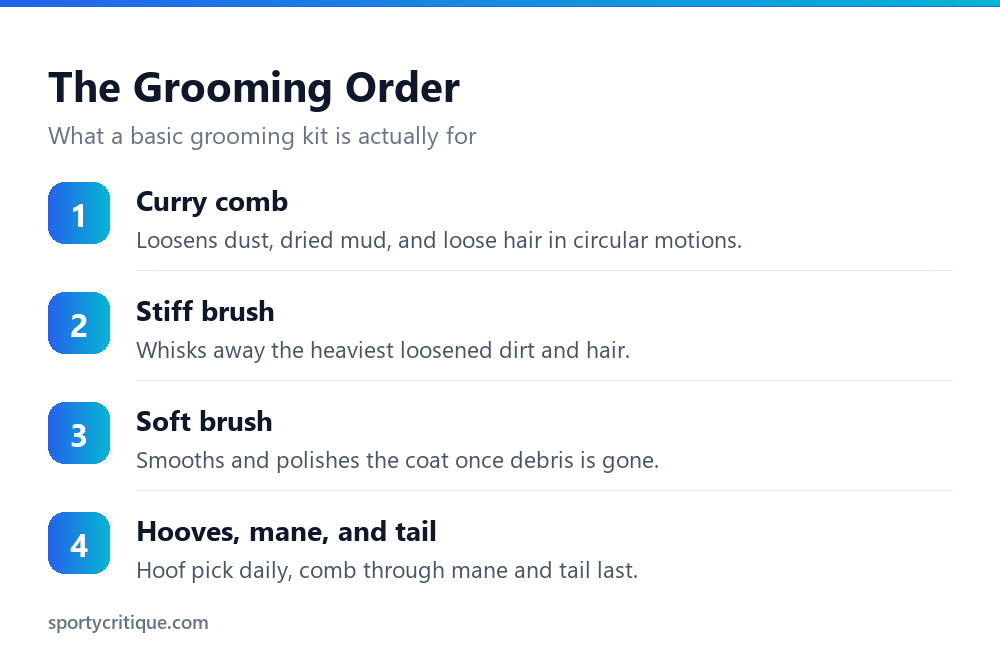
A grooming kit for a new horse owner needs, at minimum, a curry comb, a stiff brush, a soft brush, and a hoof pick, used in that order: curry to loosen dirt, stiff brush to remove it, soft brush to finish and polish, hoof pick used daily before and after riding. Most complete kits also add a sweat scraper, a bathing sponge, and mane and tail combs. Three real complete kits, all beginner-focused, are compared below.
New horse owners often either buy far more than needed, expensive individual tools accumulated one at a time, or far too little, a single brush that leaves real gaps in basic care. A well-assembled starter kit covers the genuine essentials in one purchase without requiring deep product knowledge to figure out what’s actually necessary versus what’s optional or specialized.
- →The essential four tools are a curry comb, stiff brush, soft brush, and hoof pick
- →Grooming order matters: curry first to loosen dirt, stiff brush to remove it, soft brush to finish
- →Daily hoof picking, before and after riding, prevents debris buildup that can cause discomfort or injury
- →A complete beginner kit typically runs $19 to $35 and covers everything needed to start
- →Specialized tools (shedding blades, clipper combs, show grooming products) can wait until basic care is routine
Table of Contents
The Essential Tools and What Each One Does
None of these tools are optional for basic, responsible horse care; they cover distinct jobs that don’t substitute for each other. A curry comb alone doesn’t polish a coat the way a soft brush does, and no amount of brushing replaces the daily hoof check a hoof pick provides, which is specifically about catching debris before it causes real discomfort or injury.
Why the Order Matters
Currying first, in small circular motions, loosens dirt, dust, and loose hair that a brush alone can’t lift out of the coat effectively. Following immediately with the stiff brush removes what the curry comb just loosened, using short, flicking strokes in the direction of hair growth. The soft brush comes last, smoothing and adding shine to a coat that’s already been cleared of the heavier debris the first two steps handled.
⚠️ Watch out: Skipping the curry comb step and going straight to brushing pushes dirt around the coat rather than actually removing it, which produces a coat that looks superficially clean but still has debris worked into it. The order isn’t arbitrary; each step depends on the one before it having actually done its job.
3 Real Starter Kits, Compared
📊 Note: All three kits cover the same essential tool set with minor variations in extras. The meaningful differences between them come down to tote bag quality, handle comfort, and specific bristle stiffness, not any missing core functionality in the cheaper options.
Hoof Care Deserves Daily Attention
Hoof picking should happen every single day, before and after riding at minimum, not just as an occasional part of a full grooming session. Dirt, rocks, and general debris build up in a hoof quickly during normal turnout and exercise, and left unaddressed can lead to real discomfort or injury that a few seconds of daily hoof picking prevents entirely.
💡 Pro tip: Learning to pick a hoof safely, approaching calmly, running a hand down the leg before lifting, and working from heel to toe with the pick, is worth practicing under supervision from an experienced horseperson before doing it independently, since an improperly handled hoof lift can startle a horse unfamiliar with the process.
Consistency matters as much as technique here. A horse that’s handled the same predictable way for hoof care every single day tends to stay relaxed and cooperative about it, while inconsistent handling, sometimes rushed, sometimes overly cautious, can make a horse more anxious about the process over time even if each individual session is handled reasonably well on its own.
Bathing Tools: The Sponge and Sweat Scraper
A bathing sponge, included in most complete starter kits, works with a horse-safe shampoo to clean the coat during a full bath, which is a less frequent event than daily grooming but still a routine part of overall care, especially before a show or after a particularly muddy turnout session. The sponge’s job is applying and working in shampoo gently without the abrasiveness a stiff brush would add to already-wet, sensitized skin.
The sweat scraper follows immediately after rinsing, pulling excess water off the coat in smooth, even strokes. This isn’t purely cosmetic; a horse left dripping wet takes longer to dry and is more prone to catching a chill in cooler weather, so scraping excess water genuinely speeds up the drying process and supports overall comfort after a bath.
💡 Pro tip: Work bathing tools from the top of the body downward and from front to back, matching the same general logic as the dry grooming order: remove the bulk of what needs removing before moving to finer detail work like the face and legs, which need a gentler touch throughout.
Why the Tote Bag Matters More Than It Seems
Nearly every complete starter kit includes a dedicated tote or carry bag, which is a small detail that matters more in practice than it sounds like it would. A grooming kit tossed loose into a tack room drawer scatters, gets dirty from other stored items, and makes a quick pre-ride grooming session slower simply because tools have to be located one at a time.
A dedicated tote keeps the full kit together, easy to grab in one motion, and easy to bring along to a different barn, a trailer, or a show without repacking individual tools separately. For a new owner still building the habit of consistent daily grooming, removing this kind of small friction meaningfully increases how likely the routine actually sticks.
Labeling a tote with the horse’s name, in a shared barn with multiple owners keeping similar kits nearby, also avoids the minor but real annoyance of mixed-up tools between horses. It’s a small habit that costs nothing and saves real confusion once several similar-looking kits end up stored in the same general area.
Grooming Time Is Relationship-Building Time
Beyond the practical hygiene and health benefits, regular grooming is one of the primary ways a new owner builds trust and familiarity with a horse, since it involves calm, sustained, close physical contact in a low-pressure setting compared to riding itself. A horse that’s handled gently and consistently during grooming often becomes more relaxed and cooperative during other handling too, from tacking up to veterinary visits.
For a genuinely new owner still learning to read a horse’s body language, grooming sessions are also a low-stakes opportunity to practice recognizing signs of discomfort, tension, or relaxation, skills that transfer directly to riding and general handling. Treating grooming as purely a maintenance chore misses this real, ongoing relationship-building value it provides beyond the coat and hoof care itself, value that compounds the longer a consistent routine stays in place.
What Can Wait Until Later
Shedding blades, specialized clipper-prep combs, show-quality coat polish, and other specialized grooming products serve real purposes but aren’t necessary for a new owner just establishing a basic daily care routine. Adding these once the fundamentals, currying, brushing, hoof care, are already comfortable and routine avoids overwhelming a beginner with products they don’t yet have a clear use case for.
Starter Kit Shopping Checklist
- ✓Confirm the kit includes at minimum a curry comb, stiff brush, soft brush, and hoof pick
- ✓Follow the correct order: curry, then stiff brush, then soft brush
- ✓Make hoof picking a genuine daily habit, not an occasional add-on
- ✓Add specialized tools later, once basic care feels routine
- ✕Buying an incomplete kit missing one of the four essential tools
- ✕Brushing before currying, which pushes dirt around instead of removing it
- ✕Treating hoof care as optional or occasional rather than daily
- ✕Overbuying specialized products before basic care is comfortable and consistent
Frequently Asked Questions
What’s the single most important tool in a grooming kit?
It’s hard to single one out since each tool serves a distinct purpose, but the hoof pick arguably matters most for daily welfare, since untreated hoof debris can lead to real discomfort or injury faster than a missed brushing session would.
How long does a basic grooming session take?
A thorough daily session, curry, stiff brush, soft brush, and hoof pick, typically takes 10 to 15 minutes once the routine feels comfortable, though a first-time or new owner may take longer while still learning the motions and building confidence.
Do I need different brushes for different seasons?
Not strictly for a beginner kit, though many experienced owners do use a slightly stiffer brush during shedding season and switch to a softer touch once the coat is settled. The basic curry-and-brush routine works year-round as a foundation.
Can I use the same grooming tools on multiple horses?
Generally yes for a single household with horses that are healthy and free of skin conditions, though many barns and boarding facilities require each horse to have its own dedicated tools to prevent spreading any skin issues between animals.
Do I need a separate bathing kit, or does a basic grooming kit cover that too?
Most complete starter kits already include a sponge and sweat scraper, which cover the basics of a full bath alongside a separately purchased horse-safe shampoo. A dedicated bathing-specific kit isn’t necessary on top of a complete starter set.
How do I clean the grooming tools themselves?
Brushes and curry combs should be cleaned periodically by pulling out trapped hair and rinsing with mild soap and water, then air drying fully before storing them back in the tote. Dirty tools transfer grime back onto the coat rather than actually cleaning it.
Getting started doesn’t require research paralysis over which specific kit to buy. Any of the three options above covers the genuine essentials, and the habit of using them consistently, in the right order, matters far more to a horse’s actual wellbeing than which particular brand or color of tote bag ends up in the tack room.
New owners sometimes feel pressure to master every technique and product perfectly from day one, but grooming, like most horsemanship skills, improves steadily with repetition rather than requiring expertise before starting. A basic kit, used a little clumsily at first and more confidently with time, serves a horse better than an expensive kit left unused out of hesitation to begin, or a routine delayed while waiting to feel fully ready.
As an Amazon Associate, we earn from qualifying purchases through links on this page.