Best Horse Turnout Blankets and Sheets by Weather


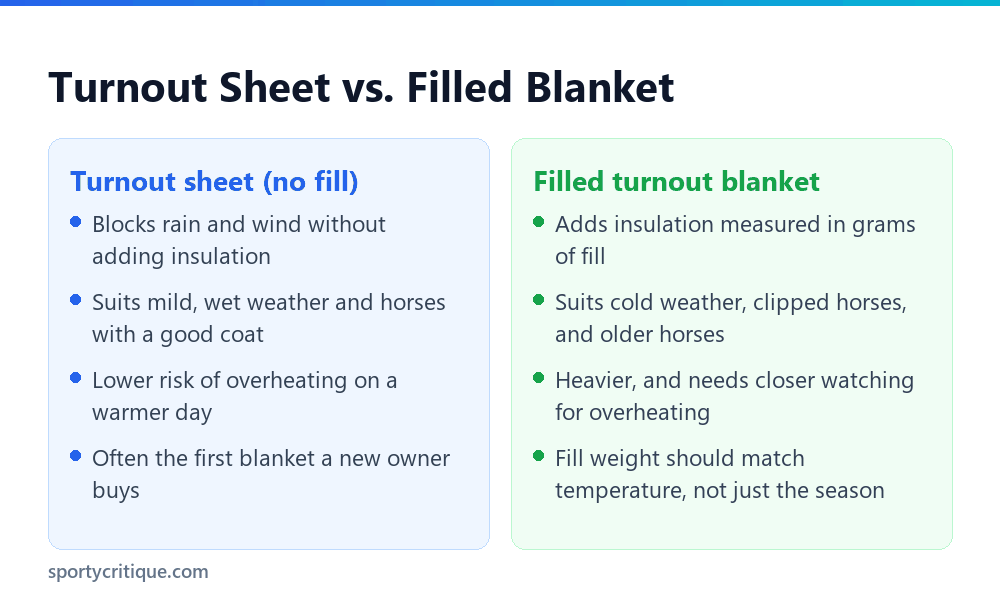
The best horse turnout blanket depends on the weather you actually face, not the calendar. A no-fill sheet like the Tough1 600D or the BARN & STABLE lightweight handles wet, mild days. A lightweight filled blanket, like the Equinavia Norse at 100 grams, covers cool, damp weather. A medium-weight blanket around 200 grams, like the Gallopoff option, suits colder weather, and heavier 300 gram blankets exist for severe cold. Fit matters as much as weight, and many horses with a healthy coat, enough feed, and shelter need no blanket at all.
Blanketing is one of the most over-bought and mis-fitted categories in horse care. New owners often assume more blanket is always kinder, but a horse that sweats under a heavy blanket on a mild afternoon can end up colder and more stressed than one left bare. Matching weight to conditions, and getting the size right, matters more than the brand name on the tag.
Table of Contents
Equine & Athletic Surface Utility
Assess impact loading, moisture barriers, and surface friction.
- →Match fill weight to temperature and the individual horse, not to the season on the calendar
- →A turnout sheet has no fill and blocks wind and rain without adding warmth
- →Fit matters: a blanket that slips or rubs causes sores no matter how good the fabric is
- →Many healthy horses with a full coat, plenty of forage, and shelter need no blanket at all
- →Check under the blanket regularly for sweat, rubs, and changes in body condition
Do You Actually Need a Blanket?
Horses grow a winter coat that traps air for insulation, and a healthy horse with enough forage, access to shelter, and a dry coat usually copes with cold better than owners expect. Forage is the horse’s internal furnace, because digesting hay generates body heat.
A blanket becomes useful in specific situations: a clipped horse that has lost its coat, an older or thin horse that struggles to hold weight, a horse without shelter in cold, wet, windy weather, or a horse that needs to stay clean and dry for competition. Outside those cases, the question is worth asking a vet or experienced horse person before buying.
⚠️ Watch out: Blanketing a horse with a full winter coat can flatten the hair and reduce its natural insulation. A blanket that is too warm for the day causes sweating, and a sweaty horse under a blanket loses heat faster once the temperature drops.
Understanding Fill Weight and Denier
Fill weight, measured in grams, describes how much insulation a blanket carries. A sheet has no fill. Lightweight blankets generally sit around 50 to 150 grams, medium weights run roughly 150 to 250 grams, and heavy weights go to 300 grams and beyond. Manufacturers’ own temperature charts vary, so treat any chart as a starting point rather than a rule.
Denier measures the thickness of the outer fabric, and a higher number generally means a tougher shell. A 600 denier sheet resists tearing better than a 420 denier one, which matters for a horse that plays rough, rubs on fencing, or shares a field. Denier alone says nothing about waterproofing, so a listing should state the water resistance separately.
4 Real Options, Compared
📊 Note: Blanket listings are sold in many sizes, and the price on each size can differ. The prices above match the specific size or listing checked on October 7, 2026, so a horse needing a larger or smaller blanket may see a different price. Heavy-weight 300 gram blankets are sold by several brands, and a horse in a severe climate may need one, so check current availability directly before you plan around one.
How to Measure for the Right Size
Blanket size is measured in inches, from the center of the horse’s chest, straight along the side of the body, to the point of the buttock at the rear. Use a soft tape measure and keep it level along the barrel rather than following the contour of the belly.
If a horse measures between two sizes, most owners choose the larger and adjust the straps, though brands differ in how they cut shoulders and gussets. Reading size-specific reviews from owners of a similar build helps more than the size chart alone.
💡 Pro tip: Measure the horse once when it is calm and standing square, write the number down, and compare it with the brand’s chart each time you buy, because sizing varies between makers.
Choosing the Right Blanket
- ✓Match fill weight to the actual temperature and the individual horse
- ✓Measure from chest center to the point of the buttock before ordering
- ✓Check under the blanket daily for sweat, rubs, and weight changes
- ✓Keep a lighter sheet on hand for mild, wet days
- ✕Choosing the heaviest blanket on the assumption that warmer is always safer
- ✕Guessing the size from a smaller or larger horse you’ve owned before
- ✕Leaving a blanket on for weeks without lifting it to check the coat and skin
- ✕Blanketing a horse with a full winter coat in mild weather
Fit Problems That Cause Real Harm
A blanket that sits too far back pulls on the withers, and one that sits too far forward can choke the throat. Rubs on the shoulder, withers, and hips are the most common signs of poor fit, and they can turn into sores or hair loss if the blanket stays on without being checked.
Straps that are too tight restrict movement, and ones that are too loose let a blanket slide, twist, or catch a leg. Leg straps should be snug but not tight, and a blanket should stay put when the horse walks, trots, and lies down.
Care and Storage
Cleaning a blanket at the end of the season, then drying it fully before storage, prevents mildew and extends its life. Many blankets can be washed by a commercial laundry service that handles horse blankets, and some owners hand-wash lighter sheets at home.
Repairing small tears and replacing worn straps early avoids bigger failures out in a field. Waterproofing treatments can restore water resistance on a blanket that has started to leak, which costs less than buying a new one.
Building a Simple Blanket Wardrobe
Most owners are well served by two or three blankets: a lightweight sheet for mild, wet days, a mid-weight blanket for cool weather, and a heavier blanket only if the climate and the horse really call for one. Layering a sheet over a liner can stretch a smaller wardrobe across more conditions.
Neck Covers, Hoods, and Layering
Some blankets include a detachable neck cover or hood, which adds warmth around the neck and shoulders for horses that need extra protection in harsh weather. Detachable designs let an owner add or remove coverage as conditions change instead of buying separate blankets.
Layering a lightweight sheet beneath or above a mid-weight blanket stretches a small wardrobe across a wider temperature range. The tradeoff is more weight and more straps to check, so layering suits owners who are comfortable with daily blanket checks.
Senior and Hard-Keeper Horses
Older horses and hard keepers often struggle to hold weight in winter, and a blanket can reduce the calories they burn staying warm. These horses are the most common case where a blanket makes a real difference, though it should accompany good forage and regular body condition checks rather than substitute for them.
A vet can help judge whether a specific senior horse needs a blanket and what weight suits it. Because conditions like arthritis or poor teeth change a horse’s needs, an individual plan beats a general rule for these horses.
Waterproof vs. Water-Resistant Labels
A waterproof blanket is built to keep a horse dry in sustained rain, while water-resistant fabric sheds light moisture but may soak through in a long downpour. Listings often use the two terms loosely, so reading the product description for how the shell is built and whether seams are sealed gives a clearer answer than the headline.
Breathability matters as much as waterproofing, since a shell that holds moisture in causes the horse to sweat underneath. A blanket that keeps rain out but lets body moisture escape suits most horses better than one that seals tightly.
When to Take the Blanket Off
Removing a blanket on warm afternoons, even in winter, and changing to a lighter weight as the day warms, prevents overheating. Owners who work during the day sometimes use the lightest blanket that covers the coldest part of the day rather than the heaviest.
Giving a horse some blanket-free time also lets the owner check the skin, coat, and body condition directly, which catches weight loss and rubs that a blanket can hide.
Budget and Value Considerations
Blankets span a wide price range, and a higher price does not always mean better protection for a given horse. A well-fitted mid-priced blanket in the right weight often performs better than an expensive one that fits poorly, so fit and suitability come ahead of brand.
Buying a good-quality sheet first, then adding filled weights as the horse’s needs become clear, spreads the cost over time and avoids buying a heavy blanket the horse never ends up needing. Used blankets from reputable sellers can also stretch a budget, provided the straps, seams, and waterproofing are checked carefully before use.
Owners sharing a barn can also compare notes on which brands hold up in their local climate and which cuts suit common builds, since local experience is often more useful than any general ranking.
Frequently Asked Questions
How do I know if my horse is too hot under a blanket?
Check under the blanket behind the withers. Sweat, damp hair, or a hot feel means the blanket is too warm for the weather and should be changed to a lighter weight or removed.
What does the fill weight number mean?
It is the grams of insulation in the blanket. No fill is a sheet, lighter numbers suit cool weather, and higher numbers suit cold weather.
Does a higher denier mean a warmer blanket?
No. Denier measures the strength of the outer fabric, not warmth. Warmth comes from the fill.
How do I measure my horse for a blanket?
Measure along the side of the body from the center of the chest to the point of the buttock, keeping the tape level, and compare that number with the brand’s size chart.
Do all horses need blankets in winter?
No. Many horses with a healthy winter coat, plenty of forage, and shelter manage without one. Clipped, older, or thin horses are the most common exceptions.
How often should I check under a blanket?
At least daily, looking for sweat, rubs, and changes in body condition.
A good blanket choice starts with the horse and the weather rather than the product page. Match weight to conditions, measure carefully, check under the blanket often, and keep the wardrobe small, and the result is a horse that stays comfortable through every kind of weather.
As an Amazon Associate, we earn from qualifying purchases through links on this page.